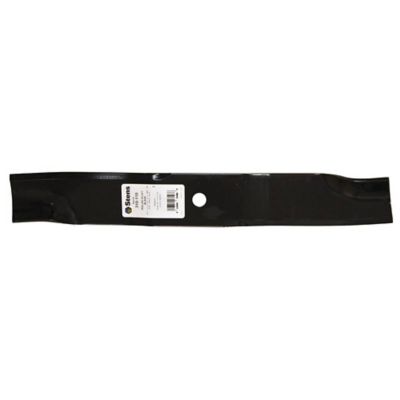
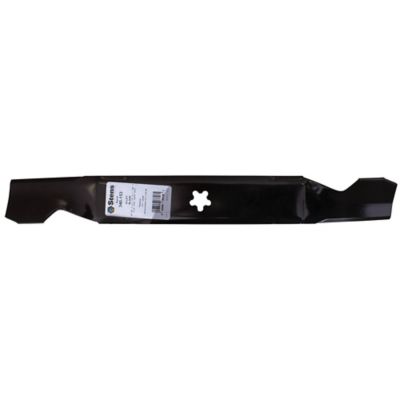
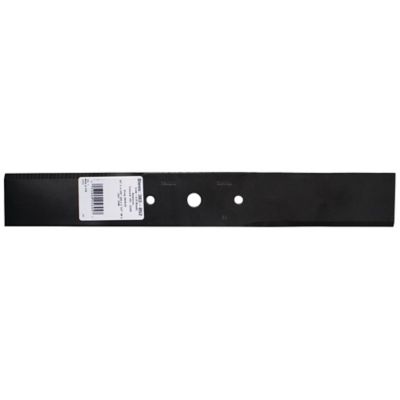
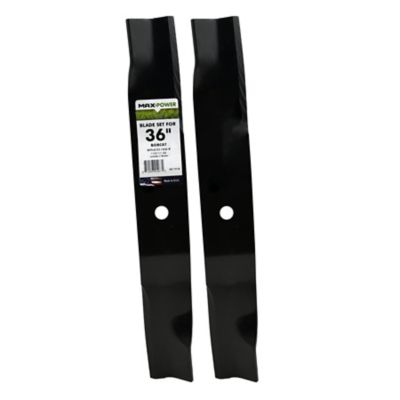
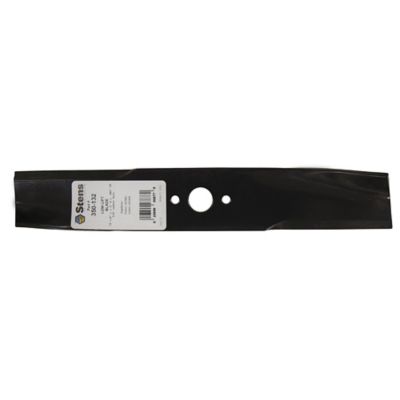
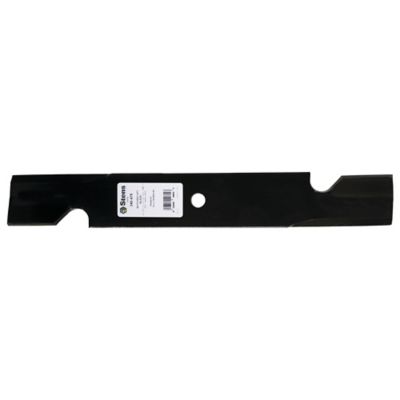
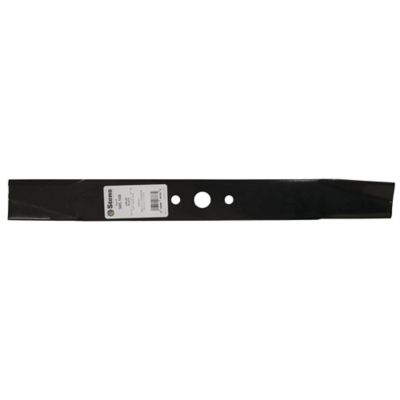
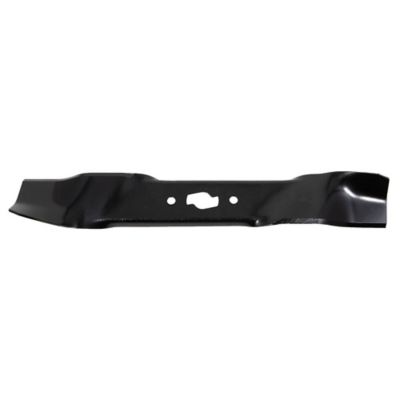
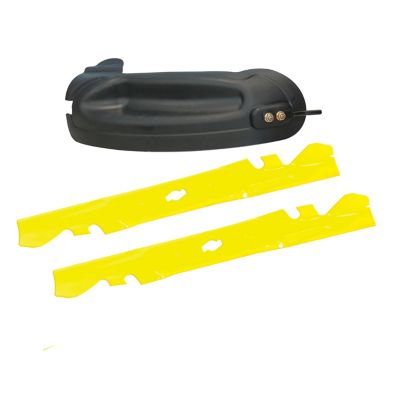
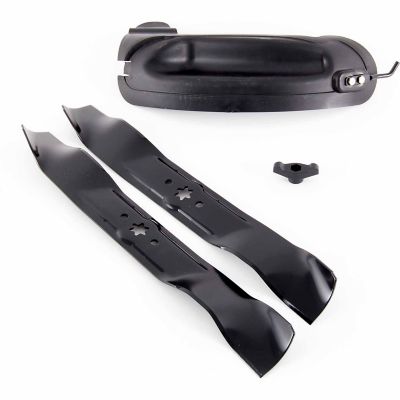
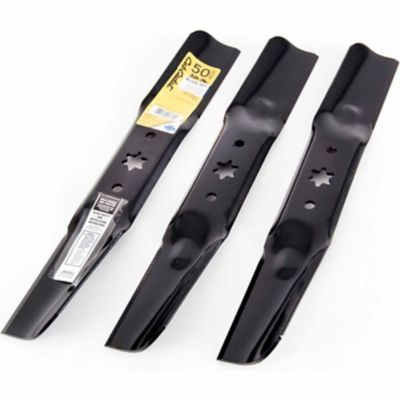
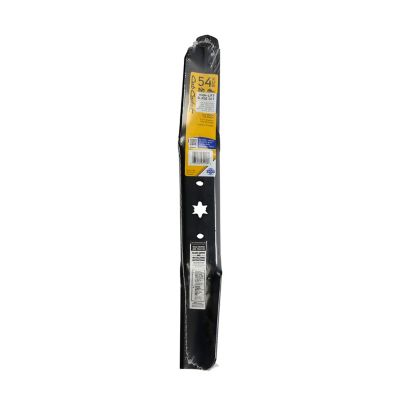
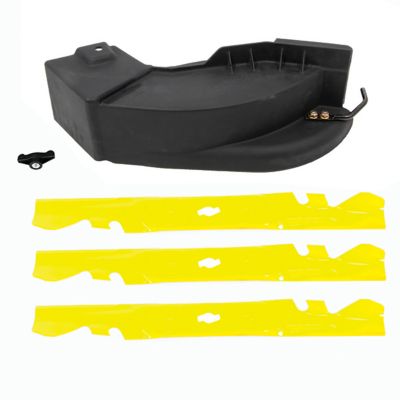
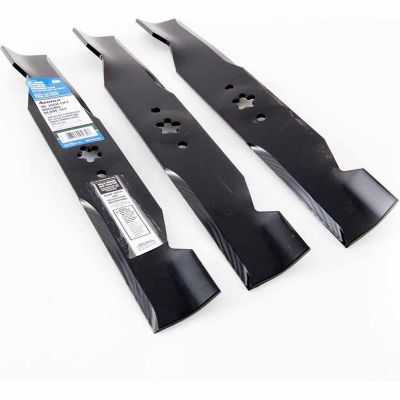
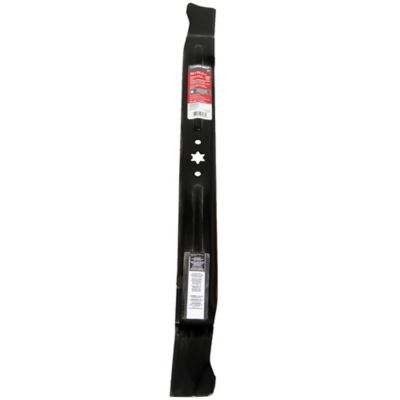
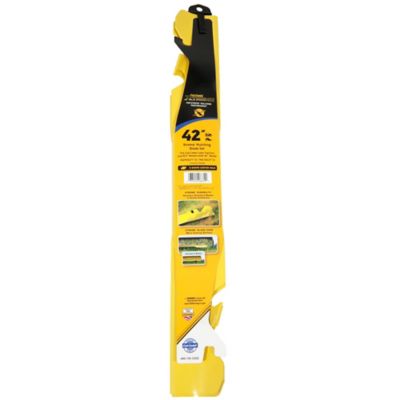
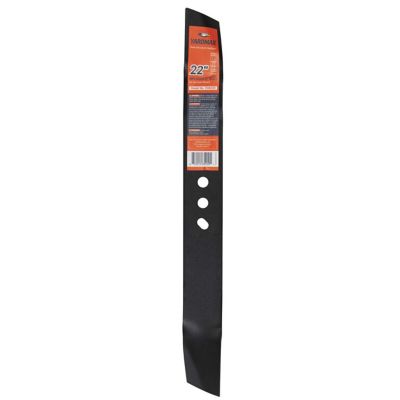
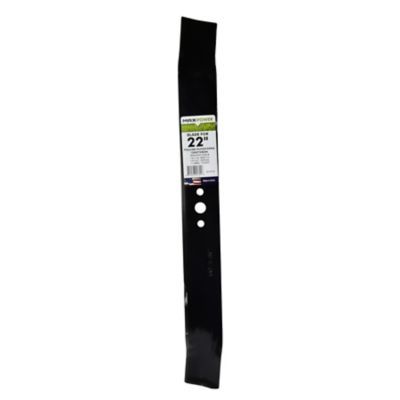
Blades for a 36-inch mower deck help keep the yard around the house, the stretch beside the driveway, and the grass near the barn looking well tended. In this category, 36 inches generally refers to the deck’s cutting width, not the length of one blade. Many 36-inch decks run two blades roughly 18 inches long, with some designs calling for lengths around 17-3/4 to 18-1/4 inches. Those measurements are a starting point, not a fit guarantee: the mower model, deck design, and manufacturer’s blade specifications determine the right replacement. Two mowers with the same cutting width can need different blade lengths, mounting holes, thicknesses, or profiles. The best reference is the replacement blade part number listed for the mower’s exact model and deck, checked against the blade manufacturer’s fit information. Length is measured diagonally between the outermost cutting tips, rather than straight across the blade’s width. Center openings may be round, star-shaped, S-shaped, or another design, and the opening must match the mounting assembly in both shape and size. Some blades also have additional mounting holes or an offset that affects where the cutting edge sits beneath the deck. A blade that slides onto the spindle is not necessarily the right blade for that mower. Proper clearance, mounting hardware, and blade orientation all matter to safe operation and an even cut. Sets deserve a close look, too, since the number of blades in a package needs to match the deck’s requirements. For homeowners keeping up a country yard or grounds crews working around gates, trees, and outbuildings, the right fit helps the mower do its job without leaving a ragged stripe behind. If another mower on the property has a smaller deck,
30 Inch Lawn Mower Blades belong to a separate size category; blade choices still need to follow that machine’s specifications rather than deck width alone.
The shape of a mower blade makes a real difference in how it handles grass after the cutting edge passes through it. Standard or medium-lift blades commonly suit routine mowing with a compatible side-discharge deck, moving clippings out while maintaining airflow beneath the housing. High-lift blades have a more pronounced sail, the raised section behind the cutting edge that helps create upward airflow. On a mower designed for them, that lift can help stand grass up for cutting and carry clippings toward a discharge opening or collection system. They can also stir up more dust on dry, sandy ground and place greater demands on the mower, so more lift is not automatically better. Low-lift designs generally move less air and may suit certain sandy or dusty mowing conditions when the equipment manufacturer approves them. Mulching blades have profiles intended to keep clippings circulating for additional cutting before they settle back into the lawn. Their performance depends on the whole setup, including whether the deck requires a mulch plug, baffles, or other matching components. A mulching blade alone does not turn every mower into a mulching system. Combination blades offer flexibility across mowing tasks, but their supported functions depend on the particular blade and deck. For a regularly trimmed lawn, small clippings can settle between grass plants without leaving much behind on the surface. Taller growth along a fence or thick grass after a rainy spell may call for slower travel and more frequent mowing to prevent clumps, regardless of blade style. During the cooler months, a compatible mulching setup can also help break down a light scattering of dry leaves while grass still needs cutting. Deep piles and wet mats are another matter and can overwhelm the deck. Matching the blade to the mower’s discharge method and the property’s usual conditions makes more sense than choosing by an aggressive-looking edge or a taller sail.
Most mower blades are made from steel, often with heat treatment that helps the cutting edge resist wear while allowing the blade to handle the stresses of normal mowing. Steel composition, blade thickness, and manufacturing specifications influence service life, but thicker does not automatically mean better for every deck. A replacement needs the dimensions and construction specified for the machine, including the proper width and offset. Protective finishes can help limit surface corrosion before operation, although contact with grass, grit, and moisture gradually wears those finishes away. On a sandy patch near a gravel lane, abrasive soil can wear cutting edges and blade sails faster than mowing a thick lawn with good ground cover. Rocks, exposed roots, and forgotten pieces of wire create a different concern: impacts can bend a blade or leave cracks and deep nicks that sharpening will not fix. A sharp, properly balanced blade cuts grass more cleanly than a dull one, which can tear the tips and leave the lawn looking pale or frayed a day after mowing. Uneven cutting or vibration can point to blade trouble, though deck leveling, spindle wear, and other mower issues can cause similar symptoms. Blade care belongs alongside routine mower maintenance, with inspections and sharpening performed according to the equipment manual. Before anyone reaches beneath the deck, the mower needs to be secured against movement and accidental starting, following the manufacturer’s shutdown and power-disconnection directions. Bent or cracked blades call for replacement rather than straightening or welding. Sharpening should preserve the specified cutting angle, and blade balance matters before reinstallation with the correct hardware and tightening torque. For folks who mow around the home place or maintain several small properties, a matching replacement set can keep blade maintenance from interrupting a full day of chores. When mowing slows or stops for the season, removing packed grass and storing spare blades clean and dry helps limit rust. Thoughtful blade selection and regular attention help a 36-inch mower leave a cleaner finish wherever lawn grass needs tending.