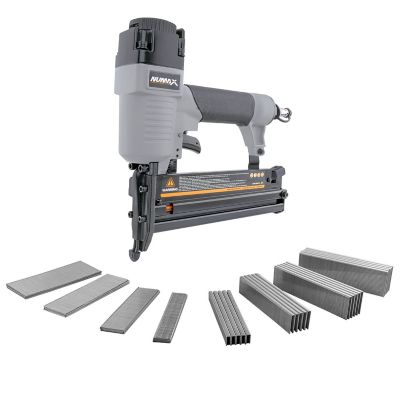
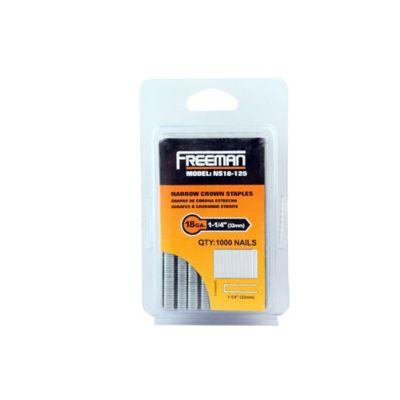
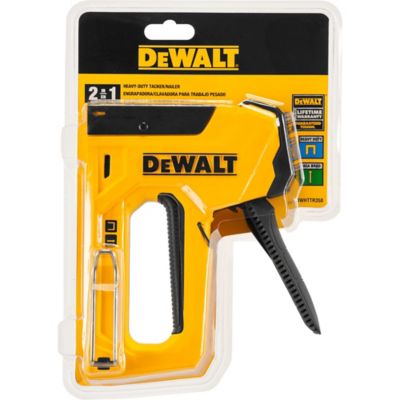
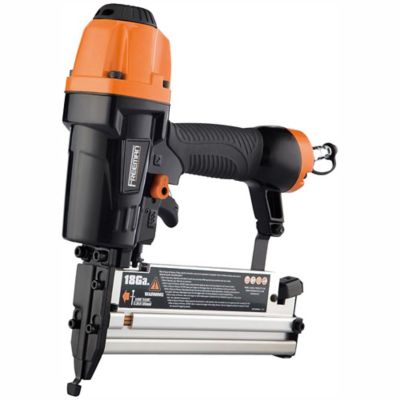
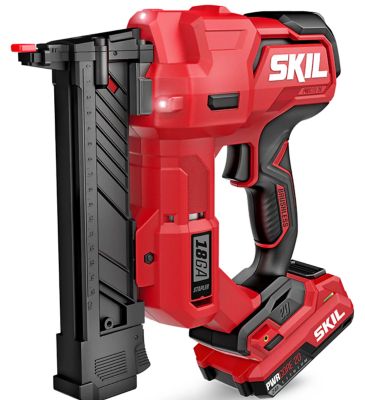
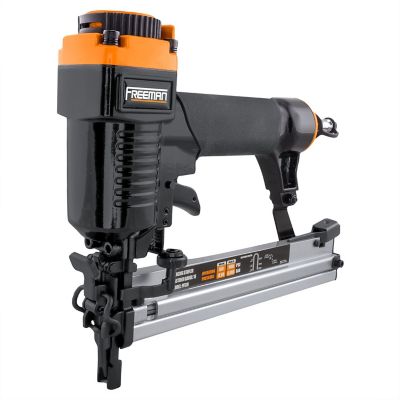
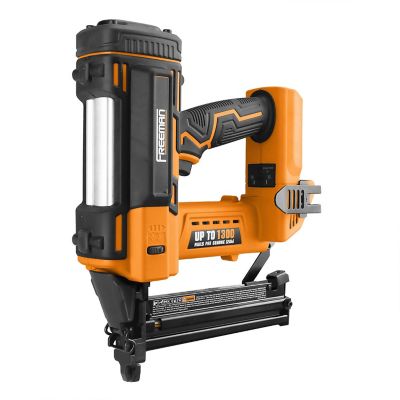
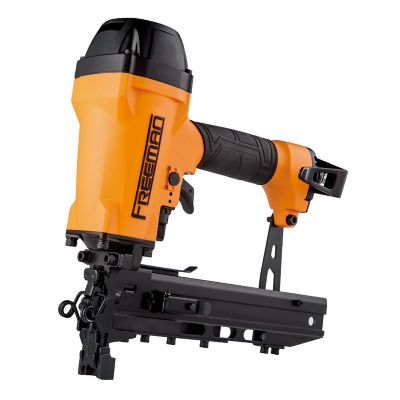
An 18 gauge stapler drives two-legged fasteners into wood and other compatible materials for jobs such as cabinet assembly, paneling, furniture repair, and light trim work. The gauge refers to the thickness of the staple wire, not the width across its top or the length of its legs. Many 18 gauge staplers take 1/4-inch narrow crown staples, with supported leg lengths often ranging from 3/8 inch to 1-1/2 inches; some tools accept lengths up to 1-9/16 inches. Those measurements vary by tool, so the specified gauge, crown width, staple series, and length range all matter when matching fasteners to a stapler. A narrow crown leaves a relatively small fastening mark while placing two legs into the material, making this tool a practical fit for attaching a cabinet back, securing a drawer bottom, or fastening thin wood pieces during assembly. Compared with a brad nail, a staple has a connecting crown that spans the surface between its legs, which can help hold thin material against its backing. That crown also remains more visible, so the appearance of the finished surface matters alongside holding power. In a farmhouse utility room, a small woodworking shop, or a garage workbench setup, these tools suit projects where controlled fastening is more important than the heavy fastening demands of framing. They are not substitutes for structural connectors or fastening methods required by a building plan. Furniture work is another common application, though upholstery calls for closer attention: many fabric projects require a fine-wire upholstery stapler rather than an 18 gauge narrow crown tool. For woodworkers, remodelers, maintenance crews, and folks keeping cabinets and storage fixtures in working order, the appeal is straightforward—a compact fastening tool that can handle repeated attachment points without swinging a hammer beside a thin edge. The best fit depends on the materials, the joint, and whether the staple marks will remain in sight.
Power source makes a noticeable difference in how an 18 gauge stapler fits into the workday.
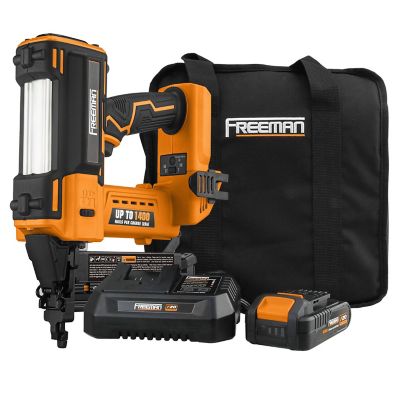
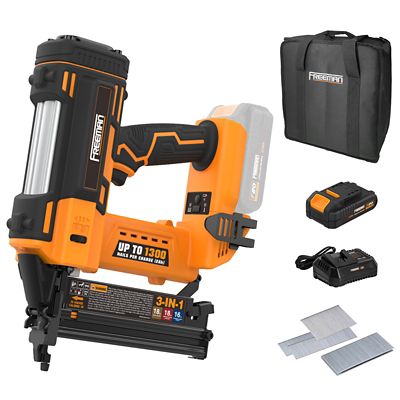
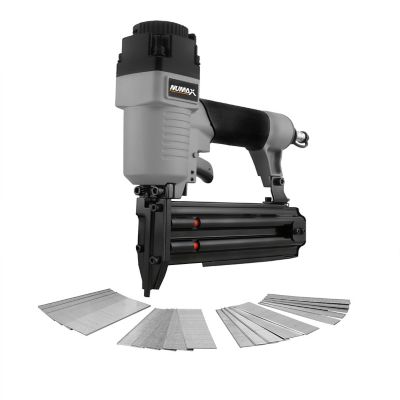
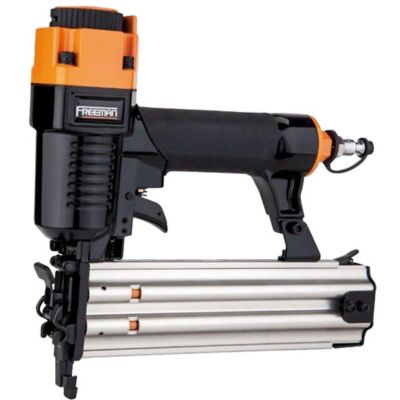
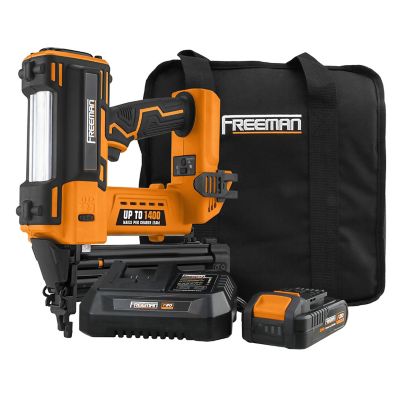
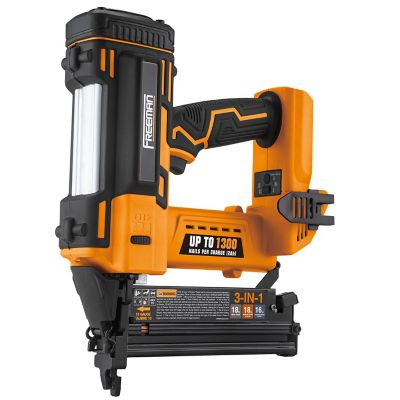
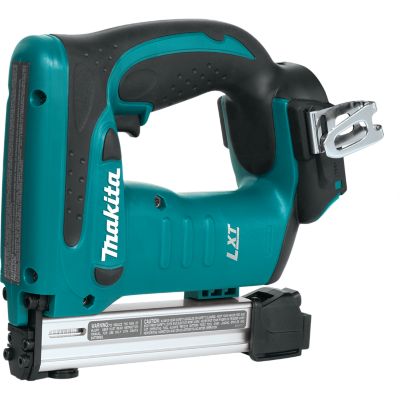
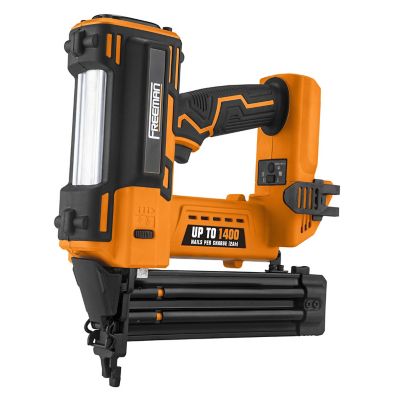
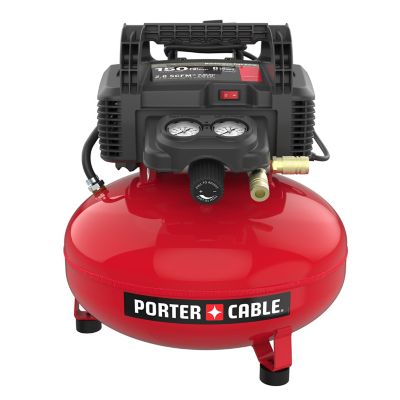
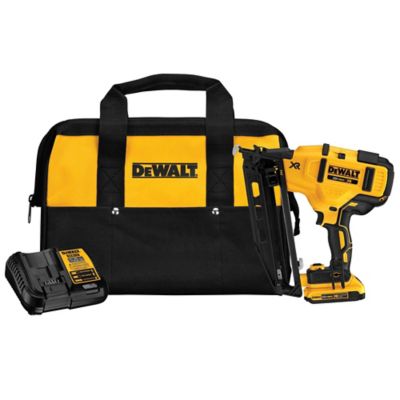
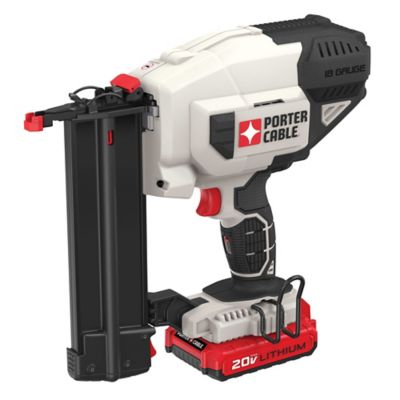
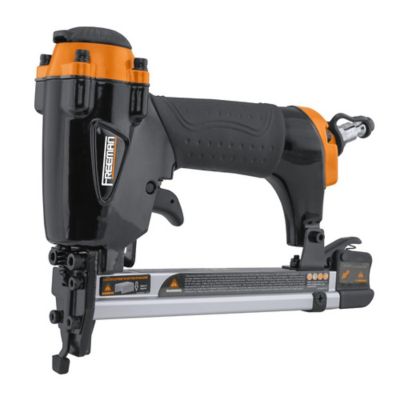
Pneumatic Staplers run on compressed air and connect to a compressor through an air hose, making them a practical match for a shop that already has an air setup. Their tool bodies can be relatively light because the power supply sits away from the handle, although the hose needs room to move around a bench, cabinet, or workpiece. Compressor compatibility involves both the operating pressure and the air delivery the stapler requires; the tool’s listed specifications establish those needs. Battery-powered 18 gauge staplers carry their power onboard, allowing movement between a workbench and an installed cabinet without routing an air hose through the space. That freedom comes with battery weight, charging needs, and battery-platform compatibility. Tool-only packaging and kits can contain different components, so included equipment matters when planning a complete setup. Beyond the power source, handling details deserve attention. A balanced grip can make repeated fastening less tiring, while a clear view of the nose helps with placement along a narrow strip. A nonmarring contact tip can help limit impressions on finished surfaces, but it does not eliminate the need to check how the tool behaves on the actual material. Adjustable drive depth allows the staple crown to sit where the project requires instead of sinking too far into thin plywood or standing proud of the surface. Tool-free jam access, an easy-to-read magazine window, and straightforward loading can reduce interruptions during longer assembly jobs. These features differ across designs and should not be assumed from the gauge alone. Firing controls matter, too: sequential actuation requires a deliberate trigger sequence for each fastener, while other actuation systems behave differently. Understanding the tool’s firing mode, contact mechanism, and manufacturer’s safety requirements is part of choosing equipment that suits the operator and the workspace. For someone who regularly builds shop storage or repairs furniture, a stapler can also make a practical gift when its fasteners and power requirements match the equipment already in the shop.
Materials and joint construction determine what an 18 gauge staple can accomplish. Pine strips, plywood backs, hardwood components, and engineered panels do not respond identically to the same staple length or drive setting. A thin cabinet back needs enough penetration into its supporting frame to hold securely, but excessive length can send staple points through the opposite face. Near an edge, the wood grain and the position of both staple legs affect the chance of splitting or breakout. Dense material can resist penetration, while softer material may let the crown sink below the intended surface. A scrap assembly made from the same layers gives a useful picture of the finished result before fasteners go into the visible work. Staple metal and finish also deserve a look. Coated steel and stainless steel fasteners serve different exposure needs, and the fastener must be suitable for the wood treatment and conditions the finished assembly will face. The correct wire gauge alone does not establish corrosion resistance or material compatibility. Where glue forms part of a woodworking joint, staples can help hold pieces in position during assembly, but they do not replace sound joint design or the adhesive’s clamping and curing requirements. Tool construction affects day-to-day handling as well as service life: housing materials, nose protection, magazine alignment, and access for routine maintenance all play a role. Care requirements differ between pneumatic and battery-powered tools. Some air staplers call for specified lubrication, while others have oil-free designs; following the tool manual avoids treating both types alike. Keeping the magazine and nose clear of debris, checking for worn contact parts, and storing the tool in a clean, dry place support consistent operation. Disconnecting the air supply or removing the battery before clearing a jam or performing maintenance helps prevent an unintended discharge. Eye protection, any additional protection specified by the manufacturer, a supported workpiece, and hands kept away from the fastening path remain essential. With the right staple match and a tool suited to the task, 18 gauge staplers earn their place beside clamps, squares, and other everyday woodworking equipment.