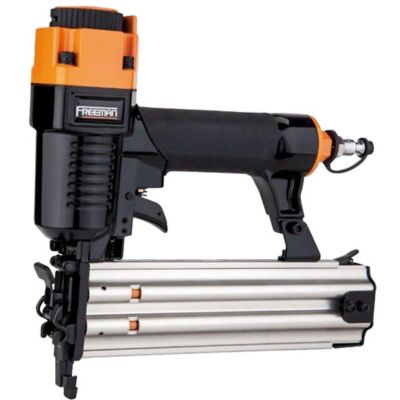
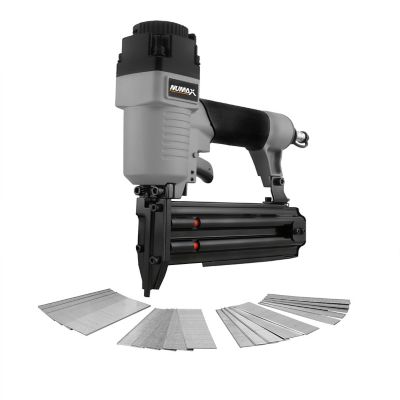
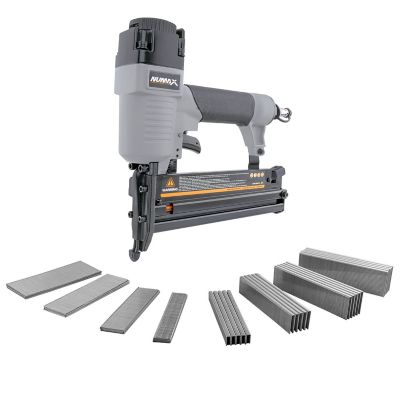
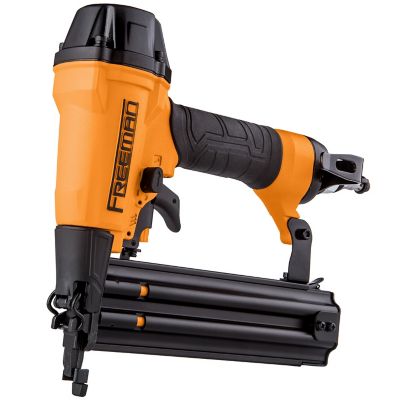
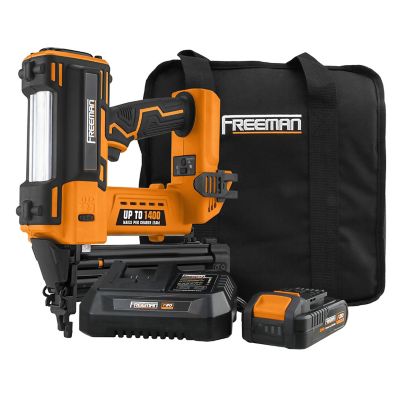
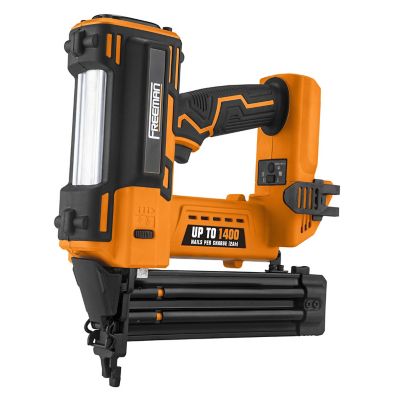
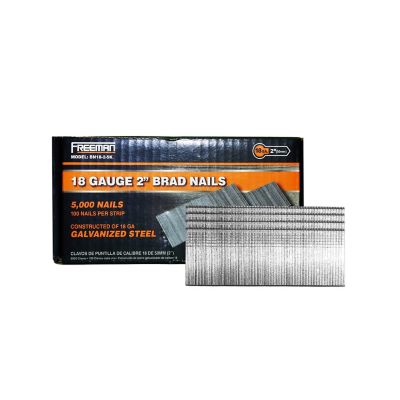
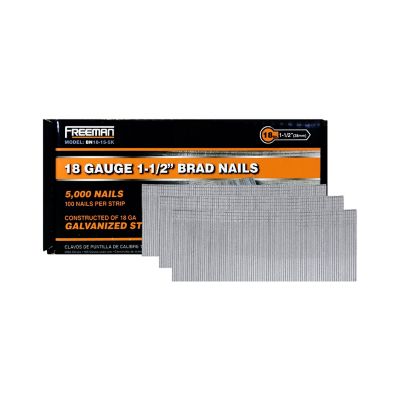
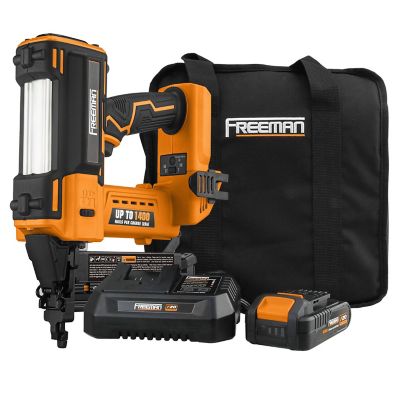
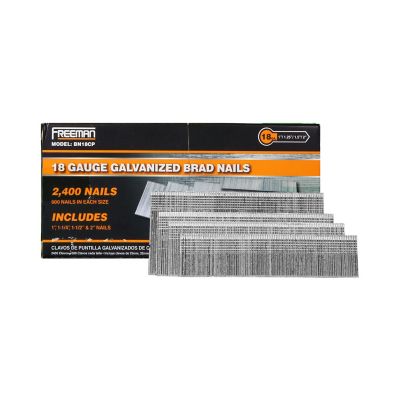
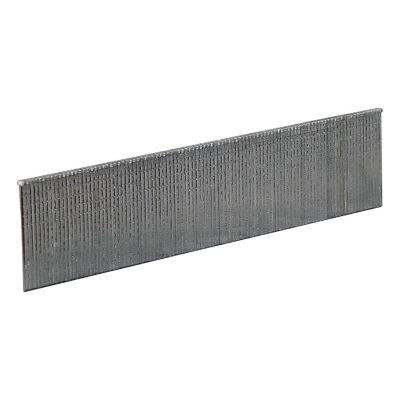
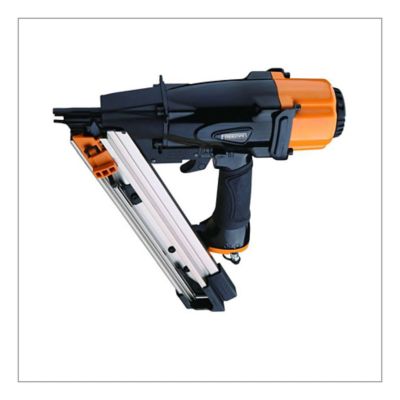
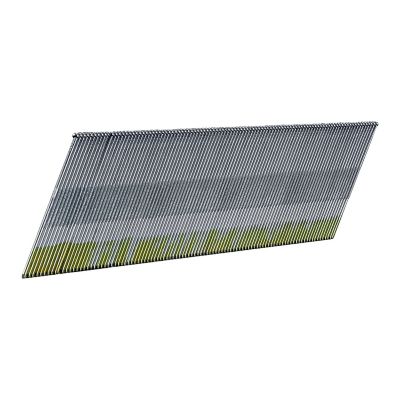
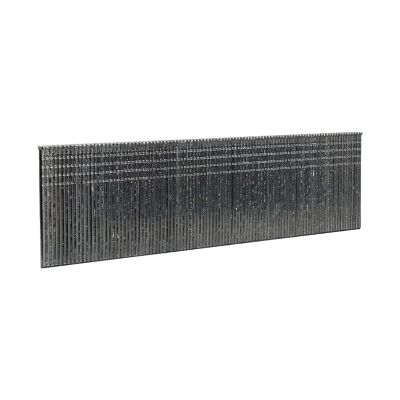
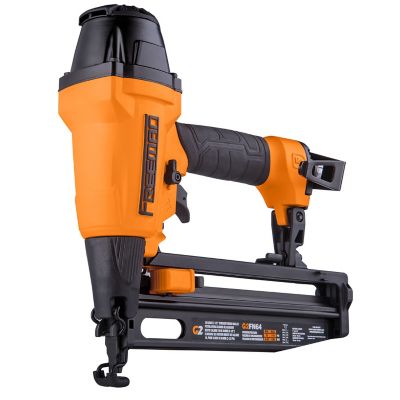
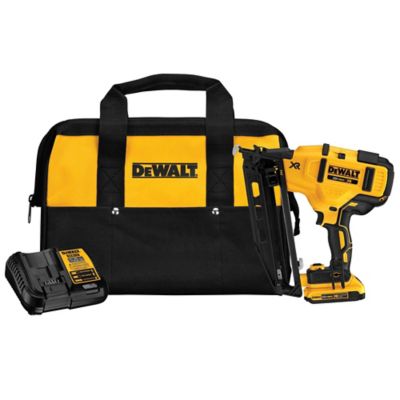
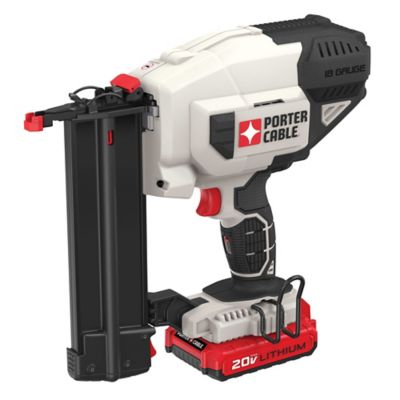
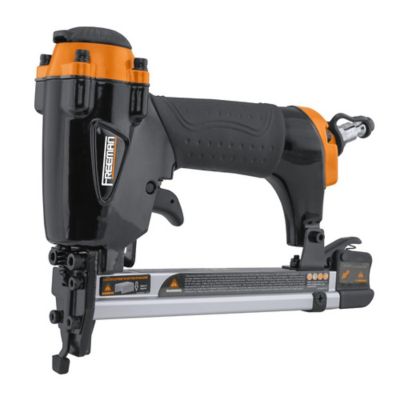
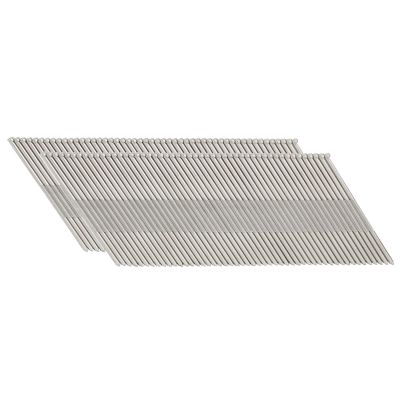
An 18-gauge brad nailer is a handy shop and jobsite tool for fastening trim, molding, narrow boards, and other light wood pieces with small-headed brads. The slim fastener leaves a small entry point and is less likely to split delicate stock than a larger nail, making this nailer a practical choice for baseboards, shoe molding, window casing, cabinet trim, face frames, and small furniture repairs. Many models accept brads from 5/8 inch to 2 inches long, so the right nail length can match the thickness of the material and give the joint enough hold without driving through the back. For example, a shorter brad may suit thin trim or a small craft project, while a longer brad can help secure thicker molding to a wood backing. Before loading the tool, check the nailer’s approved gauge and length range, then choose brads that fit the material, not simply the longest fastener available. An 18-gauge nailer is often a welcome addition for a homeowner tackling room updates, a trim carpenter fitting boards around doors and windows, a cabinet builder assembling face frames, or a ranch hand making quick repairs in a shop. It also fits well in a hobby workspace for building birdhouses, small wooden boxes, light-duty shelves, and other straightforward projects. For more options across different tool styles and features, browse
Brad Nailers.
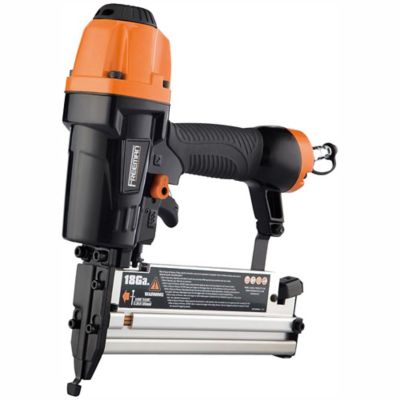
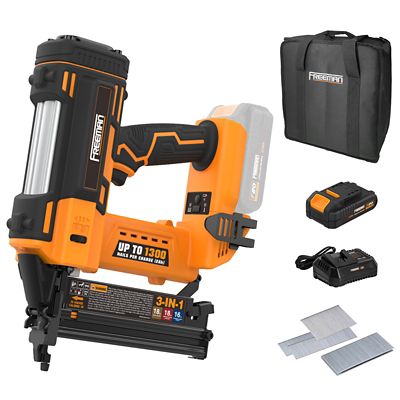
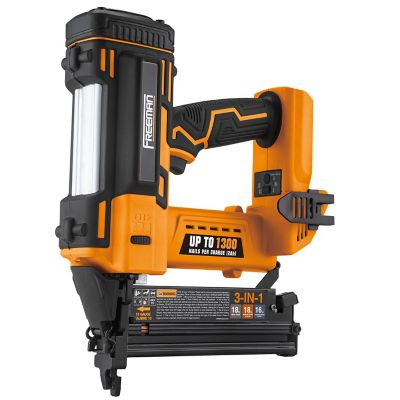
Choosing between pneumatic and cordless power comes down to the way you work and the space around the project. A pneumatic 18-gauge brad nailer runs from an air compressor through a hose. It can be a good fit for a permanent shop setup, a trim crew moving from room to room, or anyone who already keeps a compressor on hand for inflating tires, cleaning equipment, or running other air tools. The hose does add something to manage, especially when working around ladders, doorways, or long runs of baseboard, but the nailer itself is often easy to carry for a full day of fastening. A cordless model runs on a rechargeable battery, giving you freedom from an air hose, compressor, and power cord. That portability can make a difference when fitting trim in a barn office, repairing a cabinet in a far corner of the garage, or taking on a small project where setting up a compressor feels like more trouble than the work itself. Keep battery voltage and platform compatibility in mind if you already own cordless tools, since a matching battery system may simplify charging and storage. No matter the power source, look for tool-free depth adjustment so you can set the brad head just below the surface without sinking it too far. A jam-release latch can help clear a misfed fastener, while a dry-fire lockout can prevent the tool from firing when the magazine is empty. A non-marring tip is helpful when working on painted trim, finished boards, or softer woods where a nose mark would stand out. An adjustable exhaust, comfortable grip, belt hook, and clear nail magazine can also make a long afternoon of trim work easier on your hands and less frustrating.
Good results begin with careful setup. Select straight, sound boards, bring the material into the workspace, and allow it to adjust to the surrounding temperature and moisture before fastening. When joining trim, place brads where they will hold the piece firmly against the backing, and angle fasteners only when the project instructions or joint design call for it. Keep the nailer square to the surface for a clean entry, and test the depth on a scrap piece before moving to the visible work. If the brad sits proud, increase the depth gradually; if it leaves a deep divot or breaks through the face, back the setting off or choose a shorter nail. Wood hardness, grain direction, board thickness, and air pressure all affect the result, so a quick test saves patching later. For pneumatic tools, follow the manufacturer’s guidance for compressor pressure, hose fittings, and lubrication. For cordless tools, begin with a charged battery and keep the contact area clear of dust and loose fasteners. Disconnect the air supply or remove the battery before clearing a jam, changing settings, or leaving the tool on a workbench. Wear eye protection, keep your free hand away from the nose of the nailer, and never point the tool toward another person, even when it appears empty. During the cooler months, an 18-gauge brad nailer can help with indoor trim repairs, cabinet touch-ups, and shop projects while time outdoors is limited; as the weather warms, its cordless portability can be useful for porch repairs, outbuilding improvements, and work away from the main shop. It can also make a thoughtful gift for a new homeowner, woodworker, property caretaker, or practical-minded family member who enjoys keeping a workshop ready for the next repair. Store brads in a dry place, clear sawdust from the magazine and contact area, and keep the tool protected between projects so it is ready when a loose molding strip, split cabinet edge, or small wood repair calls for a steady row of fasteners.