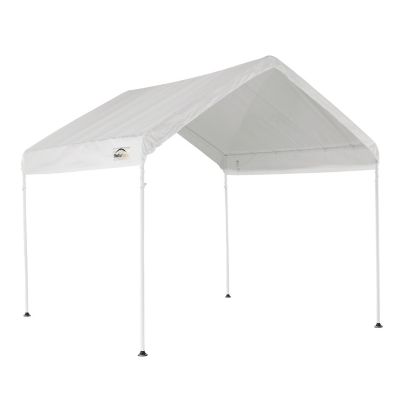
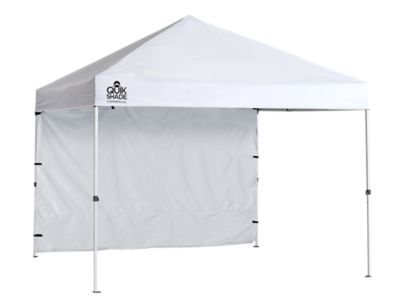
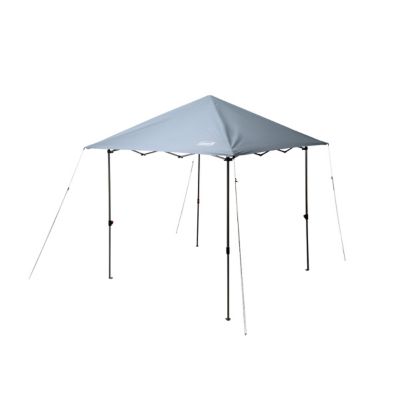
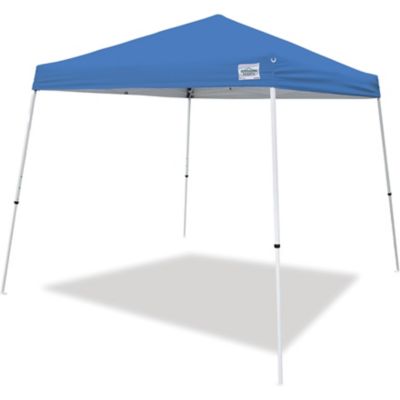
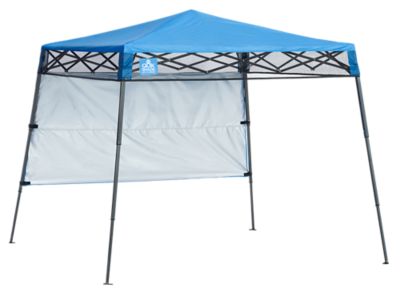
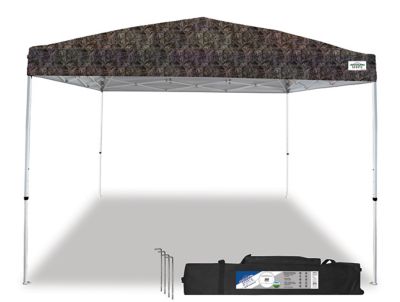
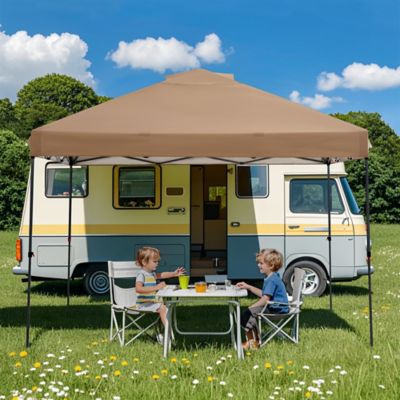
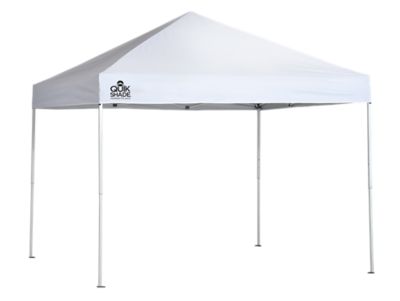
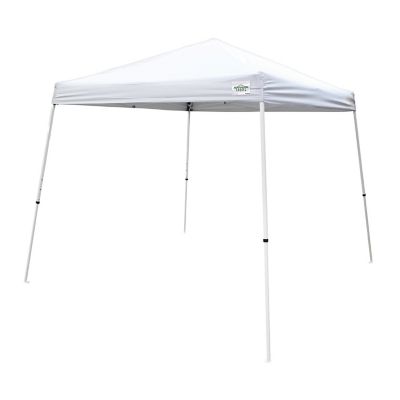
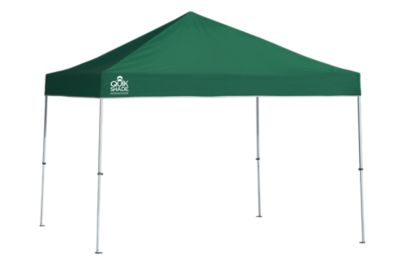
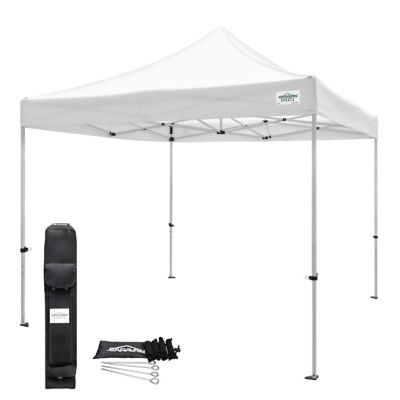
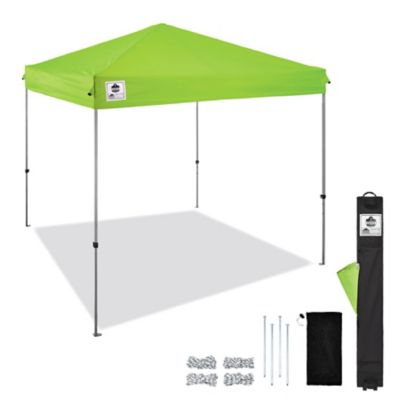
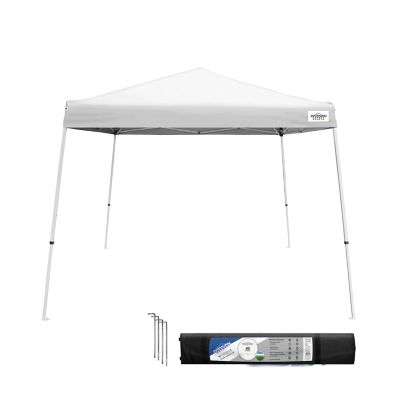
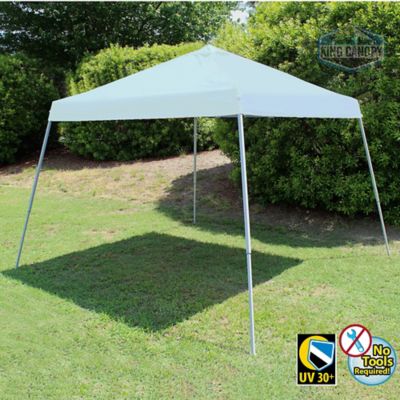
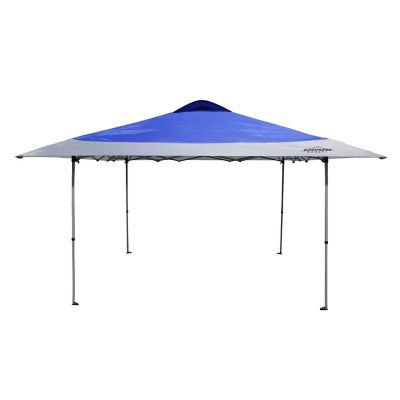
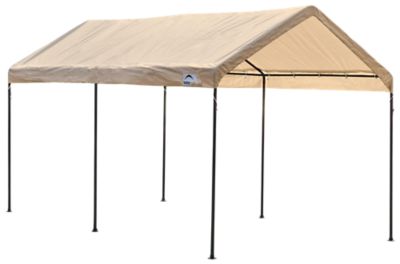
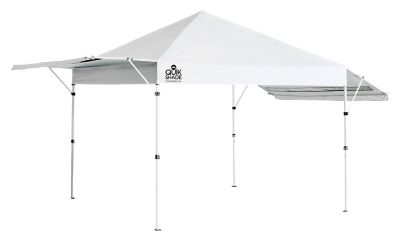
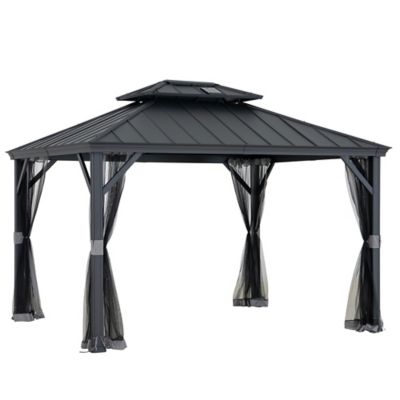
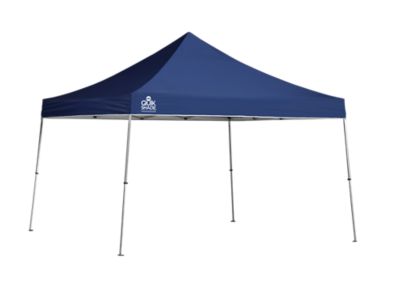
A 10x10 pop-up canopy is a portable shelter with a folding frame and fabric roof, sized for a manageable outdoor gathering or workspace. A model with a 10-foot-by-10-foot roof provides 100 square feet of overhead coverage, enough for a picnic table, a small display area, or several folding chairs. That space can generally accommodate about six to ten people standing or four to six seated around a table, depending on furniture size and the room needed to move around. Roof measurements matter: some slant-leg canopies have a 10x10 ground footprint but a smaller roof, so the listed dimensions deserve a close look. Shade also moves with the sun, meaning the full area beneath the roof may not stay shaded throughout the day. For a farm stand, ballgame sideline, campground, or tailgate, this size strikes a useful balance between covered space and portability. Straight legs make it easier to arrange tables near the edges, while angled legs extend outward and need additional clearance. Either style needs space beyond the frame for any required stakes, guy lines, or anchors. Adjustable legs help accommodate different setups, and the distinction between peak height and clearance beneath the roof edge matters when tall folks are walking through or a display rack sits near the entrance. Frames commonly come in powder-coated steel or aluminum. Steel frames tend to weigh more, while aluminum can make loading and carrying easier; tubing dimensions, joints, and locking hardware also affect how the frame handles repeated setup. A folding design keeps the parts together, often allowing setup without separate assembly tools. Push-button leg adjustments and center-hub locking systems offer different ways to raise and secure the shelter. Packed length and weight are worth checking against a truck bed, vehicle cargo area, or storage shelf, especially when one person will handle most of the carrying. A wheeled carry bag can help on firm, fairly smooth ground, though gravel, ruts, and pasture paths may still call for lifting.
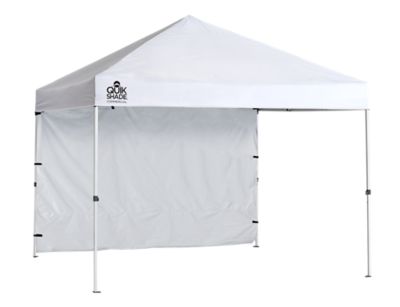
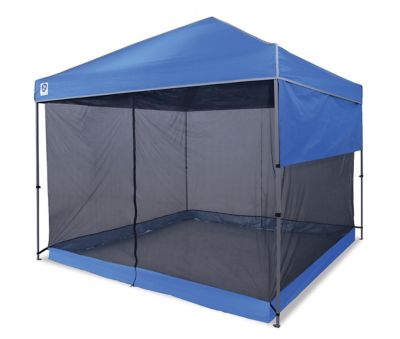
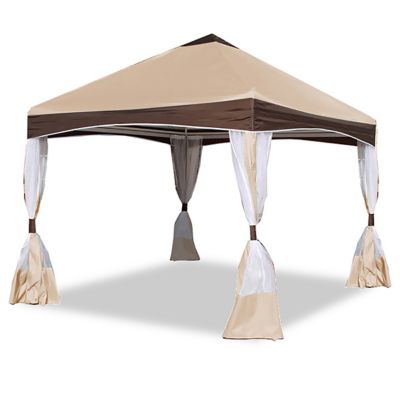
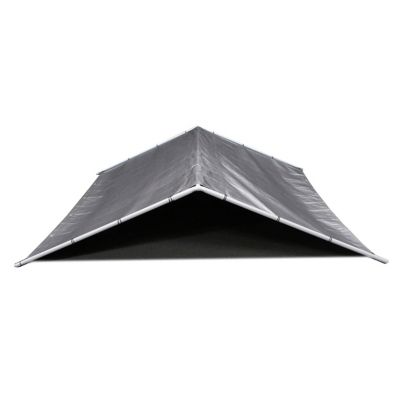
Canopy tops are often made from polyester or similar synthetic fabric, with coatings that affect water resistance and sunlight protection. Fabric denier describes the thickness of the yarn, but that number alone does not tell the whole story; seams, reinforcement at frame contact points, stitching, and the roof’s fit all deserve attention. A snug top helps keep the fabric from flapping and allows water to run off as intended. Water-resistant fabric may handle a brief shower, but it does not automatically make a canopy waterproof, and seams or attachments can let moisture through. Sun protection also varies, so a stated UPF rating is more helpful than assuming every fabric blocks the same amount of ultraviolet light. A vented roof can allow some trapped heat to escape, but it does not make the structure safe in strong wind. Removable sidewalls offer another way to shape the space, whether that means shading a low-angle sun at a farm stand or screening a display from passing foot traffic. Solid panels provide more separation, while mesh panels allow more airflow; compatibility with the frame and attachment system matters before adding either. Sidewalls also catch wind and can change the anchoring needs of the whole setup. Ground stakes work only where the surface and soil allow proper installation, while manufacturer-approved leg weights or other specified anchors may be needed on pavement. Anchor requirements vary, and the shelter needs to be secured according to its instructions whenever it is standing. For setups that involve frequent transport and repeated assembly,
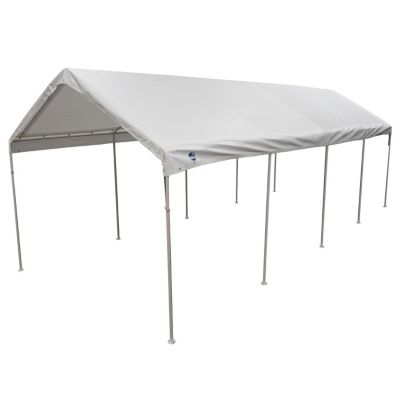
Heavy Duty Pop Up Canopies are another category to consider, with attention to frame construction, connection points, and packed weight. Heavier construction is not a substitute for proper anchoring or a guarantee against wind damage. Pop-up canopies are temporary shelters, not a place to ride out severe weather. Rain should not be allowed to pool on the roof, and a shelter should come down before conditions exceed the manufacturer’s limits.
The everyday details often determine whether a 10x10 canopy fits the job. At a roadside produce stand, room for a table, a chair, and a clear path around the display may matter more than squeezing in extra furniture. Beside a livestock show ring, easy carrying and straightforward setup can be especially helpful when hands are already full of tack and supplies. For a backyard gathering, overhead clearance and leg placement affect whether a picnic table fits comfortably without blocking the entrance. Even frames designed for one-person setup may be easier to manage with a second adult, particularly when raising the legs or positioning the roof. Locking points should engage fully, fingers need to stay clear of folding joints, and the structure should sit on a firm, level surface rather than being forced to span a rut or slope. Open flames, grills, and heaters belong outside the clearances specified by the canopy manufacturer; a fabric shelter is not an enclosed cooking space. Carry bags, replacement tops, sidewalls, stakes, and weights can support different setups, but included accessories vary, and replacement parts need to match the frame rather than just the nominal 10x10 size. After a dusty fairground visit or a day beside a gravel lane, loose dirt can be brushed from the fabric and wiped from the frame. Cleaning methods should follow the fabric instructions, with gentle soap and water where permitted instead of harsh cleaners that may affect coatings. The roof needs to dry completely before packing to help prevent mildew, odors, and stains. Folding joints, leg locks, fasteners, and roof corners benefit from regular inspection, especially after frequent travel. Keeping the packed shelter in a dry storage spot and avoiding heavy objects stacked on it helps protect both fabric and frame. For someone who spends weekends at livestock events, community markets, or youth sports, a canopy can make a practical gift when its carrying weight, setup method, and packed dimensions suit the recipient. The best fit is a shelter that provides the needed space without turning transport, setup, or storage into a bigger chore.