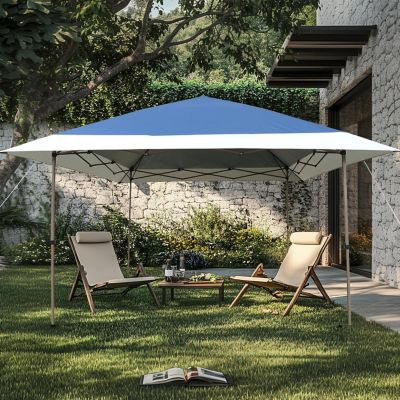
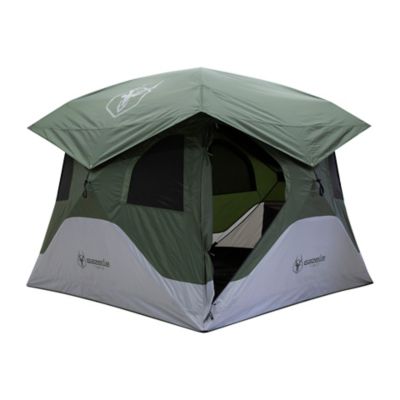
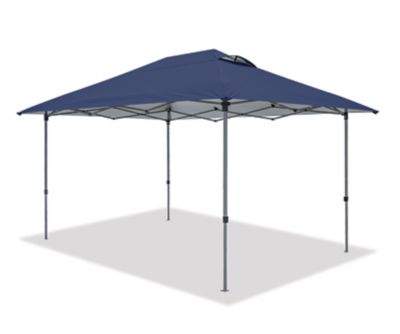
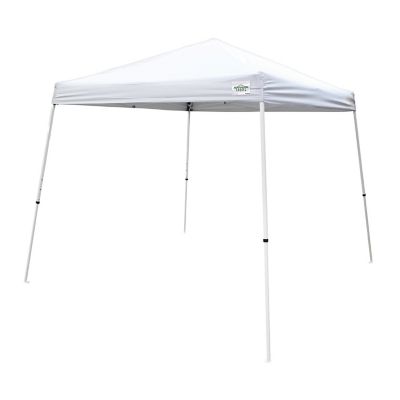
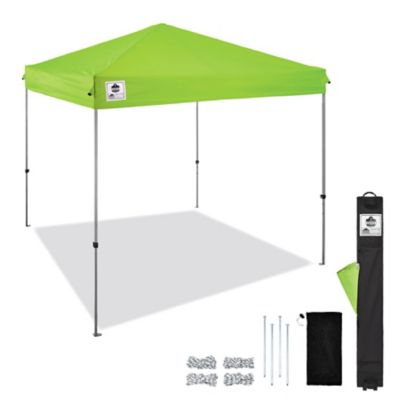
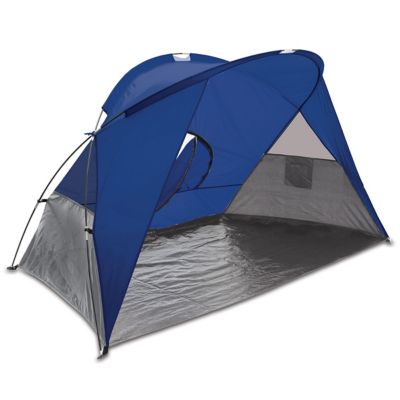
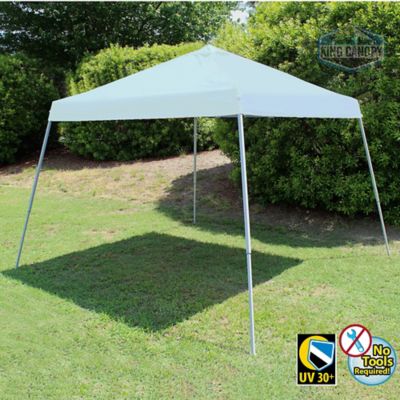
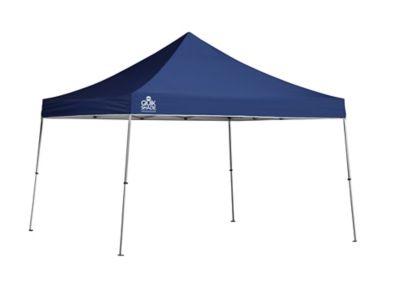
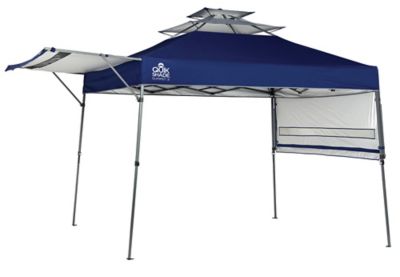
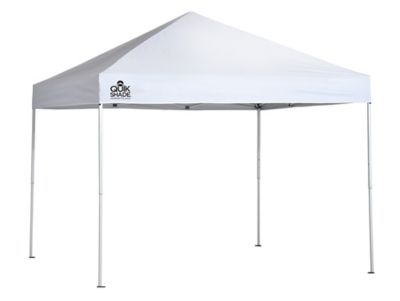
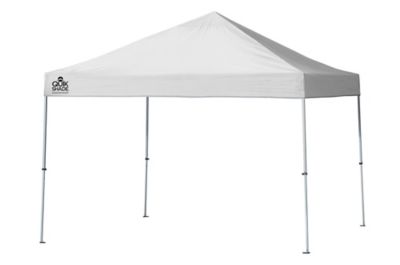
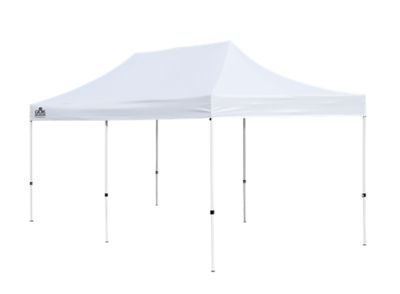
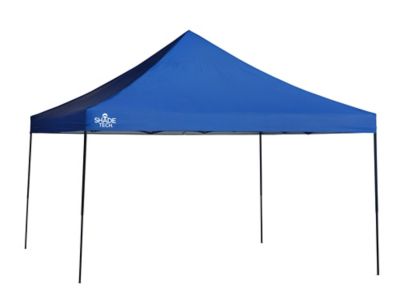
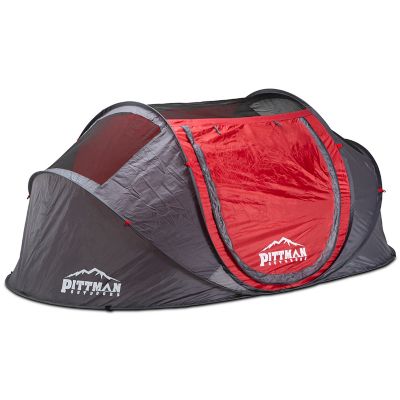
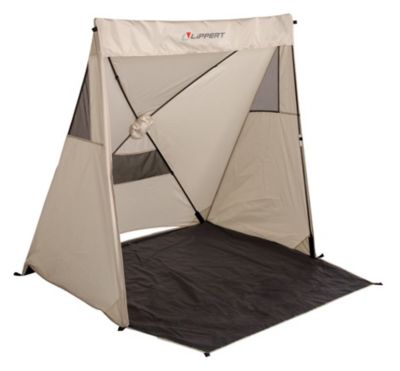
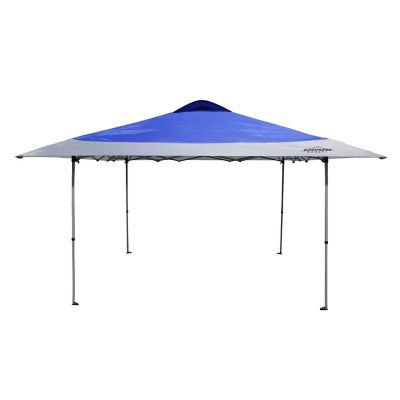
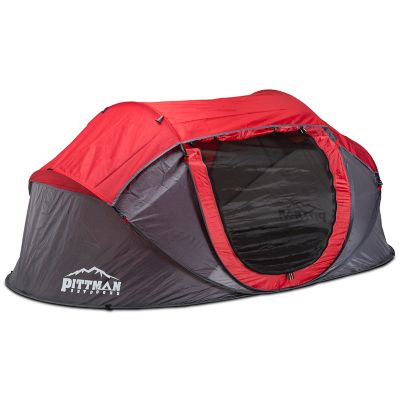
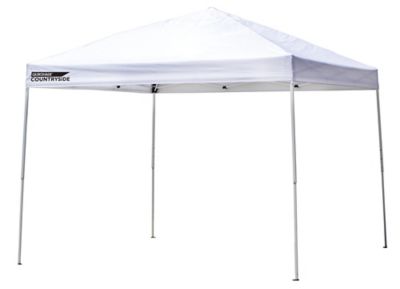
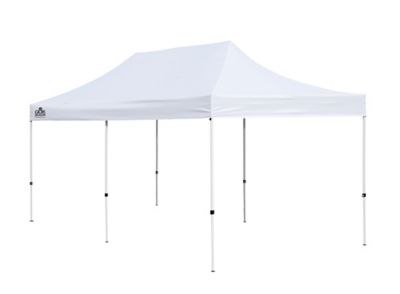
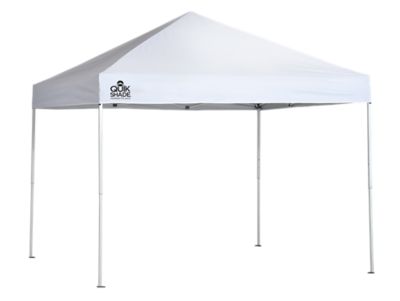
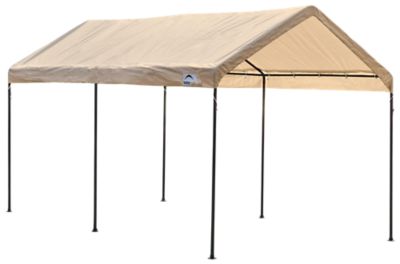
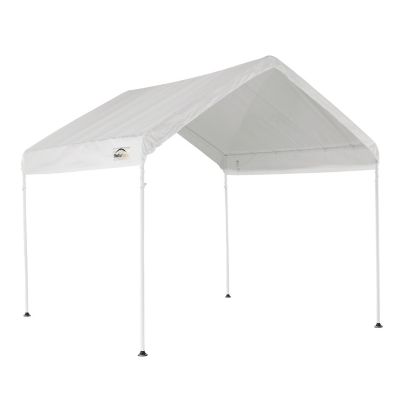
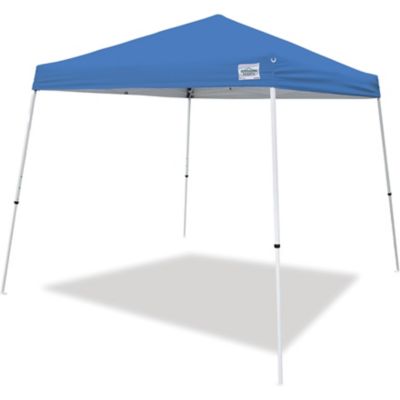
Pop-up tents for tailgating give the crew a place to gather between the truck and the gate. The canopy marks the spot for folding chairs, a table of sandwich trays and a cooler that gets opened every few minutes. A freestanding pop-up canopy makes sense when that gathering spot needs to sit apart from the vehicle. Straight legs generally give you more room beneath the roof than slanted legs for the same ground footprint. A straight-leg canopy with a 10-by-10-foot roof covers about 100 square feet overhead, though the actual patch of shade moves as the sun shifts. With a slant-leg frame, that same measurement may describe the distance between the feet rather than the size of the roof. Both measurements matter in a parking lot: One tells you what fits beneath the canopy, and the other tells you what fits between the painted lines. A table down one side and chairs along the other can leave the middle clear for folks carrying plates or reaching for a drink. If the back of an SUV is the main serving or gear station, a vehicle-attached tailgate tent can extend that space right from the open cargo area. Fit depends on the shape of the rear opening, how high the hatch lifts and how much room it needs to swing. Some designs have a sleeve that wraps around the rear of the vehicle; others work more like an awning. A mesh enclosure can help keep bugs away from the food while letting air through, while an open-sided canopy makes it easier for friends to come and go. In either setup, leave enough room for the hatch, the tent feet and the people walking around them without spilling into the travel lane or the next parking spot.
Frame and fabric choices make a difference in how a tailgating canopy handles regular setup, takedown and hauling. Steel frames generally weigh more, something worth thinking about when the walk from the truck to the tailgate spot is a long one. Aluminum often trims some of that carrying weight. With either material, sturdy joints, reinforced corners and leg locks that click firmly into place are worth a look, especially when the tent gets folded up and loaded again after nearly every game. The
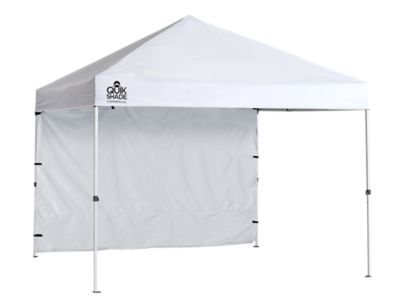
Heavy Duty Pop Up Tents page is a place to compare frames for that kind of repeat setup. A center-hub design can simplify opening the frame, while leg releases that keep fingers away from sliding parts can make height adjustments easier. It also helps to check whether the canopy calls for one person or two to set it up. That detail matters when somebody usually gets to the lot ahead of the rest of the crew. Overhead, polyester canopy tops are common, but the fabric name alone won’t tell you how much sun or rain protection to expect. Look for a stated UPF rating if sun protection matters, and check the coating and seam construction if you want cover from a passing shower. A pitched roof can help shed water rather than letting it collect overhead, but a water-resistant top isn’t the same as a waterproof shelter. Detachable side panels can block low-angle sun on one side without closing off the whole space. They also give the wind more fabric to push against, so check the canopy instructions before adding them. Keep grills and other cooking equipment out from under the canopy and follow the equipment maker’s clearance instructions, even when the serving table is just a few steps away.
A pop-up tent needs a way to stay put from the time it goes up to the time it comes down. On paved lots where stakes won’t work, canopy weights designed for the frame can secure each leg without breaking ground. Check the venue’s rules as well as the canopy maker’s directions for weight, placement and attachment. A cooler set beside a leg isn’t a substitute for a weight fastened as directed. On grass, stakes and lines may be an option where the venue permits them, but they still need to stay out of footpaths. Anchoring doesn’t make a canopy safe in strong winds, so follow the maker’s limits and take it down before conditions turn unsafe. The packed size deserves a look, too. A long frame bag may slide neatly into a pickup bed but take up much of the space behind the seats in a crossover. A wheeled bag can help on a stretch of pavement, while grab handles come in handy when the tent has to be lifted over a curb or into the bed. Once the tailgate wraps up, brush grit away from the leg locks and wipe spills off the canopy top according to the care directions. If the fabric has to go into the bag damp, open it back up at home and let it dry fully before storing it to help prevent mildew. Check the seams, feet and moving parts before the next outing so a sticking leg doesn’t hold up setup in a busy lot. A pop-up canopy can also make a practical gift for the friend who always brings the folding table or the family that makes a day of every away game. Matching the tent to the vehicle they drive, the space they have to store it and the number of folks who usually pull up a chair makes it more likely to earn a regular spot in the game-day load.