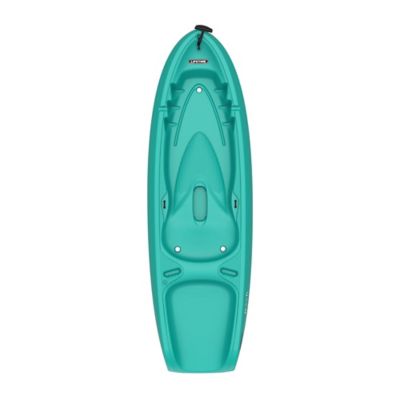
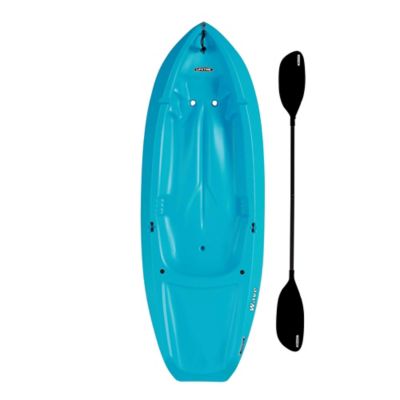
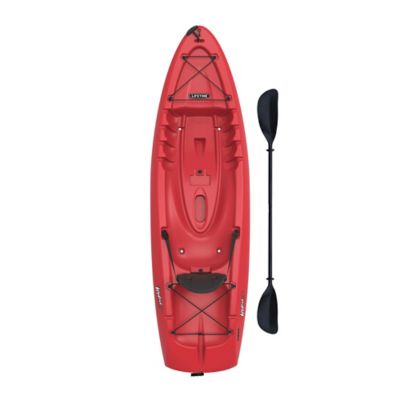
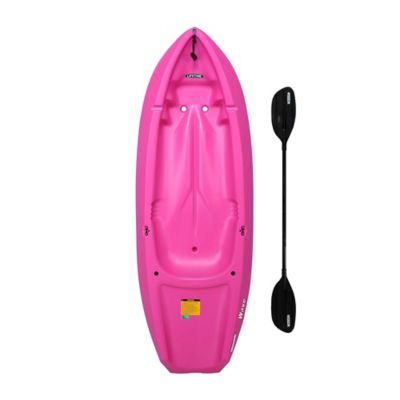
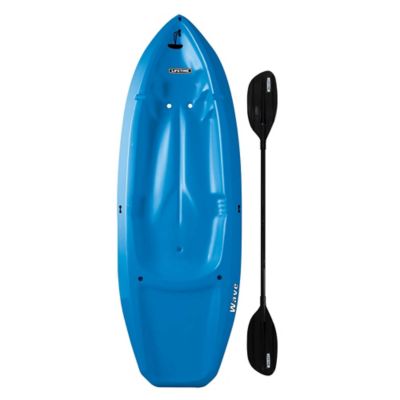
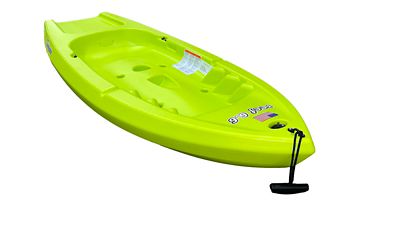
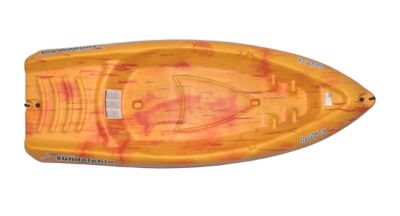
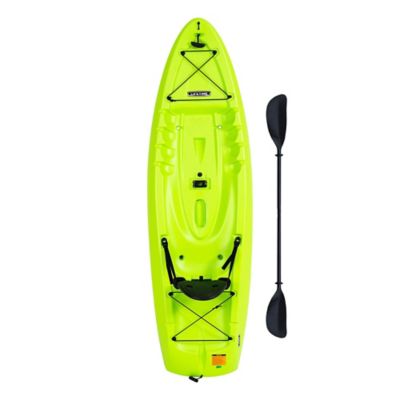
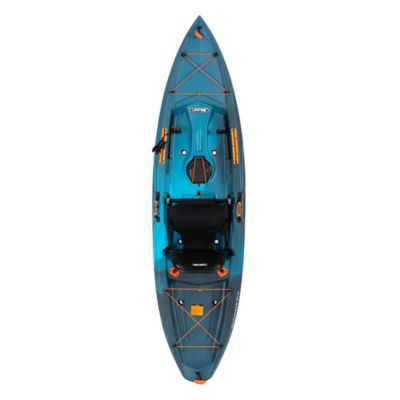
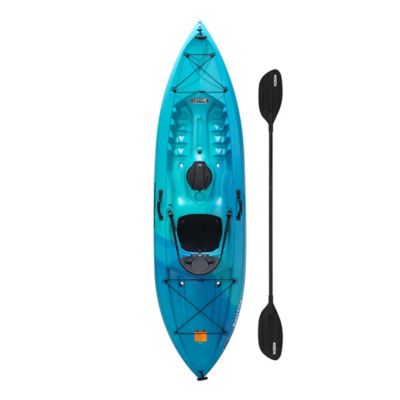
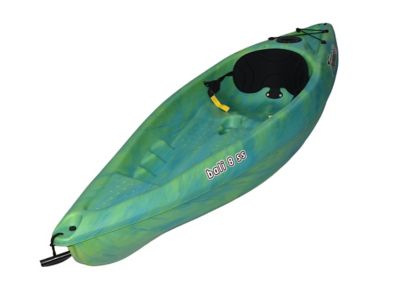
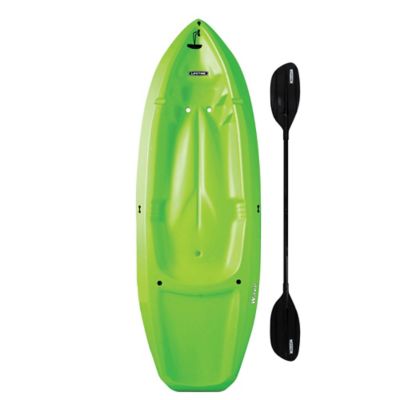
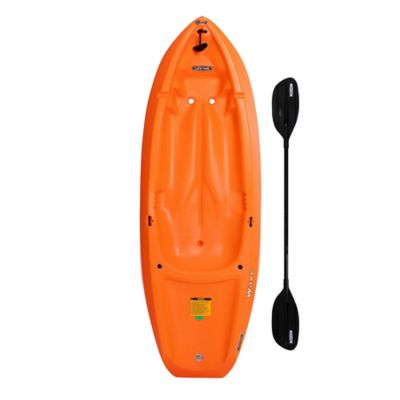
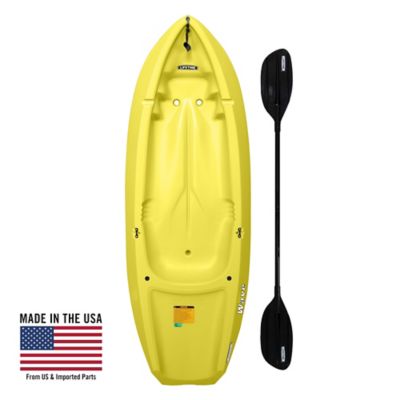
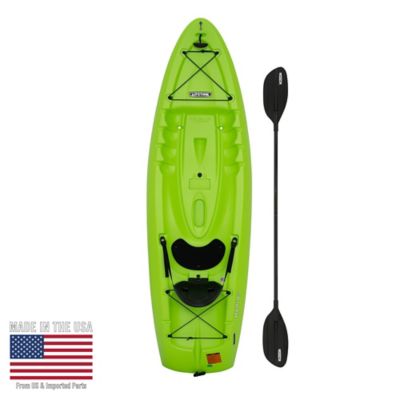
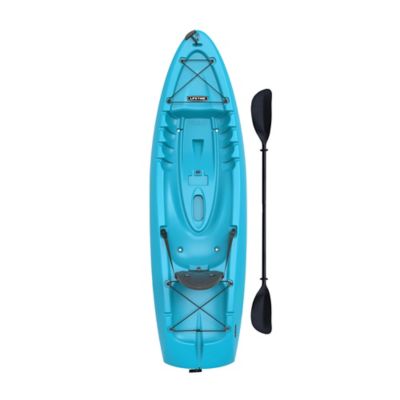
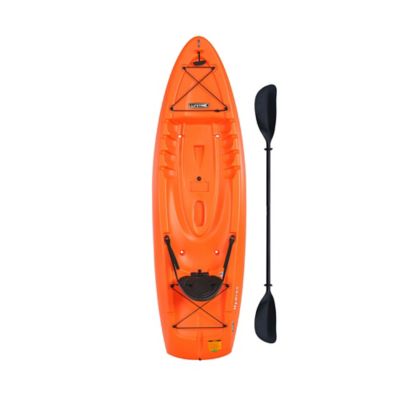
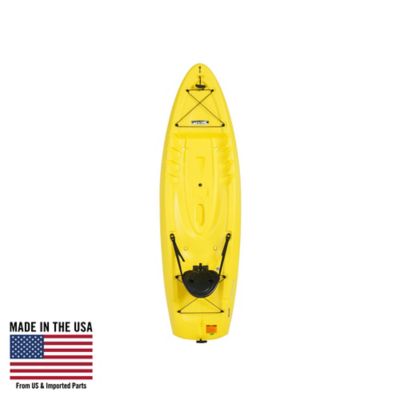
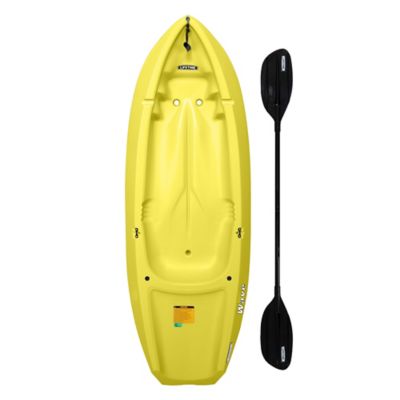
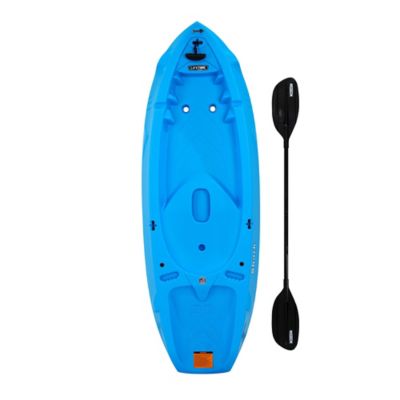
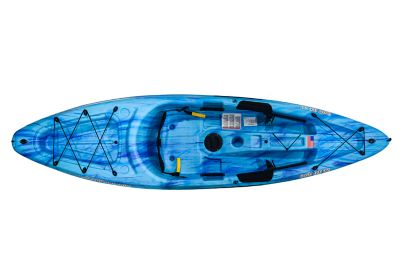
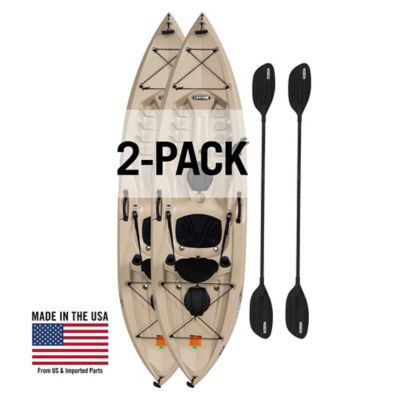
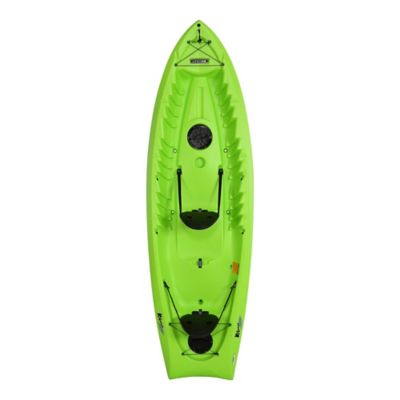
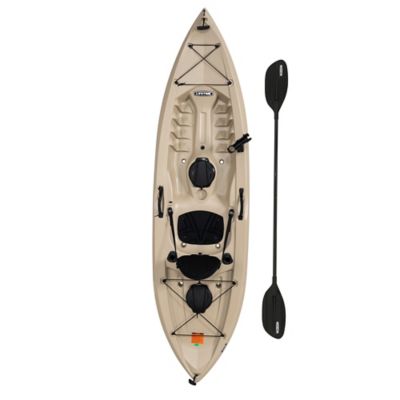
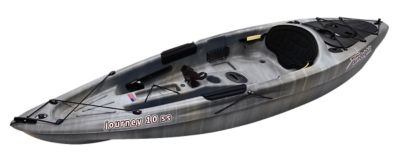
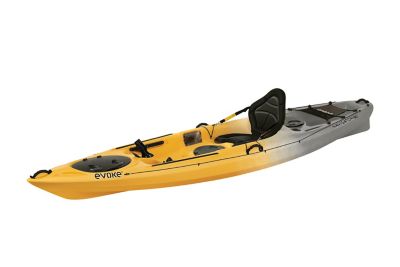
Youth sit-on-top kayaks are a handy way for young paddlers to get comfortable on the water while spending time outside with family. Unlike enclosed kayaks, sit-on-top designs leave the cockpit open, making it easier for a child to climb aboard, shift position, and get back on after a planned swim or an accidental splash. Their broad, steady hulls are made for balance, and many youth models include features such as a swim-up stern, molded footrests, a textured seating area, and scupper holes that let splashed water drain away instead of collecting around the seat. A lightweight build also makes a difference at the shoreline. A child may be able to help carry a small kayak from the truck to the water, while an adult can easily manage loading, unloading, and portaging when the path gets muddy or uneven. When shopping for youth sit-on-top kayaks, start with the manufacturer's recommended age, weight capacity, and skill level rather than choosing by appearance alone. A kayak should provide room for comfortable foot placement without leaving a young paddler stretched too far across the deck, and the weight limit should account for clothing, shoes, and any small gear carried along. Shorter hulls are usually easier for beginners to handle and turn, while a little extra length may help with straight-line tracking as skills improve. Stability is especially important for a first kayak, so look for a wide stance and a hull shape designed to resist tipping. These kayaks can be a thoughtful gift for a child who enjoys fishing from the bank, swimming at the lake, camping with family, or tagging along on weekend outings. They also make a fun shared activity for grandparents, parents, and older siblings who want to help a young paddler learn the basics at an easy pace.
Safety gear belongs in the plan before the kayak ever reaches the water. Every child should wear a properly fitted, U.S. Coast Guard-approved life jacket made for their size and weight, with all straps secured according to the manufacturer's directions. A life jacket should fit snugly without riding up over the face or chin, and children should wear it even when they are confident swimmers. Start on calm, shallow water with a clear shoreline, such as a small pond, quiet lake, or slow-moving section of a river, and avoid strong wind, boat traffic, swift current, cold water, and changing weather until a young paddler has more experience. Close adult supervision is essential; an adult should stay within reach or close enough to respond immediately rather than watching from far down the shore. Before launching, practice how to sit centered, hold the paddle, keep hands and feet inside the kayak when needed, and re-enter from the water. The open deck and sloped stern found on many youth sit-on-top kayaks can make re-entry easier, but children still need to learn the motion while an adult steadies the boat. It is also wise to check the drain holes for leaves or mud, make sure handles and footrests are secure, and inspect the hull for damage after each trip. A paddle sized for the child's height can reduce fatigue and make steering less frustrating. For longer outings, pack drinking water, sun protection, a whistle, and a dry change of clothes in a secured waterproof bag. During the cooler months, remember that air temperature can be misleading near the water; layers, water-appropriate clothing, and shorter trips may help keep the day comfortable. A quick weather check and a simple float plan shared with another adult can make family outings smoother.
The best youth sit-on-top kayak is one that matches the child's size, confidence, and the kind of water your family actually visits. A young paddler who spends afternoons on a small farm pond may need a different setup than one joining adults on a broad recreational lake, and a child who is still learning balance may benefit from the most stable design available within the recommended size range. Consider how the kayak will be transported and stored, too. Measure the vehicle, trailer, shed, or garage space before buying, and look for built-in carry handles that make it easier to move over a gravel drive or down a short path to the dock. Rinse the kayak with fresh water after use, especially after saltwater trips, and let it dry before storing it out of direct sunlight. Keep paddles, seats, and other removable parts together so the next outing does not begin with a search through the barn or gear closet. Youth sit-on-top kayaks are often used for casual paddling, shoreline exploring, nature watching, and supervised swimming breaks, but they are not a substitute for a child-sized personal flotation device, sound judgment, or adult instruction. As the weather warms, they can turn a quiet afternoon into a memorable first paddle; during the cooler months, they can still be useful on mild days when conditions are calm and the family is prepared for changing temperatures. If more than one person needs to paddle together, browse
Two Person Kayaks for another way to share time on the water. With the right fit, suitable conditions, and patient supervision, a youth kayak can help a child build confidence one steady stroke at a time—from the first wobbly launch at the shoreline to the proud paddle back toward the dock.