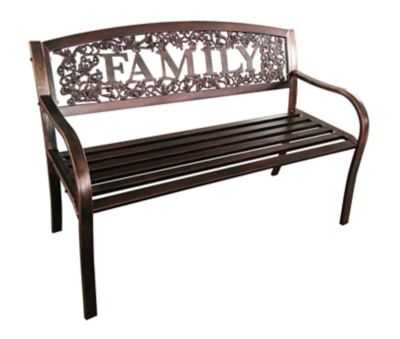
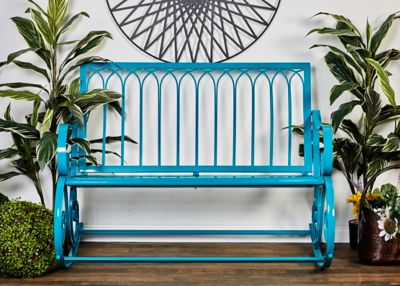
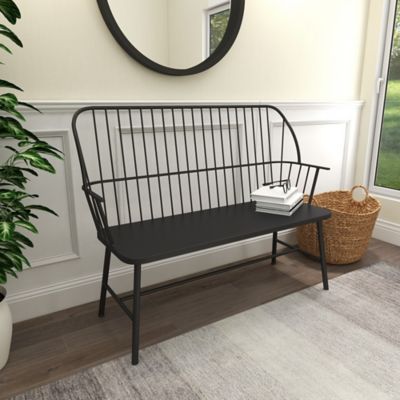
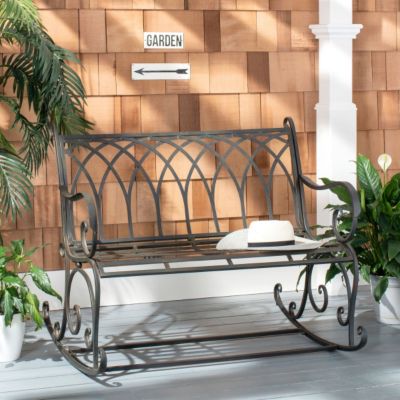
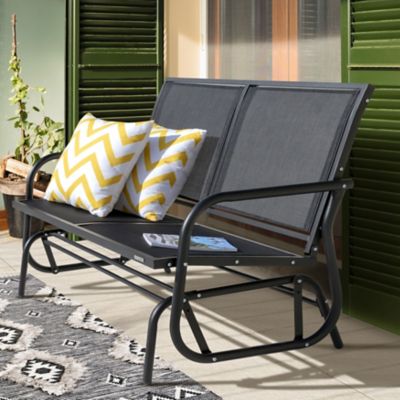
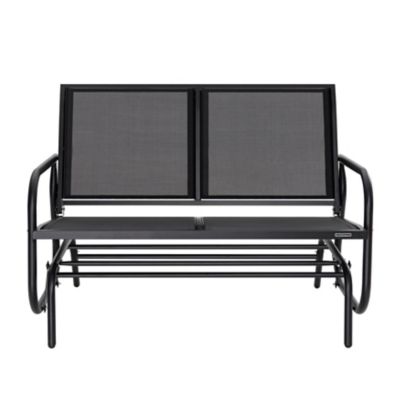
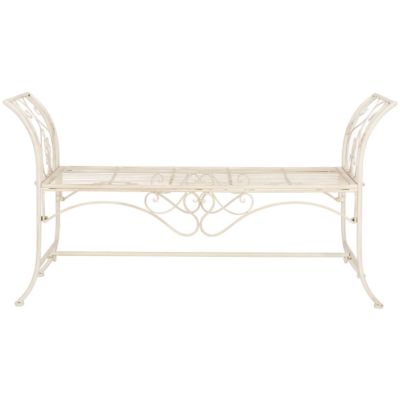
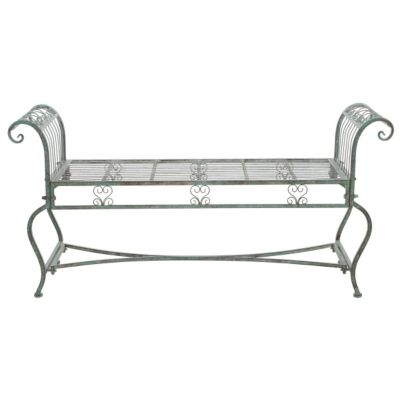
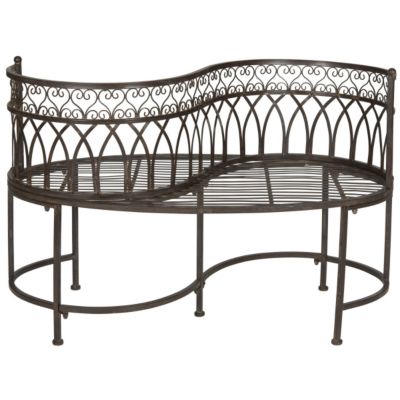
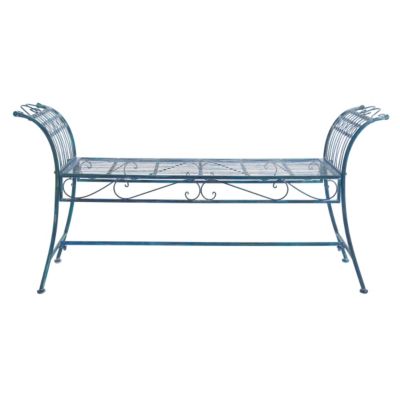
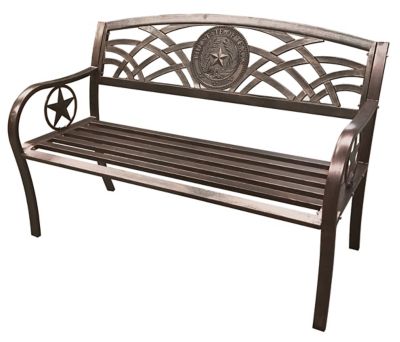
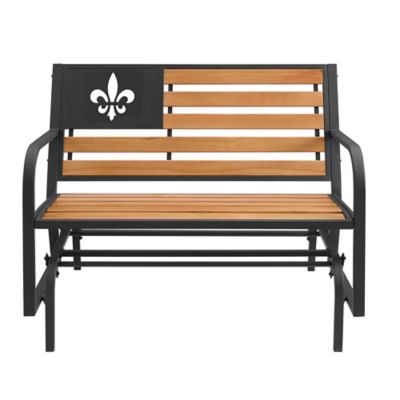
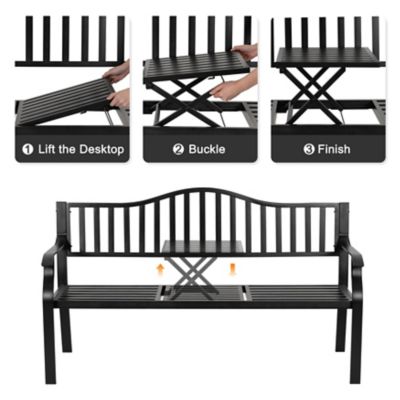
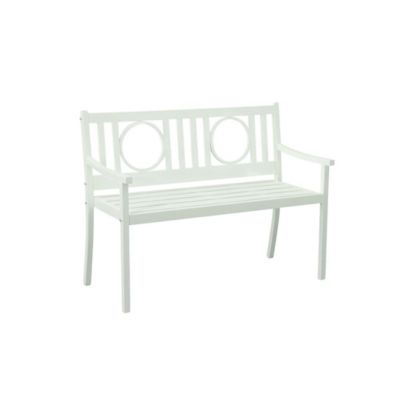
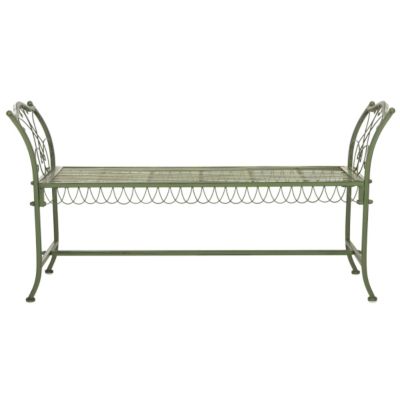
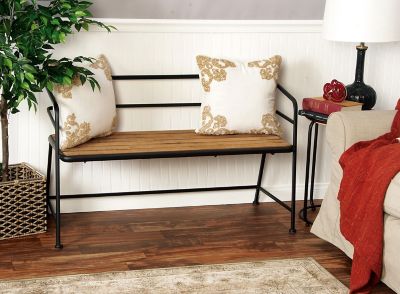
Wrought iron patio benches bring a familiar, sturdy presence to a porch, courtyard, or quiet spot beside the garden. The appeal goes beyond having somewhere to sit. A bench gives an outdoor space a clear gathering place, whether that means a seat near the back door for pulling off work boots or a place along a walking path where two people can settle in for a visit. Curved arms, open backs, scrollwork, and straight rails each create a different look, from a simple farmhouse feel to a more detailed garden setting. An open frame can leave surrounding flowers and stonework visible, while a closely spaced back creates a more substantial outline against a fence or wall. Material descriptions matter when comparing benches: wrought iron, cast iron, and steel are different materials, even when their shapes and finishes look similar. The listed construction gives a better picture of what a bench is made from than appearance alone. Iron seating generally has more heft than lightweight outdoor furniture, which can help it feel settled in its space but also makes placement worth thinking through before carrying it across the yard. A bench beside a busy doorway needs room for people carrying feed buckets, grocery bags, or muddy boots, while one tucked along a garden path should leave enough clearance for a wheelbarrow. Overall width is only part of the fit. Arms may extend beyond the sitting area, and a curved back can take up more room than expected against a wall. Checking the full footprint helps keep narrow porches and small patios comfortable to move through. For a larger yard, a bench can make an otherwise overlooked corner feel purposeful without filling it with furniture. Near a flower bed, alongside a gravel walk, or facing an open stretch of lawn, wrought iron patio benches offer a place to pause that still feels connected to the work and life happening around the property.
Comfort comes down to how the seat, back, and arms work together, not just how a bench looks from the driveway. A deeper seat may suit someone who likes to lean back, while a shallower seat can make it easier to sit upright with feet on the ground. Seat height matters for getting up comfortably, especially for family members who prefer a higher perch. Arms can provide a resting place for elbows, though their shape and spacing also affect how much room remains for sitting. The manufacturer’s stated weight capacity should match the people likely to share the bench; width alone does not establish how much weight it can support. Openwork seats may benefit from a cushion for longer visits, and cushion dimensions should match the usable seating area rather than the bench’s outside measurements. Ties or other appropriate fasteners help keep a cushion in place, while removable covers can simplify routine cleaning. If a bench will sit near an outdoor table, check the relationship between the seat and tabletop, along with clearance for knees and armrests. A garden bench intended for relaxing may not have the same proportions as dining seating. Beneath the bench, a level, firm surface helps all legs carry weight evenly. Concrete, pavers, and other solid surfaces can provide a steady base, while loose gravel or bare ground may need a suitable prepared area to keep feet from settling unevenly. Moving a heavy bench is usually easier with another adult, lifting rather than dragging to help protect both the feet and the surface below. In a yard bordered by
Wrought Iron Fences, repeating a simple curve or straight-line pattern can help the seating feel at home without matching every detail. Similar finishes can tie the space together, while a plainer bench can balance a more elaborate boundary. The goal is a comfortable place that fits the property’s layout, not a seat that gets in the way of everyday chores.
The lasting appeal of wrought iron patio benches depends partly on their construction and partly on the attention they receive. Metal thickness, joints, fasteners, and the protective finish all deserve a look when comparing designs. A painted or powder-coated surface helps separate the metal from moisture, but scratches, chips, and worn spots can leave areas exposed. Following the manufacturer’s care directions is the best starting point, especially when choosing cleaners or touch-up materials. Routine cleaning often involves removing loose dirt, wiping with a mild soap solution when permitted, and drying the frame afterward. Harsh abrasives can damage a finish, and water left in joints or beneath cushions can make care more difficult. Checking the lower frame and feet is worthwhile because those areas are easy to overlook during a quick wipe-down. Leaves and garden debris should not remain packed against the legs, and any signs of rust call for attention using a method suited to the bench’s material and coating. For designs that require assembly, properly fitted hardware helps the bench stay steady; periodic checks can catch a loose connection before it becomes a bigger problem. Assembly directions may also explain how to level the feet or where a protective pad is appropriate. A cover can help keep a bench clean between gatherings, provided it fits properly and follows the maker’s recommendations. Practical details make a difference for the people who spend time there. Grandparents may appreciate a seat close to the house, gardeners may prefer a resting spot beside their beds, and neighbors stopping by may find a bench more inviting than standing on the steps. As a housewarming or anniversary gift, an iron bench can become part of a couple’s daily routine, but its size, weight, and placement should suit the recipient’s space. A simple frame leaves room for the garden to take center stage; a patterned back can give a plain patio a stronger focal point. With thoughtful placement and regular care, this kind of seating can feel like a natural part of the property rather than an afterthought.