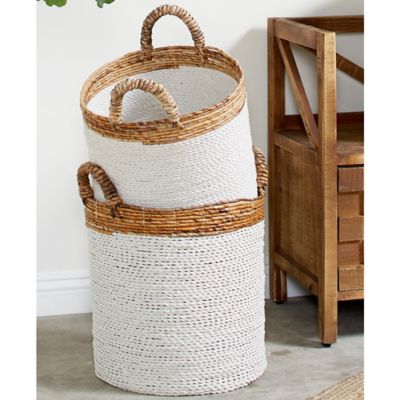
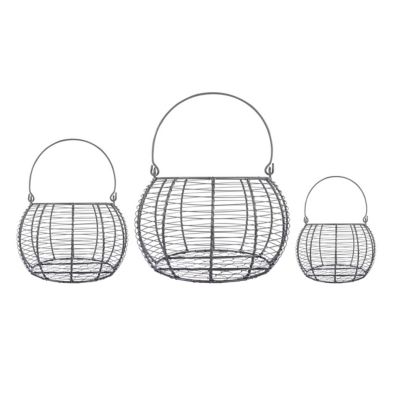
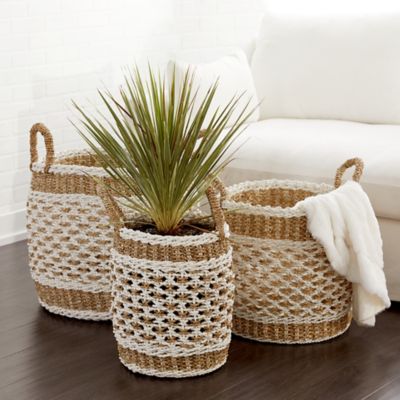
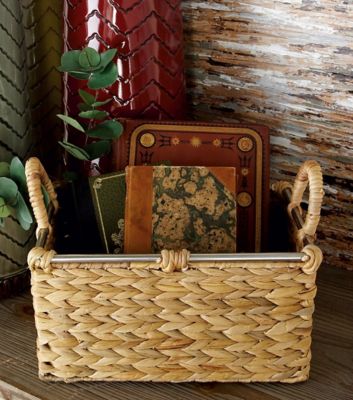
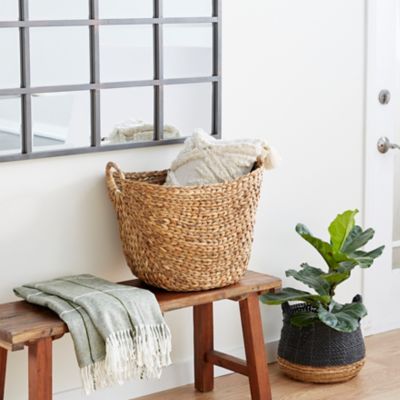
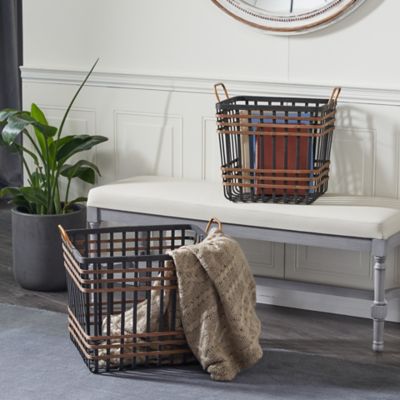
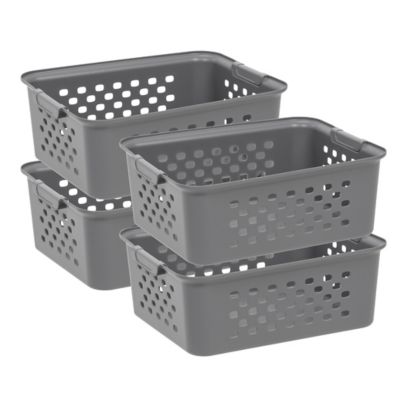
Woven storage baskets bring everyday organization and natural texture to living rooms, bedrooms, entryways, and other spaces where loose belongings tend to gather. Their interlaced construction creates a practical container with a softer look than a solid-sided bin, making them a good fit for open shelves, tucked-away corners, and the space beside a favorite chair. Common materials include rattan, seagrass, water hyacinth, jute, cotton rope, and synthetic fibers, each with a different feel and level of structure. Wicker describes a weaving technique rather than one particular material, so the fiber and underlying construction matter more than that label alone. Rattan often gives a basket a firm shape, while seagrass and water hyacinth bring visible strands and earthy color variations. Jute has a coarse, relaxed texture; cotton rope generally feels softer against clothing and linens. Synthetic weaves can offer a similar appearance with different cleaning requirements, depending on the material. Some baskets have a rigid frame that helps the sides hold their shape, while others flex when filled or fold down when empty. A close weave helps contain smaller belongings, and a more open pattern lets the contents show through. For yarn, scarves, or other fabrics that snag easily, a smooth interior or fabric liner can make a real difference. Natural fibers may vary slightly in shade, thickness, and shape, giving a row of baskets a less uniform appearance than molded containers. Those variations work well alongside wood furniture, painted shelves, and the everyday mix of furnishings in a busy home. The right choice comes down to what the basket needs to hold, where it will sit, and how often someone will pick it up. A basket for folded blankets has a different job from one that catches mail near the door, even when both share the same woven finish.
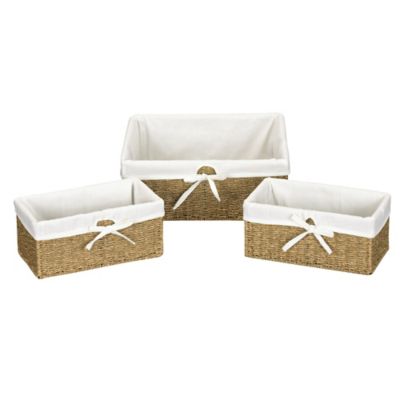
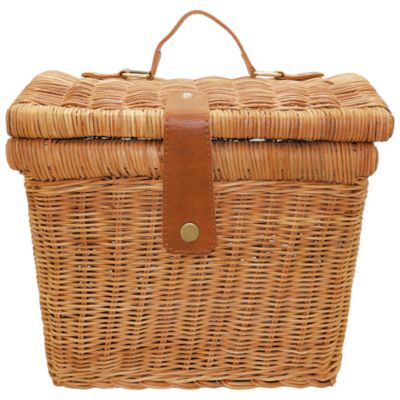
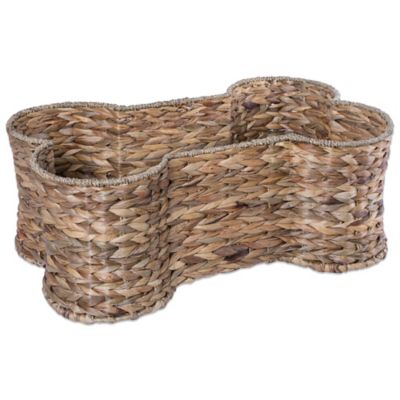
Size and shape determine how comfortably woven baskets fit into a room’s routine. Rectangular baskets make good use of shelf space and line up neatly in cabinets or cubbies, while round baskets suit rolled towels, throws, and loose belongings beside a sofa. Low, wide shapes make contents easy to see without digging, and taller shapes provide more vertical storage in a small footprint. Interior measurements show how much a basket can hold; exterior measurements show whether it will fit the space. Handles, lids, tapered sides, and a wider top rim can all affect that fit. A basket that fits a shelf opening still needs enough clearance to slide out without scraping the furniture or catching its weave. On deep shelves, a front handle makes it easier to reach the contents without pulling everything else forward. Open tops are handy for belongings that come and go throughout the day, while lids keep visual clutter out of sight and help limit settling dust. In an entryway, separate baskets can give each family member a place for clean work gloves, caps, and small grab-and-go essentials. In a bedroom, they can gather belts, accessories, or folded clothing without turning a shelf into a jumble. A basket near a pet’s resting spot keeps toys together, provided the basket stays out of reach of an animal that likes to chew fibers or handles. For heavier loads, the frame, base, handle attachments, and any stated weight limit deserve a close look. Woven sides alone do not indicate how much weight a basket can carry. Supporting the bottom when moving a full basket puts less strain on its handles. Smooth bases also matter on finished furniture and floors, where rough ends or exposed frame edges could leave marks. A little breathing room around the sides helps a basket slide smoothly and keeps an overfilled shelf from looking crowded. Matching shapes can make shared storage easier to keep straight, while different sizes let larger linens and smaller accessories each have a sensible home.
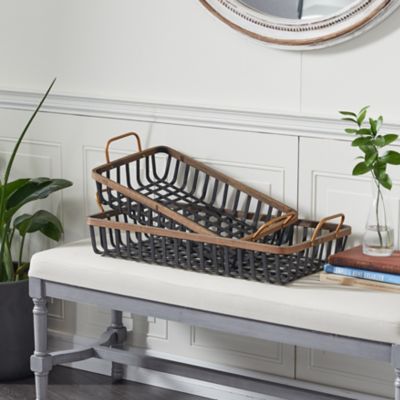
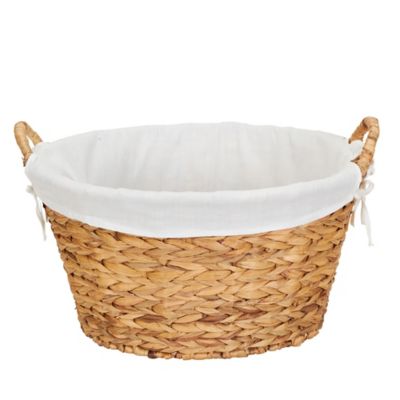
Care needs depend on the fiber, frame, liner, and finish, so the manufacturer’s directions are the best starting point. Many natural-fiber baskets benefit from gentle dusting with a soft brush or a vacuum’s brush attachment, especially where strands overlap and collect lint. Soaking can swell fibers, loosen construction, or affect the shape, and a basket should be fully dry before anything goes back inside. Bathrooms and laundry areas call for extra attention to moisture: dry towels and clean linens are a better match for moisture-sensitive fibers than damp washcloths or wet clothing. A removable liner can help keep small belongings contained and separate fabrics from a textured weave, though its washing directions may differ from those of the basket itself. Cotton rope and synthetic materials also vary in their care requirements; a woven appearance does not automatically mean a basket belongs in a washing machine. For everyday wear, look at the rim, base, and handle connections, since these areas take much of the pulling and lifting. Keeping a basket comfortably filled rather than packed tight helps preserve its shape and makes it easier to find what is inside. Appearance matters, too, especially when storage stays out in the open. Honey-colored fibers can warm up painted furniture, darker finishes can stand out against light shelving, and soft rope textures can sit comfortably near bedding or upholstered seating. A wide basket beside a chair gives
Woven Throw Blankets a handy home without hiding their texture completely. Similar baskets throughout a room can tie separate storage spots together, but every basket need not match for the space to feel settled. As a housewarming gift, a woven basket offers a useful place for household linens or everyday essentials, particularly when its size suits the recipient’s space. From a farmhouse entry bench to a small apartment bookcase, thoughtful proportions and sensible materials help keep belongings within reach and rooms feeling less cluttered.