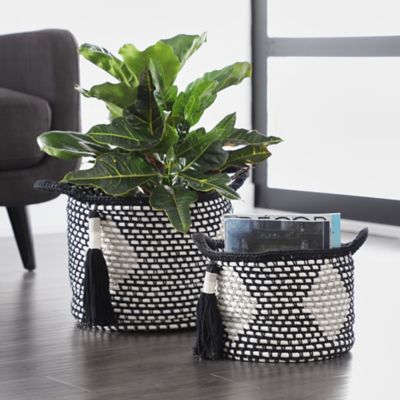
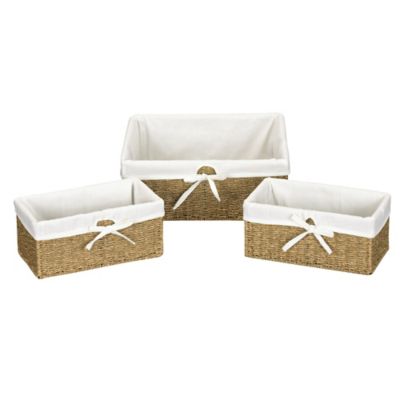
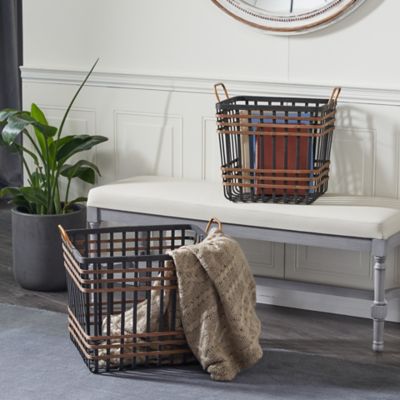
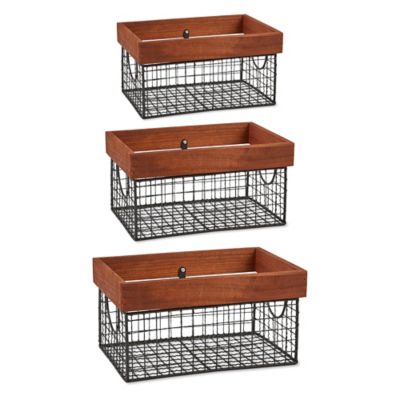
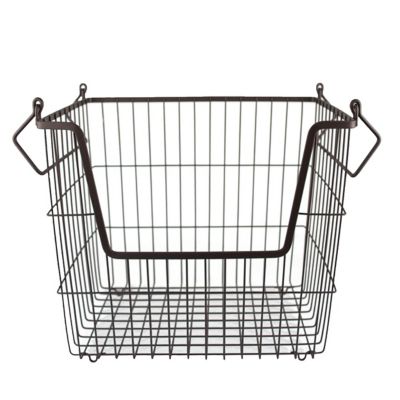
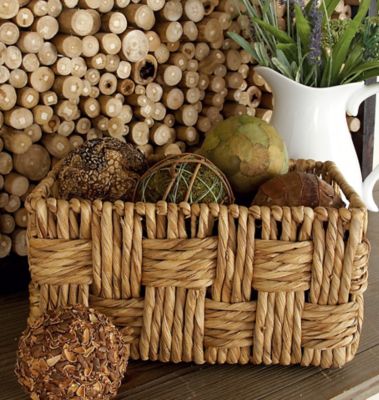
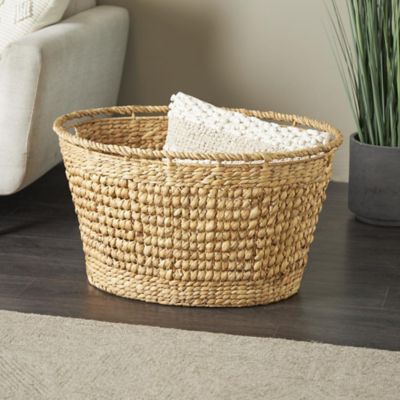
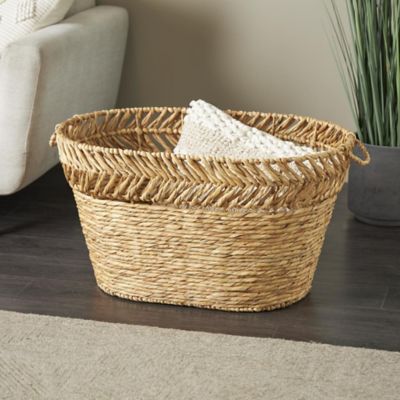
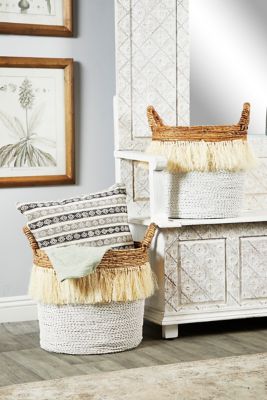
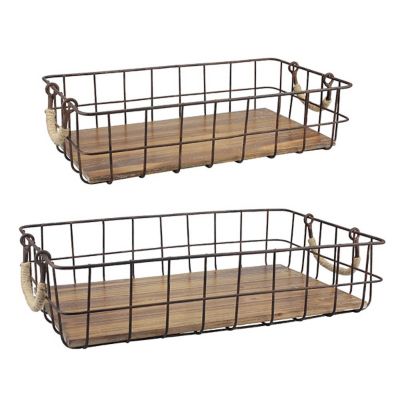
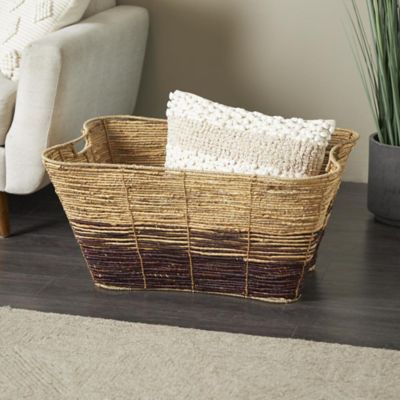
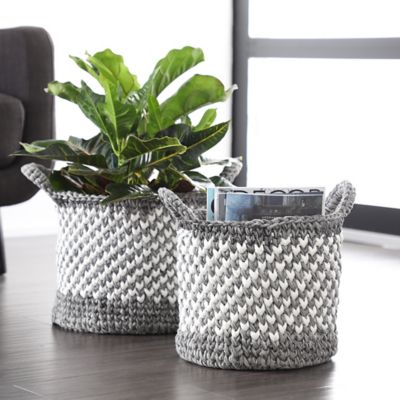
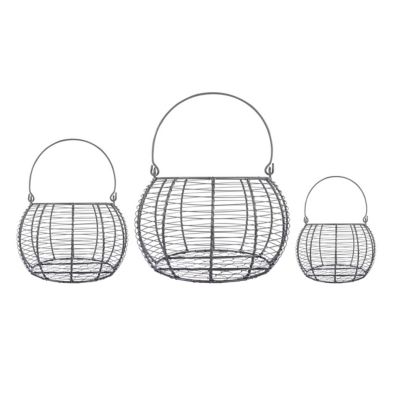
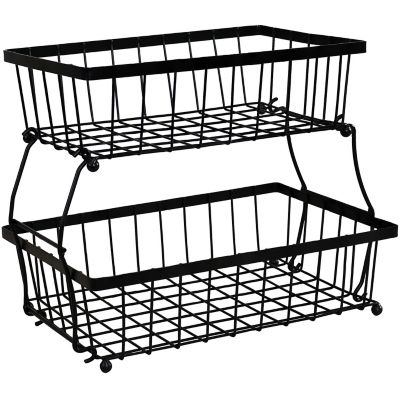
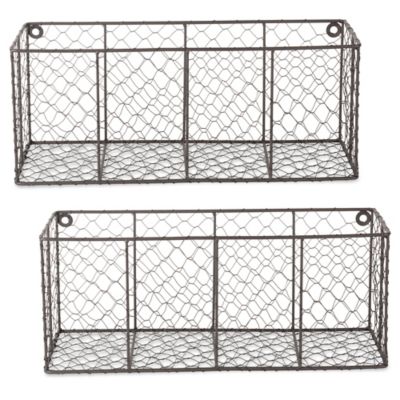
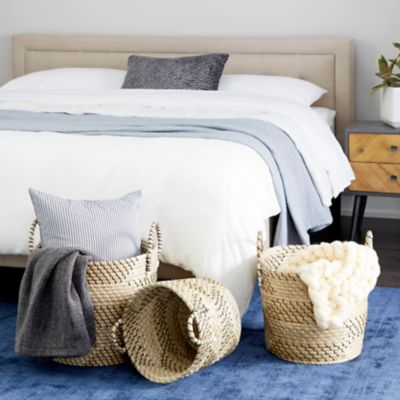
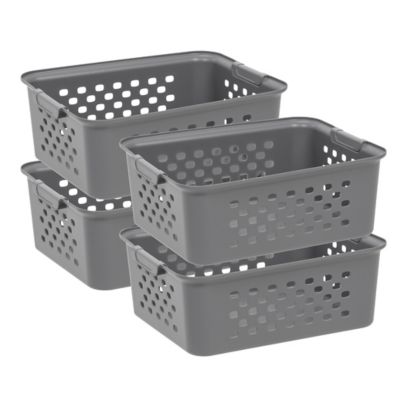
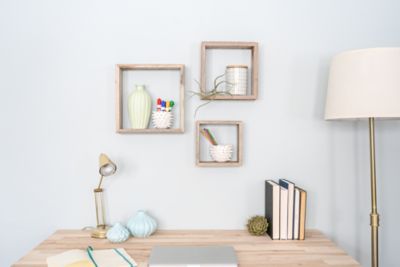
Baskets for shelves bring texture and tucked-away storage to bookcases, open cabinets and cubby units, keeping everyday odds and ends close without leaving everything out in plain sight. They give mail, spare cords, folded linens and small household essentials a place to land, while letting the shelving remain part of the room rather than just a catchall. A woven basket beside a row of books can soften the look of painted shelving, while a fabric bin can give a busy entryway a more pulled-together feel. Materials make a noticeable difference in both appearance and everyday handling. Seagrass and water hyacinth often have a pronounced woven texture, while rattan can provide a firmer structure with a smoother-looking finish. Jute brings a softer, rope-like texture that works well alongside wood, canvas and other simple household materials. Wicker describes a weaving technique rather than one particular material, so the material description matters when comparing construction and care needs. Small variations in tone and weave give natural-fiber baskets character without requiring every piece on a shelf to match exactly. Fabric baskets offer another look, with canvas, cotton blends and other textiles creating a softer surface around clothing or linens. Wire construction keeps contents more visible and can suit a utility shelf where finding things quickly matters more than hiding them. A liner helps separate stored belongings from an open weave, although the liner’s fit and attachment affect how neatly it stays in place. Shape also changes the feel of a shelf: rectangular baskets make good use of straight-sided cubbies, square styles suit divided shelving, and round baskets bring a softer outline where there is room around them. Natural tan, brown, cream and muted colors can sit comfortably beside wood grain or painted finishes. Repeating one shape creates an orderly row, while mixing a few related textures keeps a family room or farmhouse entry from feeling too stiff.
A basket’s fit involves more than whether it slips into an opening. The outside width, depth and height determine how it sits on the shelf, while the inside measurements determine what it can hold. Thick woven sides, tapered bottoms and built-in handles can reduce the usable space, so a basket that looks roomy may not accommodate a stack of folded towels or a collection of larger toys. Shelf measurements are most helpful when they account for face frames, center dividers, hinges and any raised edge at the front. A little clearance above and beside the basket makes daily access easier, especially when someone needs to get a hand around a handle or lift the front slightly. Lidded baskets need enough overhead space for the lid to open, unless they will come completely off the shelf each time. Open-top styles make sense for belongings that come and go often, such as a child’s playroom supplies or the household’s grab-and-go accessories. A lid offers more visual coverage for paperwork, spare cables or keepsakes that do not need to stay in view. Handles matter, too: a cutout grip takes up less space than a projecting handle, while a fabric loop may be easier to tuck into a snug cubby. Handles intended for pulling a basket forward are not necessarily meant for carrying a heavy load. Construction details such as a reinforced base, firm corners and securely attached grips help a basket hold its shape through repeated handling. Weight deserves attention on bookcases and wall-mounted units, where the basket and everything inside it count toward the shelf’s load limit. Heavier belongings belong on lower shelves, within the limits set by the shelving maker. A smooth base or soft underside can also help protect a finished shelf from scuffs, though rough fibers and exposed wire edges still warrant a close look. For frequent access, a manageable load and a comfortable grip usually matter more than filling every inch.
Shelf baskets work hardest when their size and construction suit the routine around them. In a mudroom, separate baskets can keep each person’s gloves, caps and small carry-along belongings together. On a living room bookcase, a low basket can hold remotes and charging cords without crowding the books above it. A bathroom shelf calls for attention to dampness: natural fibers generally fare better away from splashes, and towels should be dry before going inside. Fabric-lined baskets can help keep knitwear or other snag-prone belongings away from rough woven surfaces. In a child’s room, lightweight baskets with soft sides can make it easier to gather small toys, while secure shelving and sensible placement remain important. For wider cubbies and deeper open units,
Large Storage Baskets provide another option for folded throws, extra linens or several soft toys together, provided the shelf can support the filled weight. Bigger is not always handier, though; a smaller basket is often easier to lift, sort through and return to its place. Care needs vary with the material, lining and finish. Many woven natural-fiber baskets benefit from gentle dusting or a vacuum’s soft brush attachment, while soaking can weaken fibers or change their shape. Spot cleaning should follow the care directions, with the basket allowed to dry completely before belongings go back inside. Fabric liners may be removable, but washing depends on the label rather than appearance alone. Wire baskets also need care suited to their coating, particularly anywhere the finish has worn. Baskets can make a thoughtful housewarming gift when their size and colors suit the recipient’s shelves, and a neutral finish leaves room for the household’s own style. Whether holding everyday clutter or setting aside the things worth keeping, a well-chosen shelf basket earns its place through a useful shape, comfortable handling and a look that feels at home.