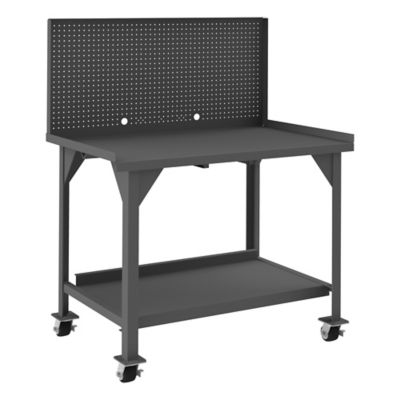
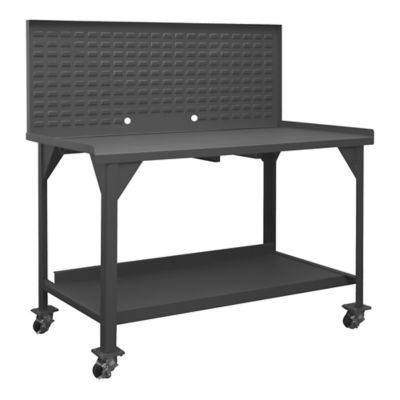
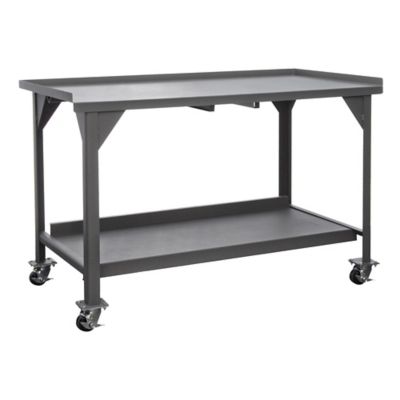
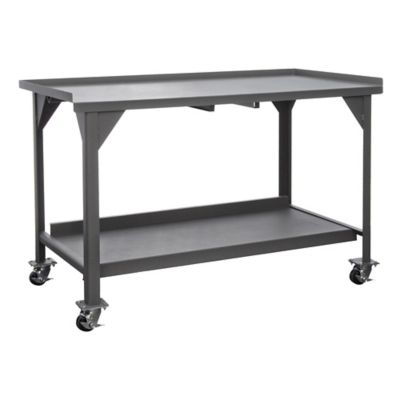
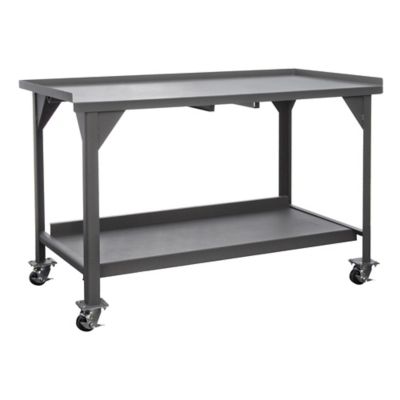
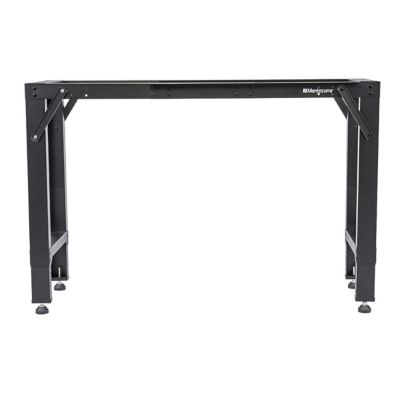
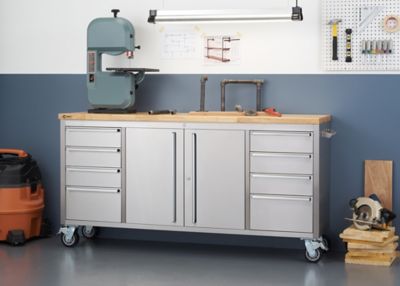
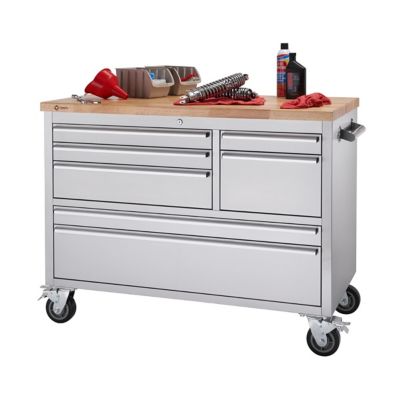
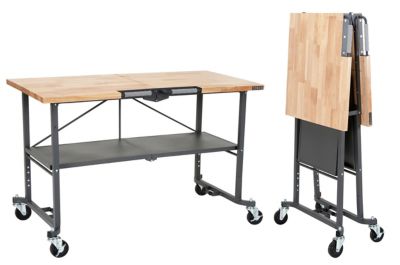
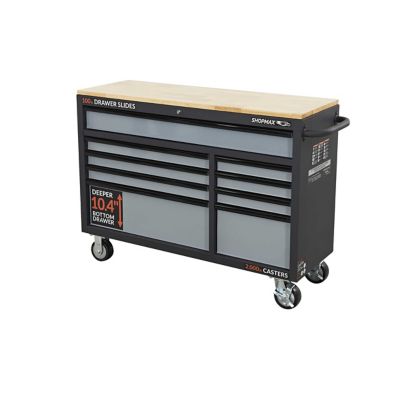
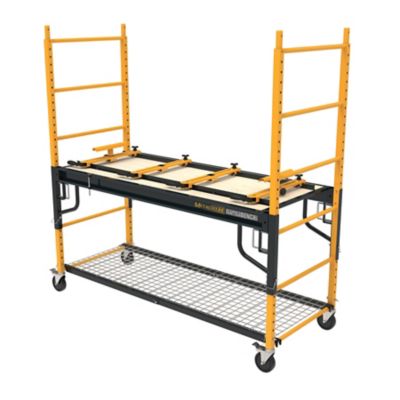
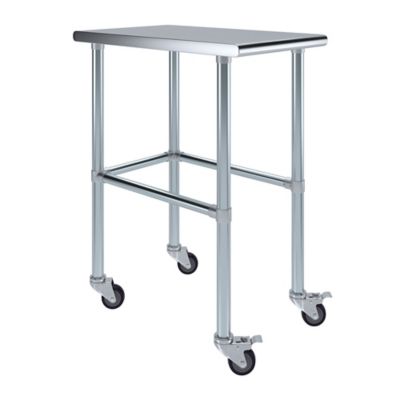
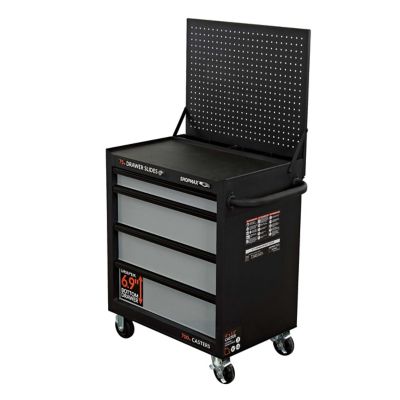
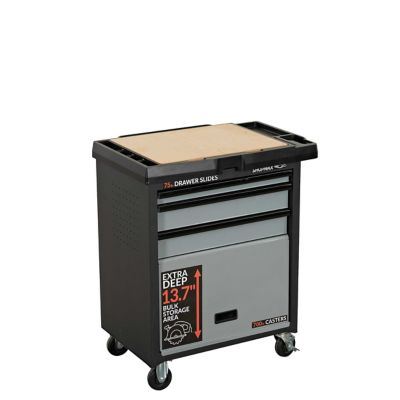
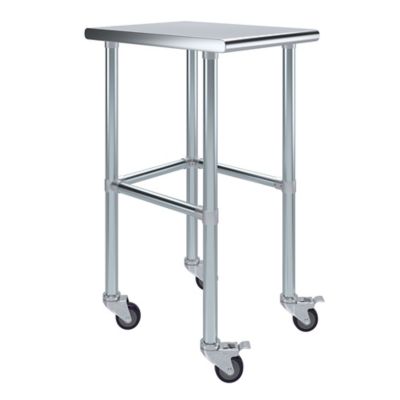
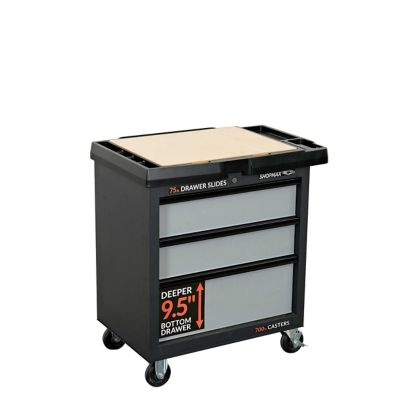
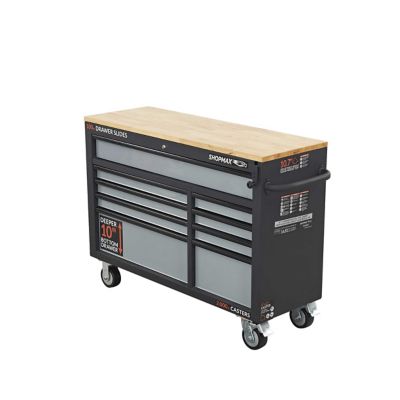
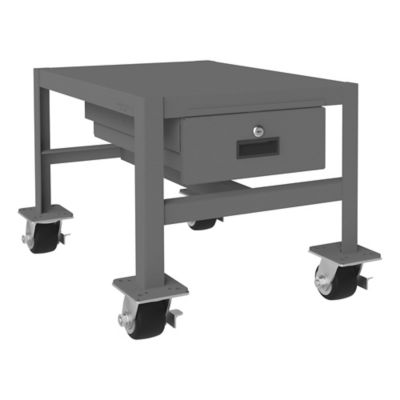
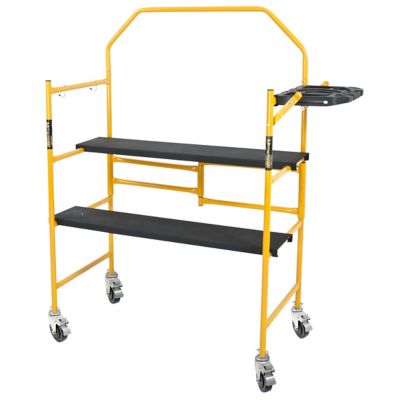
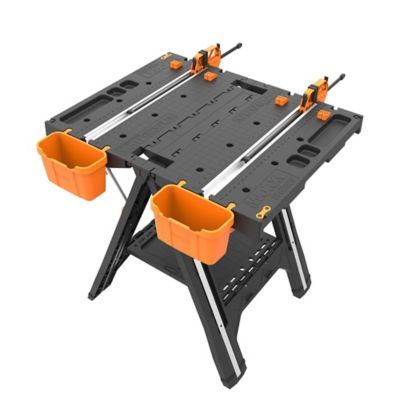
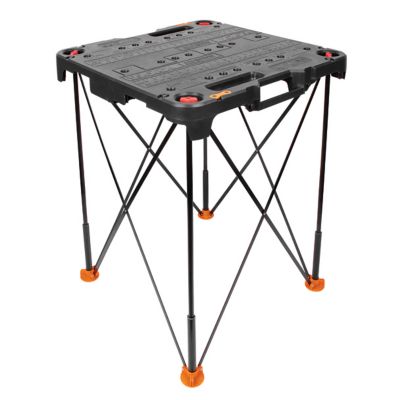
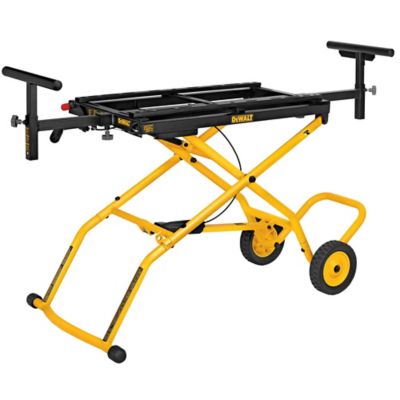
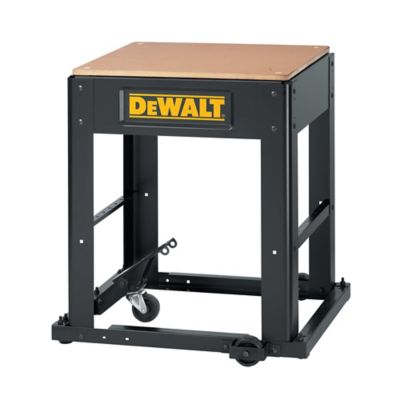
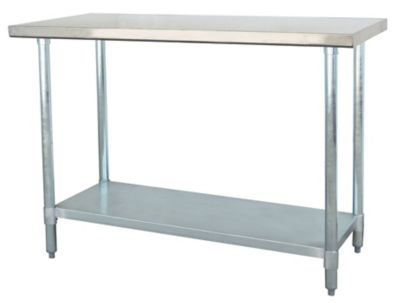
Workbenches with casters put a sturdy work surface where the job needs it, then roll out of the way when the floor has to serve another purpose. In a farm shop, that might mean bringing tools and small parts alongside a mower rather than carrying everything back and forth to a bench against the wall. In a home garage, a rolling workbench can make room for a vehicle after a repair or shift into an open area for assembling shelves. These mobile workbenches combine a tabletop and supporting frame with wheels, and some designs add drawers, lower shelves, cabinets, or height adjustment. The right fit depends on both the work happening on top and the space underneath and around it. A broad surface gives lumber, equipment housings, and larger assemblies room to rest without crowding hand tools. A shallower bench can suit a narrow shop aisle, especially where doors, parked equipment, and storage cabinets limit movement. Overall measurements matter as much as tabletop dimensions because handles, caster brackets, and other hardware may extend beyond the frame. Working height also changes how a bench feels through a long task: small-parts assembly often calls for a different position than sanding a board or applying downward pressure with a hand tool. Adjustable-height designs offer flexibility, though the adjustment method and permitted load during adjustment vary. For folks who split their time between equipment maintenance, woodworking, and household repairs, a movable bench can serve several jobs without taking up several permanent work areas. It also makes a practical gift for someone setting up a garage or putting together a shop, provided its dimensions and working height suit the space. Mobility is the main advantage, but a bench still needs to feel settled once it reaches its spot. Wheel locks, frame construction, tabletop support, and the way weight sits on the bench all help determine whether it fits light assembly, routine repairs, or more demanding shop work.
Materials shape how a workbench handles everyday knocks, spills, and cleanup. Steel frames provide support for the top and storage components, while bracing and secure joints help limit side-to-side movement. Protective finishes help shield metal surfaces, but scratches and exposed areas still deserve attention, particularly in shops where fluids are part of the job. Solid wood and laminated hardwood tops offer a substantial surface for measuring, assembling, and general repair work. Their care requirements depend on the finish, and standing liquids or prolonged contact with oil can leave marks or affect the surface. Steel tops suit many mechanical tasks and can be straightforward to wipe down, though bare metal may need protection against corrosion. Composite tops vary in construction and surface covering, so resistance to moisture, solvents, and concentrated pressure should come from the bench specifications rather than appearance alone. For shoppers weighing an all-metal setup against a wood-topped frame, the
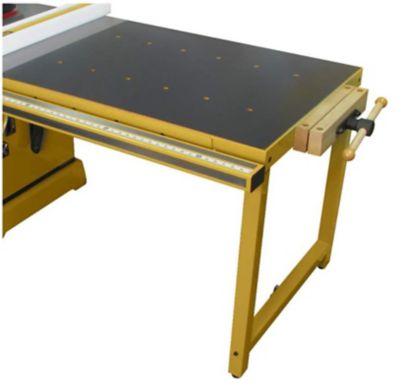
Metal Work Bench category provides another starting point for comparing construction and work surfaces. Tabletop thickness, support beneath the surface, and edge clearance also matter when attaching a vise or holding a board with clamps. A storage cabinet directly beneath the edge may limit clamp access, while an open frame can leave more room for seated work. Drawers keep sockets, measuring tools, and small hardware close at hand; lower shelves give larger tool cases a place off the floor. Storage adds weight, however, and a full drawer changes the balance when pulled open. Keeping heavier tools low and following any drawer-opening restrictions helps maintain stability. A replaceable protective mat or sacrificial work surface can help manage scratches and messes when compatible with the task. Routine care generally includes clearing away metal chips and sawdust, wiping spills promptly, inspecting fasteners, and maintaining the top according to its material and finish. Those small habits help preserve a useful workspace and keep grit from finding its way into drawer slides and moving hardware.
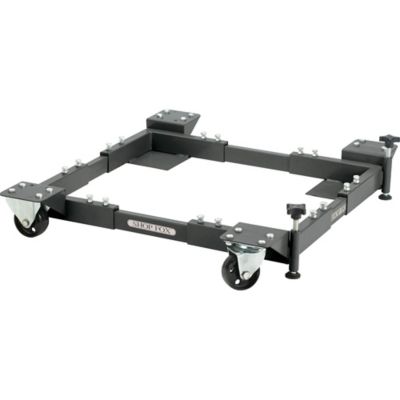
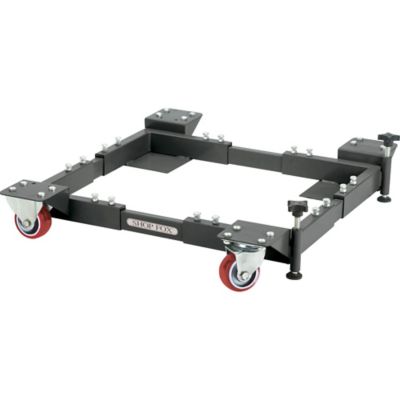
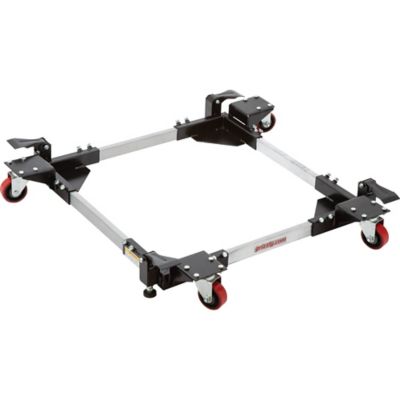
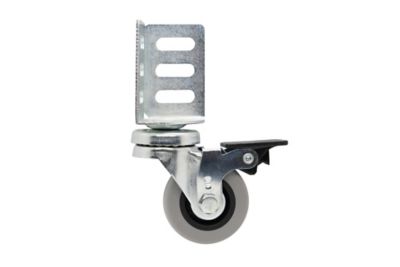
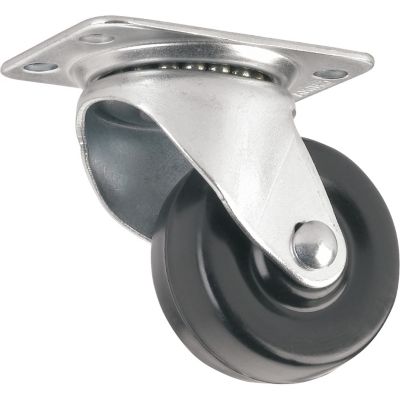
Caster construction is just as important as the bench above it. Larger wheels generally cross small floor joints and minor irregularities more easily than smaller wheels, but tread material, wheel width, load, and floor condition all affect how a loaded workbench rolls. Polyurethane and rubber treads can offer different levels of cushioning, rolling resistance, and floor protection, depending on their formulation. Harder wheels may roll readily on a smooth surface yet transmit more vibration across rough spots. Swivel casters help a bench turn into a tight parking space, while a combination of fixed and swivel casters can make straight-line movement easier to manage. Brake designs vary: some stop wheel rotation, while total-lock designs also restrict the swivel action. Neither arrangement should be treated as a substitute for a level floor or the support required for forceful work. Some mobile benches combine casters with leveling feet, allowing the feet to support and steady the bench when parked. Retractable caster systems lift a compatible bench for movement and let it rest on its legs afterward, though their suitability depends on the mounting arrangement, frame, and manufacturer’s limits. Weight capacity deserves a close look across the whole setup. A bench’s stated capacity may refer to an evenly distributed stationary load, and the permitted load while rolling may be lower. Drawer, shelf, tabletop, and caster ratings are not interchangeable, and simply adding individual wheel ratings does not establish the capacity of a complete bench. Tools, stored supplies, attached equipment, and the workpiece all count toward applicable limits. A heavy vise near one corner also places a different demand on the frame than a load spread across the top. For everyday movement, a clear route over a firm, level floor is easier to manage than gravel, steep slopes, or tall thresholds. Loose hardware and unsecured tools need attention before the bench moves, and power cords must stay clear of the wheels. Once parked, engaged locks and properly set supports help create a steady place for the next job, whether that means sorting fence hardware, rebuilding a small assembly, or fitting boards together.