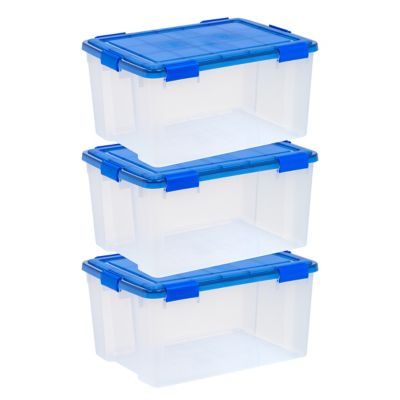
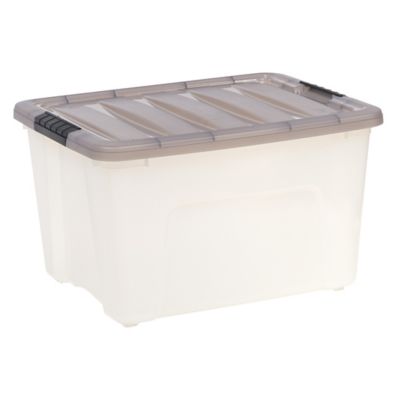
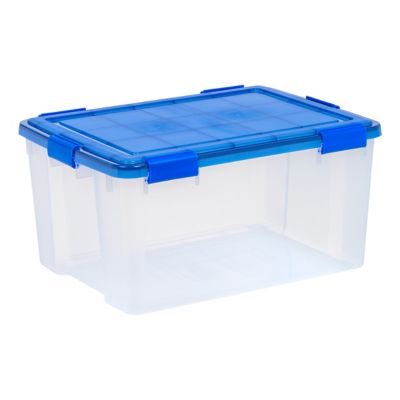
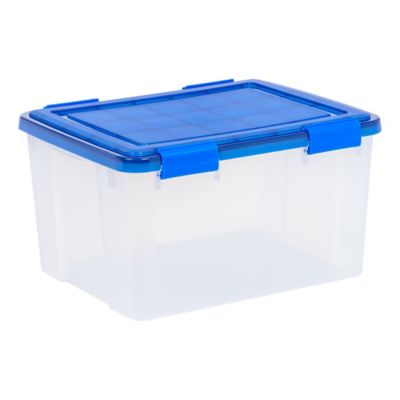
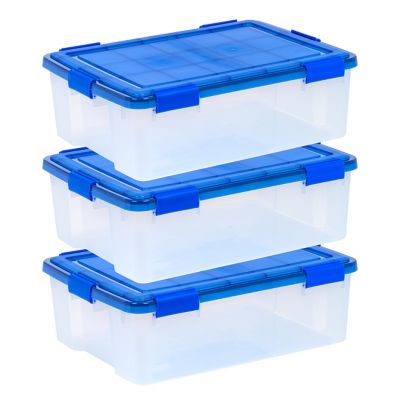
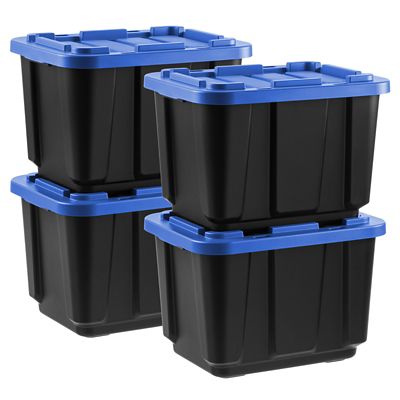
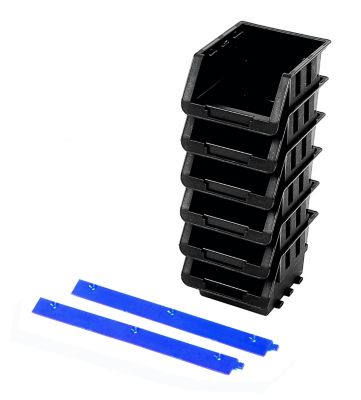
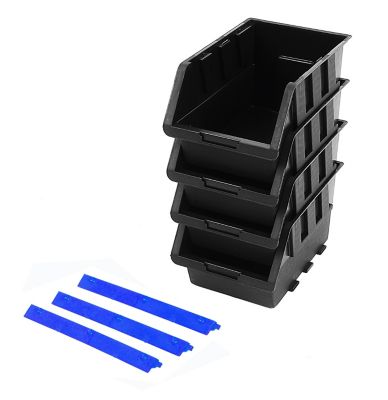
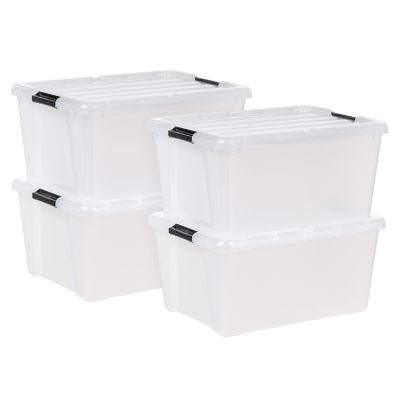
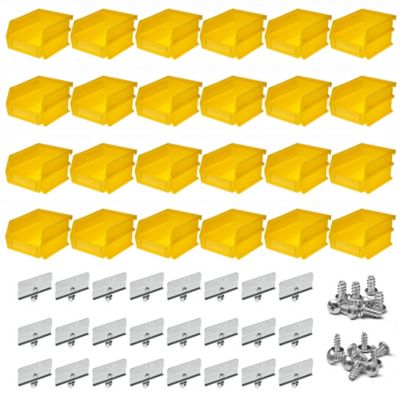
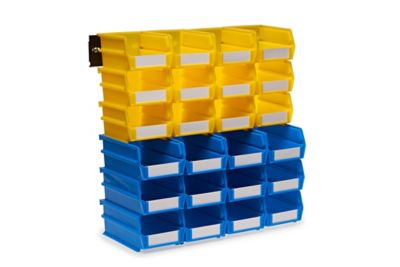
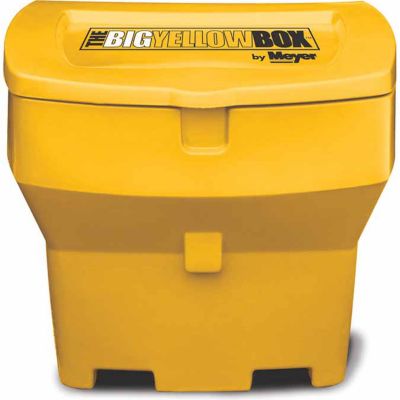
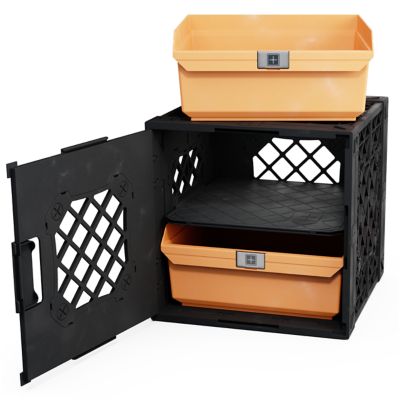
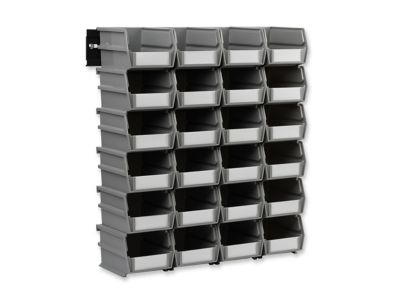
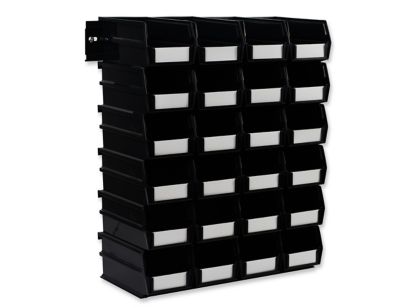
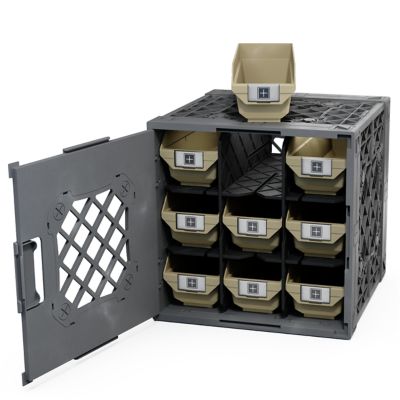
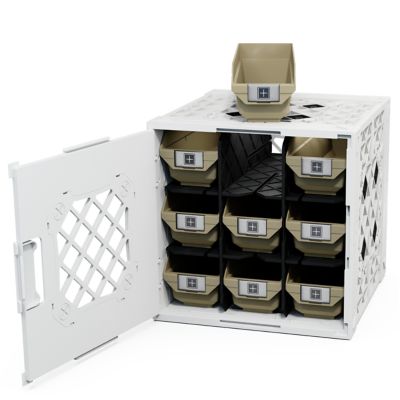
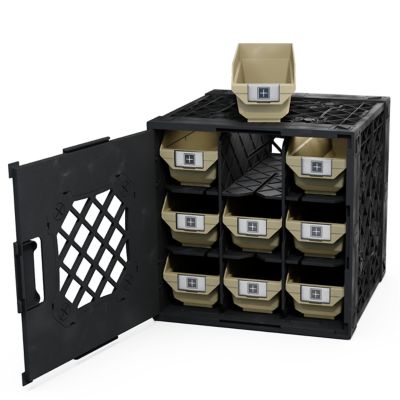
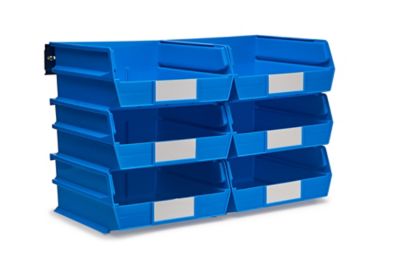
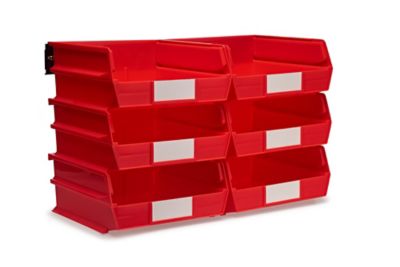
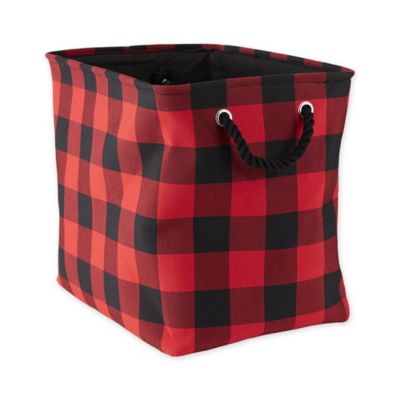
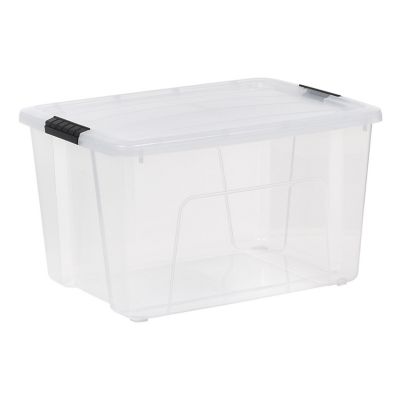
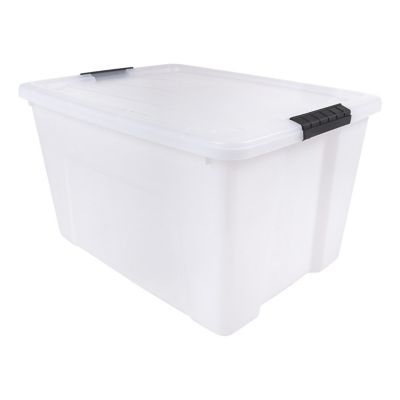
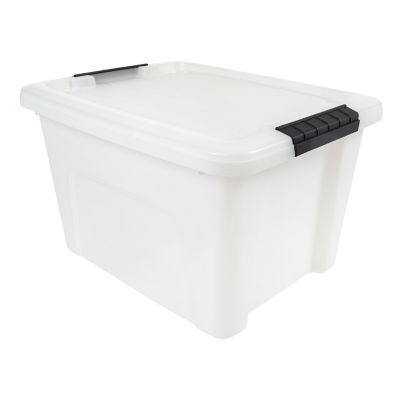
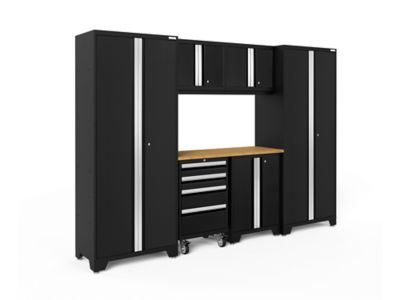
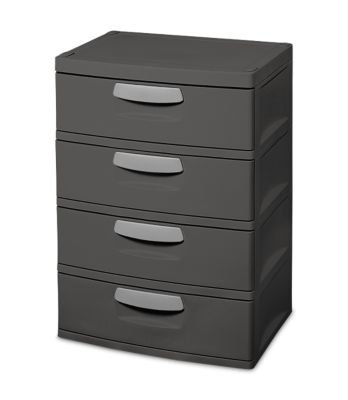
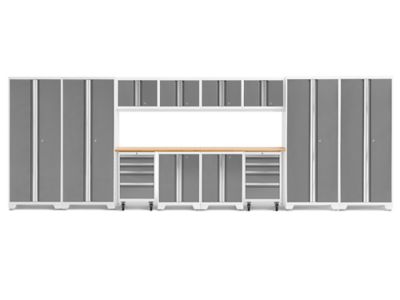
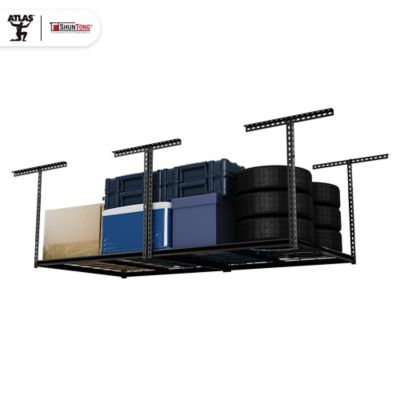
Garage storage bins give tools, hardware and household gear a place to land instead of spreading across the workbench or piling up beside the truck. They help organize shelves, make smaller supplies easier to find and keep loose belongings from taking over walkways. The best fit depends on what goes inside and how often it needs to come back out. Open-front bins suit grab-and-go supplies such as screws, washers and sanding blocks, while larger totes can hold extension cords, shop towels or sports equipment. Clear sides make contents visible at a glance; solid-colored bins keep the view tidier and work well with readable labels. A row of matching containers can make a garage look pulled together, but matching sizes are not always the most practical choice. Small bins keep hardware from disappearing beneath larger gear, and deeper containers give awkward shapes more room. For a garage that doubles as a workshop, a mix of sizes can separate the supplies needed at the bench from belongings that stay packed away between projects. Outside measurements matter just as much as capacity. A tote may fit between shelf posts but still need extra room for its handles, lid or latches. Interior dimensions matter, too, especially for long tools, rigid cases or anything that cannot bend to fit. The footprint should leave enough shelf space for a secure grip when lifting the container. Containers near a parking spot also need to stay clear of vehicle doors and the garage door’s moving parts. Shallow bins are often easier to sort through than deep ones, particularly when small parts would otherwise settle at the bottom. Larger containers make sense for lightweight, roomy gear, while smaller ones help keep a load of metal hardware manageable. That balance makes a difference when carrying a bin from the garage to a work area, loading it into a vehicle or pulling it down from a shelf.
Materials and construction affect how garage storage bins handle daily work. Rigid plastic is common because it is relatively lightweight, wipes clean and holds its shape without needing a separate frame. Polypropylene and polyethylene are common material choices, though wall thickness, reinforcement and overall construction matter alongside the type of plastic. Reinforced rims, sturdy corners and a well-supported bottom are useful details for containers that move between shelves and work areas. A flexible sidewall may give slightly when bumped, while a more rigid container can feel steadier when loaded; neither feature replaces the manufacturer’s load limits. For enclosed storage,
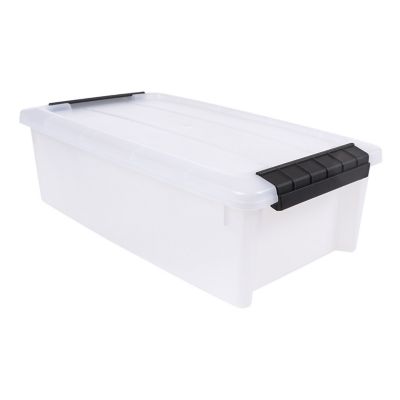
storage bins with lids help keep contents together and reduce exposure to settling dust. Lid styles make a practical difference. Lift-off lids provide a wide opening, hinged lids stay attached, and latching designs help hold the cover in place during handling. A lid alone does not make a bin waterproof, airtight or pest-proof. Those levels of protection depend on the container’s stated features, the seal and the way it closes. For stacked storage, lids and bases designed to nest together can help containers sit more securely, provided the stack stays within the stated limits. Heavy loads belong low, and shelf capacity needs to account for the combined weight of the bins and everything inside them. Handles deserve a close look as well. Recessed grips keep the outside profile compact, while larger handles may offer more hand clearance. Anyone working in gloves will appreciate enough room to get a firm hold without pinching fingers against the shelf above. Smooth interior walls make wiping out dirt simpler, and removable dividers can keep small supplies separated when that feature is part of the design. A bin should support the job without making access a chore, whether that means lifting it by both handles or reaching through an open front for a handful of fasteners.
Garage storage works best when the containers fit the habits of the people reaching for them. A woodworker may want shallow bins for sanding supplies and separate containers for clamps or hardware. Someone maintaining a mower, utility trailer or farm equipment may need a clear division between clean replacement parts and greasy shop supplies. Families can give balls, helmets and yard-game pieces their own space instead of letting them roll under a vehicle. A container near the workbench can hold the supplies for an ongoing project, keeping those parts together when the bench needs clearing for another job. Labels on the side facing the aisle help identify contents without moving every bin, especially when opaque containers share the same size and color. Broad labels such as “electrical supplies” or “trailer hardware” are often more useful than long lists that become outdated whenever something moves. For supplies that travel, a manageable load and a secure closure matter more than filling every inch of a large tote. Care is usually straightforward: empty the container, remove loose debris and clean it according to its material and manufacturer’s directions. Let the inside dry fully before closing the lid so trapped dampness does not linger around metal tools, paper packaging or fabric gear. Cracked handles, split corners and lids that no longer seat properly are signs to reassess the container before loading or stacking it again. Storage bins also have limits. Fuel, solvents and other chemicals need their original or specifically approved containers, with labels intact and storage directions followed; an ordinary tote is not a substitute. Keeping those boundaries clear makes garage organization more practical. The payoff is simple: fewer loose parts underfoot, more room at the bench and less rummaging when a repair needs attention.