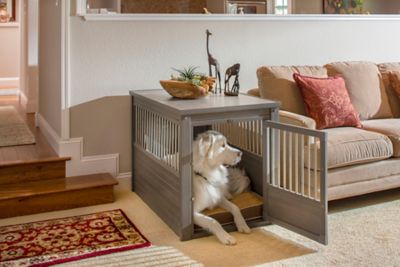
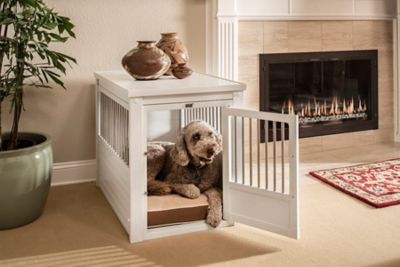
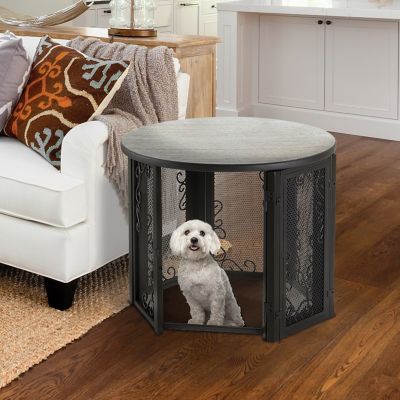
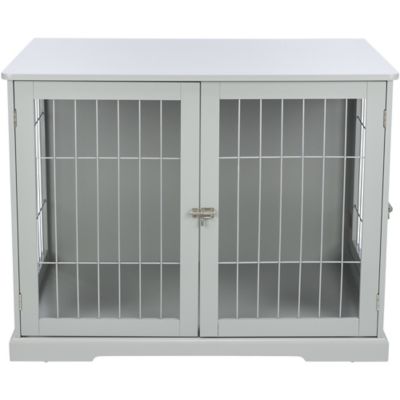
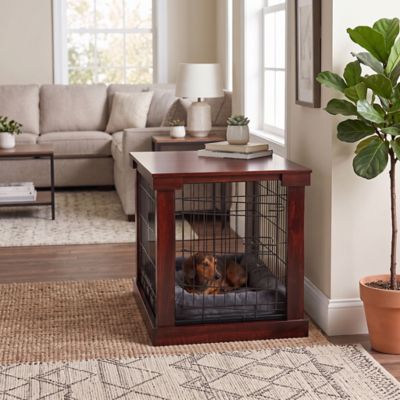
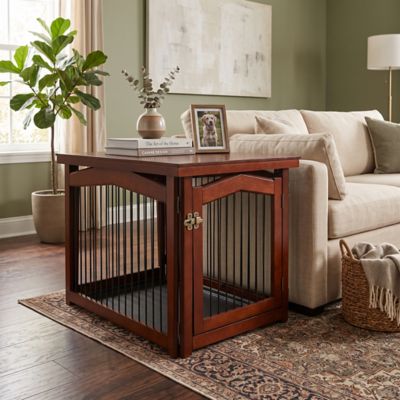
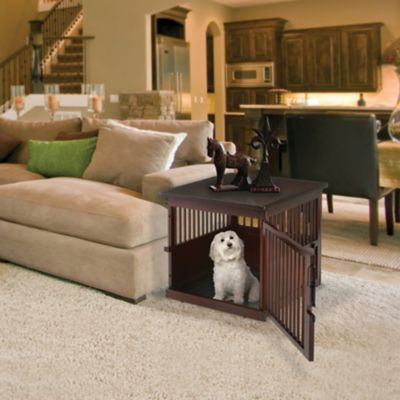
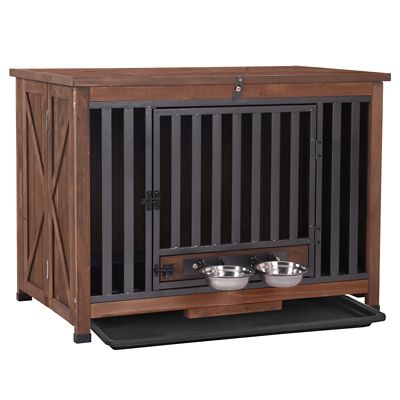
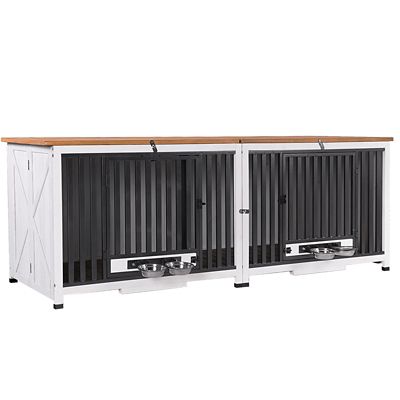
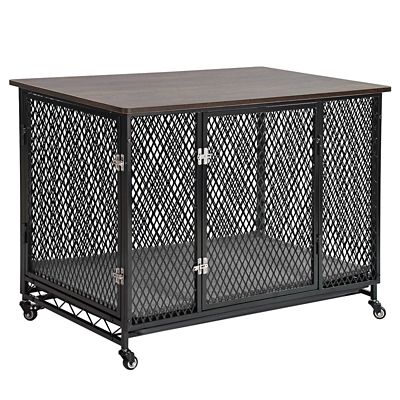
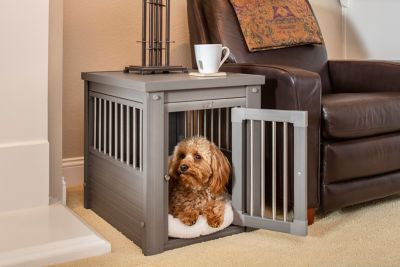
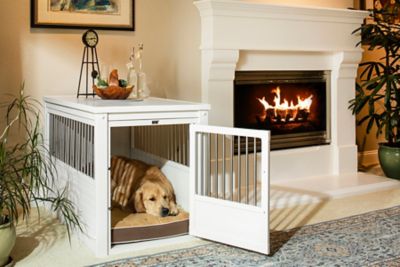
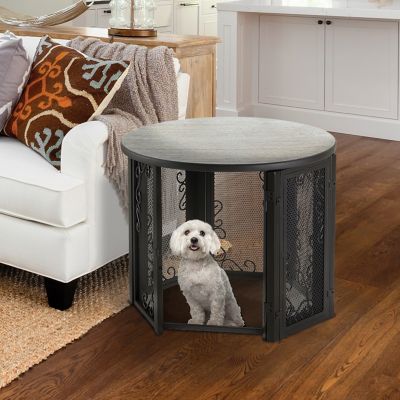
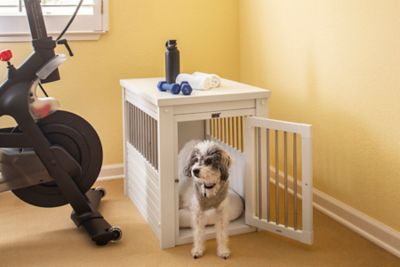
Wooden dog crates are indoor pet enclosures that combine a dog’s resting space with the look and function of household furniture. Often built with a wood or engineered-wood frame and metal bars or mesh, they can serve as an end table, console, or cabinet while keeping a comfortable spot for a dog close to family life. That combination makes sense in a living room where floor space has to earn its keep, whether there’s a couch full of kids or just a favorite chair beside the dog’s bed. Solid wood brings natural grain and variation, while engineered wood often provides a more uniform surface beneath a veneer, laminate, or painted finish. Neither material name tells the whole story: panel thickness, joinery, hardware, and the way the frame supports its weight all matter. Metal inserts can provide airflow and visibility without leaving every part of the enclosure open, and bar spacing should suit the dog’s size. More enclosed panels can give a resting spot a sheltered feel, though ventilation remains important. Some furniture-style designs include drawers, shelves, or separate compartments, making room for leashes and other everyday supplies outside the dog’s reach. A tabletop can hold a lamp or a few household essentials when the manufacturer permits it, but the stated weight limit still applies. Anything breakable, spillable, or tempting to chew belongs well away from the enclosure’s edges. Wood tones and finishes range from light and understated to darker cabinet-like looks, so a crate can sit comfortably alongside existing furniture without taking over the room. For homes where the crate stays in a shared living area, these details matter as much as its footprint. The appeal is straightforward: a defined place for the dog to settle, paired with a piece of furniture that fits the household’s everyday layout. Many
Furniture Style Dog Crates follow this same approach, bringing pet space and furniture function together in one spot.
A good fit starts with the dog’s body and resting habits, not just the size of the space beside the couch. The usable interior should let the dog stand naturally without ducking, turn around without squeezing, and lie comfortably in a normal resting position. Exterior measurements can be misleading because thick panels, raised bases, and storage compartments take up room without adding sleeping space. Interior dimensions, doorway clearance, and the thickness of a bed or mat give a better picture of how the enclosure will feel to the dog. A broad-chested dog may need more doorway width than another dog of the same weight, while a tall, lean dog may need extra headroom. Door placement matters for people, too. A front-opening door might work beside a chair, while a side opening can make more sense along a wall, provided the door has room to swing without blocking a walkway. For households with two dogs, divided enclosures require enough room for each animal and a secure separation that suits their behavior. Sharing an enclosure is not a safe assumption, even when dogs usually get along. Wooden dog crates generally make the most sense for crate-comfortable dogs that settle quietly indoors. They are not a substitute for a purpose-built travel kennel, and wood panels or furniture-style bars may not suit persistent chewers, escape attempts, or dogs that panic when confined. A puppy still learning bladder control can also be a tougher match for surfaces that absorb moisture or have exposed edges. A calm adult dog that already views a crate as a resting place is often a better fit. Familiar bedding, gradual introductions, and positive associations can help make the space welcoming, but the enclosure should never serve as punishment. Regular exercise, bathroom breaks, and time with the household remain part of the routine. Collars and harnesses can catch on crate hardware, so follow the enclosure manufacturer’s safety directions and remove snag hazards before confinement. Secure latches and smooth interior surfaces deserve close attention wherever a dog will rest unattended.
Day-to-day care has a lot to do with how well a wooden dog crate holds up in a busy home. Muddy paws, shedding coats, water drips, and the occasional accident put different demands on a furniture-style enclosure than on an ordinary side table. A removable floor tray, where included, can make cleanup simpler, while a washable bed helps keep hair and odors from settling into the sleeping area. Trays and liners should sit flat and fit as intended, without sharp edges or loose sections for the dog to pull up. Sealed surfaces still need prompt attention after spills; standing moisture can affect finishes, swell some engineered-wood panels, or work into joints. Cleaning directions vary by material, so a soft cloth and a manufacturer-approved cleaner are a better starting point than soaking panels or reaching for a harsh household chemical. Let cleaned surfaces dry before replacing bedding and welcoming the dog back inside. Hinges, latches, fasteners, and panel edges also benefit from routine checks, especially after moving the crate or noticing any wobble. Assembly matters from the start: a square, level frame helps doors line up and keeps hardware from carrying strain it was not meant to bear. Placement can make daily life easier without putting the enclosure in the middle of the action. A level spot near family activity, with clear ventilation openings and an unobstructed doorway, lets the dog stay connected while having room to rest. Electrical cords, houseplants, loose fabric, and small objects should remain beyond reach through the bars. Keep the top within its stated load limit, and never treat it as a seat unless the manufacturer expressly allows that use. For a new dog household, a wooden crate can be a thoughtful gift when the recipient has already confirmed the dog’s measurements, behavior, and room layout. The best match balances a comfortable interior, sensible access, manageable upkeep, and a finish that fits naturally into the home.