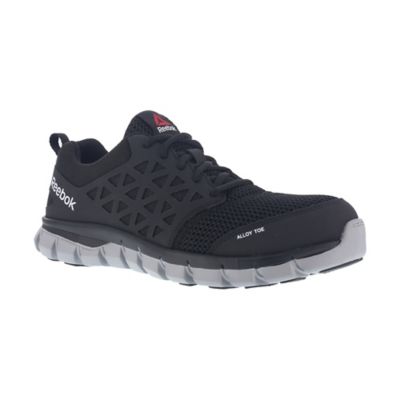
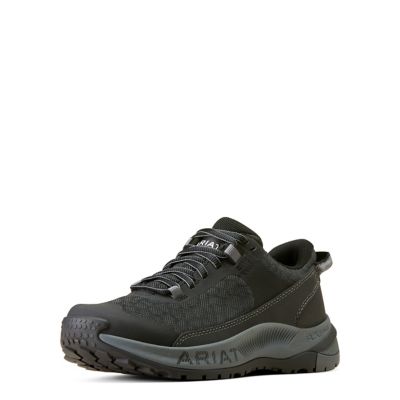
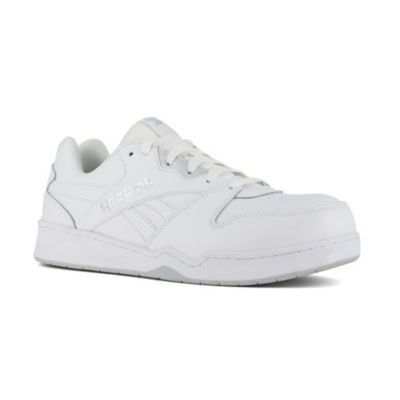
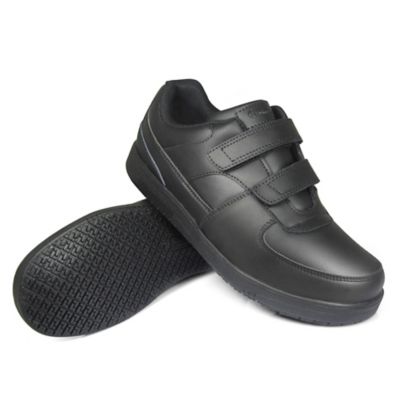
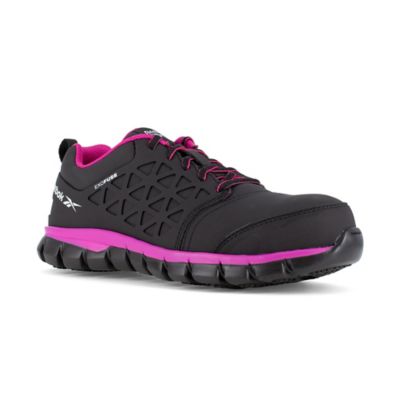
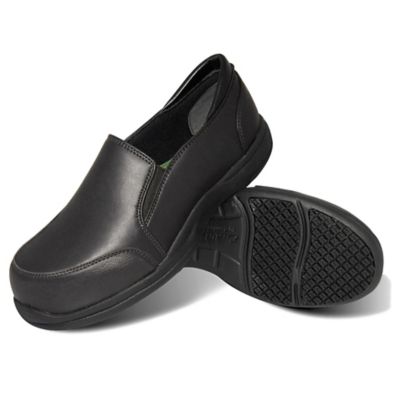
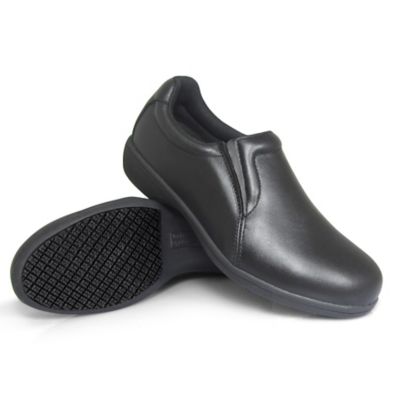
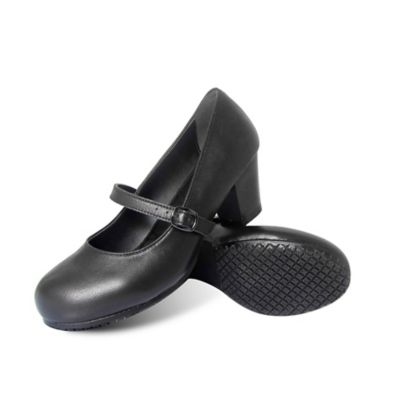
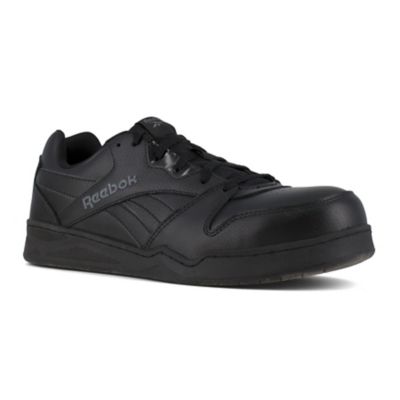
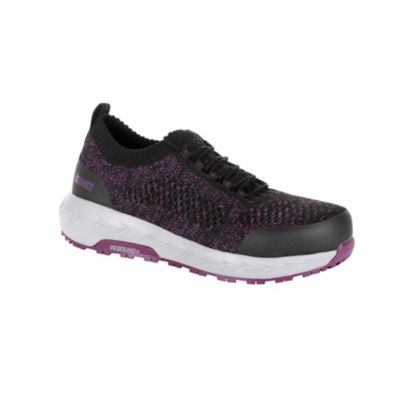
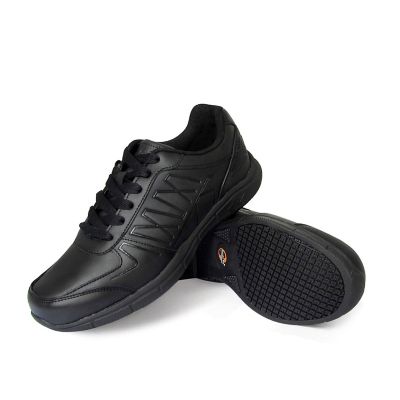
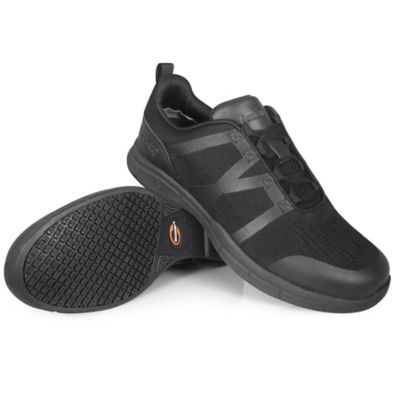
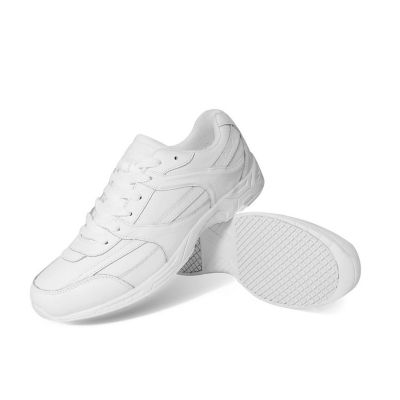
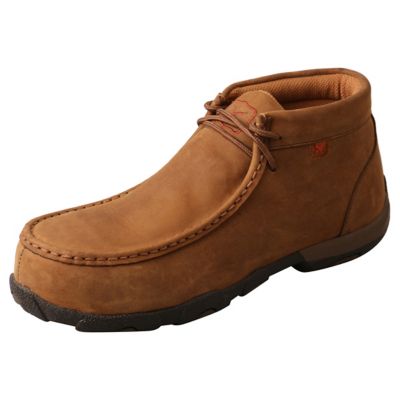
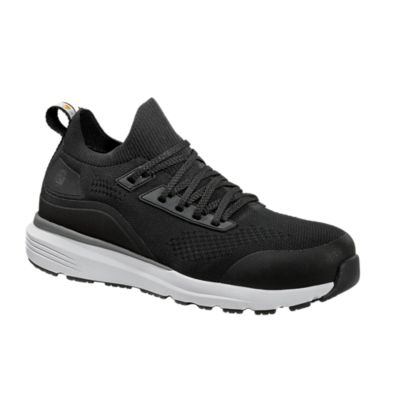
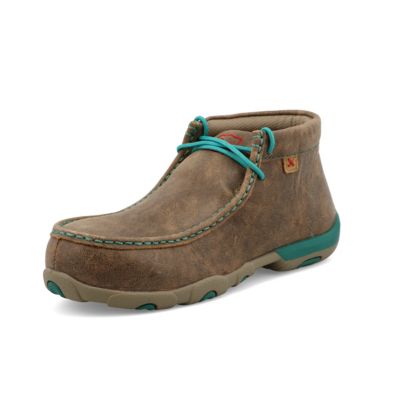
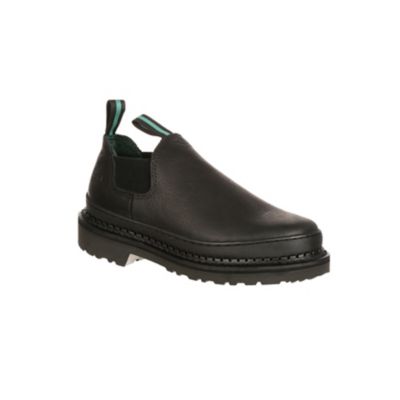
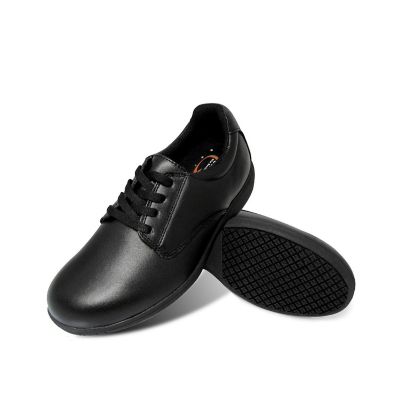
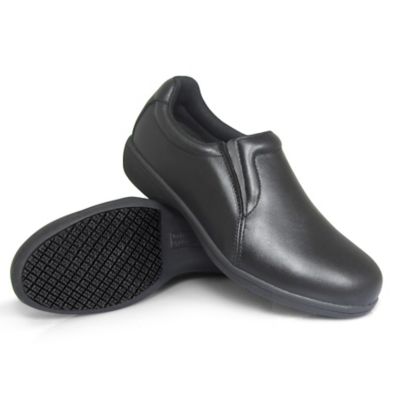
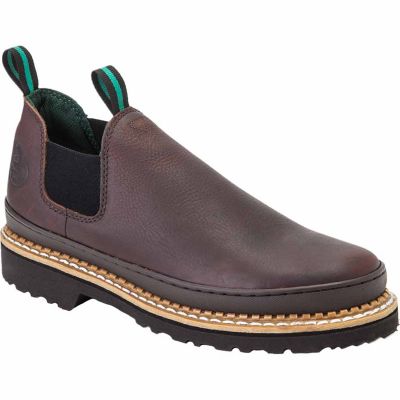
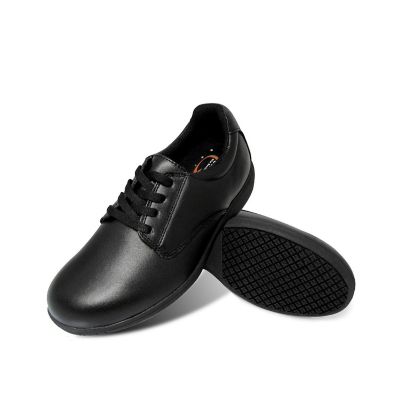
Women’s work shoes for standing all day bring together cushioning, arch support, a secure heel fit and traction suited to the job. Those features matter whether a shift means ringing up feed orders, working a restaurant counter, caring for patients or packing orders on a concrete floor. Standing in one spot puts different demands on footwear than walking steadily, and many jobs involve both: an hour at a register, a trip across the building, then more time at a workstation. Cushioning beneath the heel and forefoot helps soften repeated contact with hard surfaces, while a supportive midsole provides a steady base. EVA foam, polyurethane and other cushioning materials vary in feel, weight and firmness. A deeply padded shoe may feel inviting at first, but softness alone does not tell the whole story. Cushioning needs enough structure to keep the foot from feeling as though it is sinking or rolling sideways, especially when turning, reaching or carrying something. Arch support should follow the foot comfortably rather than press sharply into it, and a firm heel counter can help hold the rear of the foot in place. Some shoes have removable footbeds that leave room for compatible replacement insoles or prescribed orthotics; that extra space matters because adding an insert can change the fit. Lightweight construction may feel less cumbersome over a long shift, but a little more structure can be worthwhile when the work involves frequent changes in direction. A broad base underfoot can also make standing feel steadier than a narrow platform. For women moving between a service counter, storage room and loading area, the right balance is often a shoe that bends comfortably at the forefoot while holding its shape around the heel and midfoot. Comfort is personal, so a coworker’s favorite style may not suit a different foot shape, stride or set of work duties.
Materials and outsole construction help determine where women’s work shoes fit into the workday. Leather uppers offer structure and a surface that can often be wiped clean, making them practical around dust, minor splashes and everyday workplace messes. Synthetic uppers vary in flexibility and finish, while mesh panels let air circulate and can reduce a closed-in feeling during a busy shift. Breathable mesh is not the same as a liquid barrier, though, so open-knit footwear may not suit tasks involving spills or workplace sanitation rules. Smooth uppers with fewer seams can be easier to clean than deeply textured fabrics, and reinforced areas around the toe can help handle everyday scuffs. On the bottom of the shoe, slip-resistant outsoles are worth considering for restaurants, healthcare settings and other workplaces where floors may be slick. Tread pattern, rubber compound and the floor surface all affect grip; a deep-looking tread does not automatically mean a shoe performs well on a smooth floor with grease on it. Product specifications and listed slip-resistance testing provide more useful information than appearance alone, and no outsole eliminates the possibility of slipping. Keeping tread clear of packed dirt and residue remains important. A feed room, shop floor or busy receiving area may bring additional hazards that ordinary work shoes are not built to address. Safety toes, puncture-resistant components and electrical hazard ratings are separate features, and the employer’s footwear requirements should determine whether any are needed. Water resistance also differs from waterproof construction, so those descriptions are not interchangeable. Low-profile work shoes can make sense for indoor duties and jobs calling for easy movement, while tasks that require more coverage or ankle support may call for a different footwear category. Dress codes matter, too: a plain upper, enclosed toe or particular fastening style may be part of the job’s requirements. Matching the shoe to the actual floor, messes and hazards is more useful than choosing by looks alone.
Fit is what allows cushioning and support to do their jobs through a full day. Women’s work shoes should leave room for the toes to spread without letting the heel lift with every step. Width matters as much as length, particularly across the ball of the foot, where a narrow shoe can pinch even when there is enough space in front of the toes. Feet can swell over the course of a shift, so a fit that feels snug before work may feel quite different after hours on the floor. Trying shoes with the socks intended for work, along with any orthotics, gives a better sense of the space needed. Lace-up styles allow adjustments across the instep, while slip-on designs depend more heavily on the shape of the opening and heel for a secure fit. Neither should require curled toes or constant readjustment to stay on. Interior seams, collar padding and tongue placement also deserve attention, since a small rubbing spot can become a real nuisance after repeated trips between a counter and back room. Regular care helps preserve the shoe’s shape and performance: loose dirt can be brushed away, suitable uppers wiped down and footbeds aired out according to the manufacturer’s directions. Strong cleaners or soaking can damage some materials and bonding, so care methods should match the construction. Rotating between pairs, when practical, gives interiors time to dry between shifts. Flattened cushioning, worn-smooth tread, a leaning heel or an upper that no longer holds the foot securely can signal that a pair is no longer providing the same support. Persistent foot pain calls for advice from a qualified healthcare professional rather than an assumption that more padding will fix it. Work shoes can make a thoughtful gift for someone starting a job or spending long days on their feet, especially when the recipient can choose the fit and confirm workplace requirements. For another worker in the family,
men’s work shoes for standing all day offer a related footwear category built around many of the same everyday considerations.