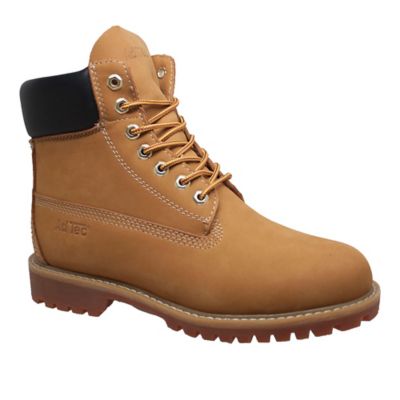
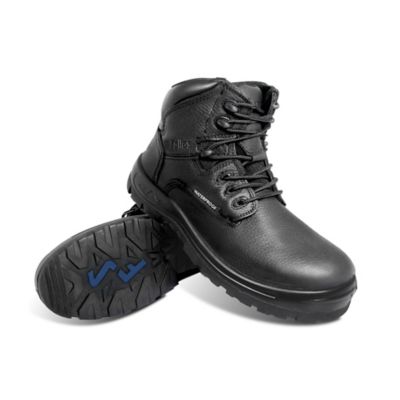
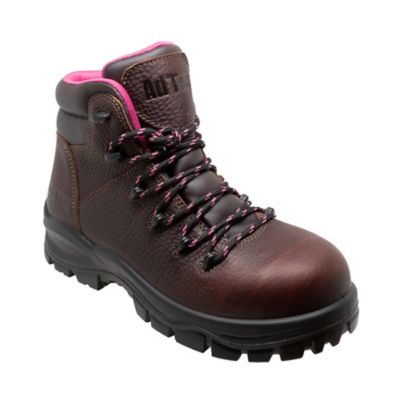
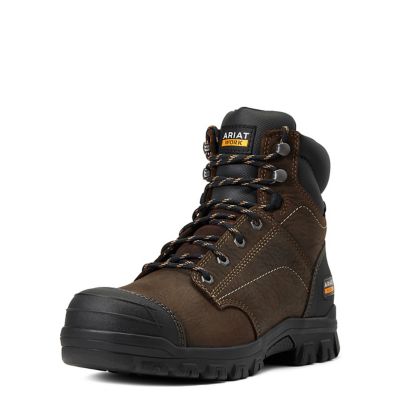
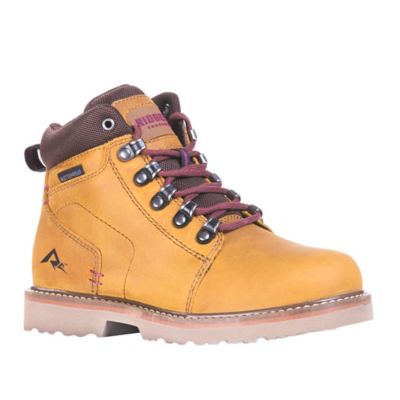
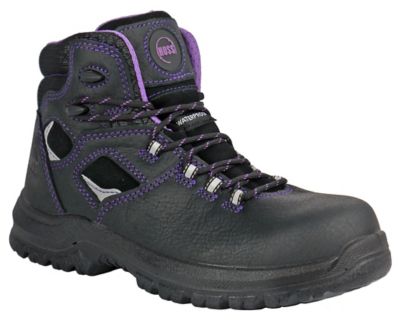
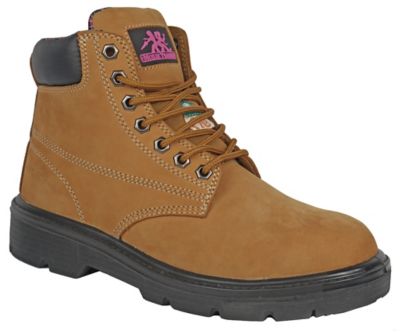
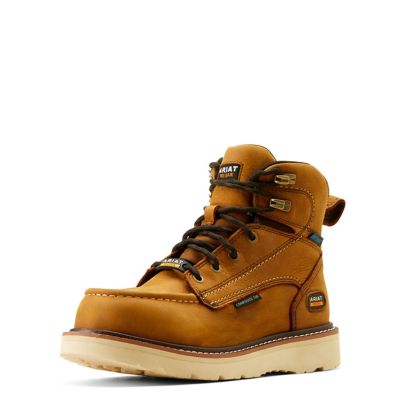
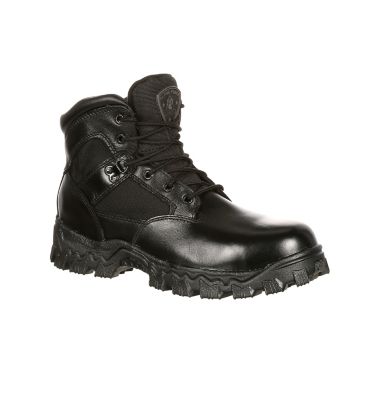
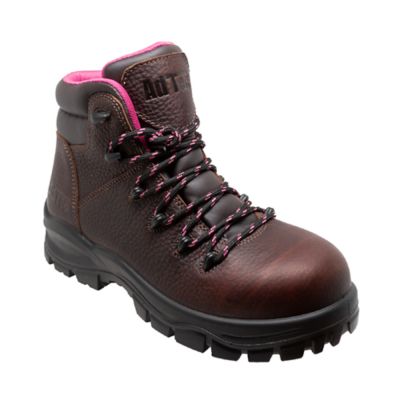
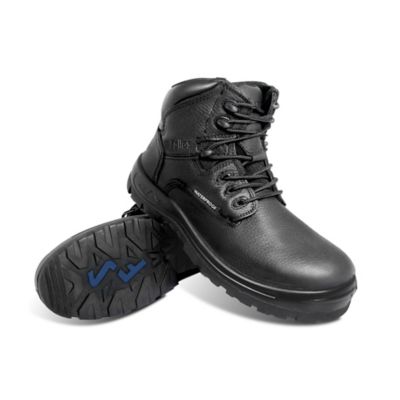
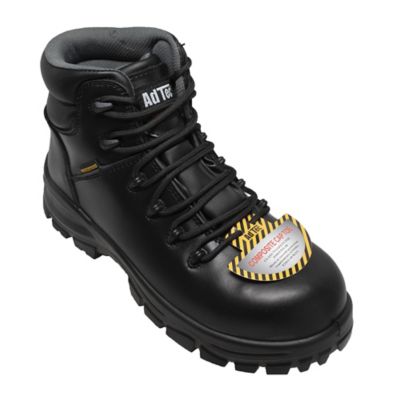
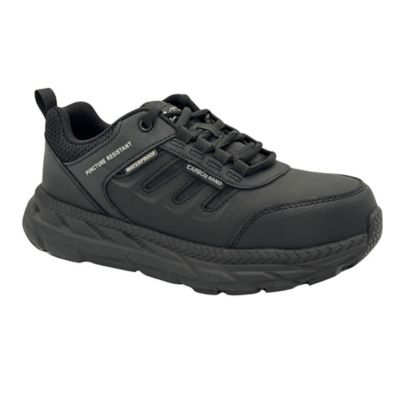
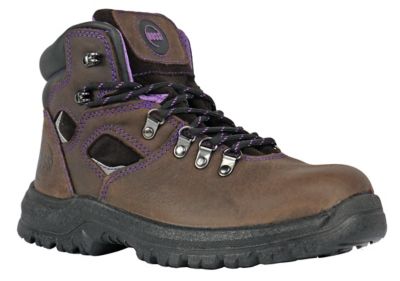
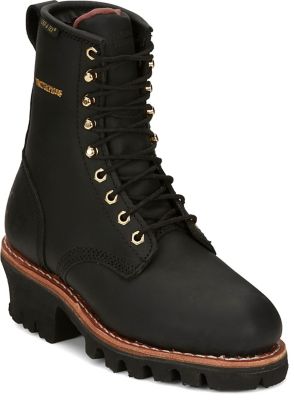
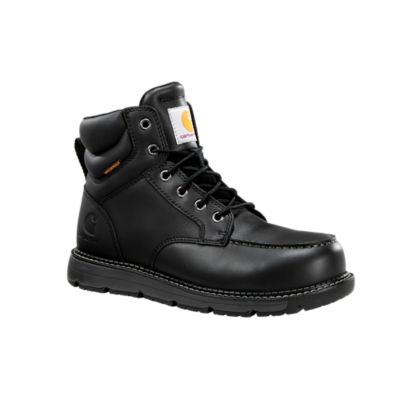
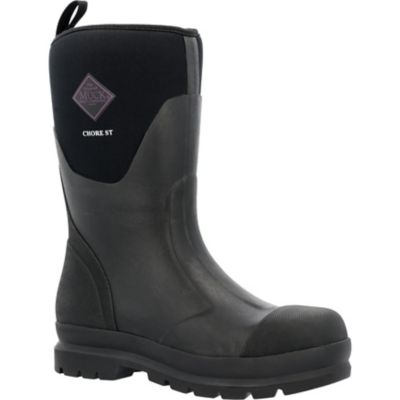
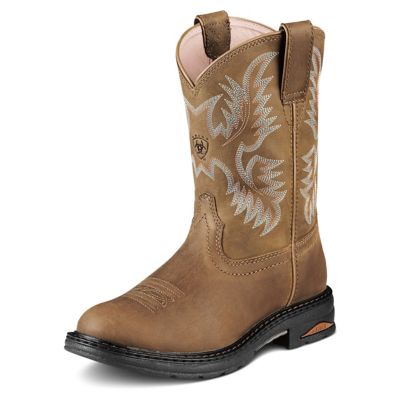
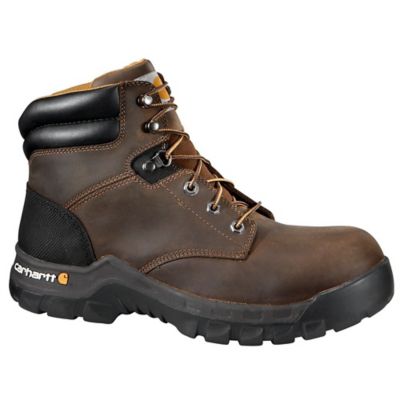
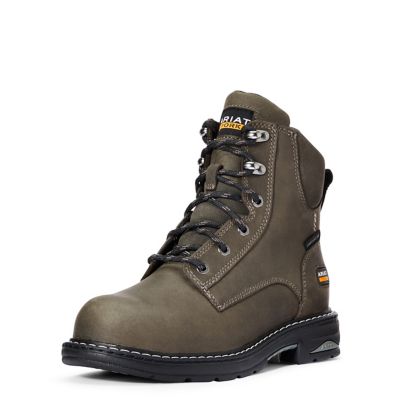
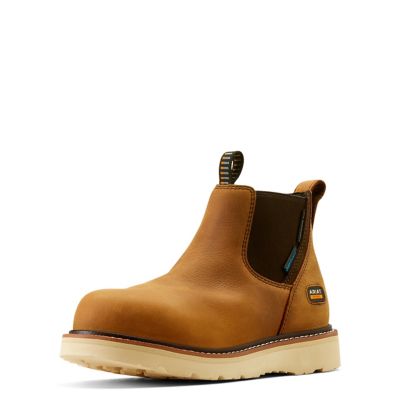
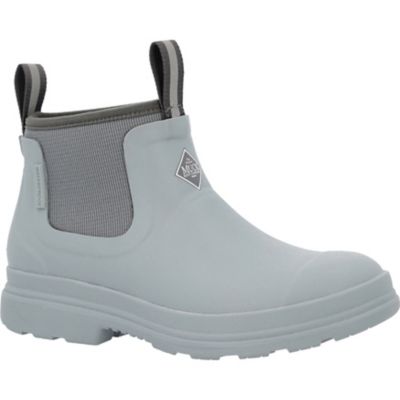
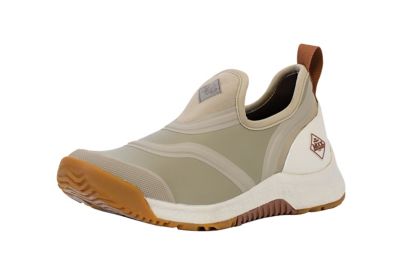
Women’s waterproof work shoes help keep feet dry through wet grass, splashes around a wash station, and damp stretches between the barn and the feed room. The category includes athletic-style work shoes for jobs with plenty of walking, leather designs with a more substantial feel, and rubber or molded constructions suited to muddy chores and frequent rinsing. What separates waterproof footwear from water-resistant footwear is the construction: waterproof designs have a barrier intended to keep water from reaching the foot, while water-resistant materials may only shed light moisture. Depending on the design, that barrier can come from a waterproof membrane, sealed seams, a molded shell, or a combination of features. Leather uppers offer structure and can soften with wear, while synthetic uppers often have a lighter feel and require different cleaning methods. Fabric panels need waterproof backing or another protective construction to keep water out; an airy-looking upper alone does not tell the whole story. A gusseted tongue helps close the gaps beside the laces, although its height affects how far that protection extends. Low-cut work shoes leave the ankle free to move and fit easily beneath work pants, but water can still enter through the collar. They make sense for shallow puddles and incidental splashes, not water that reaches above the shoe opening. A waterproof work shoe also is not automatically a safety-toe shoe, a slip-resistant shoe, or footwear rated for chemical exposure. Those are separate features that depend on the demands of the job. For women tending animals, handling plants in a nursery, working around a busy kitchen, or moving between indoor workspaces and wet ground, the right combination starts with the surfaces underfoot and the kind of moisture encountered. Waterproofing handles one part of the job; the upper material, sole construction, and protective features determine how well the rest of the shoe fits the work. A smooth, easily wiped upper may suit frequent splashes, while reinforced panels can help at spots that rub against equipment or rough ground.
Fit matters just as much as keeping water out, especially when a shift involves walking concrete aisles, standing at a counter, or squatting beside a water trough. Women’s waterproof work shoes should hold the heel securely without squeezing the forefoot or pressing across the instep. There should be room for toes to move, including inside a protective toe cap, without the foot sliding forward on a slope. Length alone does not settle the fit; width, toe-box shape, arch placement, and the volume around the top of the foot all affect comfort. Work socks take up space, too, so the fit needs to account for the socks worn on the job rather than a thinner pair worn just for trying shoes on. Feet can swell after hours of standing, making a little breathing room especially helpful late in the day. Laces offer adjustment across the instep, while slip-on constructions depend more heavily on the shape of the opening and heel hold. Cushioning softens the feel of hard floors, but support and a stable platform matter when carrying feed bags, pushing a loaded cart, or stepping over a threshold. A deeply lugged outsole can bite into loose soil, while a shallower tread pattern may be better suited to smooth work floors. Wet-floor jobs also make
Womens Waterproof Slip Resistant Shoes worth a look, particularly where splashes are part of the daily routine. Slip resistance is not a promise against every fall: floor material, grease, soap, worn tread, and debris all affect footing. Oil resistance describes how a sole material handles oil exposure and should not be mistaken for grip on an oily floor. Steel and composite safety toes add another consideration where falling or rolling objects are a concern. Workplace requirements and the shoe’s stated safety ratings should settle that choice, rather than appearance or the presence of a sturdy-looking toe. A lighter shoe can feel easier over long distances, but weight should not take priority over required protection.
Everyday care helps women’s waterproof work shoes keep doing their job without turning a muddy chore into a lengthy cleanup. Mud packed into the tread can reduce contact with the ground, while grit around seams and flex points can rub against the upper with each step. A soft brush, a damp cloth, and a cleaner approved for the material are often enough for routine attention; leather, fabric, and molded rubber do not all respond well to the same treatment. Manure and other residue deserve prompt removal, especially before shoes head into a vehicle or back toward the house. A waterproof label is not permission to put footwear in a washing machine or leave it soaking in a bucket. The maker’s care directions matter because harsh cleaners, long soaking, and high heat can damage adhesives, finishes, or waterproof components. Drying at room temperature, away from a heater or direct heat source, is generally gentler on the construction. Removable footbeds can be taken out for drying when the care instructions allow, and moisture-managing socks help with dampness that comes from inside the shoe. Waterproofing keeps outside water at bay, but breathability varies, and a waterproof membrane cannot prevent perspiration. Leather may need a compatible conditioner or treatment, while some synthetic materials need little beyond cleaning. Even a spray-on treatment cannot repair a split seam or a worn-through lining. Creases, loosened sole edges, smooth tread, and damage inside the heel are worth checking as the miles add up. Reinforcement around the toe and heel can help with scraping and repeated contact, though no construction lasts indefinitely under every chore. The best match is footwear that suits the actual work: enough flexibility for kneeling by a pen, enough support for long stretches on hard floors, and the right protection for the tasks at hand. With a comfortable fit and care that suits the materials, waterproof work shoes can make wet, messy jobs a little easier to get through.