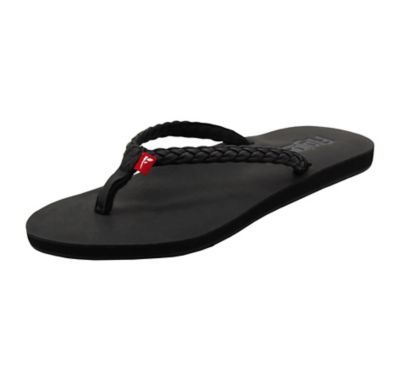
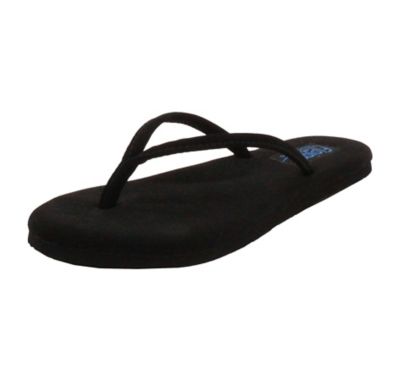
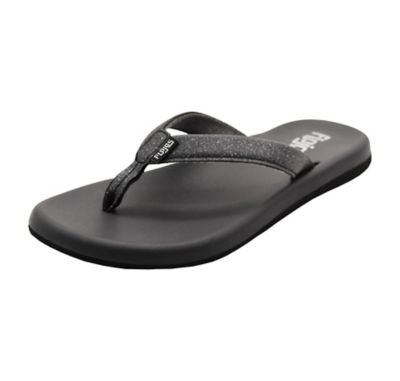
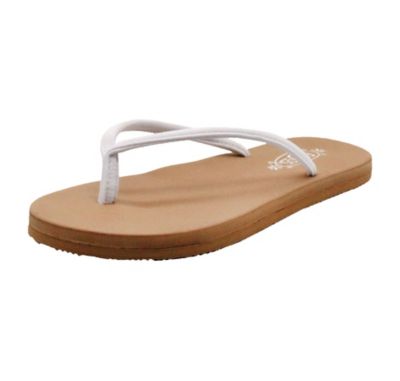
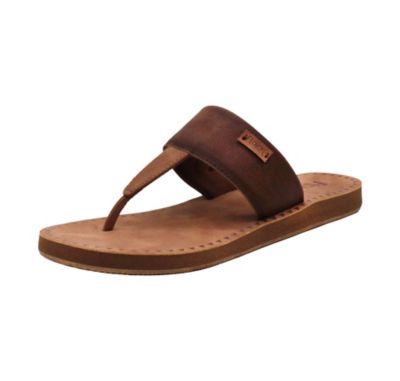
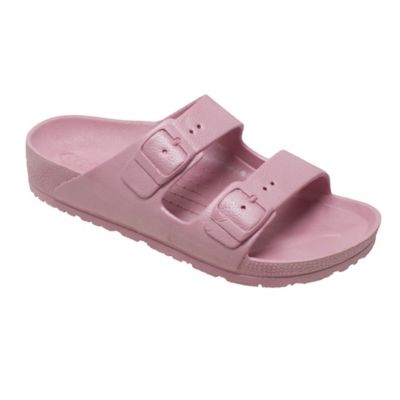
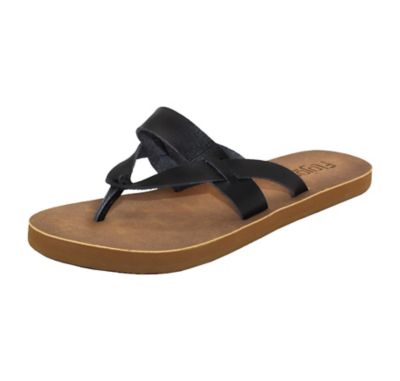
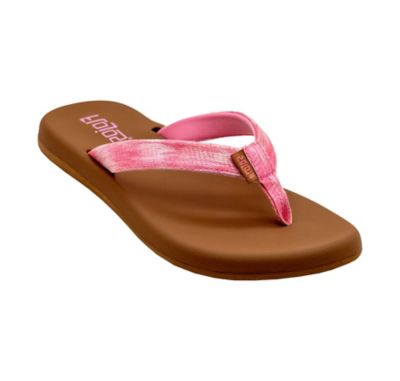
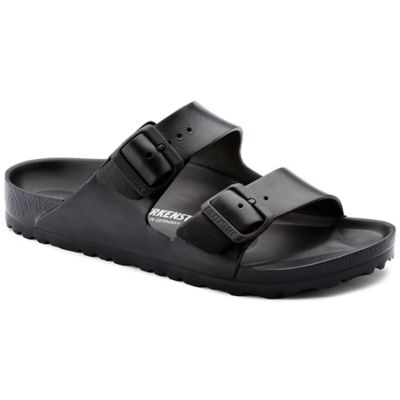
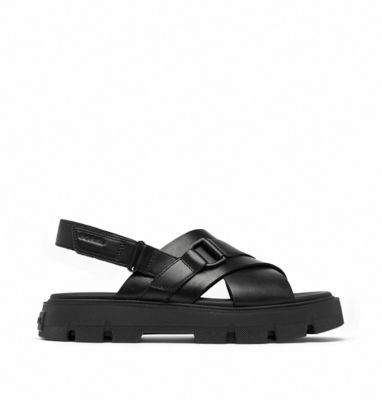
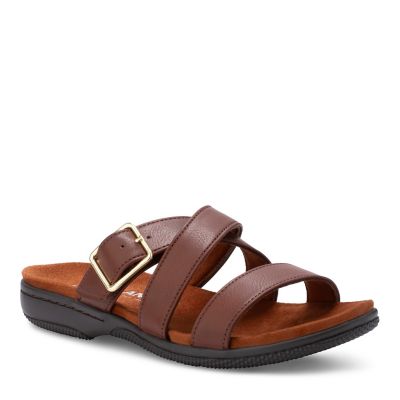
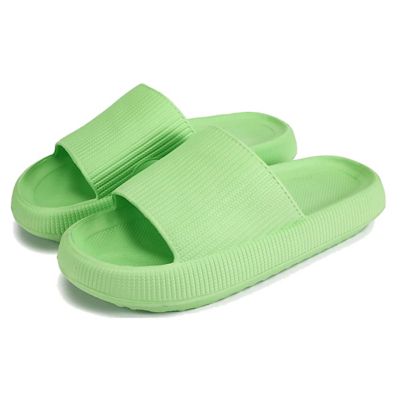
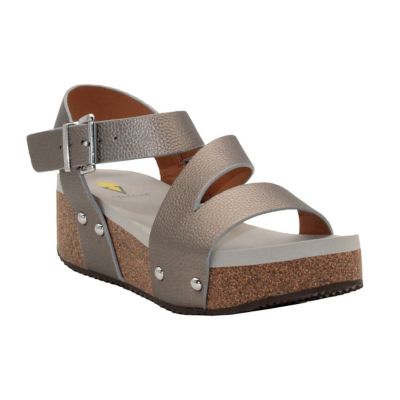
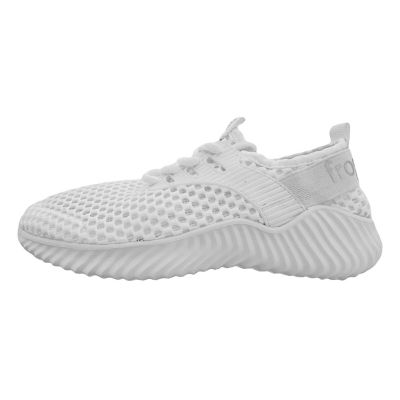
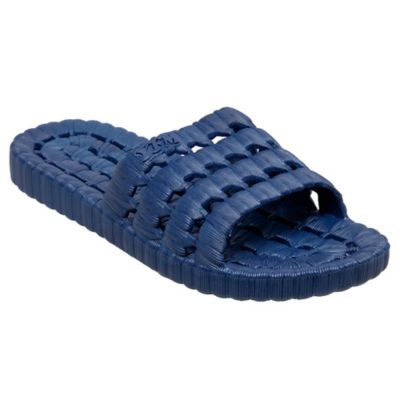
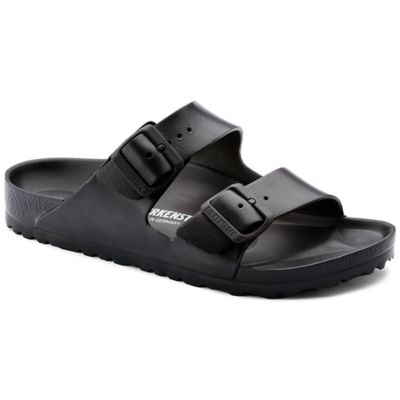
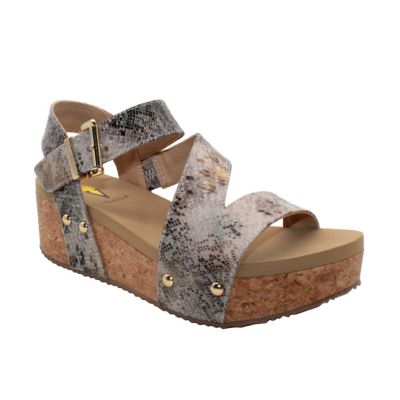
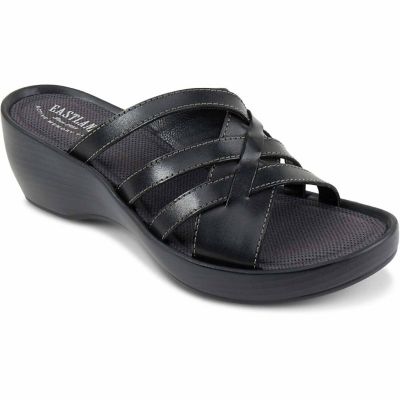
Women’s sandals with arch support combine an open design with a shaped footbed that supports the underside of the foot. That support usually comes from a raised contour through the arch, often paired with a recessed heel cup and cushioning under the heel and forefoot. These features do different jobs: the arch contour provides contact beneath the midfoot, the heel cup helps keep the foot centered, and cushioning softens the feel of each step. A soft footbed alone does not necessarily provide arch support, and a higher arch contour is not automatically a better fit. Comfort depends on how the shape lines up with the foot, how securely the sandal stays in place, and what the day has in store. For a trip into town, a stretch of errands, or time spent on your feet around the house, a supportive sandal can offer a more structured feel than a flat, flexible sole. Slides, thong sandals, and backstrap styles each bring a different feel. Slides slip on easily for a quick trip out the door, while a strap behind the heel can help hold the foot in position during longer walks. Thong styles leave much of the foot uncovered, though the toe post needs to sit comfortably without rubbing. Adjustable straps across the forefoot or instep allow changes in fit without requiring the toes to grip the footbed to keep the sandal on. Wider straps can spread contact over a larger area, while padded linings can soften the feel against bare skin. For women who spend part of the day driving between stops and part walking through stores or visiting neighbors, the balance of support, cushioning, and secure fit matters more than any single feature. Arch support sandals for women are still open footwear, so they belong with everyday walking and casual outings rather than chores that call for covered toes, protective footwear, or work around machinery.
Materials play a big part in how supportive sandals feel, hold their shape, and stand up to repeated wear. Leather uppers often soften with wear and can bring a straightforward look that pairs with jeans, cropped pants, or a casual dress. Suede has a softer surface but generally needs more protection from spills and stains. Textile straps can feel light against the foot, while synthetic uppers vary from smooth, easy-wipe surfaces to padded constructions with a more substantial feel. Strap edges and seams deserve attention because those are common contact points against bare skin, especially across the toes and along the instep. Underfoot, molded foam can provide cushioning without much weight, while a cork blend or another firmer footbed material may offer a more structured platform. The material name alone does not tell the whole story; footbed shape, thickness, and construction all influence the feel. A sandal may combine a supportive base with a softer top layer, giving the foot some cushion without letting it sink deeply into the sole. Footbed coverings also affect the experience, with textured or fabric-lined surfaces feeling different from smooth molded materials. Rubber outsoles and tread patterns can add grip, though performance depends on the surface and the sandal’s intended use. No tread pattern makes open footwear suitable for every walkway or task. A broad base beneath the heel can feel steadier than a narrow platform, and a sole that bends near the ball of the foot can allow a natural step without folding through the middle. Heel height matters, too: the relationship between the heel and forefoot changes how weight rests across the sandal. Low-profile styles suit many everyday routines, while raised soles or wedges have a different feel underfoot. Construction details such as reinforced strap attachments, even stitching, and firmly bonded sole edges help explain how a sandal may handle regular wear.
Fit brings all those features together. The heel and toes should rest fully on the footbed, with enough room that neither hangs over an edge during a step. At the same time, extra length is not a substitute for the right width, and a loose sandal can let the foot slide away from the arch contour. Women’s sandal sizing can vary by style, so foot measurements and the size information for each design are more useful than assuming every pair fits alike. Measuring both feet helps account for differences between them, and trying sandals later in the day can give a better sense of fit when feet have had time to expand. Adjustable closures are especially helpful when the forefoot and heel need different amounts of room. Straps should feel secure without pressing sharply, and the arch should feel supported rather than poked or forced upward. A firmer footbed may feel different at first, but rubbing, pinching, or pain should not be treated as something to push through. For anyone managing ongoing foot discomfort, a clinician can help clarify what support is appropriate; sandals are not a substitute for treatment. Everyday care also helps preserve the fit and feel. Following the material-specific care directions matters, since a leather upper, a cork-based footbed, and a molded synthetic sandal may need different cleaning methods. Brushing away loose dirt, wiping away residue as directed, and letting sandals dry away from direct heat can help protect straps, adhesives, and footbed surfaces. Machine washing or soaking is appropriate only when the care instructions permit it. Signs such as a flattened footbed, a leaning heel, loose straps, or worn tread can mean the sandal no longer feels or holds the foot as it once did. Supportive sandals can also make a thoughtful gift for someone who enjoys easygoing footwear, especially when their size and preferred strap style are known. For more on the features that contribute to underfoot comfort, explore
Best Sandals For Foot Support. The right match comes down to a footbed that fits, straps that stay comfortable, and a sole suited to the places the day takes you.