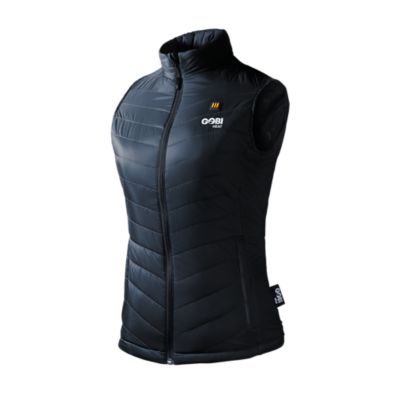
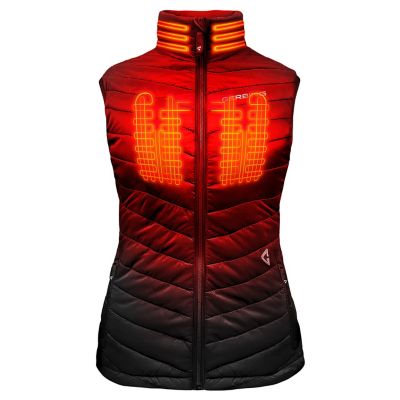
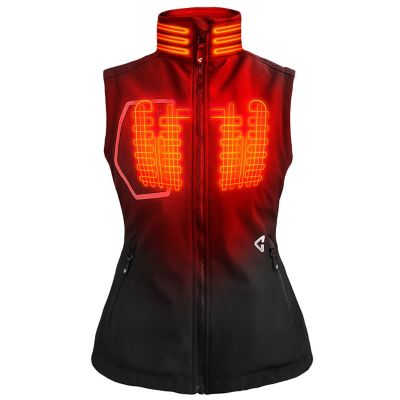
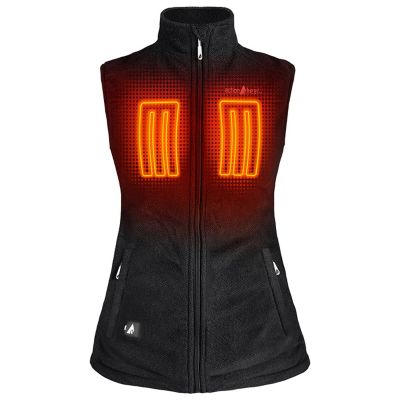
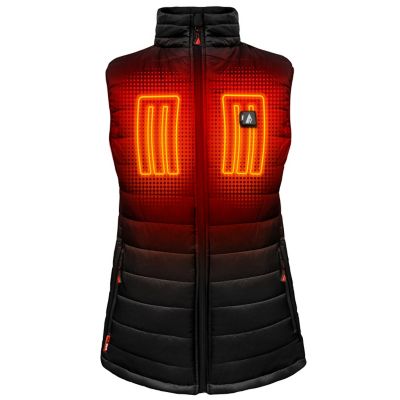
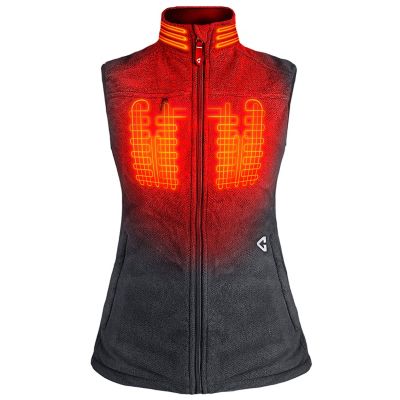
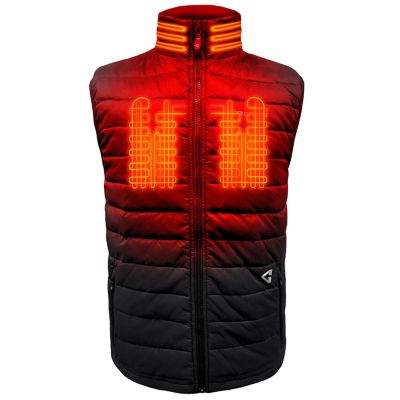
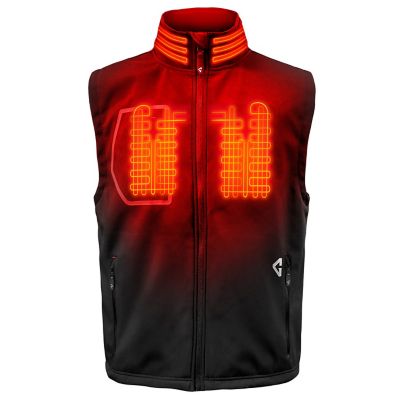
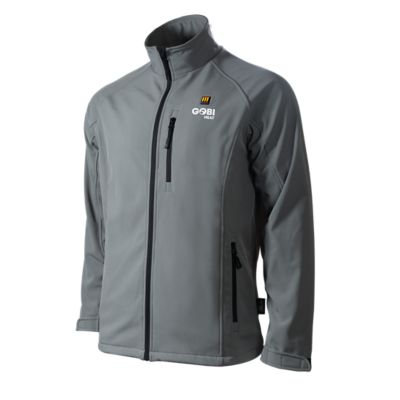
A women's heated vest provides targeted warmth around the torso through heating elements powered by a rechargeable battery. Unlike a regular insulated vest, it can add heat at the push of a button while leaving the arms free for work and everyday movement. That makes it a practical layer for checking fence lines, feeding livestock, walking the property or watching a game from cold metal bleachers. Heating elements may contain carbon fiber or other conductive materials, with zones positioned across the chest, back, collar or pocket areas, depending on the design. The number and placement of those zones matter just as much as the overall warmth: heat across the back feels different from heat near the collar, and not every vest warms every part of the torso. Adjustable settings commonly include low, medium and high, allowing the wearer to change the heat level between active chores and longer stretches of standing still. Battery run time depends on the battery's capacity, the selected setting, outdoor conditions and the vest's heating system. Higher settings generally draw more power, so a maximum run-time claim should not be taken to mean the same length of warmth at every setting. Charging time also varies, making battery details worth checking for anyone planning a long morning outside. A battery usually sits in a designated pocket and connects to the vest's internal wiring. Its size, weight and position can affect comfort, especially when bending to fill a feed pan or sitting in a truck. Easy-to-reach controls are helpful when a coat covers the vest, though buttons and operating methods differ among designs. The insulation still serves a purpose when the heating system is switched off, while the powered elements offer another way to manage comfort. For women whose day moves between the barn, the driveway and an indoor workspace, that combination can make a heated vest a useful part of a flexible layering setup.
Materials and fit shape how a women's heated vest feels through a full day of wear. Nylon and polyester shells are common, and some designs include a water-repellent finish or construction that helps block wind. Those features can help with light moisture and breezy conditions, but water resistance does not mean a garment is waterproof. Down or synthetic insulation may provide warmth around the heating zones; the amount and type of fill affect weight, loft and how easily the vest fits beneath another layer. Fleece-lined sections can add softness, while a smoother lining may slide more easily over a flannel shirt or sweatshirt. A
Lightweight Heated Vest can suit women who want powered warmth without a thick outer layer, particularly when shoulder movement matters for handling tools, carrying feed or working around horses. A comfortable fit sits close enough for the heating areas to rest near the body without squeezing the chest or restricting movement. Room through the shoulders and armholes matters when reaching across a gate, and enough space at the hem helps when crouching beside a water trough. Women's sizing varies between designs, so body measurements and the garment's size chart provide a better starting point than a familiar size alone. The intended base layer matters, too: a vest worn over a thin long-sleeve shirt may fit differently over a heavy sweatshirt. Length can affect coverage when sitting or leaning forward, while the collar shape determines how the vest feels beneath a zipped coat. Pocket placement deserves attention when gloves, a phone and the battery all need room. Shell fabric, stitching, zipper construction and care also influence how well the garment stands up to repeated wear. Around rough lumber, wire and tools, a vest still needs protection from snags and abrasion. As a gift for a partner, mother or friend who spends time outdoors, heated apparel is most useful when the fit, care requirements and battery arrangement match her routine.
Care for a women's heated vest involves both the fabric and the electrical components, so the garment label and manufacturer's directions should govern cleaning, charging and storage. The battery needs to be disconnected and removed before washing. Some heated vests allow machine washing under specified conditions, while others require a different cleaning method; a mesh laundry bag, gentle cycle or particular detergent may be part of the instructions. Drying directions matter just as much, since a tumble dryer, direct heat or twisting the garment can harm components in designs that do not permit those methods. The vest and its connections should be fully dry before the battery is reconnected. Mud along the hem, dust from the barn and everyday wear can call for different levels of cleaning, and spot cleaning may be suitable when the label allows it. Keeping the battery pocket free of loose debris helps protect the connection, while checking the cord, connector and shell for damage is a sensible part of regular care. Batteries and chargers need to match the heating system's requirements; a similar-looking plug does not establish compatibility. Charging and storage should follow the battery manufacturer's directions, including any limits on temperature and charging conditions. For longer outings, a spare compatible battery may extend access to powered warmth, but it adds weight and needs safe storage. Heated clothing is also only one part of dressing for cold conditions. Base layers, a suitable outer coat, gloves and footwear still matter when the job keeps someone outside. Heat settings should remain comfortable rather than excessively hot, and manufacturer warnings deserve particular attention for anyone with reduced sensitivity to heat. With the right fit and routine care, a heated vest can move between practical chores and leisure time, from tending animals before breakfast to a long afternoon along the sidelines, adding adjustable torso warmth without covering the arms.