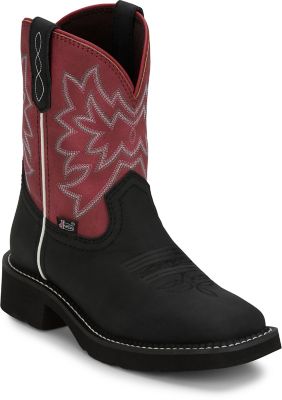
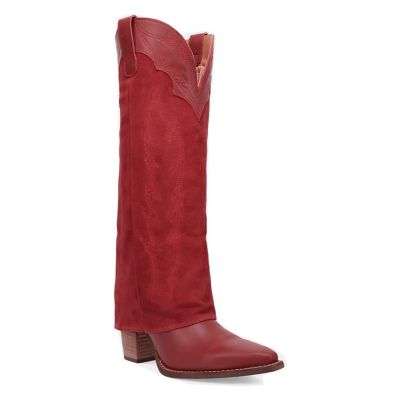
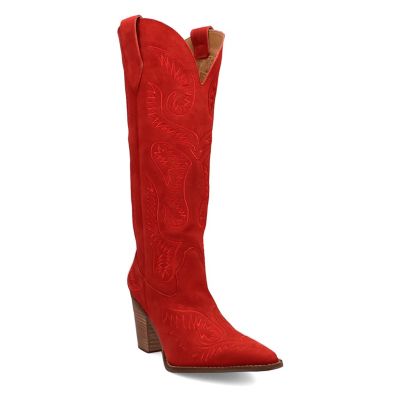
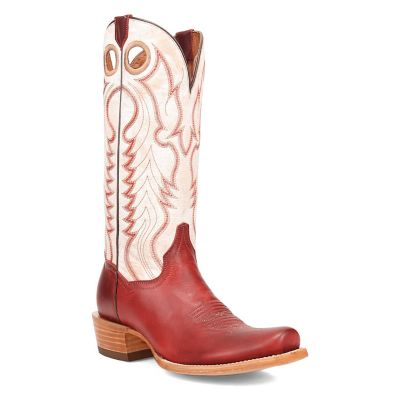
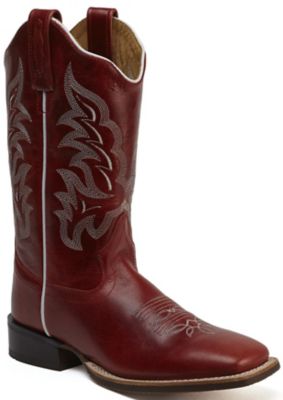
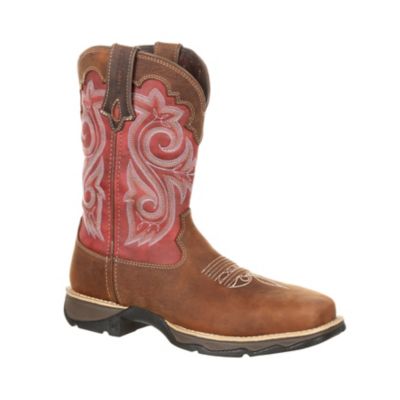
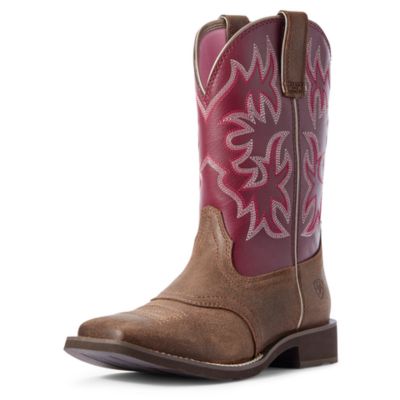
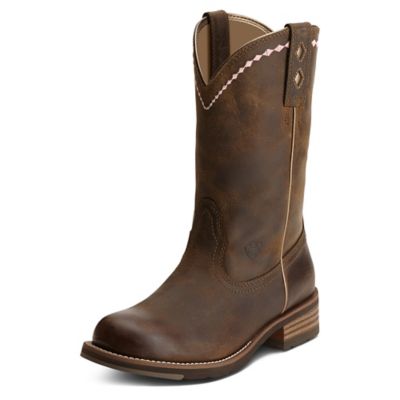
Women’s red cowboy boots bring a little fire to a familiar western look, whether they’re peeking out beneath bootcut jeans or taking center stage with a denim skirt. Red has plenty of range: bright cherry shades make a bold statement, deeper wine tones feel understated, and earthy brick reds sit comfortably alongside worn denim and brown leather belts. The shape matters just as much as the color. A tall shaft with traditional stitching gives a boot that recognizable western profile, while a shorter shaft leaves more of the leg visible and pairs easily with cropped jeans. Contrasting thread, shaped pull tabs, and patterned overlays can add detail without changing the straightforward character of the boot. For a county fair, a country concert, or a night at the dance hall, red boots can carry the outfit while everything else stays simple. They also fit right in at a barn wedding, especially with a flowing dress that leaves enough room to walk and dance. Materials influence both the appearance and the feel. Full-grain leather often shows natural variations in its surface and develops creases where the foot bends. Suede has a soft, brushed texture that gives red a more muted look, while smooth leather can range from a low sheen to a polished finish. Synthetic uppers offer another option, with their own flexibility and care requirements. A leather lining may feel different against the foot than a textile lining, and padding around the footbed can change how a boot feels over several hours. Stitching around the shaft is part of the look, but stitching and attachment at the sole also deserve attention when comparing construction. Boots meant mainly for dressing up may put more emphasis on their silhouette, while pairs intended for frequent walking need a balance of support, flexibility, and a sole suited to the ground underfoot. The right combination depends on whether the day means sitting in the grandstand, strolling around town, or spending most of it on your feet.
Fit makes the difference between red cowboy boots that look good in the closet and a pair that gets pulled on again and again. Western boots generally hold the foot through the instep rather than with laces, so that area should feel comfortably snug without pressing hard across the top of the foot. A little heel movement can be normal in a new pull-on boot, but substantial lifting or rubbing calls for a closer look at the size and shape. Toes need room to rest naturally, even in a pointed style; the narrow tip is not meant to be filled by the foot. Rounded, square, and snip toes each change the outline, though the room inside depends on the particular boot’s construction rather than the toe name alone. Width matters, too, especially across the ball of the foot. Leather may soften with wear, but a boot that pinches sharply or crowds the toes should not be expected to stretch into a comfortable fit. Trying boots with the socks you plan to wear gives a better sense of the space inside, and anyone who wears an orthotic needs enough room for it without crowding the instep. Shaft circumference deserves the same attention as foot size. A taller boot should fit around the calf without digging in, and jeans tucked inside take up additional space. Heel height changes the feel of a stride, while the heel’s width and shape affect stability on uneven ground. Outsoles matter for intended use: leather soles and rubber soles feel different on concrete, gravel, and a dance floor, and tread patterns influence grip. A dress-oriented cowboy boot is not automatically suited to chores, workplace hazards, or time in the saddle. Riding calls for footwear with a heel and sole appropriate for the stirrup, while jobs with foot-protection requirements call for boots carrying the specified safety features. Cushioning can help with comfort, but it does not replace proper fit or the protection a task requires.
Keeping women’s red cowboy boots looking good starts with care that matches the material and finish. Dust left in seams and along the welt can collect in the places that flex most, so a soft brush or cloth is handy after a day out. Smooth leather generally benefits from gentle cleaning and a compatible conditioner, applied according to the boot maker’s directions. Too much conditioner can alter the feel or darken the surface, and red finishes may react differently to cleaners, creams, and polish. Testing a small, hidden spot first helps prevent an unexpected color change across the toe or shaft. Suede needs its own brush and suitable care products rather than the same treatment as smooth leather. Synthetic materials also have different needs, making the care label a better starting point than an all-purpose leather routine. If a pair becomes damp, letting it air-dry away from direct heat helps protect its shape and finish. Giving boots time to air between outings helps the lining dry, while boot shapers can keep taller shafts from folding over in storage. Scuffs across the toes may become part of the character of a well-worn pair, but loose stitching, a lifting sole, or a worn heel deserves attention before the damage spreads. Depending on construction, a boot repair shop may be able to replace heels or soles and extend the pair’s working life. Red cowboy boots can also make a thoughtful gift for someone who loves western dancing, rodeo weekends, or a little color with everyday denim. Knowing the recipient’s usual boot size, preferred toe shape, and calf fit makes that choice more personal. For couples who enjoy a coordinated western look,
Men's Red Cowboy Boots offer a related direction without requiring matching outfits. Whether dressed up or paired with well-worn jeans, red boots feel most at home when their fit, construction, and character suit the person wearing them.