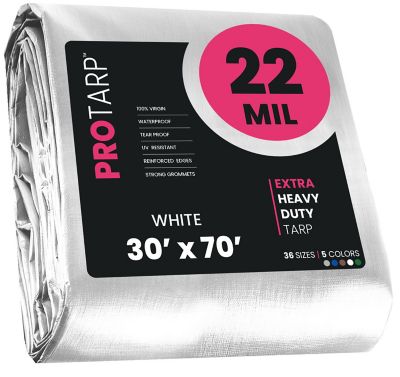
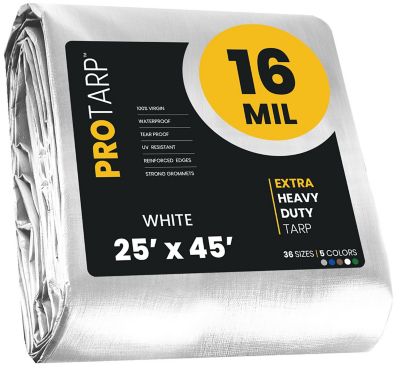
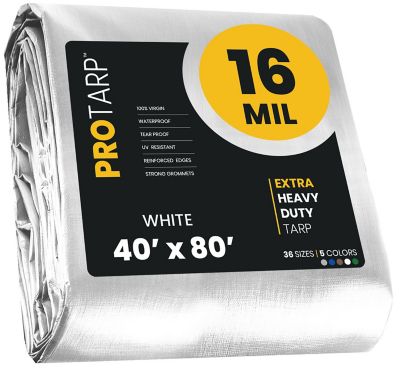
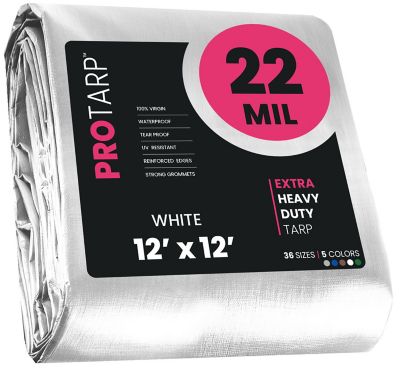
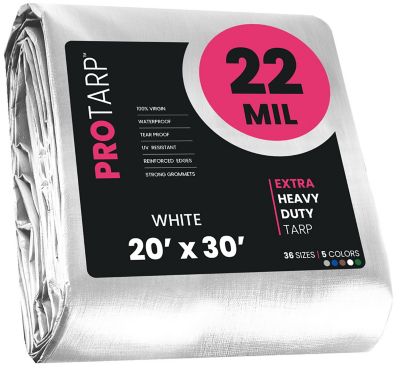
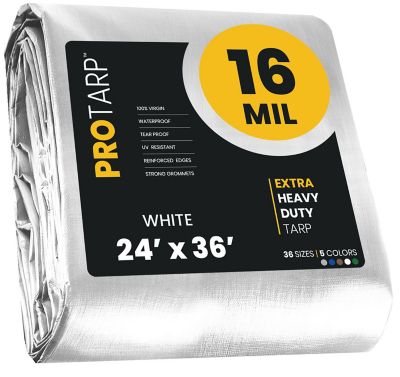
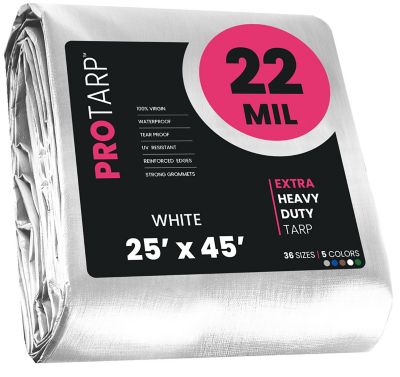
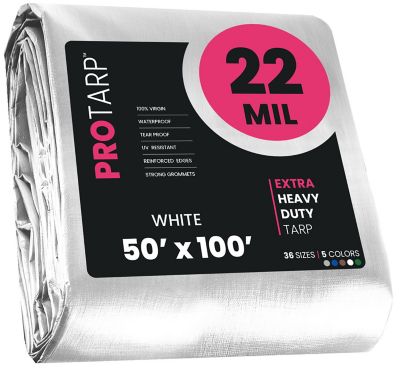
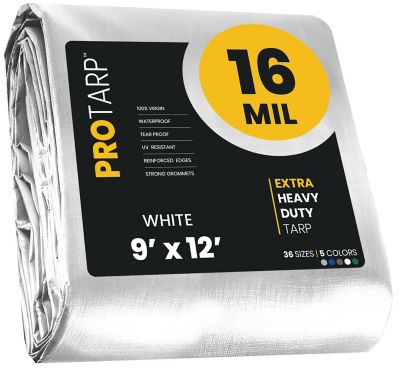
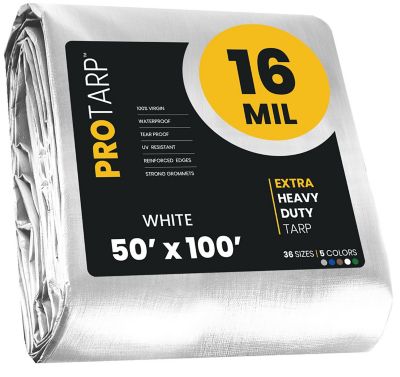
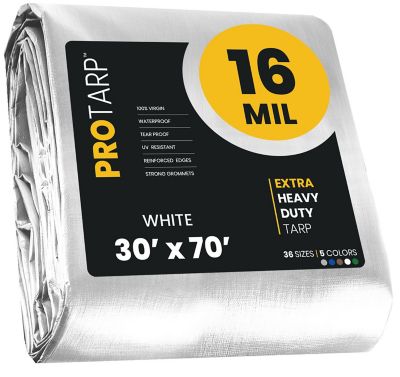
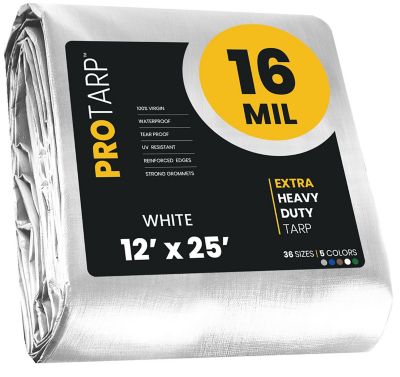
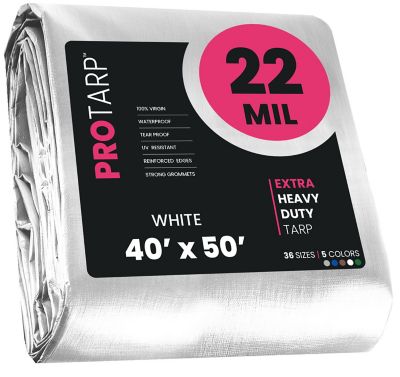
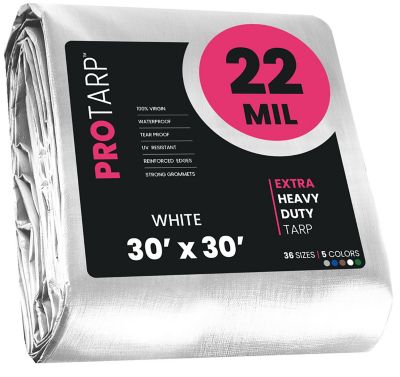
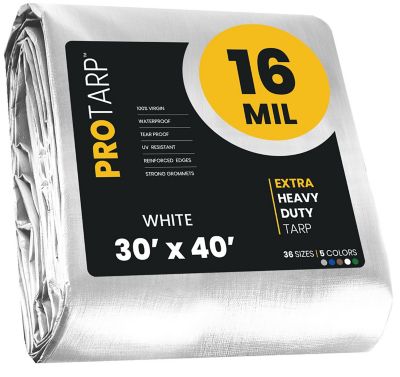
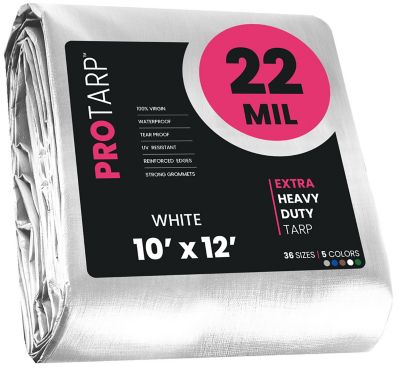
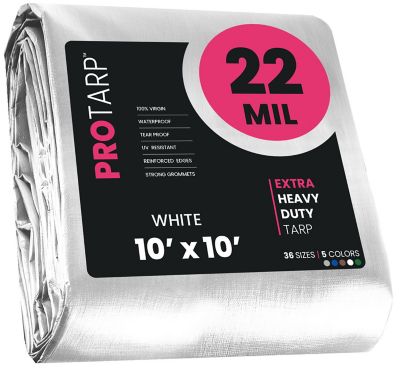
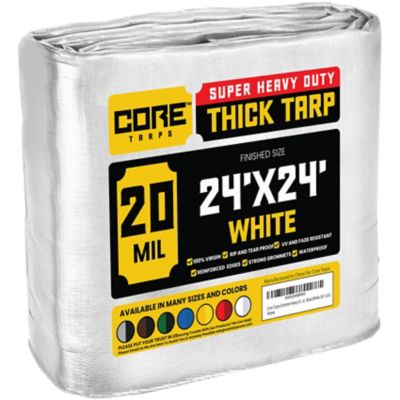
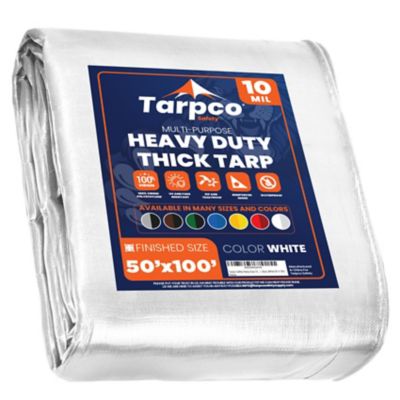
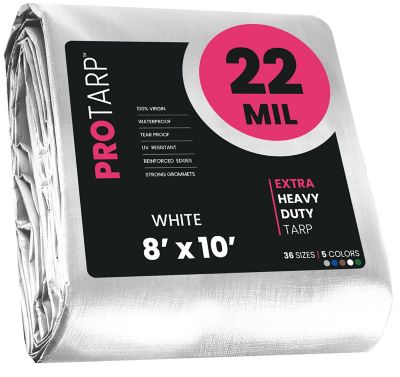
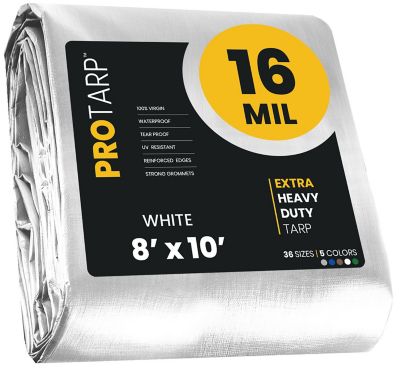
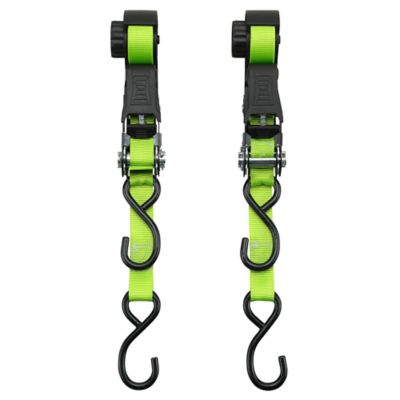
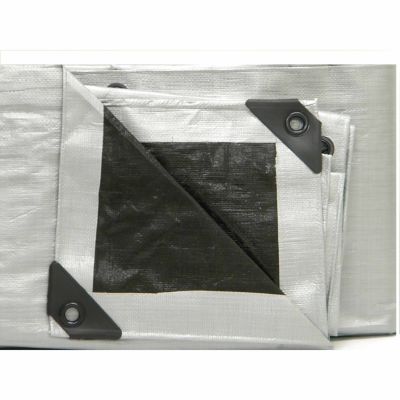
White tarps are handy covers for the farm, homestead, workshop, jobsite and backyard. Their light color gives them a clean, easy-to-see appearance while helping reflect sunlight, which can be useful when covering equipment, supplies, firewood, outdoor furniture, garden materials or a temporary work area. A white tarp can also brighten up a shaded space, serve as a simple divider or backdrop, and help you spot the covered item at a glance when the days get shorter. Depending on the material and construction, these covers may help guard against rain, dirt, windblown leaves, dust and snow. They are often used by homeowners getting outdoor spaces ready for cooler weather, farmers protecting feed and tools between jobs, contractors covering building materials, landscapers shielding mulch or soil, and campers creating a dry place for gear. White tarps can be especially useful around events, markets and gatherings where a neat, bright cover fits the setting better than a darker color. Some families keep one folded in the barn or truck for unexpected jobs, such as covering a load during a sudden shower, making a temporary windbreak or protecting boxes while moving items from one building to another. They can also make a practical gift for someone settling into a new home, starting a small farm, managing rental property or spending weekends working on projects outdoors. Like any cover, a white tarp works best when it is matched to the job instead of treated as a one-size-fits-all solution. Think about the space you need to cover, how much overlap you want around the edges and whether the tarp will be used once, occasionally or through an entire season. Measuring the item from end to end and side to side before shopping helps prevent the common problem of coming up short when the tarp needs to be secured. Leave room for a little drape without allowing large pockets where water can collect, and remember that a cover stretched tightly over a sharp corner can wear through faster than one supported with smooth padding.
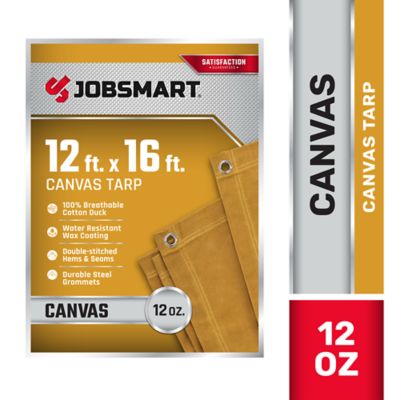
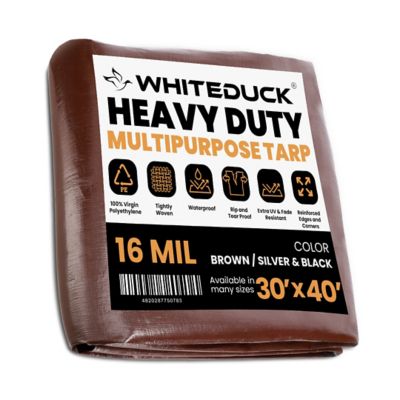
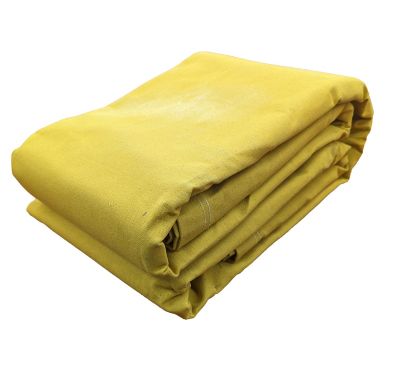
Material, thickness and construction all make a difference in how a white tarp handles everyday use. Coated woven polyethylene tarps are a popular choice for general outdoor covering because they are lightweight, flexible and easy to clean, while heavier versions are better suited to repeated handling, rough ground or extended exposure. Canvas covers have a different feel and may be preferred for certain agricultural, workshop or storage tasks where a breathable, sturdy fabric is a better fit; shoppers looking for that type of material can also browse
Large Canvas Tarps. Check the product details for weight, weave, coating, waterproof or water-resistant performance, UV protection and temperature limitations. A tarp described as water-resistant may shed light moisture but may not be intended for hours of steady rain, and no cover should be expected to stay dry inside if water can enter through seams, folds or the edges. Grommets placed along the perimeter give you more options for tying down the cover, especially when the tarp needs to follow an irregular shape or withstand changing wind. Reinforced hems and corners add strength in high-stress areas, while a generous number of attachment points can help distribute tension instead of putting all the strain on two corners. Before covering a load, smooth away sticks, metal edges and other sharp spots that could puncture the fabric. If the tarp will sit over machinery, leave enough ventilation to limit trapped moisture and allow hot engines or other equipment to cool completely before covering. For firewood, lumber, hay or other stacked materials, a sloped top encourages water to run off rather than settling in the middle. On a trailer or truck bed, secure every exposed edge with suitable rope, straps or tie-downs, and keep the cover from flapping against painted surfaces. A loose tarp can turn into a sail in a hurry, so taking a few extra minutes to anchor it properly is part of getting dependable service from it.
White tarps are useful across the seasons because they can be put to work in both routine chores and last-minute situations. During the cooler months, one may cover patio furniture, protect a stack of split wood, shelter a small work area or keep mud and slush off supplies waiting to be moved indoors. Around the farm, a clean cover can help separate stored items, shield fencing supplies from the elements or provide temporary protection while a more permanent shelter is being repaired. Homeowners may use one while painting, clearing storm debris, trimming trees or making improvements to a shed, garage or outbuilding. For outdoor gatherings, a white tarp can create shade when the weather is mild, though it should be anchored securely and taken down when strong winds are expected. It can also serve as a bright ground cover for sorting tools, organizing garden harvests or keeping camping gear off damp grass. When the job is finished, shake off loose dirt, allow the tarp to dry fully and fold it loosely enough to avoid sharp creases that can weaken the fabric over time. Store it in a dry place away from rodents, fuel, fertilizer and direct sunlight, and inspect the grommets, hems and corners before using it again. Keeping a few different sizes on hand can save a trip to town when weather moves in or a project changes shape. Whether it is headed to a busy barn, a pickup bed, a workshop or a backyard, the right white tarp offers a straightforward way to keep useful things covered, visible and ready for the work ahead.