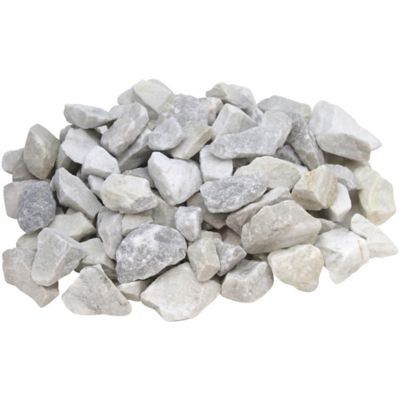
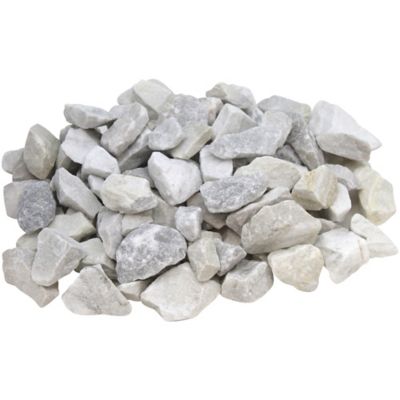
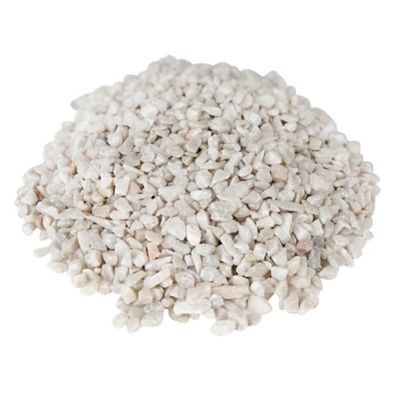
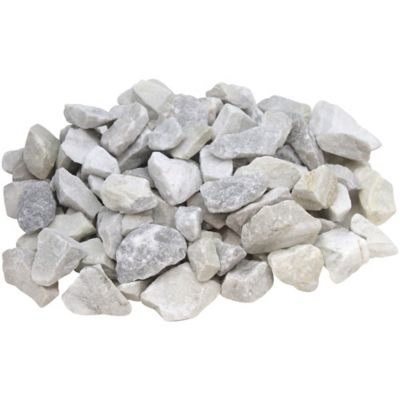
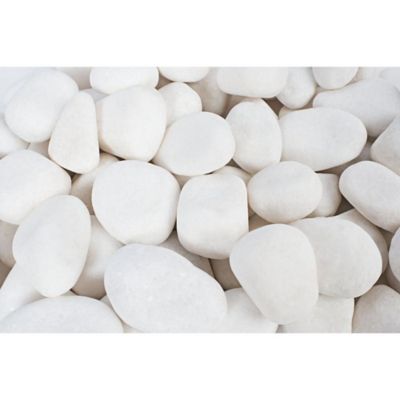
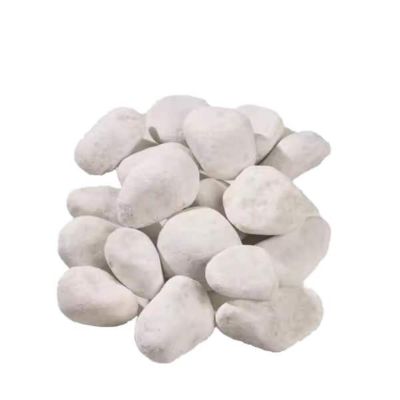
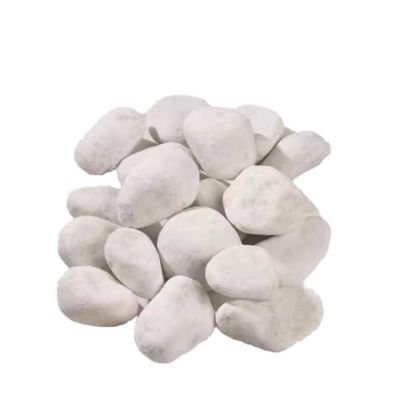
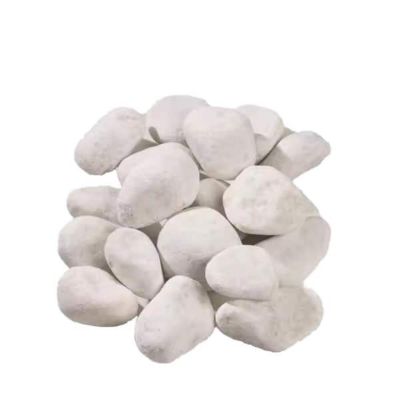
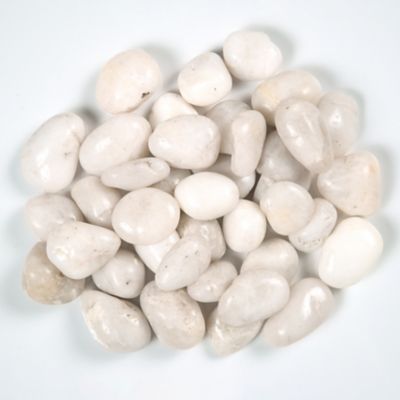
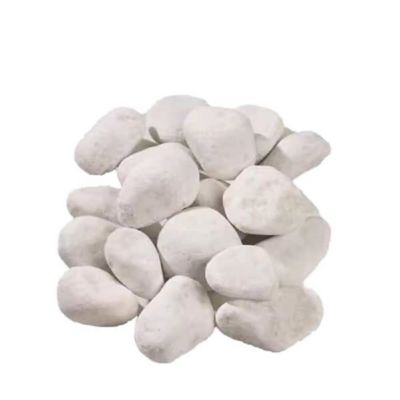
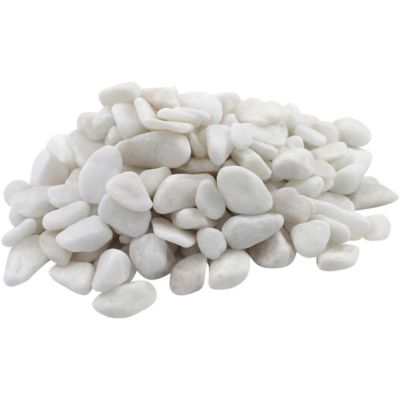
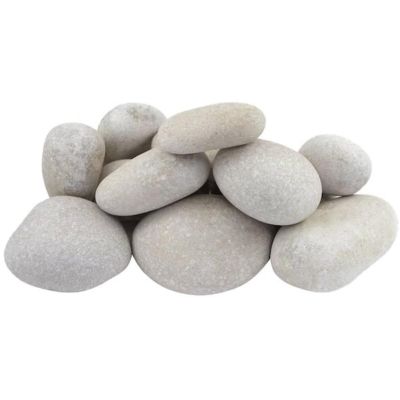
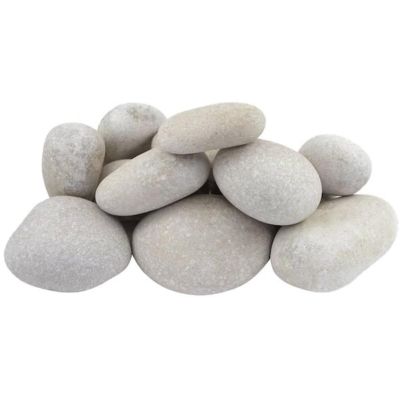
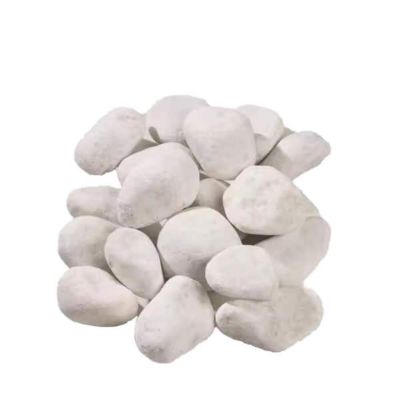
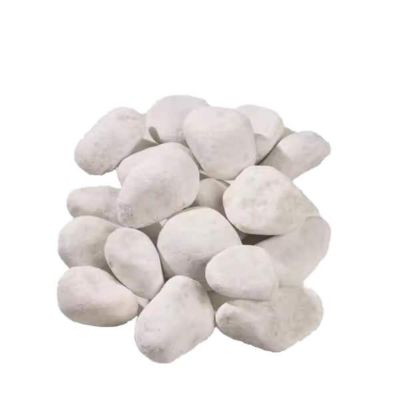
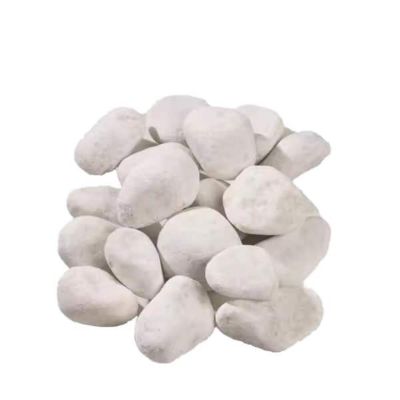
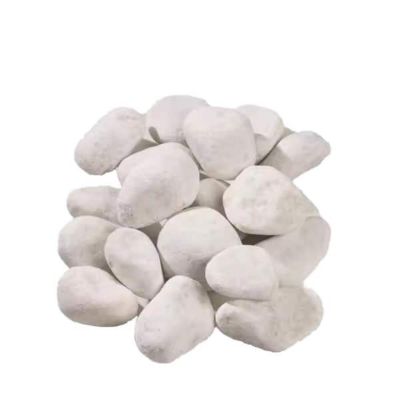
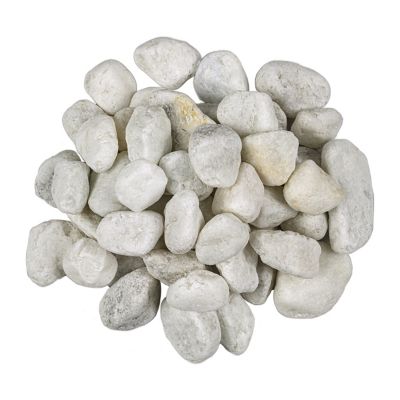
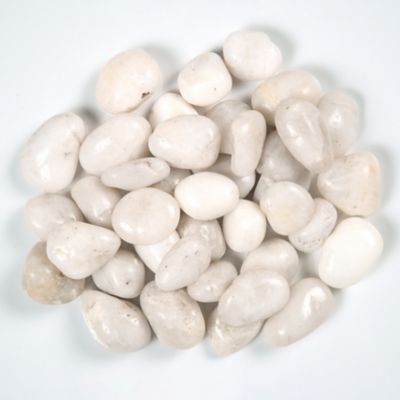
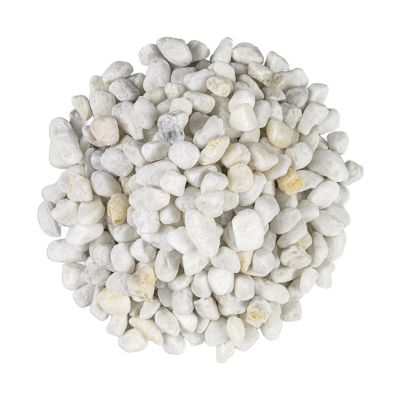
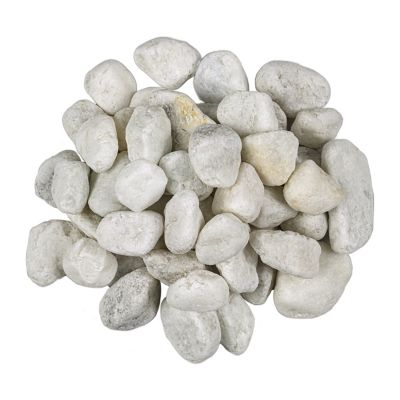
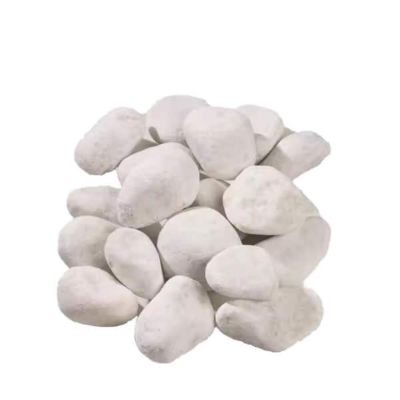
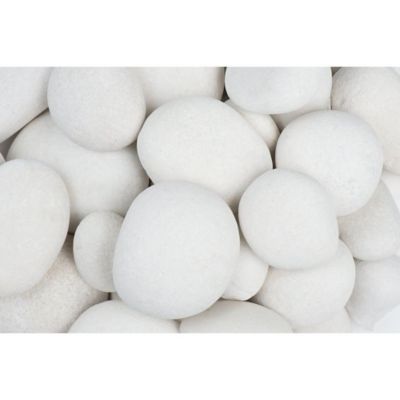
White marble landscaping rocks bring a bright, clean look to outdoor spaces without taking attention away from the land around them. Against green shrubs, dark soil, a brick foundation, or a split-rail fence, their pale color gives planting beds and borders a clear outline. They fit just as naturally around a farmhouse porch as they do beside a backyard patio, along a front walk, or in a small bed near the driveway entrance. Marble is a natural stone made largely of calcite, and its crystalline surface can catch the light with a soft sparkle. Color can range from chalky white to cream or light gray, with occasional veins and flecks that keep a bed from looking flat. Those differences are part of the material, so a finished area may have more variation than a small sample suggests. Most marble landscape chips have irregular shapes and fractured edges rather than the smooth contours of river pebbles. That texture gives them a crisp appearance and helps neighboring pieces settle together, though they remain loose stone rather than a solid walking surface. Smaller chips tend to create a finer-looking cover around established plants, while larger pieces give open beds a stronger texture. For a property owner freshening up a mailbox bed or defining the edge of a gathering area, that balance of color and size matters as much as the overall layout. White stone can make a narrow border easier to see, and a broad patch can provide a quiet backdrop for a bench, planter, or substantial shrub. Anyone comparing marble with
Natural Landscaping Stones can weigh its bright appearance and angular texture against other stone colors and shapes. The best fit comes down to how the space looks from the porch, how people move through it, and how much plant growth the finished bed needs to accommodate.
Size, depth, and the surface underneath all affect how white marble landscaping rocks perform once they’re in place. Bag weight alone doesn’t tell the whole story; coverage depends on stone size and the intended layer depth, so the stated coverage information is worth checking against the actual square footage of the bed. A thin scattering may leave soil or the underlying fabric visible, while a deeper layer adds weight and makes later planting more work. For a long fence border or several beds around an outbuilding, measuring each section separately helps account for curves, corners, and spaces occupied by plants. A firm, properly graded base helps keep stone from settling unevenly, and edging keeps chips from wandering into grass, gravel drives, or neighboring planting areas. That separation is especially useful beside a lawn, where stray rocks can become mower projectiles. Permeable landscape fabric may help separate stone from soil in some installations, but it isn’t a promise of a weed-free bed. Soil and leaf fragments can collect on top over time and give weeds a place to root. Marble chips suit low-traffic borders and established landscape beds better than spaces that need frequent digging, reseeding, or rearranging. Around a vegetable patch, for instance, a defined stone border may be more practical than covering soil that gets worked regularly. Their angular edges can also feel rough under bare feet or paws, and loose chips may shift beneath narrow wheels, walkers, or mobility aids. A sitting area with solid pavers and marble around the edges offers a different experience from a walkway made entirely of loose rock. Even when the main goal is appearance, access still matters: gates need clearance, irrigation fittings need to remain reachable, and fence posts may need attention down the road. Keeping those everyday chores in mind makes the finished space easier to live with.
White marble landscaping rocks don’t break down like bark mulch, which makes them appealing for beds where the layout is meant to stay put. That staying power also means they take effort to remove if the space later becomes a garden or lawn. Around plants, marble deserves a little extra consideration because its calcite content can gradually raise soil pH, with the effect depending on the soil and site conditions. Plants that prefer acidic soil, such as blueberries, azaleas, and rhododendrons, may be better paired with another ground covering. Marble also doesn’t add organic matter to the soil, so it serves a different role from mulch that decomposes and contributes to soil structure. Leaving room around trunks, stems, and plant crowns helps keep the rock layer from crowding them and leaves space for inspection and care. Near a foundation, stone is a surface covering rather than a fix for grading or drainage problems; water still needs a clear path away from the building. Ongoing care is mostly about keeping the pale surface free of buildup. Leaves, grass clippings, loose soil, and muddy footprints tend to stand out against white stone, especially near frequently traveled paths or beneath trees that shed debris. A gentle rinse can lift ordinary dust, and careful raking can level spots where the chips have shifted. A blower on a low setting may help move dry leaves without scattering as much stone, though smaller chips need a lighter touch. Acidic cleaners, including vinegar, can etch marble, so any cleaning treatment should be labeled as suitable for the material and kept away from nearby plants as directed. Occasional sorting, cleaning, or topping off may be needed to maintain an even appearance. For folks who want a clear border around a porch, a bright bed beside a workshop, or a tidy finish around established shrubs, white marble offers lasting mineral texture with a straightforward look. It works best where its pale color, substantial weight, and loose-stone surface match the way the property gets enjoyed and cared for.