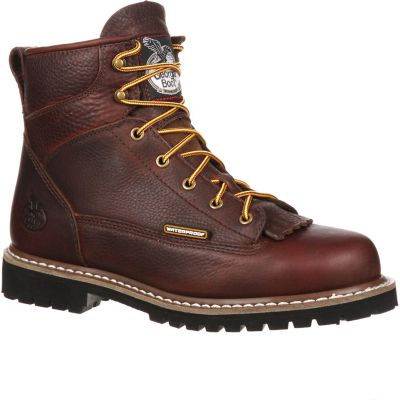
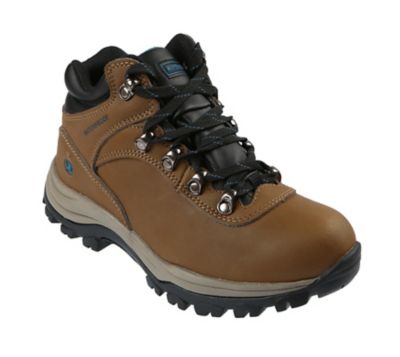
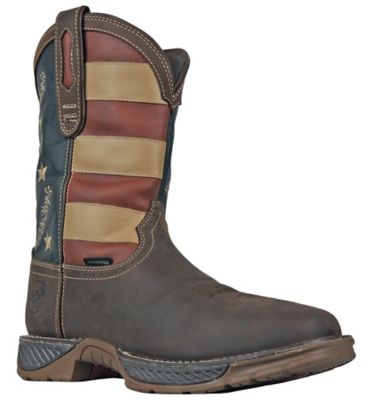
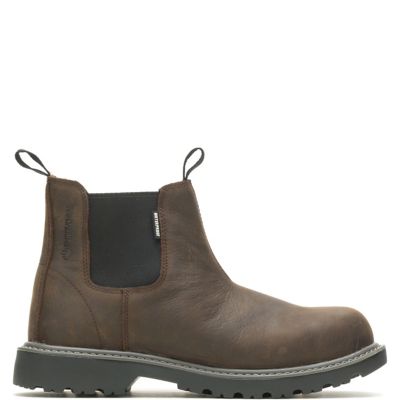
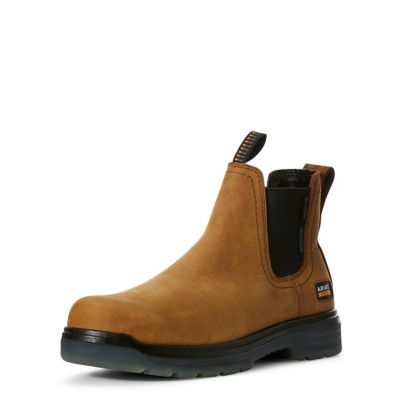
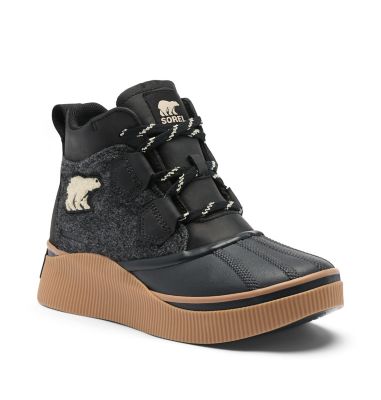
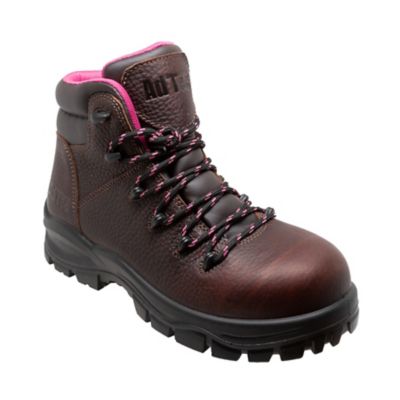
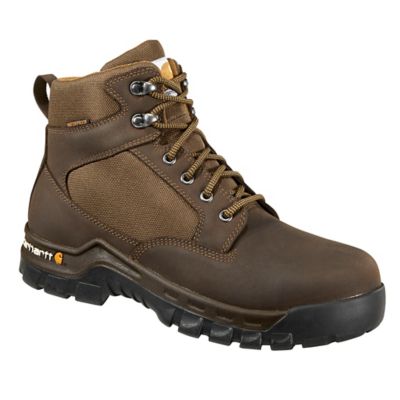
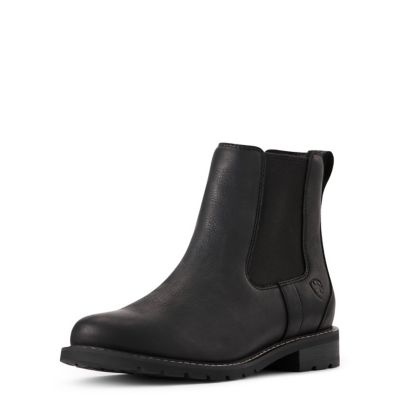
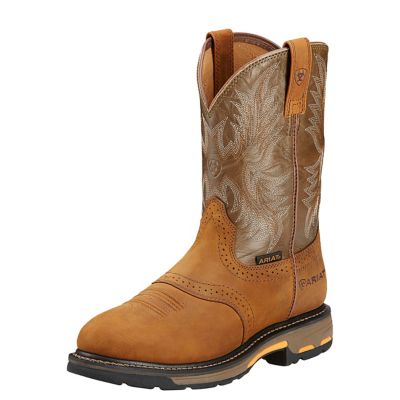
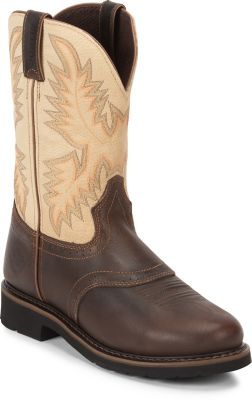
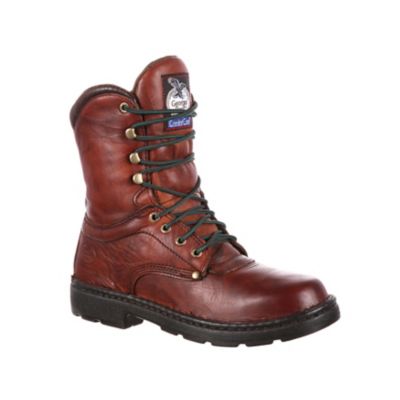
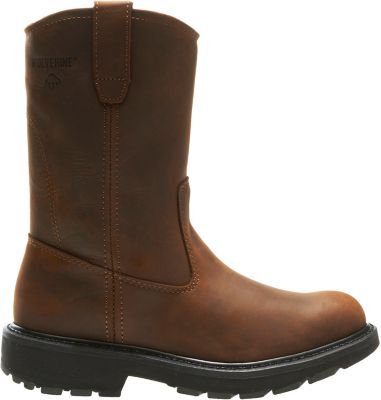
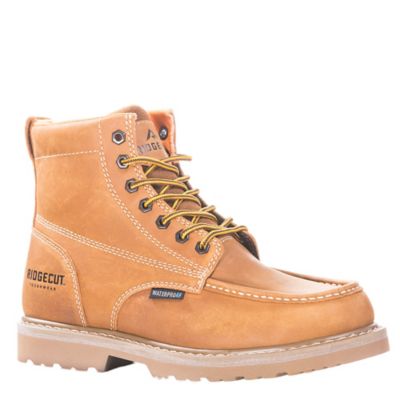
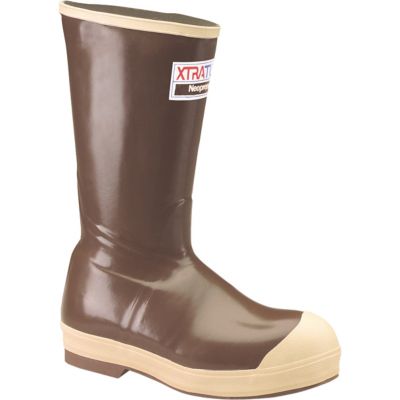
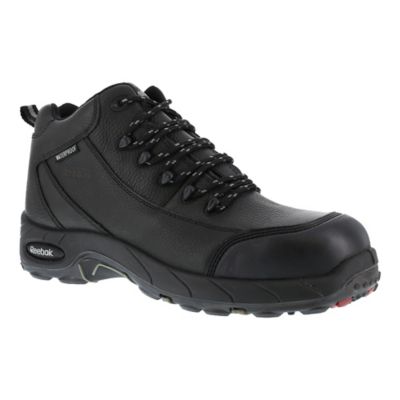
Waterproof leather boots combine leather uppers with water-blocking construction to help keep feet dry through rain, mud, wet grass, and shallow puddles. Many designs pair full-grain leather with an internal waterproof membrane or bootie, along with sealed seams that help keep water from working through stitching. Other construction methods rely on treated leather and sealed components, so the waterproof features of each pair matter more than appearance alone. Water-resistant leather can shed splashes, but that is not the same as a boot built and labeled for waterproof protection. For someone walking a fence line, feeding livestock, or carrying supplies across a soggy yard, that difference can mean finishing the chore without soaked socks. Full-grain leather retains the hide’s natural surface and can soften with wear while standing up to repeated bending and scuffing. Nubuck and suede have a different feel and finish, and waterproof versions need care suited to those surfaces. Reinforced toe and heel areas can help take the scraping that comes with kneeling beside equipment or stepping around rough ground. A waterproof lining adds another layer of protection, but the boot still has an opening at the top. Water that runs over the shaft or down a pant leg can get inside, and ordinary waterproof work boots are not a substitute for waders or footwear designed for prolonged submersion. Shaft height, tongue construction, and the way the upper joins the sole all deserve attention. A gusseted tongue helps close off gaps beside the laces, while a taller shaft offers more coverage through wet brush. Breathable membranes can let some moisture vapor escape, though hard work and heavy socks can still leave feet damp from perspiration. Insulation is a separate feature: waterproof leather boots may be insulated or uninsulated, making it possible to match water protection to the work without assuming every pair is built for snow or freezing conditions.
The best fit for waterproof leather boots leaves room for natural movement without allowing the foot to slide around. Toes need space to spread and should not strike the front when walking downhill or stepping off a truck running board. A secure heel and supported midfoot help keep each step steady, while enough depth through the instep prevents pressure across the top of the foot. Leather may soften as it breaks in, but a cramped toe box or a painful pressure point is not something to count on fixing with wear. Trying boots with the socks intended for work gives a better sense of fit, especially when thicker socks or supportive insoles are part of the routine. Feet can swell over a long day, so a fit check later in the day can reveal tight spots that are less noticeable first thing in the morning. Lace-up styles allow adjustments across the instep and ankle; pull-on styles make for a quicker change at the mudroom door and have their own fit requirements around the heel and shaft. Underfoot features matter just as much. Cushioning can ease the feel of repeated steps on concrete, while a supportive midsole or shank can be helpful when the day includes ladders, uneven ground, or carrying feed. Outsole choice should match the surface. Deeper lugs can find purchase in loose soil, while closely spaced tread may be easier to clear of packed mud before stepping indoors. Slip-resistant ratings are worth checking for wet work areas, although no tread guarantees a firm grip on slick floors, ice, or algae-covered concrete. For work that calls for impact and compression protection, compare
Waterproof Steel Toe Boots and confirm that the pair carries the safety ratings required for the job. Waterproof construction alone does not provide toe protection or electrical hazard protection. Boot weight, ankle flexibility, and the shape of the sole also affect how a pair feels after hours of walking, climbing, or standing at a workbench.
Regular care helps waterproof leather boots keep their shape, flexibility, and ability to shed water. Mud left packed around stitching and along the welt can hold moisture against the leather, while grit can rub at flex points with every step. A soft brush and a damp cloth handle much of the everyday cleanup, with a leather cleaner appropriate for the finish taking care of heavier grime. Care directions matter because smooth leather, suede, and nubuck do not all respond well to the same treatments. After cleaning, boots need time to dry with air circulating around them, away from a heater, stove, or other strong heat source that can shrink or crack leather. Removable insoles can be taken out to help the inside dry, and a boot dryer should only be operated at a setting approved for the footwear. Leather conditioner helps replenish oils in suitable leather, while a compatible waterproofing treatment helps maintain the outer surface’s water repellency. Some wax-based treatments can darken leather or change its feel, and not every treatment works well with breathable waterproof construction. Conditioning the outside will not repair a torn membrane, an open seam, or a sole that has started to separate. Checking those areas, along with worn tread and deep cracks across the forefoot, gives a clearer picture of how much service a pair has left. Storage counts, too: boots fare better clean and dry in a ventilated spot than shut inside a damp bag. For ranchers, grounds crews, outdoor tradespeople, and anyone with chores beyond the porch, the right combination of fit, traction, and water protection can make a long stretch on foot more comfortable. Waterproof leather boots can also make a practical gift for someone who spends plenty of time outdoors, provided their size, preferred fit, and workplace requirements are known. A familiar shaft style, enough room for their usual socks, and features suited to their daily routine will matter more than looks alone.