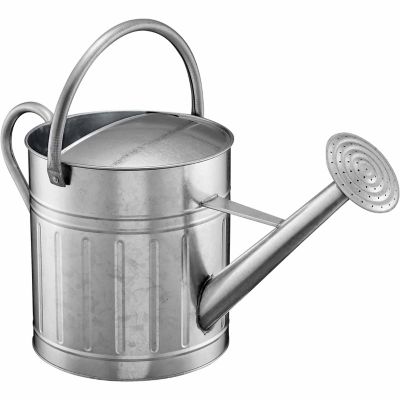
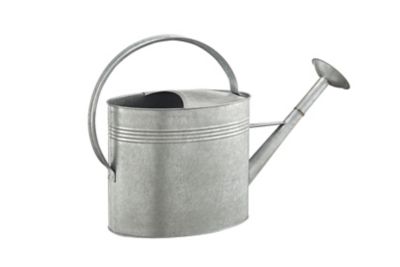
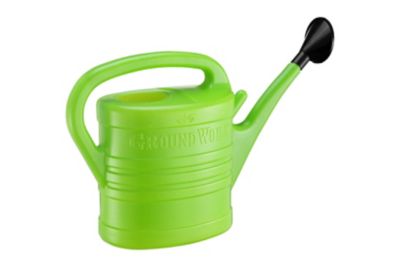
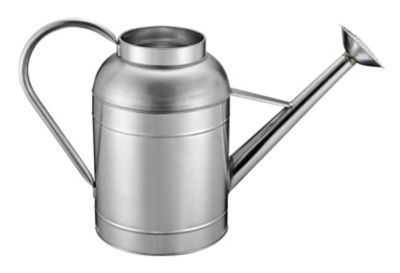
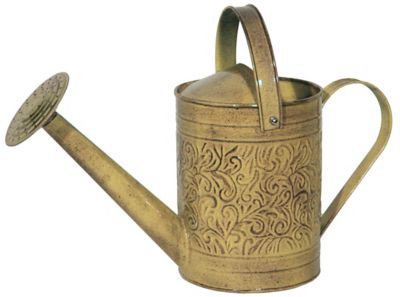
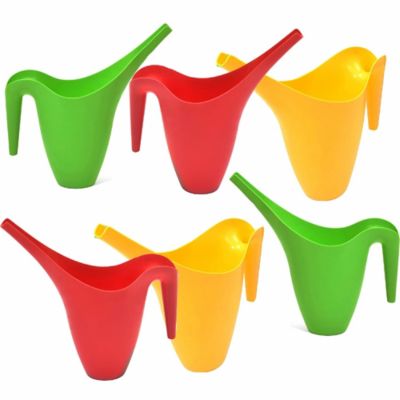
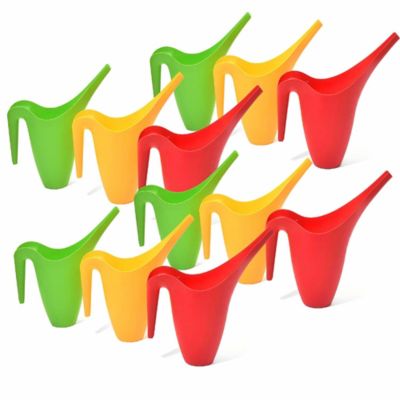
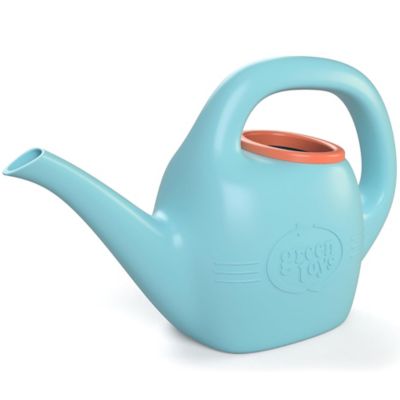
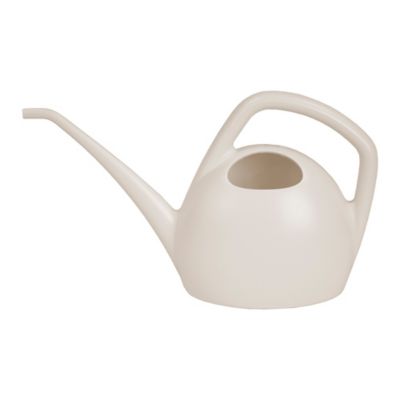
Watering cans are portable containers with a handle and spout that let you carry water and pour it directly onto plant soil. They bring a little control to everyday plant care, whether that means reaching a fern beside the kitchen window, tending porch containers or watering a row of starts on a potting bench. Unlike a hose, a watering can travels wherever the plants are, without a connection to a faucet while you work. Indoor watering cans generally have smaller bodies and slender spouts that fit between leaves and pot rims. Capacities around half a liter to a liter and a half suit a few houseplants, while outdoor watering cans commonly hold about 1 to 2.5 gallons for container gardens, raised beds and larger groups of plants. The right size depends as much on the person carrying it as the number of pots waiting for a drink. A gallon of water weighs a little over 8 pounds before the weight of the container is added, so a smaller can may make more sense when stairs, long walks or overhead lifting are part of the routine. A larger opening leaves room for filling beneath a faucet, while a narrower opening can help limit sloshing along the path from the sink to the porch. Handle shape matters, too. A top handle supports carrying, and a side handle or a handle that curves around the body can give the other hand a steady place to grip when pouring. Enough clearance for a comfortable hold, a balanced body and a base that sits flat all make a difference once the can is full. For someone tending plants in several rooms, a compact watering can can tuck beside a plant stand and reach pots without requiring much rearranging. For someone working along a fence lined with planters, extra capacity can mean fewer trips back to the tap.
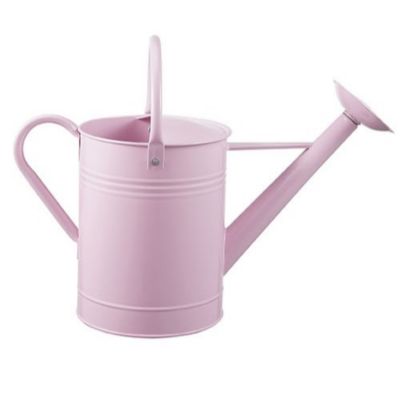
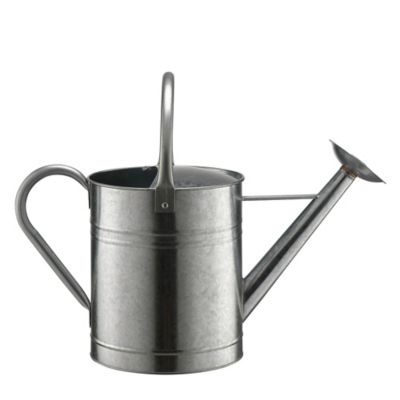
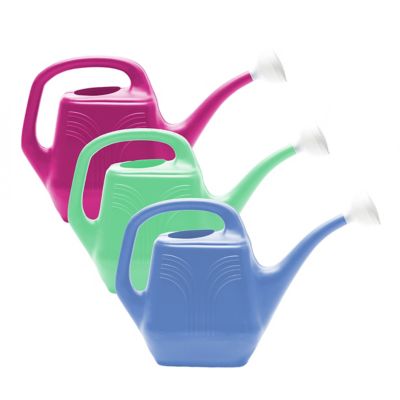
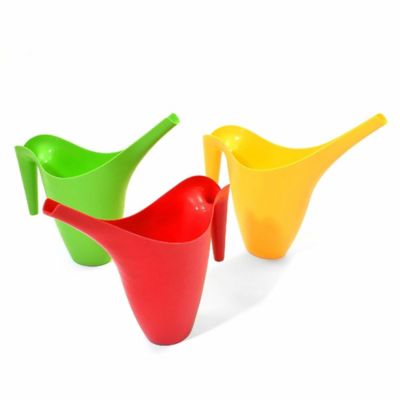
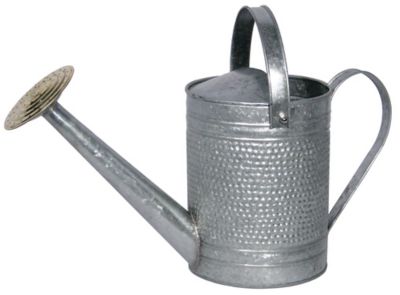
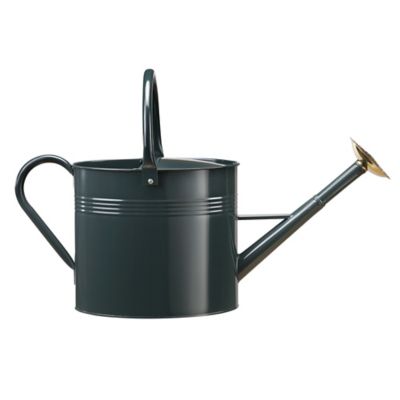
Material and spout design give watering cans much of their character and determine how they feel in everyday work. Plastic watering cans keep the empty weight low, which leaves more of the carrying effort for the water itself. Molded bodies have no metal seams to corrode, though cracks, worn handles and damaged spout connections still deserve attention over time. Metal watering cans have a more substantial feel, with galvanized steel offering a protective zinc coating that helps resist rust while that coating remains intact. Dents, scratches and standing water can affect how a metal can holds up, especially around seams and attachment points. Copper and other metal finishes may change in appearance with handling and exposure, so the finish and care directions matter as much as the look. For indoor plants, a slim, extended spout helps place water near the soil beneath broad leaves or between closely arranged pots. It also gives a clearer view of where the stream lands, which comes in handy around a narrow planter rim or a crowded shelf. Outdoor watering cans may have a broader spout or a removable sprinkler head, often called a rose. A rose breaks the flow into many smaller streams, spreading water across seed trays, young plants and wider containers rather than sending one concentrated stream into the soil. The gentleness of that shower depends on the hole pattern, pouring angle and distance above the planting surface. A removable rose adds flexibility, allowing a shower for tender growth and an open spout for established plants that need water directed toward their roots. A long spout offers reach, but the full length of the can still needs room to turn between shelves, railings or neighboring pots. For hanging baskets, a manageable filled weight is especially important; reaching from a steady standing position is more practical than stretching with a heavy container. These details help distinguish a watering can suited to a few tabletop plants from one built around the work of tending a busy porch or garden bench.
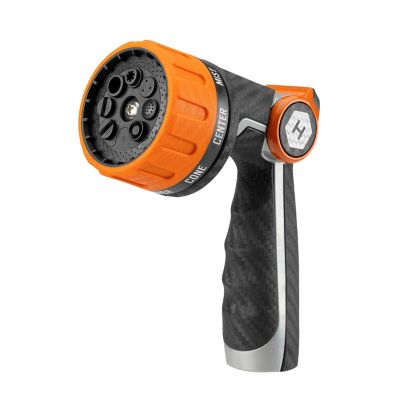
A watering can also fits the small, hands-on jobs that a broader watering setup may not handle as neatly. A newly filled planter may need a slow pour around its edges, while a deep container may benefit from several measured passes that allow water to soak into the potting mix. Soil condition, plant needs and drainage determine how much water belongs in each pot; the size of the can is not a watering schedule. A steady stream makes it easier to pause before water overflows a saucer or runs across a shelf. For larger planted areas, a
sprinkler for gardening can cover more ground, while a watering can handles individual containers and spots that need closer attention. Simple care helps keep that pour consistent. Emptying the can after watering, rinsing away sediment and clearing the rose openings prevent buildup from interfering with the flow. A removable head makes it easier to flush out bits of soil or mineral deposits, and any cleaning method should suit the material and finish. Water-soluble plant food calls for careful measuring according to its label, followed by a thorough rinse so residue does not remain inside the can. A clean, dry storage spot helps protect handles, seams and finishes between tasks. Storage space is worth considering before choosing a size, especially when a long spout must share a shelf with pots, gloves and hand tools. For a gift, a watering can makes sense for a houseplant keeper, a neighbor with a porch full of flowers or a gardener setting up a first potting bench. The most thoughtful fit comes from the recipient’s routine: a light container for short indoor rounds, a narrow spout for crowded foliage or more capacity for a generous collection of planters. With the right balance of reach, grip and water capacity, a watering can becomes a familiar part of tending plants, close at hand for the next pot that needs attention.