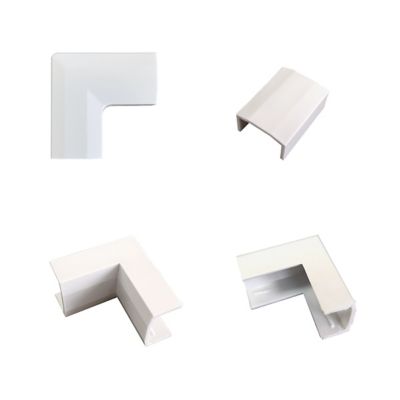
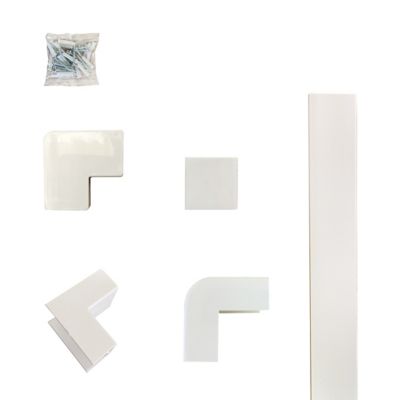
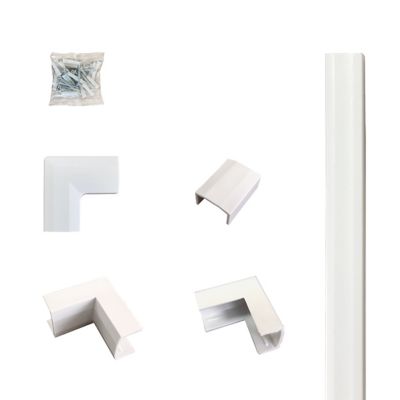
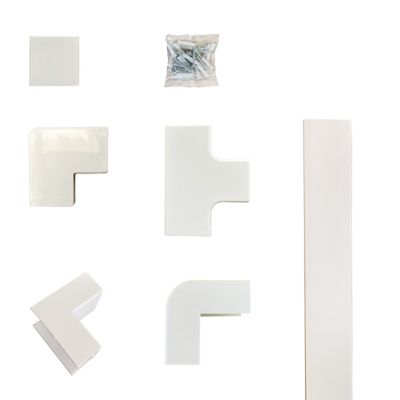
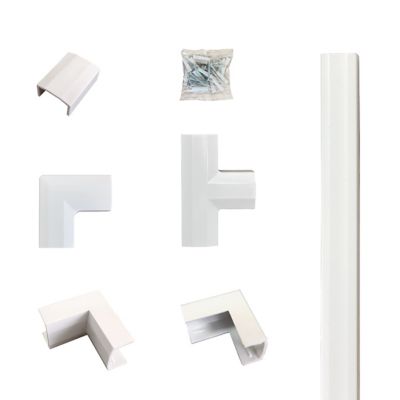
Wall cord covers help bring a little order to the places where everyday life leaves a tangle of cables. Behind a wall-mounted television, alongside a home office desk, or near a workbench, a covered cable path can make the whole space feel more put together without changing much else. Instead of cords hanging against the wall or bunching behind furniture, these covers give compatible wiring a defined route between equipment and its connection point. That can be especially welcome in a farmhouse living room where the television sits well above the outlet, a mudroom with a charging station, or a small office tucked into the corner of a shop. Most wall cord covers have a channel that holds the cables and a face that closes over them, though the shape, capacity, and closure vary. Slim channels suit a small cable run, while wider profiles offer more room for several compatible lines. The outside width alone does not tell the whole story: interior dimensions, cable thickness, and the space needed at bends all affect fit. A cover that looks right along a baseboard still needs enough room for the intended cables without squeezing their jackets or forcing a sharp turn. Connector size matters, too, particularly with designs that require a cable to pass through an opening rather than drop into an open channel. Straight sections work well for a simple vertical run, while matching corners, couplings, and end pieces help longer routes follow the room. Those details make a difference when cables need to travel down from a screen, turn along the wall, and finish near a cabinet. A well-matched layout looks settled into the space rather than like something added in a hurry, and it leaves less loose cable hanging where furniture gets moved.
Material and mounting style play a big part in how wall cord covers fit a room and hold up to everyday activity. Plastic channels, including PVC options, are generally lightweight and easy to handle, with finishes that blend into many painted walls. Metal raceways offer a different level of rigidity and may suit certain utility or work areas, but their suitability depends on the system’s intended application and installation requirements. A smooth white channel can disappear against pale trim, while a darker finish may sit more quietly beside a black desk or television. Some covers accept paint according to the manufacturer’s directions, which can help a cable run blend with the wall rather than stand out across it. Paint compatibility matters because not every surface takes a coating the same way, and the closure still needs to work afterward. Adhesive-backed mounting can suit smooth, clean surfaces when the cover’s instructions allow it, but rough paneling, textured drywall, dusty masonry, and peeling paint present different challenges. A strong adhesive bond can also lift paint or affect the wall finish during removal, an important consideration in a rental house or a room likely to change. Screw-mounted channels offer another attachment method where the wall material, approved fasteners, and location permit it. Neither approach makes every surface a good match. Temperature swings and dampness in an unheated outbuilding may call for ratings beyond those needed in a climate-controlled spare bedroom. The cover’s opening mechanism deserves a look as well. A snap-on face or hinged design can make later cable changes less of a chore, especially at a desk where monitors and other equipment get rearranged. Compatible fittings help keep joints aligned, and shorter sections can fit tight spaces around trim or cabinets. Along a busy wall, resistance to scuffs and incidental bumps matters just as much as appearance, though no cover should be treated as a shield against hard impacts unless it is expressly rated for that job.
The best match also depends on what the cable run serves. A television area may involve power, audio, and data connections, while a home office might need a path for monitor leads and networking cables. Those cables do not automatically belong together in the same channel; the cover’s listing, any required separation, and applicable electrical rules determine what it can carry. Surface cable-management covers are not interchangeable with electrical raceway systems intended for building wiring, and neither makes an ordinary flexible cord suitable for concealment inside a wall. For a permanent electrical change, an electrician can help identify the right approach. Around the house, a cover can make loose cables less exposed, but it should not be counted on as childproofing or protection against a determined pet that chews. On a workshop wall, placement away from moving tools, sharp edges, heat, and splash areas remains important even when a cable has a cover over it. Wall-mounted channels also serve a different purpose from
Extension Cord Safety Covers, which address cord connections rather than a cable’s route along a wall; each calls for attention to its own application and ratings. For day-to-day care, a soft cloth and a cleaner permitted for the cover’s material are usually a better match than harsh scrubbing or soaking. Dust can collect along upper edges and joints, especially near a shop office or an entryway that sees muddy boots and chore clothes. An occasional look at the mounting points and cover seams can reveal loosening adhesive, shifted sections, or a lid that no longer seats properly. Cracked channels and pinched or damaged cables need attention rather than another layer of tape. With the right fit and placement, wall cord covers can keep cable runs orderly through furniture moves, equipment changes, and the ordinary bustle of a working household, leaving the wall looking cleaner while keeping compatible wiring accessible when it needs attention.