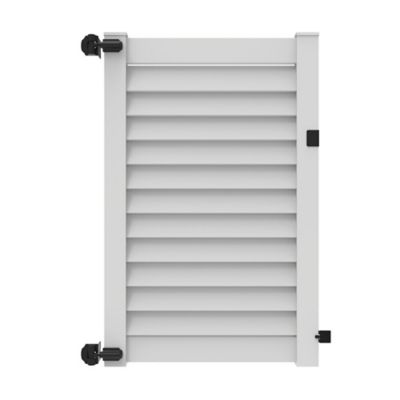
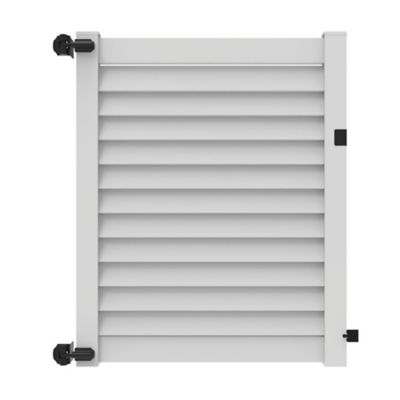
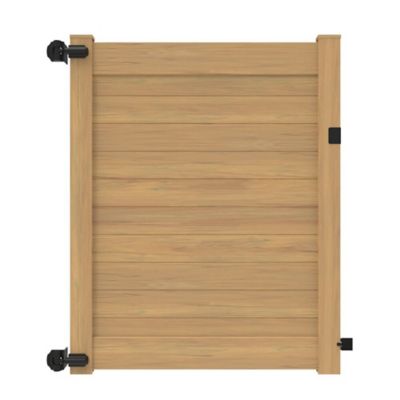
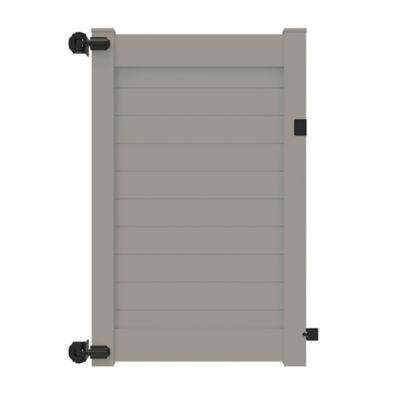
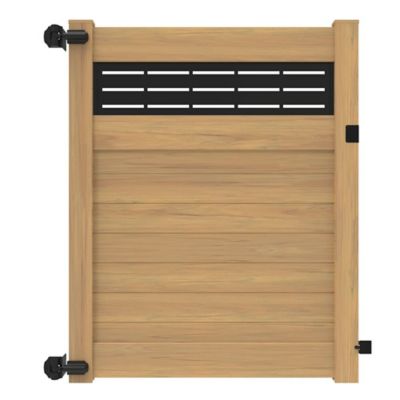
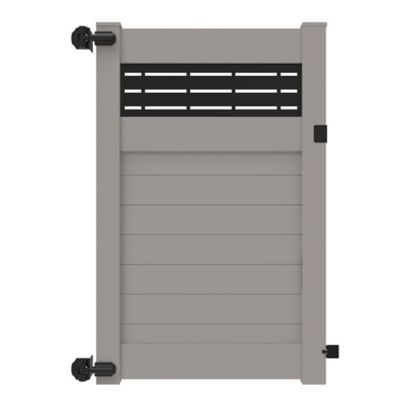
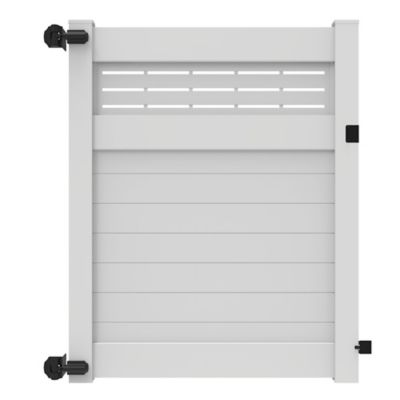
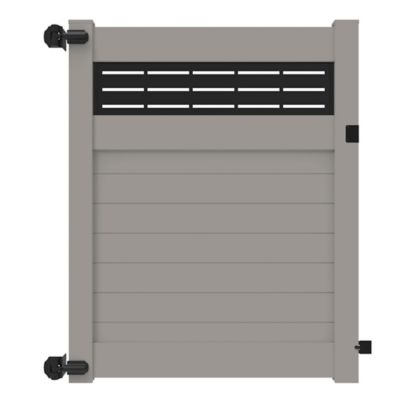
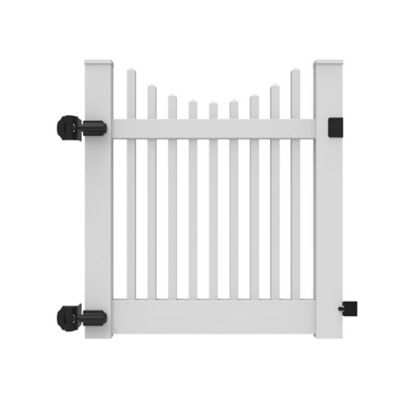
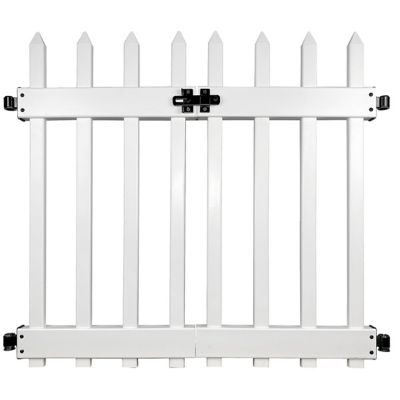
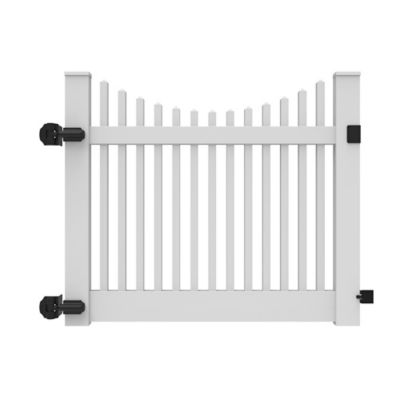
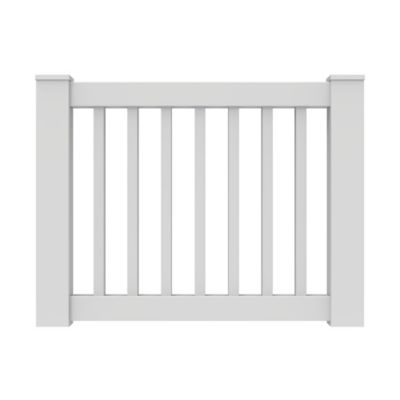
Vinyl privacy gates bring a solid, coordinated entry to a fenced yard, patio, or side passage, helping screen everyday activity while leaving a practical way in and out. Made primarily from PVC, these gates typically feature closely fitted boards or panels held within a frame, rather than the open spacing found on picket gates. That construction helps limit sightlines from neighboring properties or the road, making it a good fit for a backyard seating area, a garden enclosure, or the stretch beside the house where trash cans and yard equipment stay tucked away. The amount of screening depends on the design: full-panel styles block more direct views, while louvered or partially open styles leave room for airflow and some visibility. A privacy gate is not necessarily a security gate, though, and a solid panel alone does not provide a lock or prevent entry. Frame construction, post support, hinges, and latch placement all play a part in how the entrance functions. For many homeowners and folks with a little acreage, the appeal is a tidy boundary without the recurring staining or painting associated with many wood gates. Vinyl does not develop wood rot, but the complete gate still depends on sound supports and hardware suited to its weight and width. Internal reinforcement may be part of the frame, especially on wider designs, so the construction beneath the surface matters as much as the finished appearance. A narrow gate can serve a footpath between the house and garden, while a broader opening gives a wheelbarrow, mower, or loaded garden cart more elbow room. The right arrangement balances privacy with the chores that happen on both sides of the fence, whether that means carrying feed to a nearby shed, hauling a hose through the yard, or getting chairs out for a family cookout. An entrance that looks right but makes every trip awkward can quickly become the most frustrating part of an otherwise useful fence.
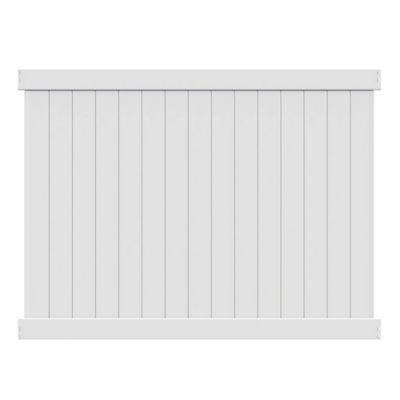
Fit starts with the relationship between the gate, its posts, and the surrounding fence, not just the width printed in a description. A gate described as 4 feet wide may require a different post-to-post opening after hinge clearance and latch spacing are taken into account. Gate height also needs to work with the fence rails, the finished ground level, and the clearance underneath. A roughly 6-foot-tall gate can suit a taller privacy enclosure, but its actual dimensions and mounting requirements still need to match the fence system. Single gates keep everyday foot traffic straightforward, while double gates create a wider passage for equipment or larger loads. On a double-gate setup, one leaf can handle regular trips while the other stays secured until the full opening is needed. Drop rods or other approved holding hardware may help keep that second leaf in position. Swing direction matters around steps, walkways, planting beds, and equipment parked nearby; a gate needs enough clear space to travel through its intended arc without dragging or striking an obstacle. Matching the gate with
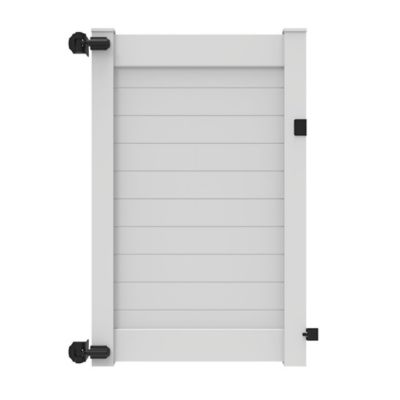
White Vinyl Privacy Fence Panels can help carry the same solid look across the enclosure, but color alone does not establish compatibility. Rail profiles, panel thickness, top shape, post dimensions, and attachment methods can differ between fence systems. Flat tops create a simple, level line, while shaped tops change the outline and may call for a different alignment with neighboring sections. Gate kits also vary in how much assembly they require and which components they include. Hinges, latches, reinforcing pieces, posts, and post caps should each be accounted for rather than assumed to come together. No-dig mounting methods apply only to systems designed for that approach; they are not interchangeable with every vinyl fence or gate. The manufacturer's specified supports and clearances help the parts work together without forcing the frame into place.
Everyday convenience comes down to details that are easy to overlook until both hands are full. A latch that can be reached comfortably from the intended side makes a difference when carrying groceries through a side yard or pushing a cart toward the garden. Locking provisions, handle placement, and hinge adjustment deserve the same attention as panel style. Adjustable hinges can help fine-tune alignment within their stated range, but they cannot make up for a leaning post or an opening that is out of square. Wider gates place greater demands on their supports, so reinforcing requirements and hinge weight ratings matter. Households with children or pets also need to consider the gap below the gate, access to the latch, and whether the gate closes and secures as intended. Solid vinyl panels can limit a dog's view beyond the yard, but they do not guarantee containment for an animal that digs, jumps, or pushes against a boundary. Residential privacy fencing should not be assumed suitable for livestock pressure or for fastening heavy equipment. Pool enclosures have separate safety requirements, and any gate serving that purpose must meet applicable local rules for height, openings, latch location, and closing action. Care is generally straightforward: routine cleaning with mild soap and water can remove dirt and surface buildup, followed by rinsing as directed by the manufacturer. Abrasive scrubbers, strong solvents, and incompatible coatings can harm the finish, so cleaning recommendations matter. Hinges and latches benefit from periodic checks for loose fasteners, rubbing, or changes in alignment, with lubrication only where the hardware maker recommends it. Keeping soil, mulch, and gravel from piling into the swing path helps preserve clearance. Vinyl needs less finish upkeep than painted or stained wood, but it is not maintenance-free or immune to impact damage. A well-matched gate combines the screening a household wants with the opening, support, and hardware needed for regular trips through the yard.