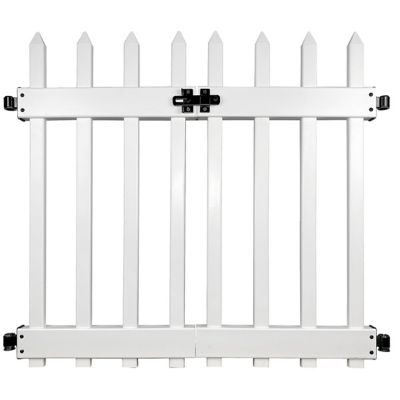
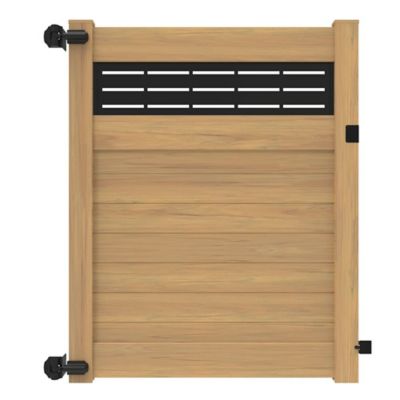
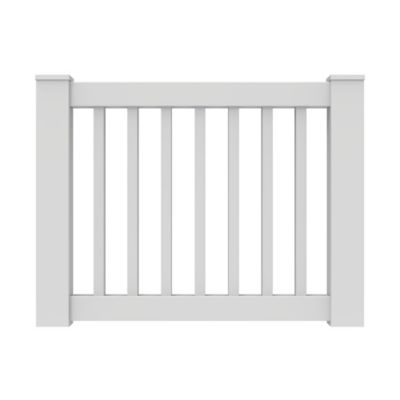
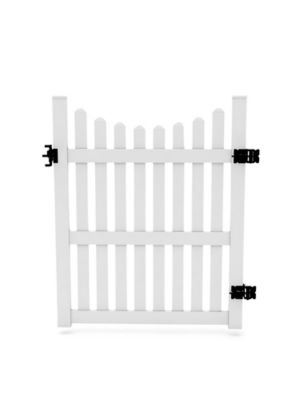
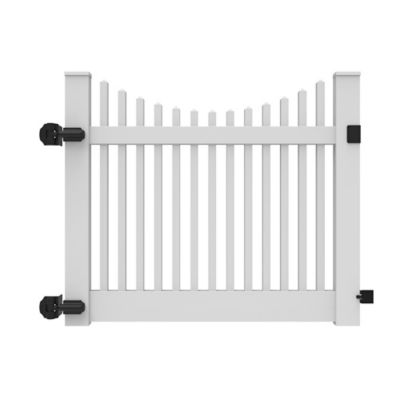
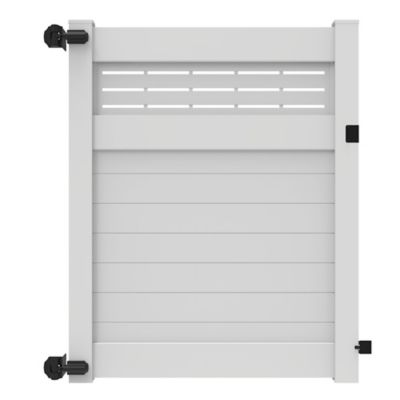
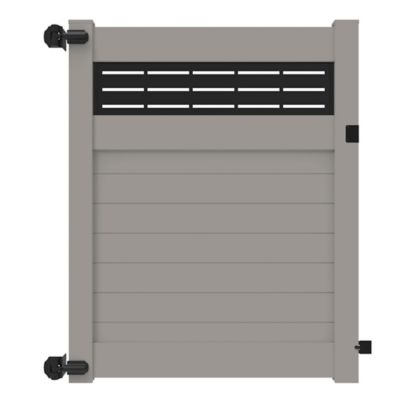
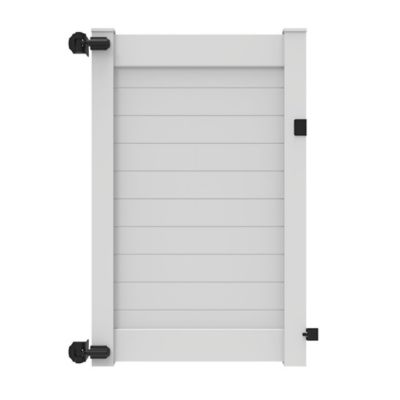
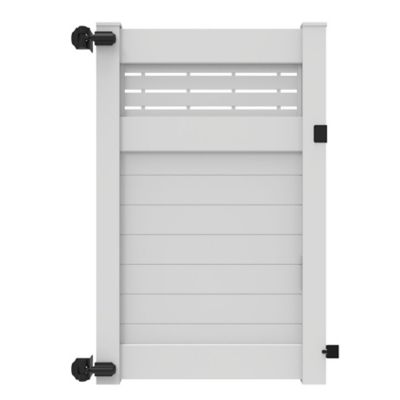
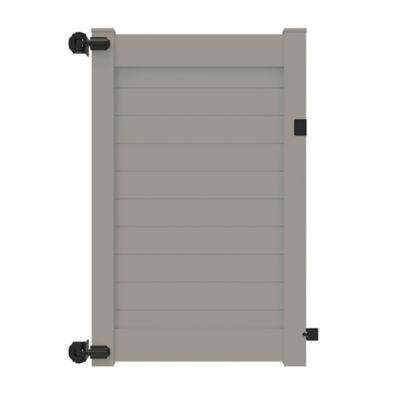
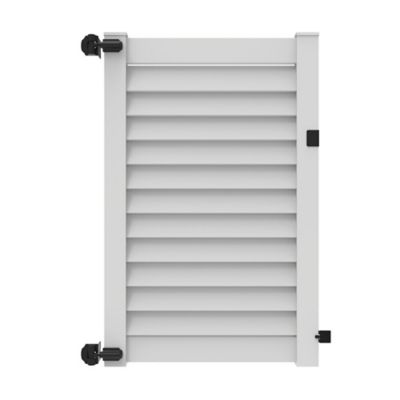
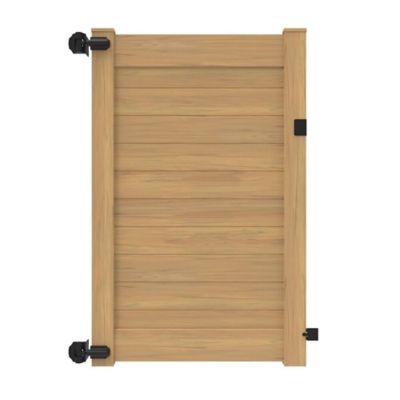
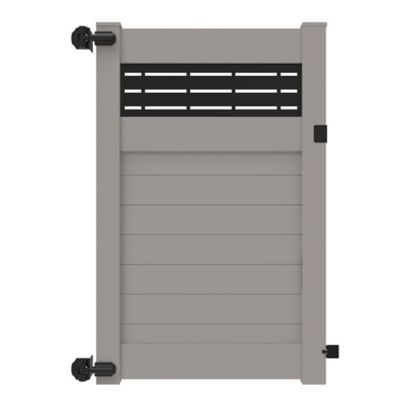
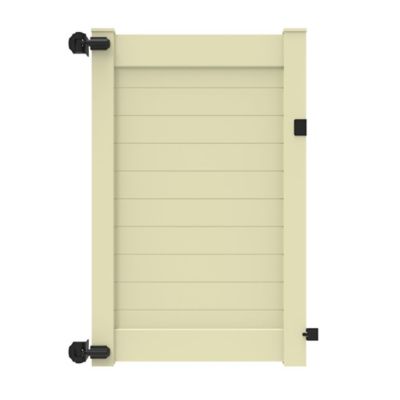
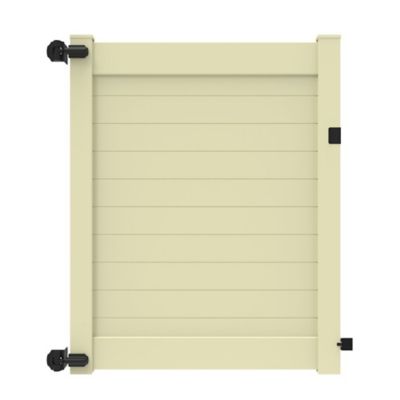
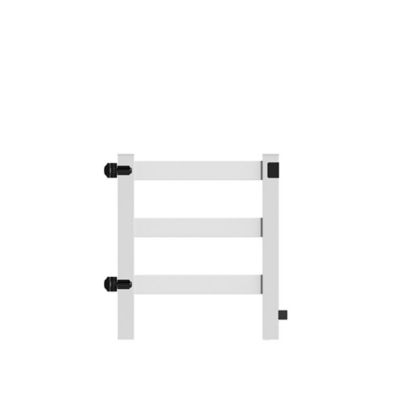
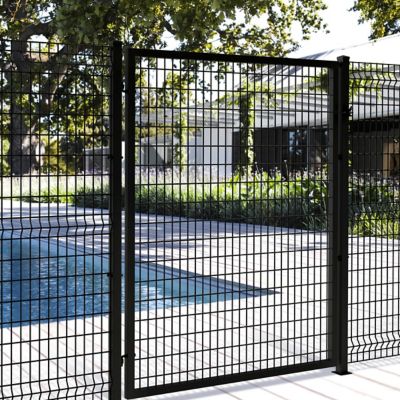
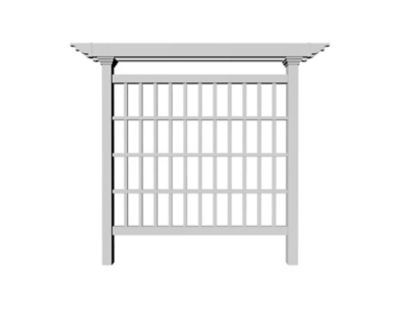
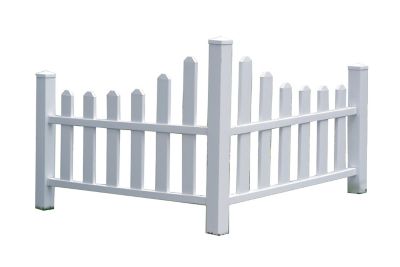
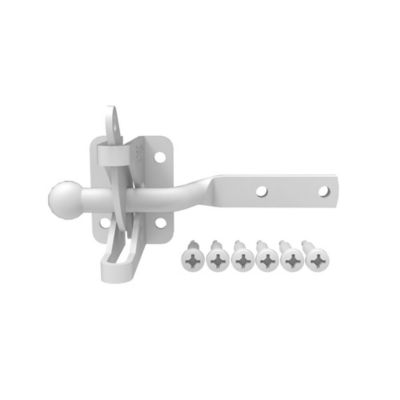
A vinyl fence gate gives a fenced yard a proper way in and out, whether the opening leads to a garden path, a side yard or the stretch of grass behind the house. It brings the fence line together without making everyday trips with a mower, wheelbarrow or feed cart a squeeze. Vinyl fence gates are generally made from PVC, with construction that can include hollow rails, fitted pickets and internal reinforcement. That reinforcement matters because a gate moves and carries its weight differently than a stationary fence section. A framed opening with well-supported corners helps the gate keep its shape through repeated opening and closing. The look matters, too: a solid privacy gate can keep a backyard screened from a nearby road, while a picket-style gate leaves a more open view toward the porch or garden. Semi-private designs fall between those looks, breaking up sightlines without closing everything off. Rail placement, picket spacing, top shape and color all help a gate feel like part of the fence rather than an afterthought. Pairing a gate with compatible
Vinyl Fence Panels helps carry those details across the property, though matching appearance alone does not confirm that every component fits together. Homeowners finishing a yard, gardeners setting off a growing space and folks replacing a troublesome entry can all benefit from a gate suited to the way that opening gets traveled. A narrow walkway and a broad equipment entrance call for different proportions, even when both belong to the same fence line. Vinyl itself does not rust or need routine painting, which makes it appealing for a tidy-looking yard boundary without another painting job on the chore list. The hinges, latch, fasteners and any metal reinforcement still deserve attention, since those parts do much of the work each time the gate swings. A good match balances the fence’s appearance with the demands of the opening, rather than treating the gate as just another panel.
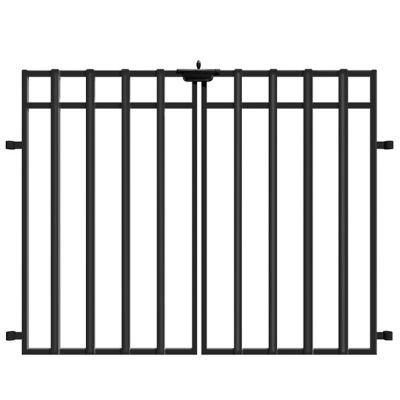
Fit starts with the opening between the posts, but the gate’s listed width may not tell the whole story. Some dimensions describe the gate leaf itself, while others refer to the opening it is intended to fill, so the manufacturer’s measurement details make a real difference. Hinges and latches need space to operate, and the gap below the gate affects both clearance and containment. A gate that clears a flat walkway may catch on rising ground farther into its swing. Gravel, edging, roots and uneven paths can also change how freely it opens, especially where a wheelbarrow or mower needs a clear route. The full swing matters as much as the closed position: a nearby wall, garden bed or porch step can limit access even when the opening looks wide enough. For larger entrances, a double-gate layout can divide the span into two leaves, with one side handling ordinary foot traffic and both sides opening for equipment when the design allows it. The meeting point needs suitable latching, and the less frequently opened leaf may need a ground stop or drop rod designed for the installation. Gate posts must support moving weight, not simply hold the end of a fence section. Depending on the system, that can mean reinforced posts, specified inserts, suitable footings and hardware attached to structural support rather than only the vinyl shell. Existing posts deserve a close look before a replacement gate goes on, since movement or poor alignment can leave even a properly sized gate dragging or refusing to latch. Hinge adjustment can help fine-tune alignment, but it cannot make up for an unsuitable post. Hardware compatibility also reaches beyond screw spacing. Gate weight, frame dimensions, swing direction and latch position all affect how the assembly works. A latch that is easy to reach from both sides can make chores smoother, while a lockable arrangement may suit an entrance where access needs more control. Manufacturer instructions and local requirements should shape those choices, particularly where the gate forms part of a regulated enclosure.
Day-to-day use is where the small details earn their keep. Coming through with a basket of vegetables, leading a leashed dog into the yard or rolling a loaded cart toward the shed is easier when the gate opens far enough and latches without lifting or shoving. A gate should not need a shoulder bump to close, and repeated dragging can point to a shifting post, loose hardware or an alignment problem worth addressing. Routine care is usually straightforward: mild soap, water and a soft cloth or brush can remove ordinary dirt, with the manufacturer’s care directions guiding any treatment for stubborn marks. Abrasive tools and harsh cleaners can damage the surface, and pressure washing is not suitable for every assembly. Hinges and latches may have their own cleaning or lubrication instructions, separate from the vinyl. Checking fasteners, hinge attachment points and the latch connection helps catch movement before it becomes a bigger repair. Vinyl requires less surface upkeep than painted wood, but it is not immune to impact damage. Leaving clearance from mower decks, keeping heavy objects from leaning against the gate and avoiding hanging loads from the frame can help protect it. For households with pets, the spaces beneath and beside the gate deserve as much attention as the spaces between pickets; an opening that looks small to a person may still offer a route for a determined animal. No gate replaces supervision, and a residential vinyl yard gate should not be assumed suitable for containing horses, cattle or other livestock unless the system is expressly designed for that purpose. Pool barriers bring another set of requirements, including rules that may address gate swing, self-closing action, self-latching hardware and latch placement. A general yard gate is not automatically a pool gate. For an everyday property entrance, the best fit is one that suits the traffic, matches the surrounding fence system and has the support and hardware to work as intended. That combination keeps the focus on getting through the gate and getting on with the next chore.