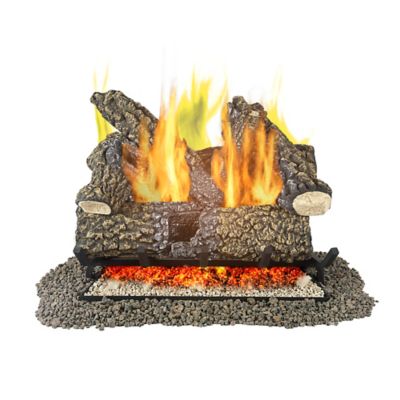
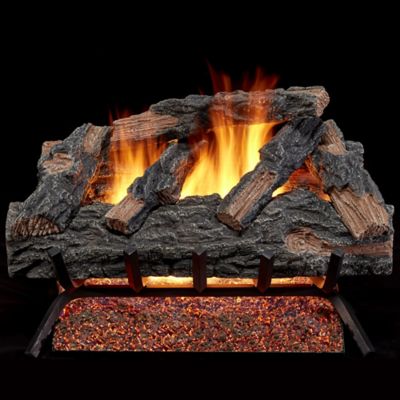
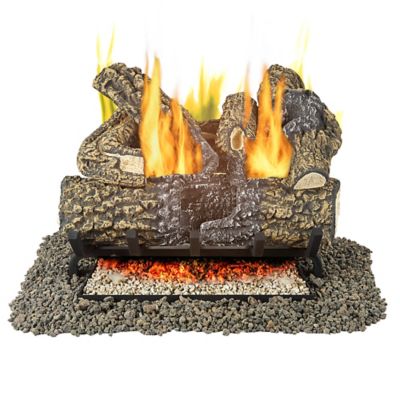
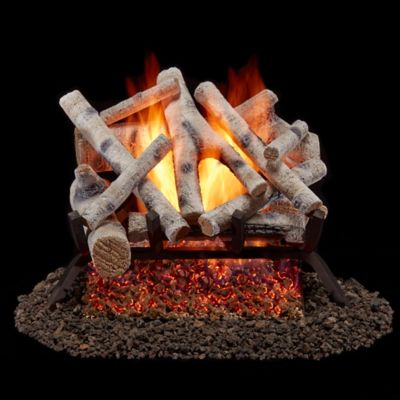
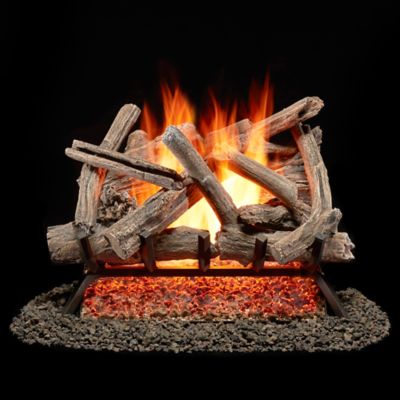
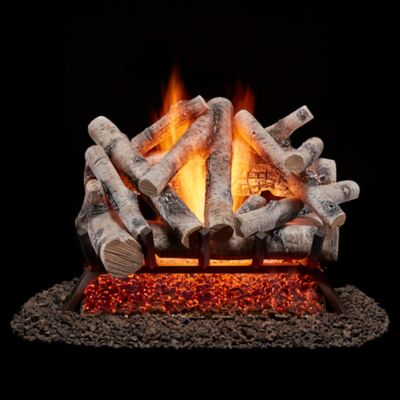
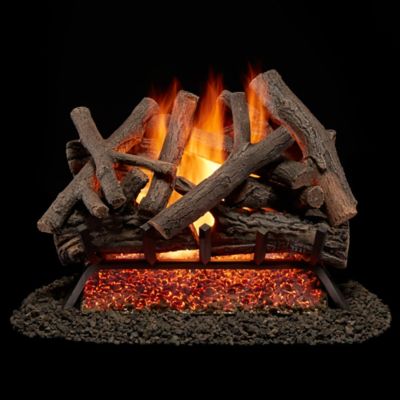
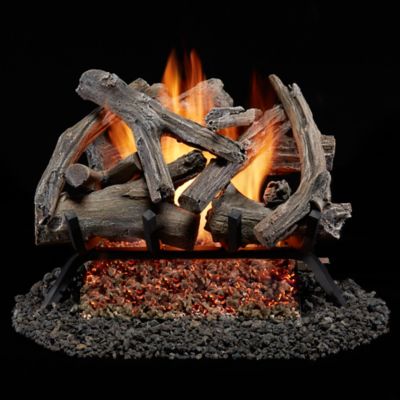
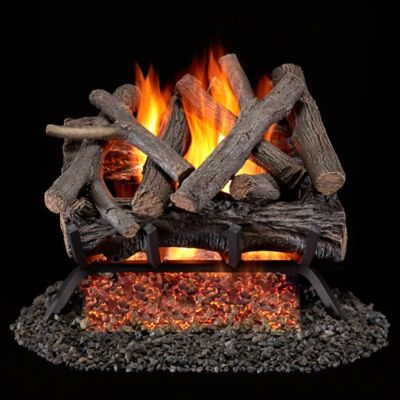
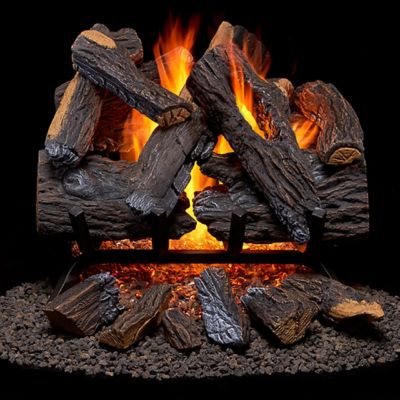
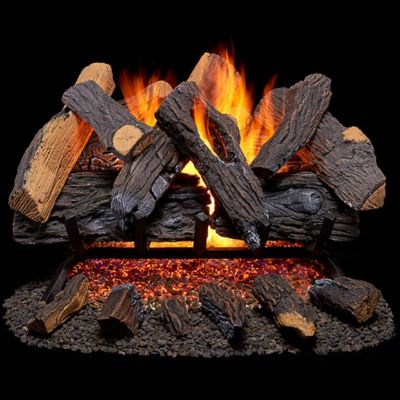
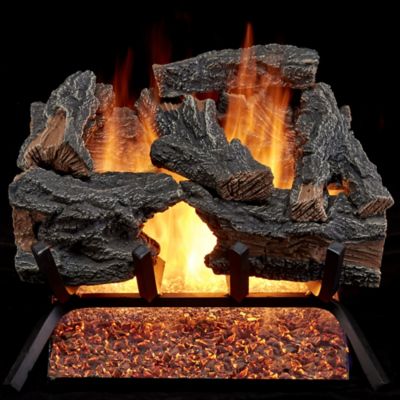
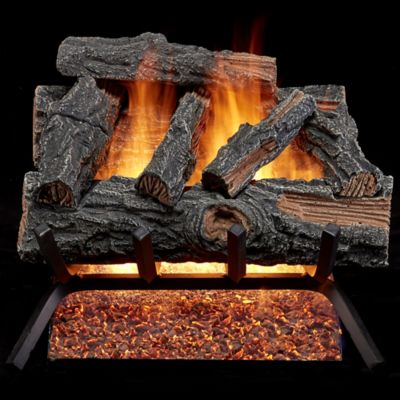
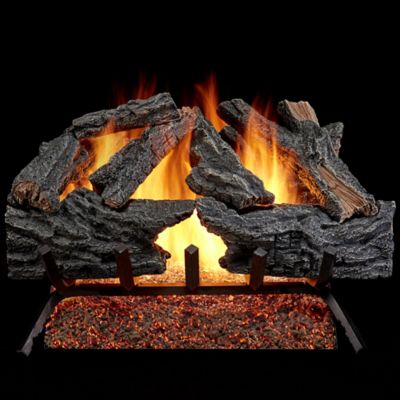
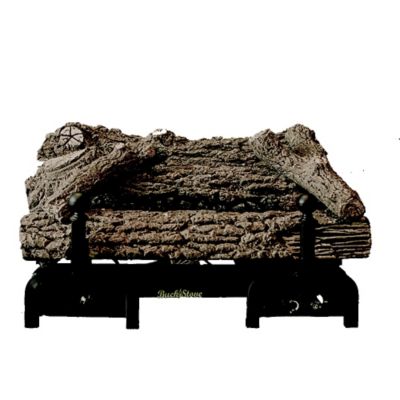
Vented gas logs bring the look of a wood fire to a compatible fireplace without the steady work of hauling split logs, tending kindling, or carrying out buckets of ash. These fireplace log sets pair heat-resistant molded logs with a gas burner that creates a lively flame pattern around them. They typically burn natural gas or propane, depending on the system, and send combustion exhaust through a functioning chimney. That open venting path is what separates vented gas logs from vent-free gas logs, and the two types are not interchangeable. For a living room where folks gather after chores or a farmhouse hearth that anchors the family sitting area, the main appeal is the fire itself: yellow flames, bark-like texture, and the glow of an ember bed when the burner system includes one. Vented gas logs provide some radiant warmth, but much of the heat travels up the chimney. They are mainly an appearance-focused fireplace option rather than an efficient way to heat a room or replace a home heating system. A high BTU input rating describes how much fuel energy the burner consumes; it does not mean that same amount of heat stays in the house. Log shapes and finishes help set the scene, from deeply ridged bark and broad split faces to slender branches with lighter coloring. A fuller arrangement can give a wide hearth the look of a well-built wood fire, while a simpler arrangement leaves more of the flame visible. The burner and prescribed log layout determine how that effect comes together, so appearance depends on the complete system rather than the logs alone. For households that enjoy watching a fire while visiting, reading, or settling in after a long day outside, that balance of flame movement and recognizable wood texture is often the biggest draw. The convenience comes from skipping the firewood routine, not from skipping the care and attention that any fuel-burning appliance needs.
Construction, fireplace fit, and fuel compatibility all matter when comparing vented gas fireplace logs. Common log materials include refractory cement and ceramic fiber, both designed to withstand the heat of an approved burner. Refractory cement logs tend to have a substantial feel and can hold detailed bark patterns, knots, and split-wood surfaces. Ceramic fiber logs are generally lighter, with their appearance and glow depending on the design. Neither material makes a log set suitable for every fireplace, and resistance to heat does not mean the pieces can take rough handling. Surface finishes, internal reinforcement where present, and proper operation all contribute to how well the logs hold up over time. A stated log length is only one part of sizing: the fireplace’s front width, rear width, depth, and height must accommodate the entire burner assembly and the clearances listed in its manual. A tapered firebox may look roomy across the opening but narrow sharply at the back, leaving less space than expected. Controls and valves can also require room beside the burner, which makes choosing solely by the width of the largest log a poor fit. Compatible masonry wood-burning fireplaces and certain factory-built wood-burning fireplaces can accept vented gas logs, but approval depends on both the fireplace and log-set instructions. A gas insert, sealed direct-vent fireplace, or other enclosed appliance is not automatically a suitable home for a separate gas log set. Natural gas and propane models also have different fuel requirements, including the proper burner components, regulator arrangements, and supply pressure. Fuel conversion is appropriate only when the manufacturer expressly permits it and specifies the required parts and procedure. For a house with an existing gas connection at the hearth, a qualified installer can confirm that the line and supply meet the selected system’s requirements. That check matters just as much as getting the log dimensions right, especially when other gas appliances share the supply.
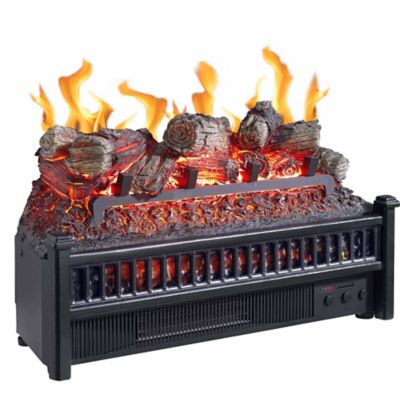
Every vented gas log installation depends on a sound fireplace, a clear chimney, and the ventilation required by the appliance instructions and local code. These systems generally draw combustion air from the room, with exhaust leaving through the chimney flue. The damper must remain fully open during operation, and a damper clamp or other approved provision must maintain the permanent minimum opening specified for the installation. Closing the damper to keep more heat inside is not an option while the burner is running. The permanent opening also means the fireplace is not sealed when the fire is off, an important consideration for a household focused on limiting drafts. A qualified professional should assess the fireplace and chimney, install the gas connections, and verify proper operation. Working carbon monoxide alarms belong in the home as well; a chimney does not eliminate the need for them. Day-to-day convenience varies with the ignition and control arrangement. Some natural gas systems permit match lighting, while others have a safety pilot, electronic ignition, or compatible remote controls. Those features must belong to the approved system rather than being added on the assumption that all fireplace controls work alike. Logs also need to stay in their prescribed positions, since moving one to make the stack look fuller can disrupt the flame pattern and contribute to soot or improper combustion. Care generally means letting everything cool completely, following the manufacturer’s cleaning directions, and having the burner, pilot, connections, and chimney inspected at the recommended intervals. Abrasive brushing, soaking, or household cleaners can damage certain log surfaces, so cleaning methods should match the material and instructions. Persistent soot, delayed ignition, or an unexpected change in the flame calls for shutting the system down and arranging service. For a hearth display where a gas flame is not the goal,
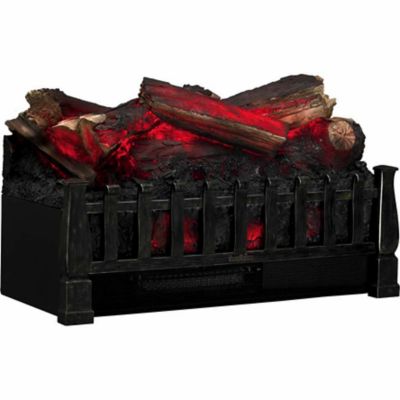
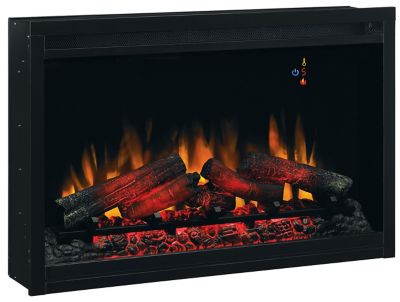
LED fireplace logs offer another way to create a firelike glow without gas combustion. Vented gas logs suit households that want an actual flame, have an approved venting setup, and are ready to give the fireplace the attention it needs.