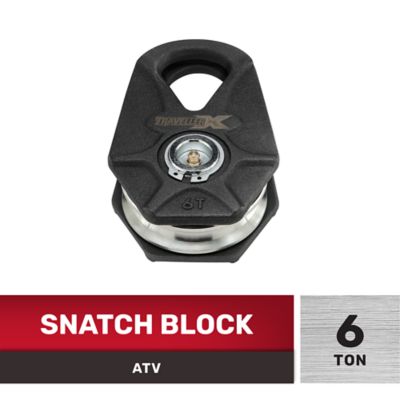
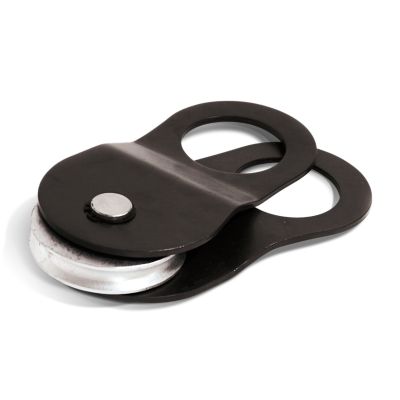
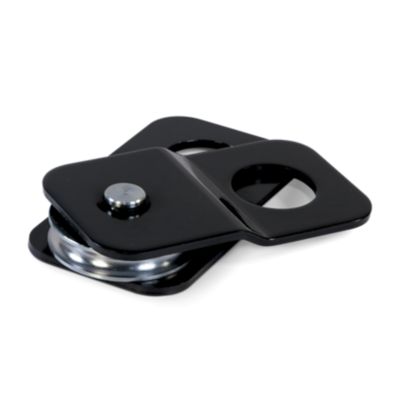
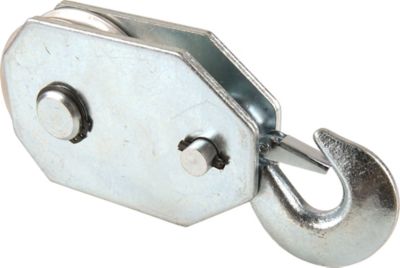
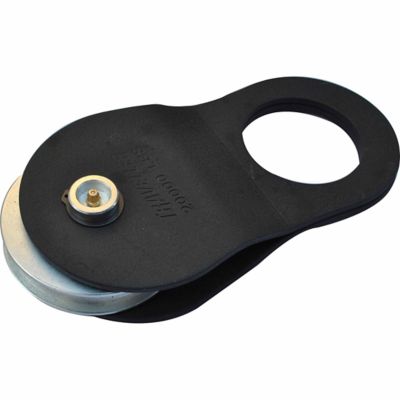
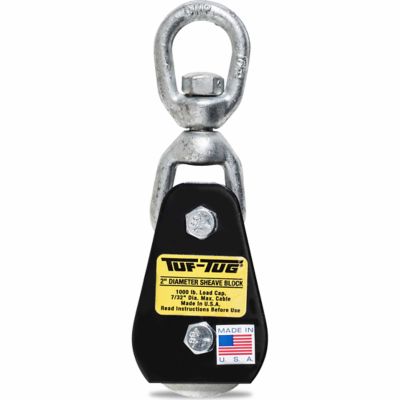
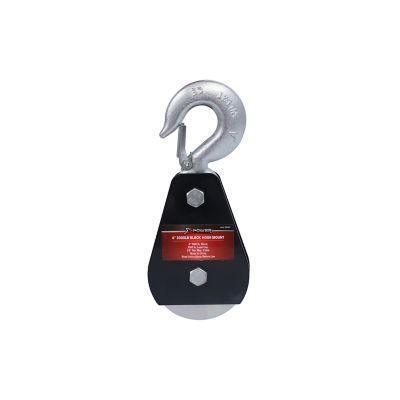
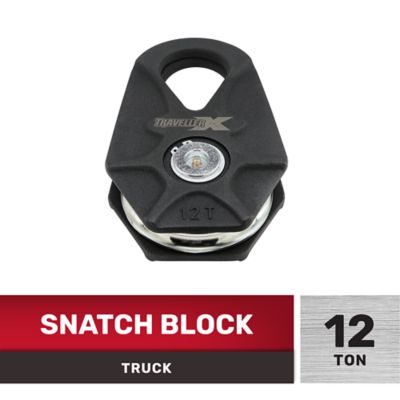
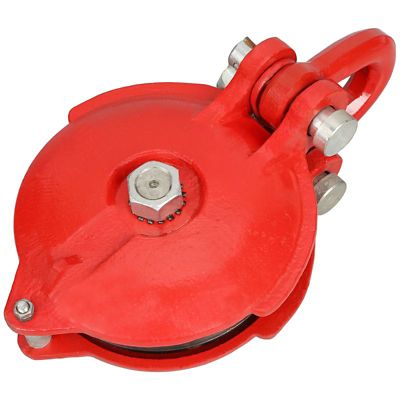
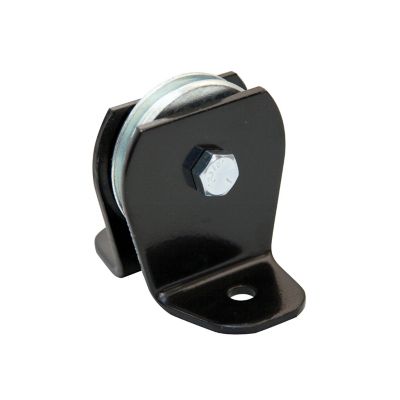
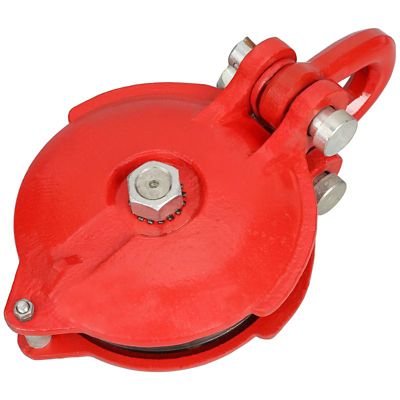
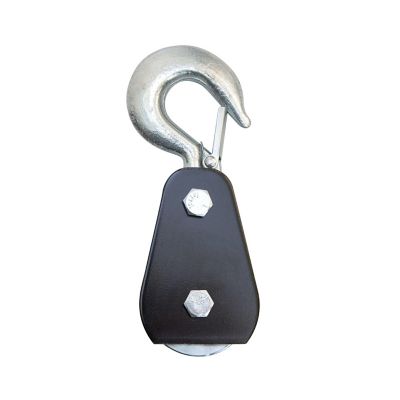
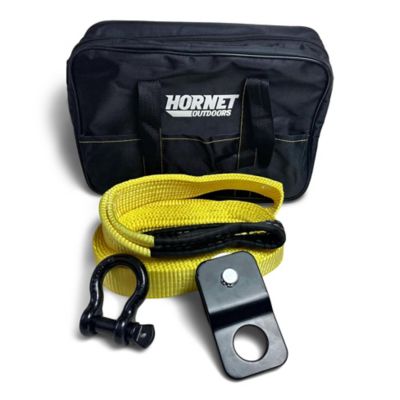
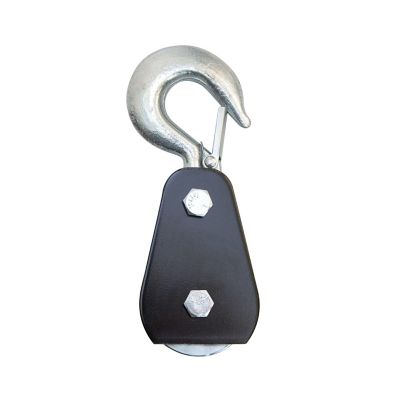
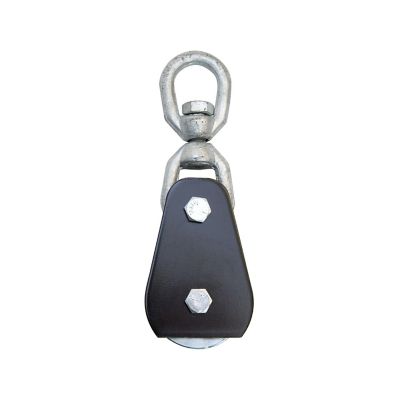
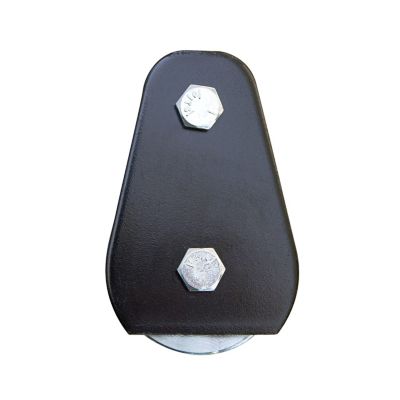
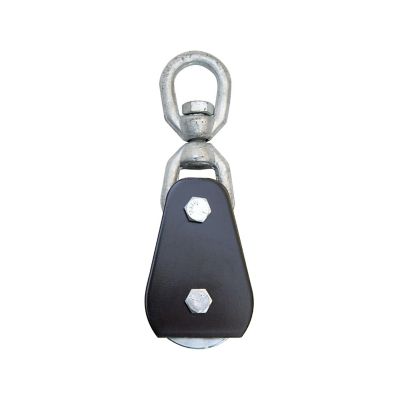
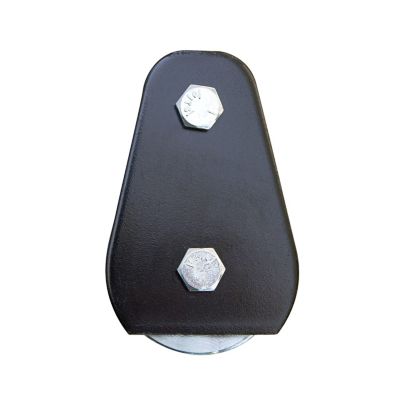
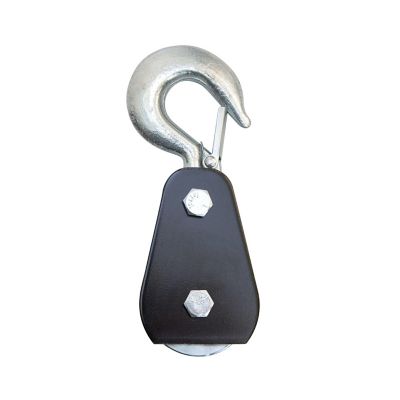
Vehicle recovery snatch blocks give a winch setup more flexibility when a truck, utility vehicle, or other recovery-rated vehicle needs help getting back onto firm ground. A snatch block is a pulley inside a load-bearing frame, typically with an opening side plate that lets the winch line sit in the pulley groove without threading the entire line through the housing. That pulley wheel, called a sheave, turns as the line travels across it. Depending on the rigging arrangement, the block can change the direction of a pull or provide mechanical advantage. In a common double-line vehicle recovery setup, the winch line runs from the vehicle through a snatch block at a suitable anchor and returns to a rated recovery point on the same vehicle. The two supporting line sections can provide approximately twice the pulling force of a single line, before friction and other losses, while reducing recovery speed. A block arranged only to redirect the line does not automatically multiply pulling force. That distinction matters whether the job involves a pickup sitting deep in a pasture rut or a trail vehicle with no suitable anchor directly ahead. A properly planned redirected pull can help align the pulling force with the recovery path while keeping the line clear of obstacles. It does not make dragging a winch line across a stump, rock, or frame edge safe. For landowners, ranch hands, off-road drivers, and people working along access roads, these blocks are practical additions to a matched recovery kit. Their value comes from expanding the rigging options within the limits of the winch, line, anchor, and attachment points—not from making every stuck vehicle an easy pull. Vehicle weight is only part of that picture; slope, wheel resistance, and how deeply a vehicle is stuck also affect the force a recovery demands. The right block belongs in a setup sized for those demands, with every connection accounted for.
Construction and fit make a real difference in how a vehicle recovery snatch block handles that work. Steel frames offer strength for demanding pulls, while some designs feature aluminum components to reduce carrying weight. Protective finishes help limit corrosion, though scraped coatings and trapped dirt still need attention. Side plates, pivot hardware, attachment eyes, and the sheave all carry or control forces during a pull, so their condition matters as much as the material named on the package. A smooth-turning sheave helps the line travel with less friction, and bearing or bushing designs have different maintenance needs. Compatibility starts with the line itself: wire rope and synthetic winch rope are not interchangeable across every block. The manufacturer's approved line type and diameter range determine whether the groove and frame suit a particular setup. A groove that is too narrow can pinch a line, while an unsuitable groove profile or rough surface can contribute to damage. Sheave diameter also affects how sharply the line bends, making the specified minimum pulley size an important part of matching the block to the rope. A block with burrs or scoring from wire rope may damage synthetic fibers even if the line diameter appears to fit. Attachment fit deserves the same attention. The eye or mounting opening must work with the intended connector without crowding, binding, or loading it in an unintended direction. Soft shackles require compatible, smooth, rounded attachment surfaces rather than just an opening large enough to pass through. Capacity labels need a close look, too. Working load limit describes an allowable load under stated conditions; minimum breaking strength is not an allowable operating load. Depending on the angle between the line sections, the force on a snatch block and its anchor can approach twice the tension in one section. A rating that merely matches the winch's maximum pull may therefore be insufficient. Manufacturer rating definitions and rigging limits matter more than a large capacity number by itself, especially when comparing blocks whose published figures describe different measurements.
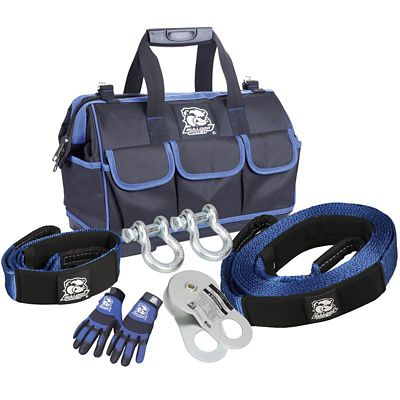
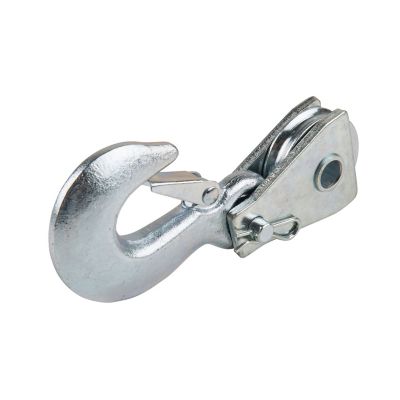
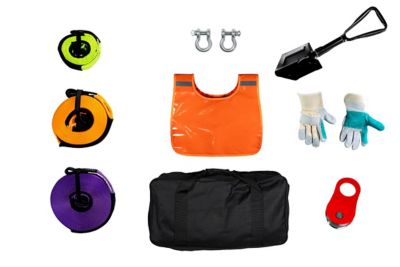
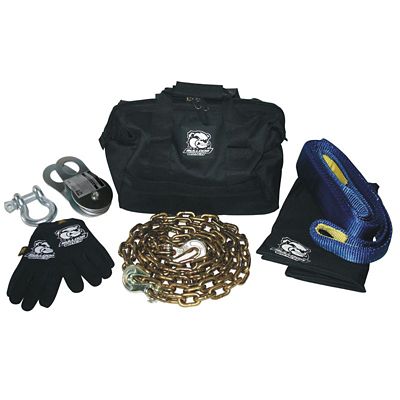
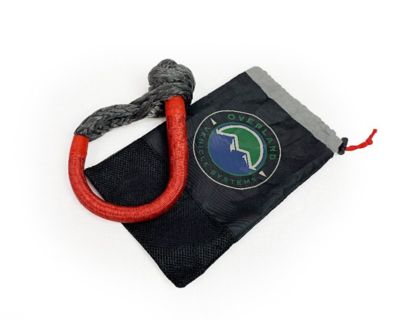
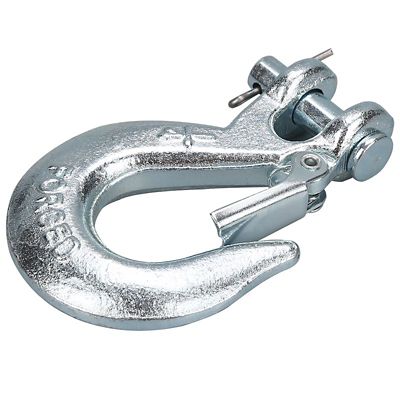
A recovery kit works best when its parts fit together before the vehicle leaves the barnyard or trailhead. Snatch blocks belong alongside a suitably rated winch line, compatible connectors, appropriate anchor equipment, and designated vehicle recovery points. Connecting hardware such as
winch hooks also needs to match the line assembly and intended attachment, with loads seated where the manufacturer specifies rather than on a hook tip or latch. A receiver hitch ball is not a recovery anchor, and ordinary tie-down points should not be mistaken for rated recovery points. Those details matter when a loaded pickup is sitting low in a two-track and there is little room to reposition it. A block that opens readily, closes securely, and has readable markings is easier to assess before the pull begins. Compact dimensions and manageable weight can make storage simpler, but neither replaces the required load capacity or rope compatibility. Long service life depends on care between jobs as well as sound construction. Grit lodged around the sheave, corrosion near a pin, bent side plates, cracks, and loose hardware are reasons for closer inspection and, when appropriate, removal from service. Cleaning methods, lubrication points, and inspection intervals should follow the manufacturer's directions; not every bearing assembly calls for the same treatment. Clean, dry storage helps keep abrasive dirt away from rope-contact surfaces and makes damage easier to spot before the next outing. During recovery, people need to stay clear of tensioned lines, the inside of line angles, and the path of a possible hardware failure. Controlled winching is different from a kinetic recovery: the word “snatch” in the block's name does not mean the assembly is intended for jerking loads. For someone choosing recovery equipment as a gift for a rancher or trail rider, knowing the recipient's winch rating, rope type, rope diameter, and existing connectors is more useful than guessing by vehicle size. A well-matched snatch block adds practical capability without leaving fit and load limits to chance.