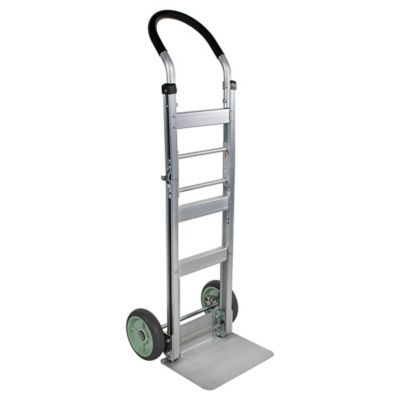
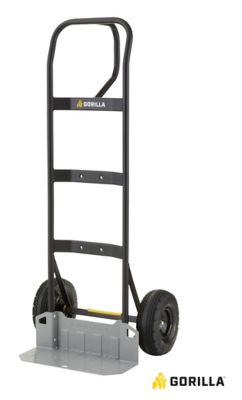
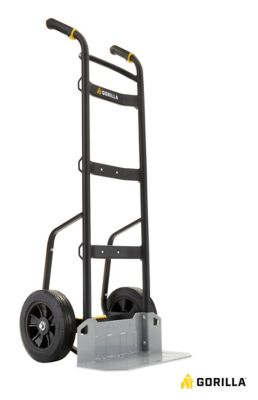
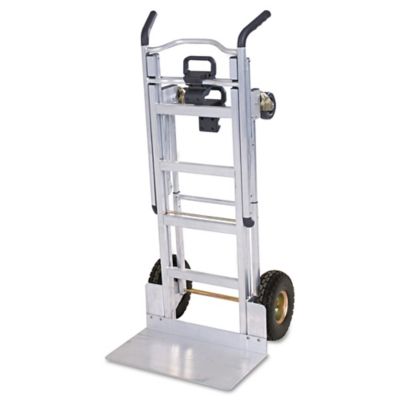
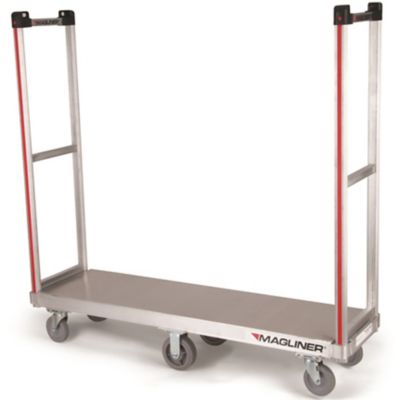
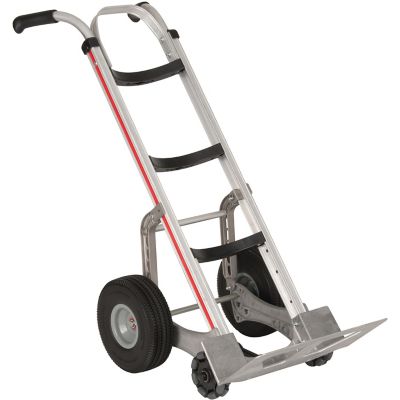
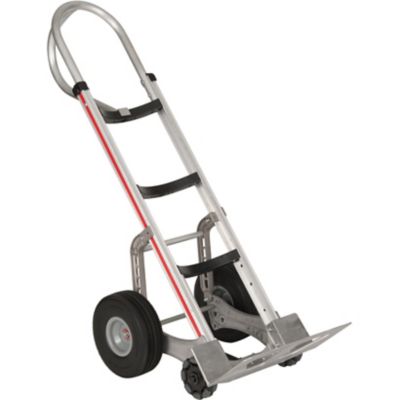
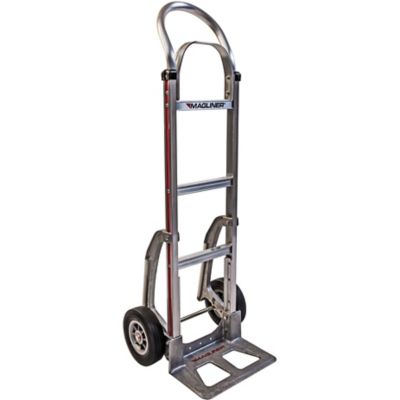
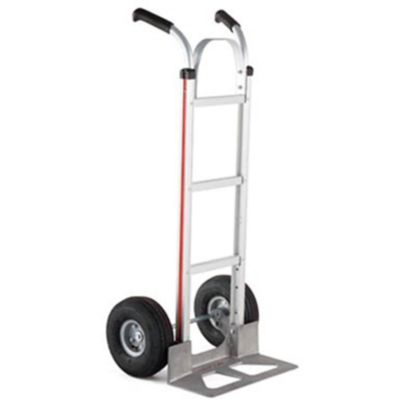
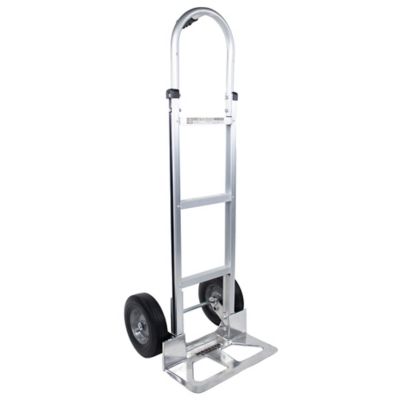
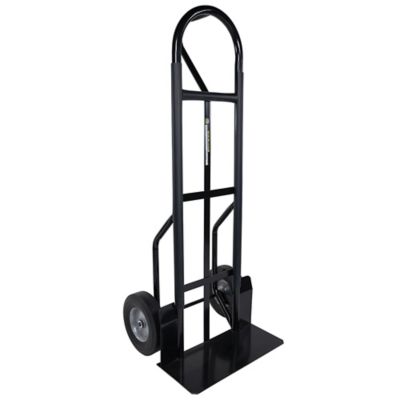
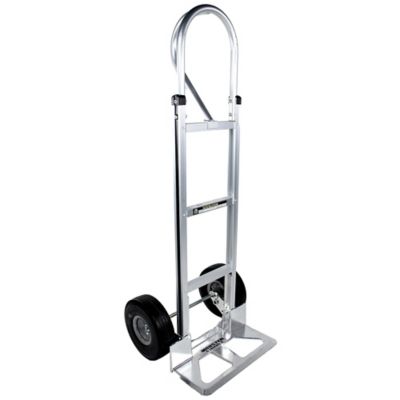
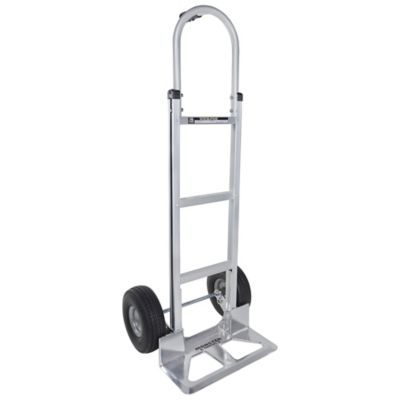
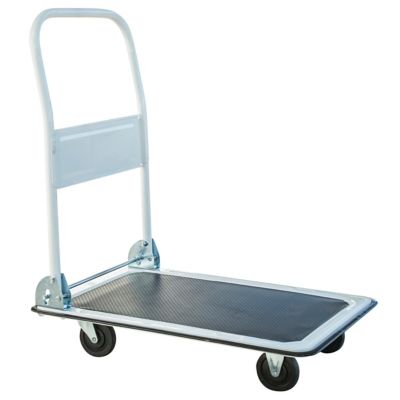
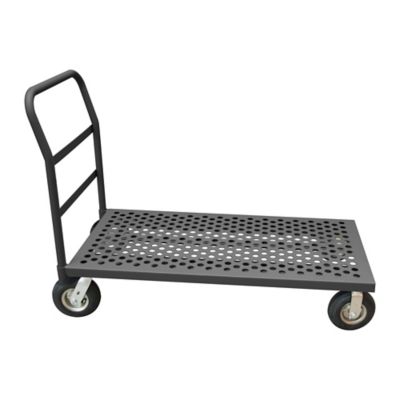
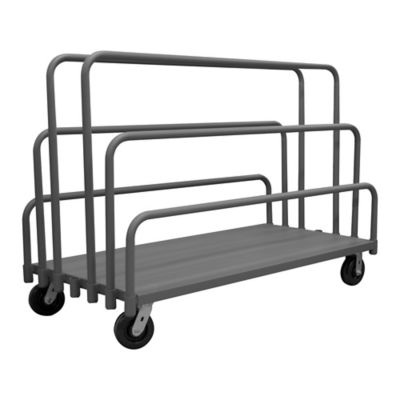
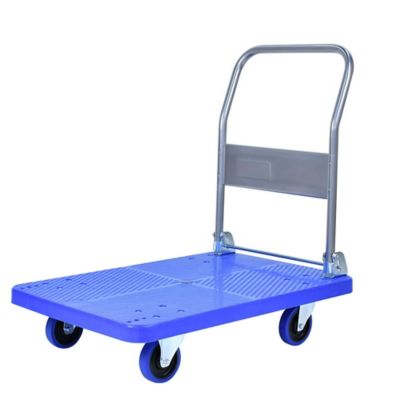
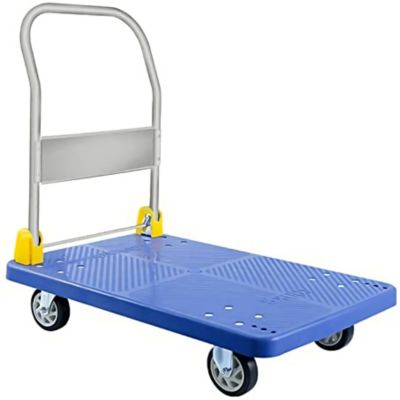
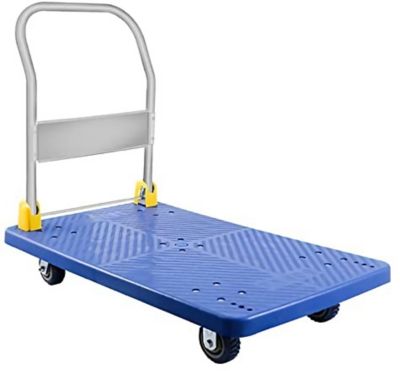
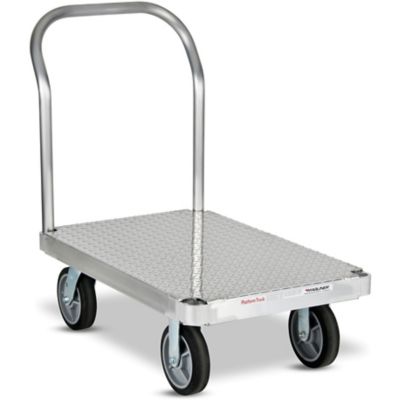
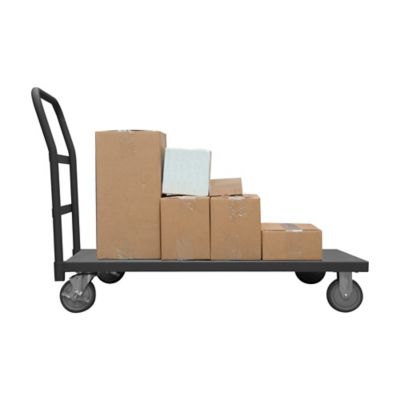
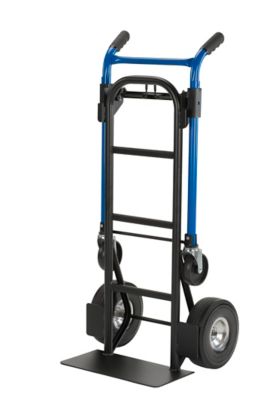
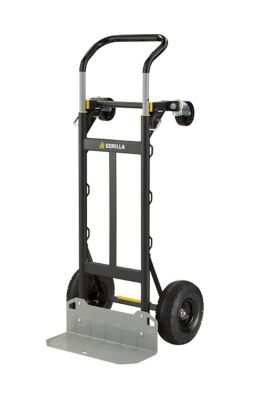
Delivery hand trucks are wheeled load carriers that help move boxes, bundled supplies, and other heavy goods with less carrying by hand. A typical upright design has two wheels, a tall frame, handles, and a flat toe plate that slides beneath the load. Tilting the frame brings the load over the wheels so the operator can balance and roll it instead of carrying its full weight. That makes a delivery hand truck a practical tool for drivers making repeated stops, store crews moving cartons from receiving areas, and farm owners hauling supplies between a storage building and a work area. The biggest benefit often shows up in everyday jobs: moving several manageable cartons together, crossing a long concrete floor, or bringing a boxed shipment through a narrow doorway. Upright hand trucks suit loads that can rest securely against the frame, while convertible hand trucks can switch between a two-wheel upright position and a four-wheel platform position. The platform setup gives broad or longer loads more support, though it also takes up more floor space and turns differently. Appliance-style designs may include load straps and protective frame coverings, but moving large equipment calls for a truck specifically rated and equipped for that job. Load capacity is a key comparison point, and the stated rating applies to the truck as configured by its manufacturer. A convertible model may have different limits in its upright and platform positions. The combined weight of everything on the truck matters, not just the heaviest box, and staying within the weight rating does not make an awkward or poorly balanced stack safe. Frame height, toe plate dimensions, and the shape of the goods all affect how well a load rides. A broad carton perched on a shallow plate can be harder to control than several smaller cartons of the same total weight. Matching the truck to the shape and weight of regular deliveries helps keep loads supported and the work moving steadily.
Frame material and wheel design make a noticeable difference over a full delivery route or a busy day around the shop. Steel frames can suit demanding hauling tasks, especially where a sturdy frame and substantial load support matter more than keeping the truck itself light.
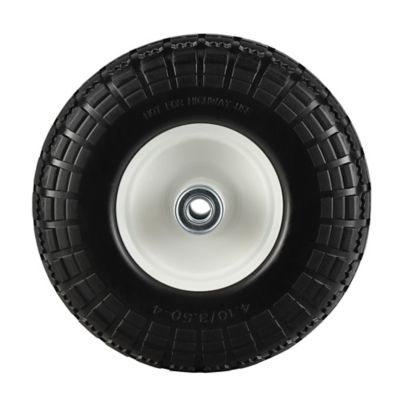
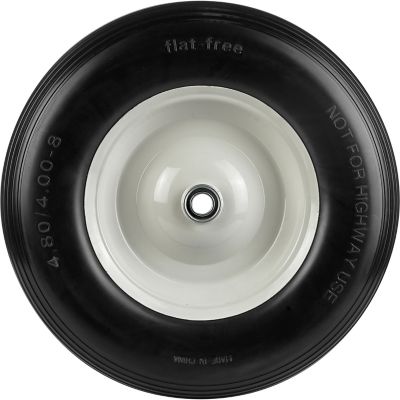
Steel Hand Trucks are worth a look for repeated moves around receiving areas, workshops, and storage buildings. Aluminum frames generally weigh less than comparable steel frames, which can make lifting an empty truck into a vehicle or carrying it back to a loading area easier. Neither material alone determines carrying capacity; frame construction, axle design, wheels, and the manufacturer's rating all play a part. Protective finishes on steel help resist corrosion, while sound joints and secure hardware matter on either material. Wheels deserve just as much attention as the frame. Solid rubber and other flat-free tires avoid air-pressure checks and puncture-related flats, making them practical for routes where nails, staples, or packing debris may be underfoot. Pneumatic tires provide cushioning over uneven surfaces, but they need proper inflation and can puncture. Tire size and tread affect how a truck rolls across packed gravel, rough concrete, doorway thresholds, and small surface gaps. Larger wheels generally negotiate small obstacles more easily than smaller wheels, though no wheel choice makes every rough path suitable for a loaded truck. On convertible designs, swivel casters help with steering in platform mode, and their size can influence how smoothly the truck crosses floor joints. Handle shape matters, too. A continuous loop can offer several gripping positions, while separate handles give a defined place for each hand. Comfortable handle height helps the operator maintain control without reaching awkwardly. There should also be room for hands at doorways and beside shelving. For delivery work that involves tight turns, the overall width of the truck and its load can matter as much as its carrying capacity.
A well-matched delivery hand truck fits the route as well as the load. A driver taking boxed goods through a shop entrance needs room to clear the threshold, turn inside, and lower the toe plate without striking a door or counter. A crew moving supplies across a feed room may need a wheel setup that handles dusty floors and enough frame support to keep bags from sagging between the rails. Tall stacks should stay low enough to preserve a clear view, with heavier goods near the bottom and the load centered across the frame. Straps or other manufacturer-approved restraints can help keep goods against the truck, but they do not increase its rated capacity or replace careful stacking. Loads that shift, roll, or extend far beyond the toe plate need particular attention to support and restraint. Stairs, slopes, and loading ramps introduce additional demands; standard hand trucks should not be treated as stair-climbing equipment. Stair-capable designs, braking features, and other specialized equipment have their own operating limits, and the manufacturer's directions should govern their use. Keeping the travel path clear and getting help with oversized loads can prevent a routine move from becoming a struggle. Day-to-day care is straightforward but important for a long service life. Before loading, check for loose fasteners, bent frame sections, cracked welds, damaged handles, and wheels that wobble or bind. Clear string, stretch wrap, and other debris from axles and casters, and inspect straps for cuts or fraying. Air-filled tires need pressure checks against the specified range, while wheel bearings and moving joints should receive only the maintenance recommended by the manufacturer. Wiping off dirt and spills helps keep handles easier to grip and makes damage easier to spot. An unloaded truck should have a secure storage spot where it cannot roll into a walkway or tip into nearby equipment. In a delivery vehicle, proper restraint keeps it from shifting between stops. From a single stop at a farm office to repeated trips across a receiving floor, the right combination of capacity, load support, wheels, and handling can make moving goods a more manageable part of the day.