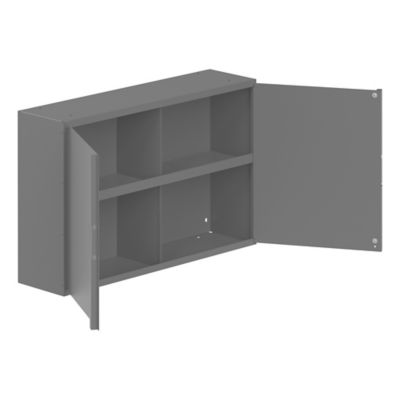
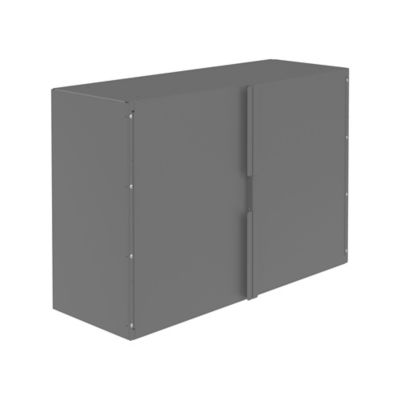
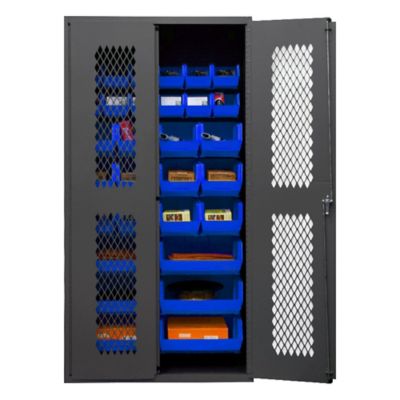
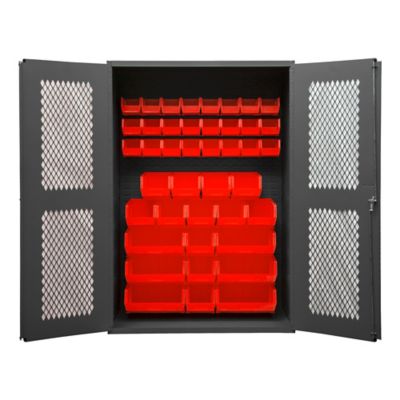
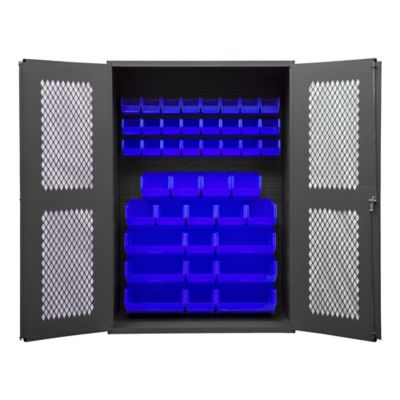
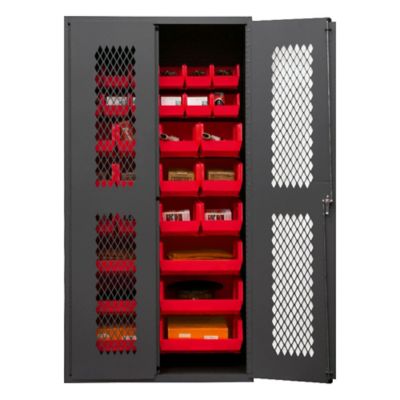
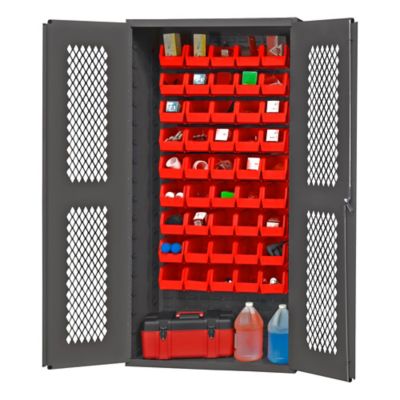
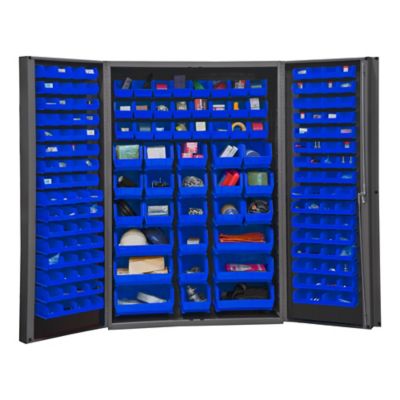
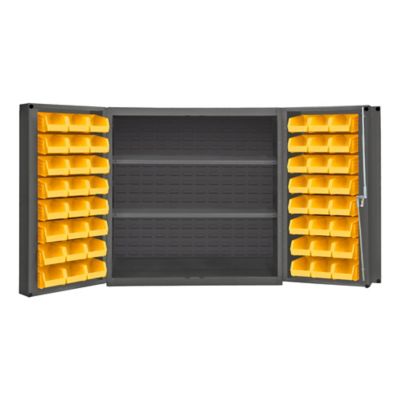
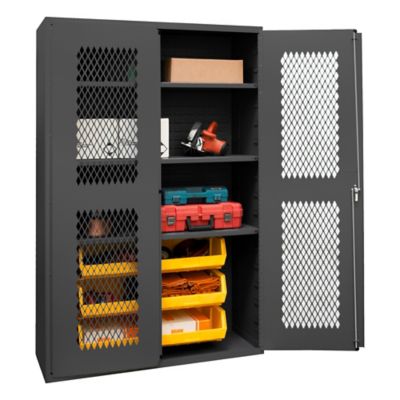
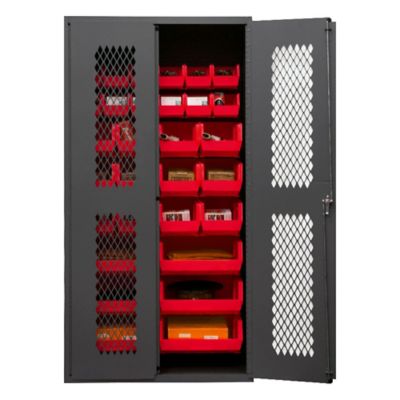
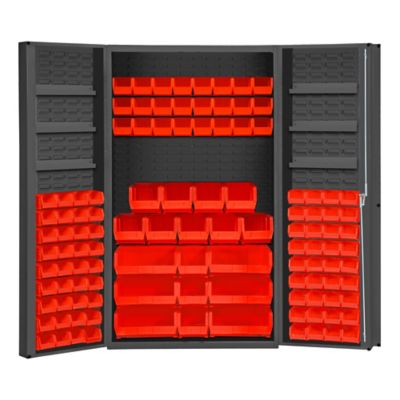
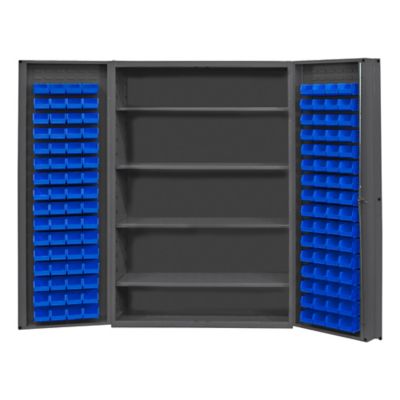
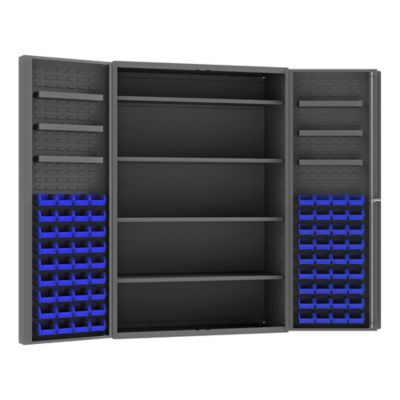
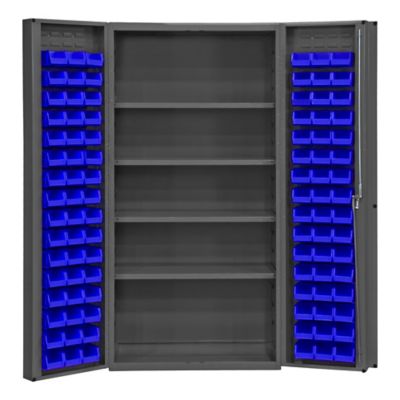
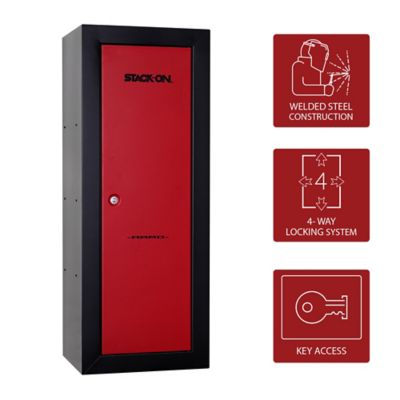
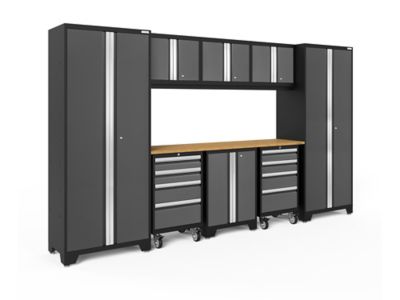
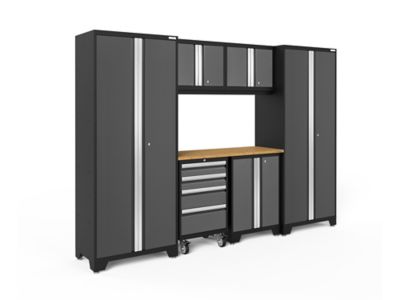
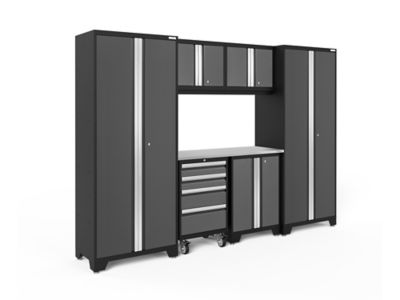
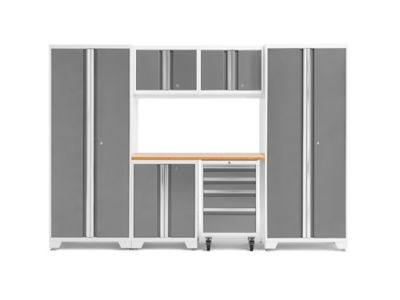
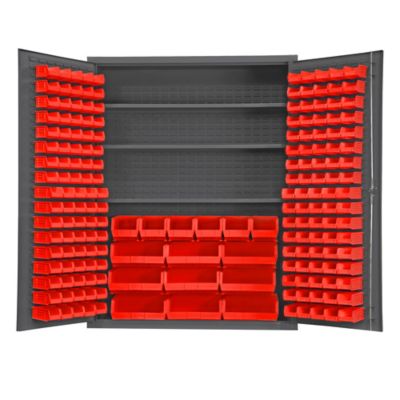
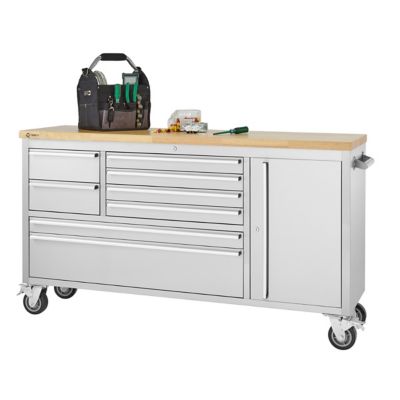
Utility cabinets are enclosed storage units that keep tools, household supplies, and work essentials organized behind doors. They fit naturally in garages, workshops, laundry rooms, basements, and other spaces where open shelves can leave everything out in the way. A cabinet beside a workbench gives measuring tools, spare hardware, and equipment manuals a regular home, while one near the laundry area can hold detergent, cleaning cloths, and extra paper goods. In a farm shop, cabinet storage helps keep smaller maintenance supplies together instead of scattered across benches and tucked into unrelated drawers. Homeowners, mechanics, ranchers, and anyone juggling household chores with hands-on projects can appreciate having fewer things to hunt down before getting started. The right layout depends on what needs a home: tall compartments accommodate long-handled cleaning tools, closely spaced shelves hold smaller containers, and deeper shelves provide room for larger cases or supply bins. Closed doors also cut down on visual clutter, though an ordinary cabinet should not be mistaken for a sealed, dustproof enclosure. Freestanding utility cabinets provide storage without taking over a work surface, while wall-mounted cabinets can leave floor space open where the wall construction and installation requirements allow. Shorter cabinets may fit beneath existing shelving, and taller designs make more of a narrow stretch of wall. Fit goes beyond the outside dimensions. Door swing, handle projection, nearby outlets, and room to stand comfortably in front all affect how a cabinet works day to day. A spot beside a parked mower might look roomy until a wide door swings into the aisle. Enough clearance to carry a toolbox past the cabinet matters just as much as fitting it against the wall. Inside, shelf depth and usable opening width determine whether larger containers slide in easily or need to be turned sideways every time. Those everyday details help separate storage that simply fills a space from storage that makes the space easier to work in.
Materials and construction play a big part in how utility cabinets handle their surroundings and their contents. Steel utility cabinets are a common choice for garages and work areas because their rigid panels suit tool and equipment storage. A powder-coated finish provides a protective surface, but scratches that expose bare metal deserve attention according to the manufacturer’s care directions. Resin or plastic cabinets offer surfaces that generally wipe clean readily and do not rust, though shelf limits and restrictions on placement still matter. Wood and engineered-wood cabinets can blend into laundry rooms, pantries, and finished utility spaces, with care taken to protect edges and joints from leaks or standing water. No material alone tells the whole story. Shelf construction, hinges, door alignment, fasteners, and the way the cabinet sits on the floor all contribute to how it holds up. Weight ratings deserve a close look, including whether a stated limit applies to each shelf or the entire cabinet. A row of power-tool cases puts different demands on a shelf than folded towels, and a concentrated load can behave differently from weight spread across the surface. Adjustable shelves help accommodate changing storage needs, but the adjustment spacing and the number of shelf supports influence the arrangements possible. Fixed shelves may divide the interior into useful zones when the contents stay fairly consistent. Doors that open comfortably, handles that are easy to grip, and hinges that stay properly aligned make daily access less of a chore. Locking utility cabinets can help limit access to tools and supplies, although a lock does not make every cabinet childproof or suitable for hazardous materials. Fuels, flammable liquids, and certain chemicals need storage that meets their labeling and applicable safety requirements, not just an empty shelf behind a locked door. Food, animal feed, and household chemicals also belong in separate storage areas to reduce the chance of contamination. Cabinet selection works best when the contents, their weight, and their handling requirements come first.
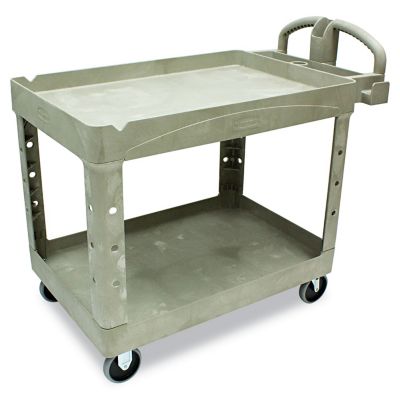
A practical cabinet arrangement follows the rhythm of the work around it. In a busy garage, everyday hand tools and frequently reached-for supplies belong within comfortable reach, with heavier contents down low to help maintain stability. In a laundry room, shelf spacing that accommodates detergent containers can prevent the awkward routine of tipping a bottle just to get it out. A utility cabinet near a household entry can hold cleaning gear and spare household supplies without turning the walkway into a catchall. Shelf bins and clear labels help keep small parts together, while leaving some open room makes it easier to return things after a job. Cabinets with leveling feet can help compensate for minor floor irregularities when adjusted within the manufacturer’s limits; they are not a fix for an unsuitable or unstable surface. Tall cabinets should be secured as directed, with anchoring hardware appropriate for the wall and installation. Where rolling storage makes sense, caster ratings, floor condition, and wheel locks become part of the decision, especially when loading or opening doors. Assembly requirements matter, too, and the
Assembly Cabinets page offers another place to explore cabinet storage for the space at hand. Before bringing a cabinet into its final position, account for the delivery path through doorways and the working room needed to put it together. Larger sections may call for another person to help lift and align them safely. Once installed, routine attention keeps the setup working smoothly: wipe spills promptly, follow the recommended cleaning method, and check for loose hardware or shelves that have shifted out of position. Avoid abrasive cleaners unless the finish instructions permit them, and give hinges and locks only the care specified for those parts. A cabinet earns its place when the doors open freely, the shelves carry their intended loads, and the supplies needed for the next chore are easy to find. That is the real appeal of utility cabinet storage: a tidier workspace with less shuffling and more room to get on with the job.