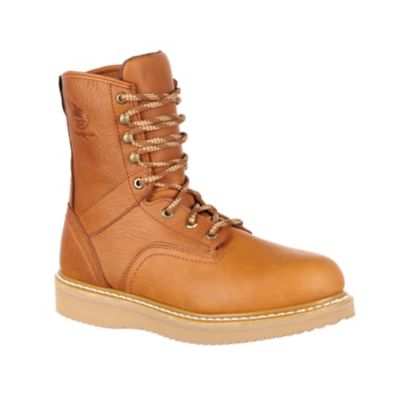
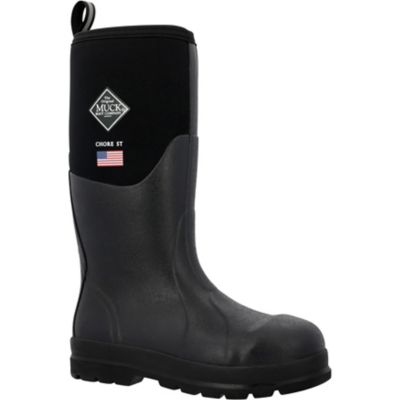
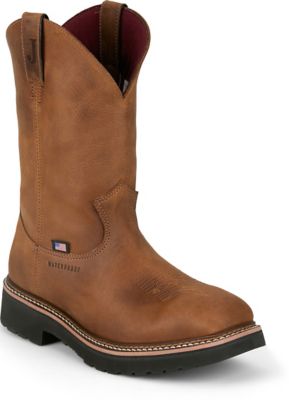
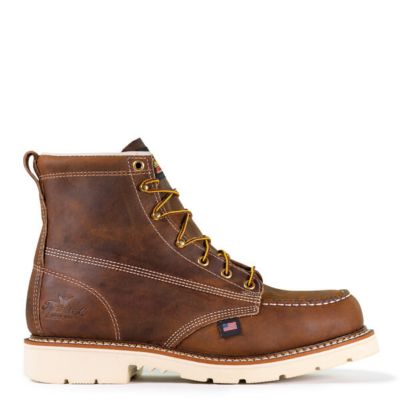
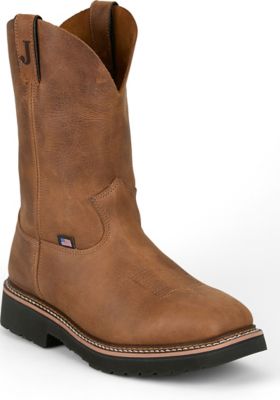
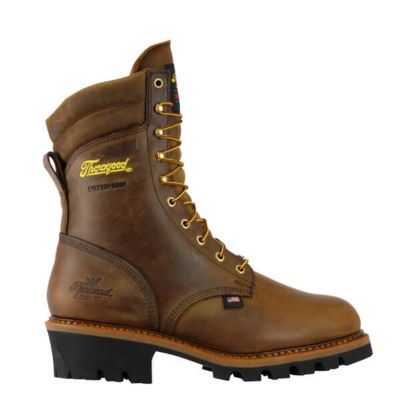
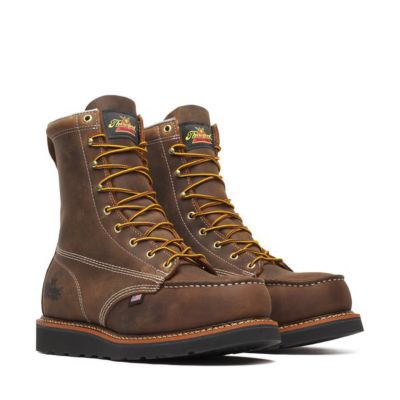
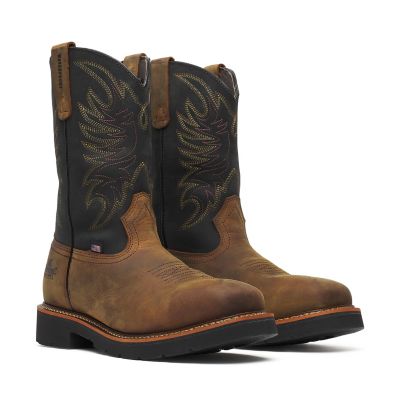
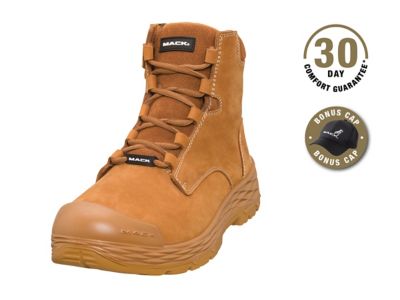
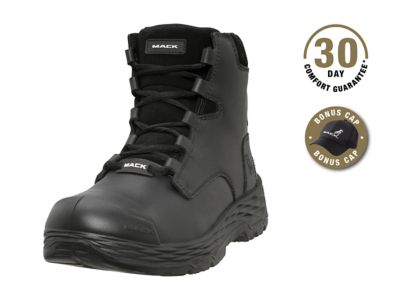
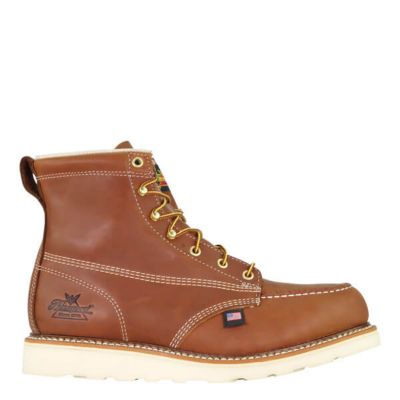
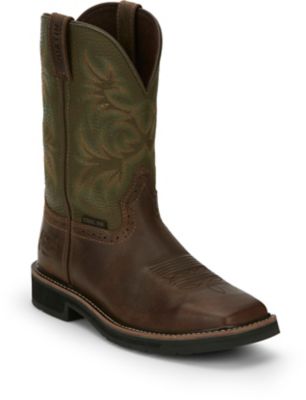
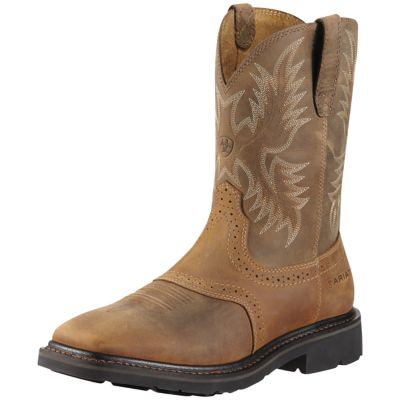
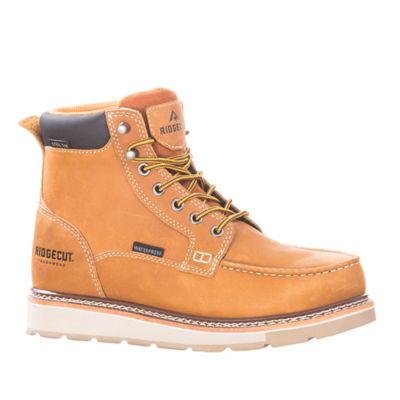
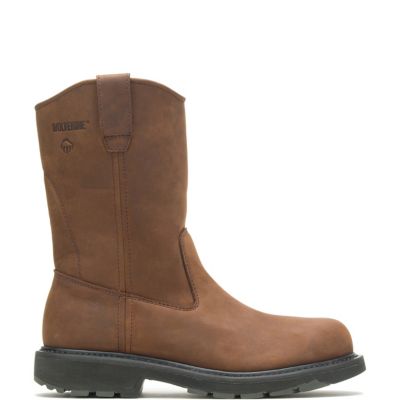
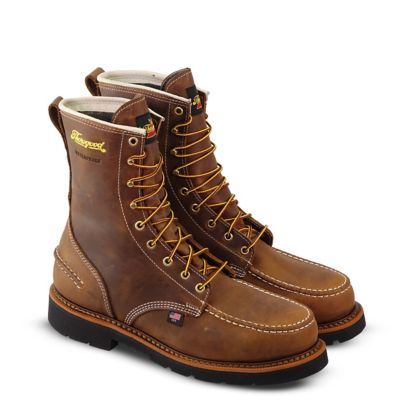
USA-made steel toe boots bring together American manufacturing and built-in toe protection for work around farms, ranches, shops and job sites. A steel safety cap sits inside the front of the boot, helping protect toes from impact and compression when the footwear meets the applicable safety standard. That matters when handling lumber, shifting equipment parts or working near materials that could fall or roll onto a foot. Protection is specific to the boot’s tested ratings, though; a steel toe does not make every part of a boot protective against every hazard. ASTM F2413 markings identify protective footwear that meets the standard’s requirements, while additional markings and manufacturer information describe features such as electrical hazard protection or puncture resistance. An EH rating provides secondary protection against accidental contact with certain electrical hazards under specified conditions, not permission to work on energized equipment. Likewise, a steel toe alone does not establish puncture resistance underfoot or protection over the top of the foot. Jobs with those hazards may call for separately rated puncture-resistant footwear or metatarsal protection. Workplace safety requirements should match the boot’s documented features before anything else. Country-of-origin wording matters, too. An unqualified “Made in USA” claim means all or virtually all of the product is made in the United States. Statements about U.S. assembly or imported components describe different sourcing arrangements, so the full origin description tells more than a flag graphic. For shoppers who put American manufacturing high on the list, that distinction helps keep the choice grounded in how the boots are actually made. Farmhands, mechanics, equipment operators, warehouse crews and tradespeople can all have a reason to wear protective footwear, but their needs are not identical. A pair that suits repeated trips across a smooth shop floor may not be the best match for climbing equipment steps or walking over loose gravel. Construction, traction and fit matter alongside the safety toe.
Leather is a common choice for American-made steel toe work boots because it offers abrasion resistance and gradually flexes with the foot. Full-grain leather retains the outer grain, while other leather finishes can have different care needs and surface characteristics. Reinforced stitching, sturdy lace hardware and protection around high-wear areas help a boot stand up to repeated bending, kneeling and brushing against equipment. The way the upper joins the sole also affects flexibility and service life. Some welted boots can be resoled, depending on their construction and condition, while other designs place more emphasis on flexibility or a lighter feel. Underfoot, outsole shape makes a noticeable difference through a long shift. Broad, flatter soles can feel steady on smooth surfaces, while more pronounced tread can provide purchase on uneven ground. Neither a deep tread nor a slip-resistant label guarantees footing on every surface; oil, loose material and packed mud can change how a sole grips. For work around oil or fuel, resistance claims should come from the manufacturer rather than an assumption about the sole material. Waterproof construction can help with splashes during pen cleaning or other wet tasks, but it is separate from toe protection and is not a feature of every boot. Fit deserves just as much attention as leather and tread. The heel should feel secure, the instep supported without being squeezed, and the toes free to move without pressing against the safety cap. Leather may soften with wear, but the steel cap will not stretch to make extra toe room. Work socks, foot width and the shape of the boot’s last all influence the fit, so the same marked size can feel different across designs. Lace-up styles allow adjustment across the instep and ankle, while pull-on styles depend more heavily on the match between foot shape and boot shape. Cushioning and arch support should suit the hours spent standing or walking, without crowding the foot against the cap.
Regular care helps steel toe boots keep doing their job through repeated chores and shifts. Dirt caught along seams and grit worked into leather creases can wear on the upper, while packed tread can interfere with traction. A soft brush, a damp cloth and cleaning products recommended for the boot’s materials are usually a better approach than harsh scrubbing or soaking. Leather conditioner should match the leather finish, and waterproof treatments should be compatible with any membrane or factory treatment. More product is not necessarily better; heavy applications can leave residue or change the leather’s feel. After washdown work or other tasks that leave boots damp inside, opening the boots and removing removable footbeds, when permitted, helps them air out. Direct heat from a heater or dryer can harm leather, adhesives and other components, so drying methods should follow the maker’s directions. Worn laces, loose stitching, separating soles and tread worn smooth deserve attention before the next shift. A hard impact to the toe is another reason to inspect the footwear and follow the manufacturer’s replacement guidance, even when the outside does not look badly damaged. For resoleable construction, a qualified repair shop can assess whether the upper and safety components remain suitable for further service; replacing a sole does not restore every protective feature. Beyond steel toe styles,
USA Made Boots offers a broader look at American-made footwear for different work needs. Protective boots can also be a practical gift for a family member starting a trade or taking on more work around the farm, provided the recipient’s size, fit preferences and required safety ratings are known. The best match comes down to the actual day’s work: carrying feed, tending machinery, crossing a shop floor or spending hours at a workbench. American origin, documented protection, sound construction and enough room to move comfortably give steel toe boots a useful place in a working wardrobe.