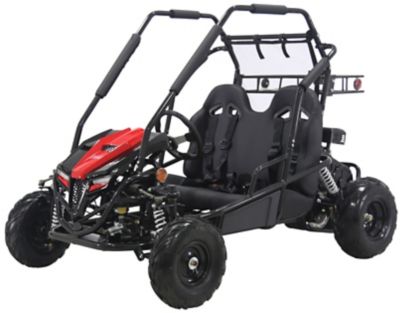
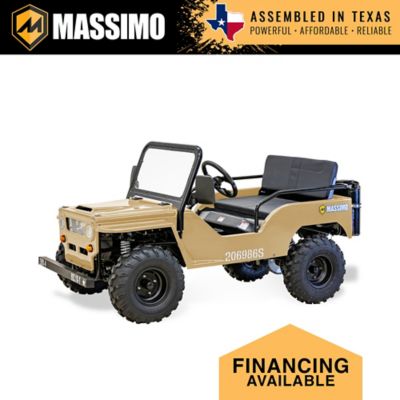
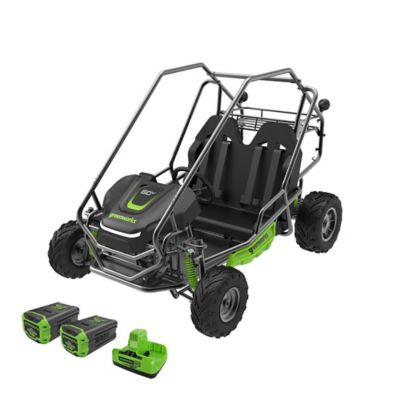
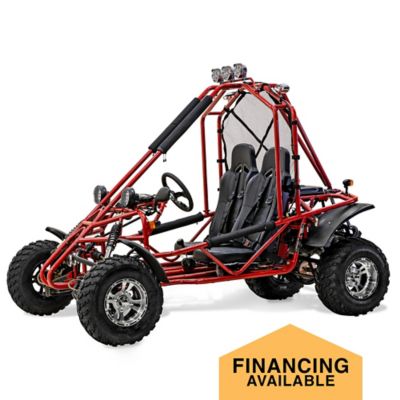
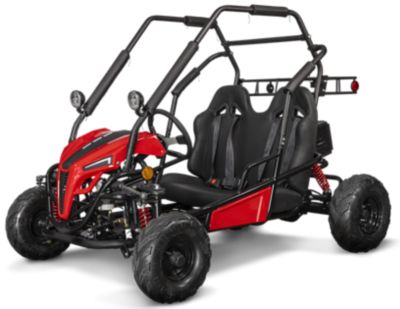
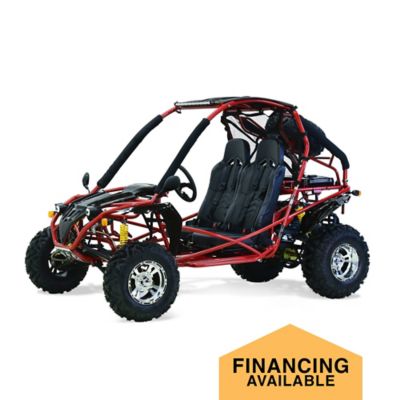
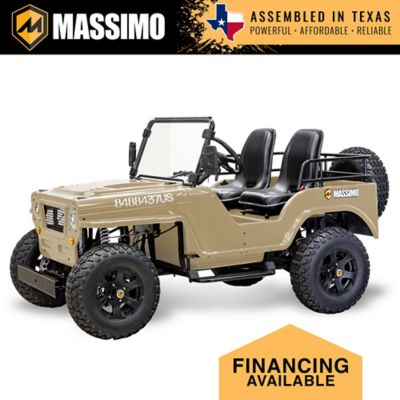
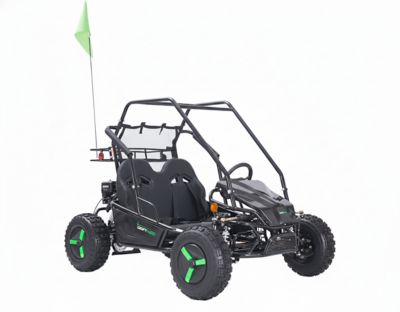
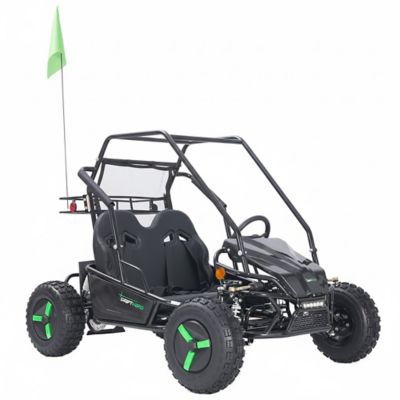
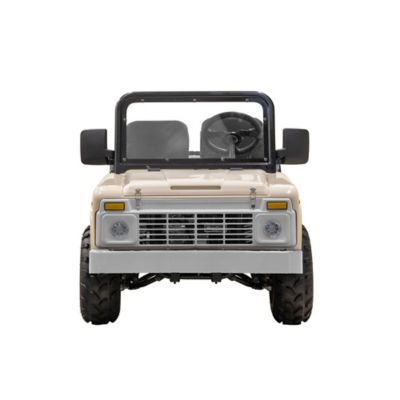
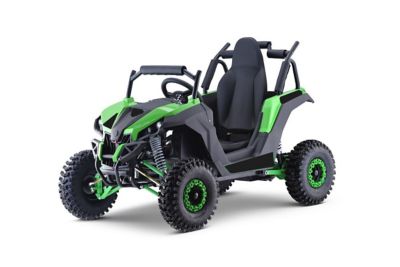
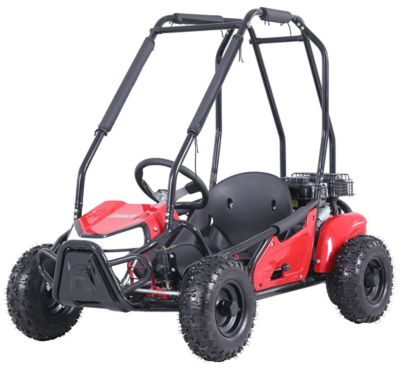
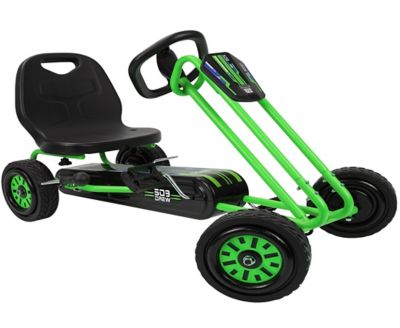
Two-seat go karts are recreational vehicles with designated seating for a driver and one passenger, making room for a shared ride rather than a solo lap. The category includes smaller electric karts, youth-size off-road machines, and larger gas or electric designs built for riders who meet the manufacturer’s age, size, and operating requirements. That second seat can make a ride around a designated riding area more enjoyable for siblings, friends, or a parent and child, but only when the kart is rated for both occupants. Two seats do not automatically mean room for two adults, and a passenger seat does not make a child ready to operate the vehicle. Rider fit matters just as much as the overall dimensions. The driver needs to reach the pedals comfortably, hold the steering wheel securely, and turn without stretching or crowding the controls. The passenger needs proper seating support, room for both feet inside the designated foot area, and a restraint that fits as intended. Adjustable seats can help accommodate different leg lengths, though their adjustment range varies. Seat width, legroom, and access through the frame opening also affect how comfortably each person can get settled. The stated weight limit generally applies to the combined load described in the owner’s manual, not a separate allowance for each seat. A kart’s own weight is a different measurement altogether. For families comparing two-seater go karts, those distinctions help narrow the choices more meaningfully than appearance alone. A compact frame may suit a designated youth rider, while a taller driver may need a larger cockpit even when the listed weight capacity seems sufficient. Side-by-side seating also means the passenger shares every turn and bump, so a comfortable fit and properly secured restraints matter for both people throughout the ride.
Gas and electric two-seat go karts offer different ownership experiences, and neither power source tells the whole story about performance. Gas models commonly have small engines that require fuel, engine oil, and scheduled service. Electric models rely on a rechargeable battery and motor, with riding time influenced by battery capacity, terrain, rider load, speed, and driving habits. A larger engine displacement or higher battery voltage alone does not establish top speed, hill-climbing ability, or suitability for a particular rider. Gearing, motor output, vehicle weight, and the manufacturer’s operating limits all play a part. For off-road riding, the frame, tires, suspension, and ground clearance deserve a close look. Steel tubing is common in go-kart frames, while molded body panels can cover sections of the chassis and help shield riders from some thrown dirt. Neither body panels nor a surrounding frame make a kart suitable for every trail. A smooth, packed-dirt loop places different demands on a machine than a deeply rutted path, and steep slopes or rough ground may fall outside its permitted use. Suspension can help manage bumps, but it does not remove the need to slow down and stay within the kart’s limits. Knobby tires are generally associated with loose-surface traction, while other tread patterns serve different riding surfaces; tire selection should match the vehicle’s specifications and intended setting. Braking systems, turning space, and control placement also influence everyday handling. Reverse can make repositioning easier in a suitable open area, and speed-limiting features may help an adult set operating boundaries when included. Neither feature replaces rider training or supervision. Padded seating and wipe-clean seat coverings can make a difference after a dusty afternoon, while accessible service points can simplify routine upkeep. Construction details matter most when they support the actual riding conditions, rider fit, and care requirements, rather than simply giving the kart a rugged look.
A two-person go kart fits best into a household that has a permitted place to ride, suitable supervision, and room to store and maintain the machine. A broad patch of land is not automatically a riding course: fence corners, livestock, parked equipment, drainage ditches, and crossing traffic all need separation from the riding area. Off-road karts generally belong on appropriate private property or designated riding grounds where operation is allowed, not on public roads. The owner’s manual and local rules set important boundaries, including age requirements, passenger restrictions, and any limits on slopes or surfaces. Both occupants need properly fitted helmets intended for motorized riding, eye protection, closed-toe footwear, and clothing that stays clear of moving parts. Each rider needs the designated restraint fastened correctly, and any protective frame is no substitute for careful operation. For younger riders, direct adult supervision and a clear understanding of stopping, steering, and keeping hands and feet inside the vehicle come before shared laps. Ownership also includes the work between rides. Tires, brakes, steering components, restraints, and visible fasteners need inspection at the intervals specified by the manufacturer, with any damage addressed before riding again. Dust and mud deserve attention around moving parts and cooling areas, while cleaning methods should protect electrical components, bearings, and seat materials. Gas engines need the specified fuel and lubricants, along with outdoor operation to prevent exhaust buildup in enclosed spaces. Electric karts need the approved charger, proper charging practices, and battery care that follows the manufacturer’s directions. Storage space should accommodate the kart’s full width and length, with enough clearance to move it without scraping doorways or crowding other equipment. As a gift, a two-seat kart calls for more planning than a helmet and a bow: the recipient’s fit, experience, riding location, and ability to handle upkeep all matter. The
Best Go Karts page is another place to explore the category while keeping those practical needs in mind. A well-matched two-seater makes shared recreation the focus, with both riders properly seated and the machine suited to the ground ahead.