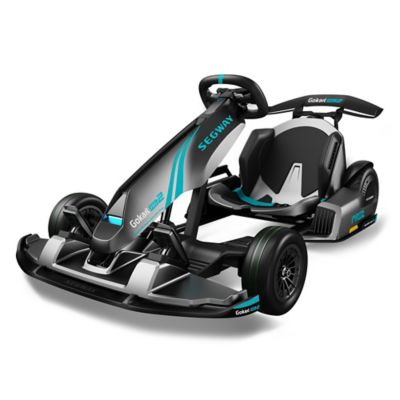
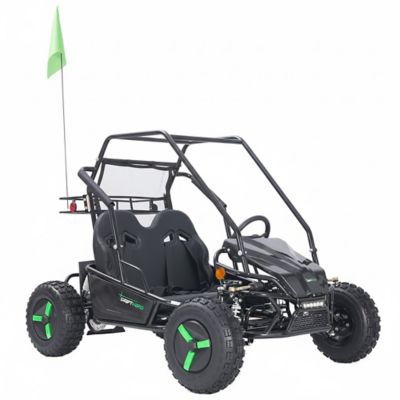
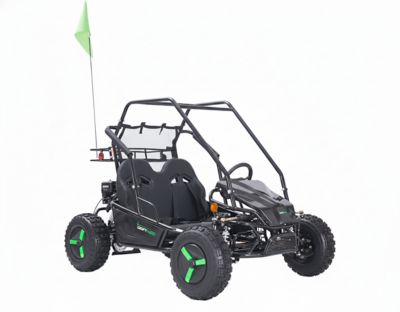
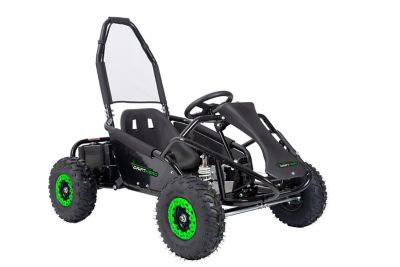
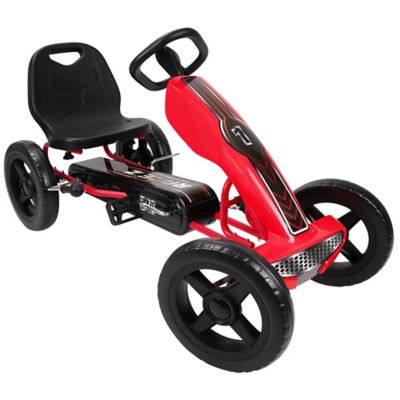
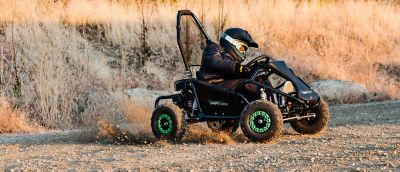
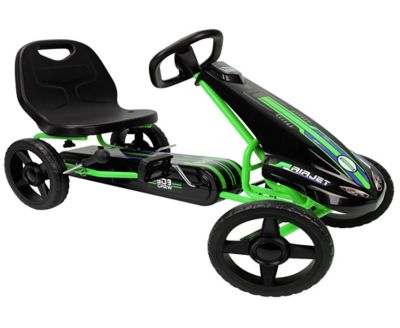
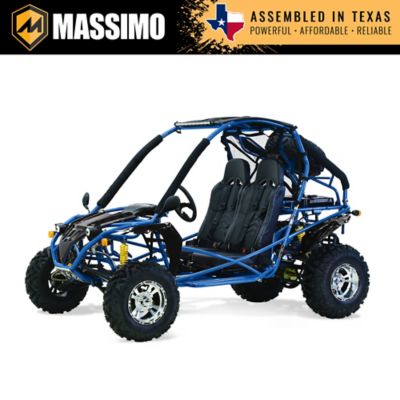
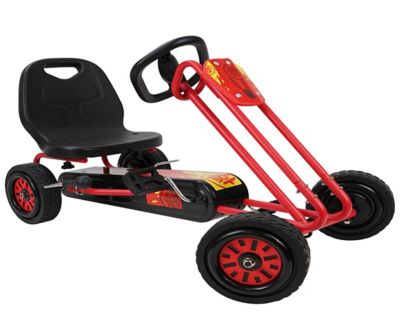
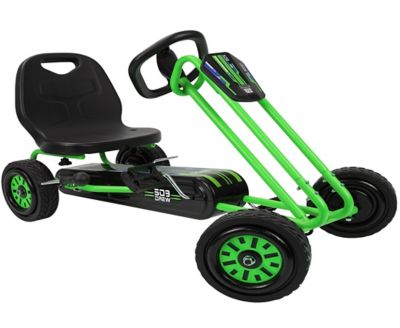
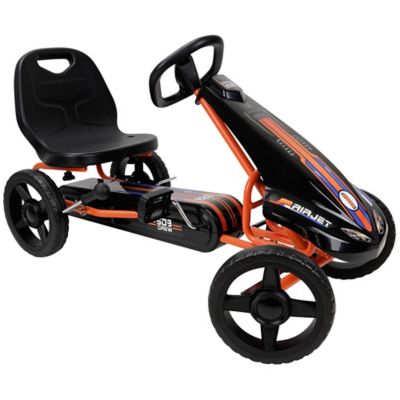
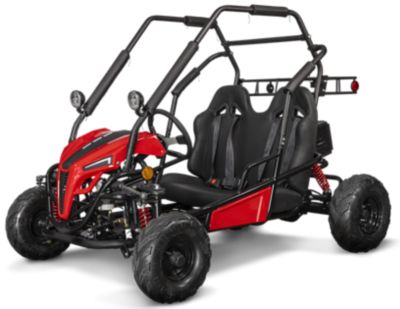
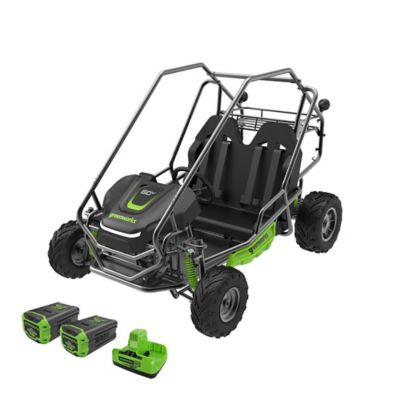
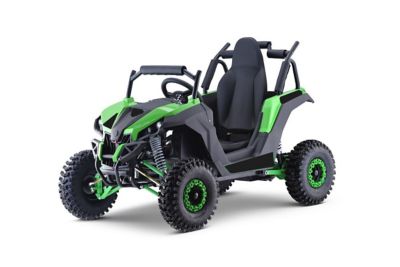
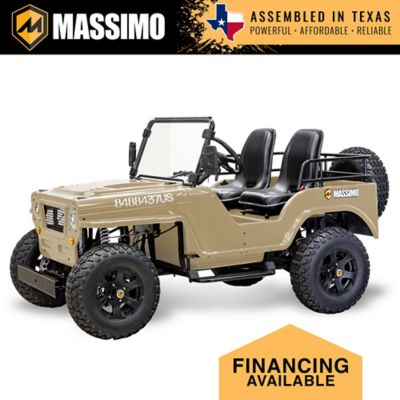
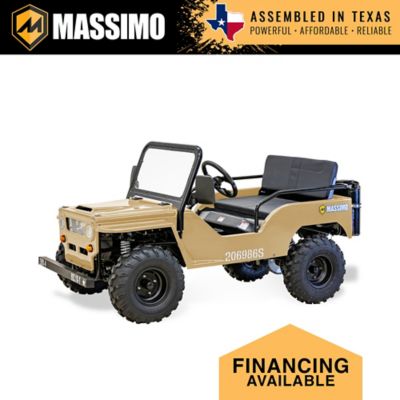
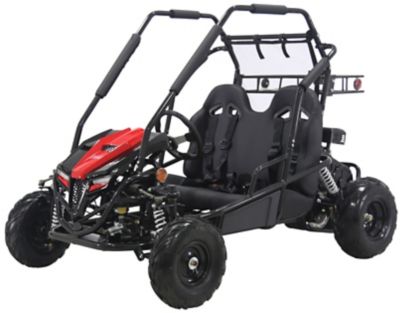
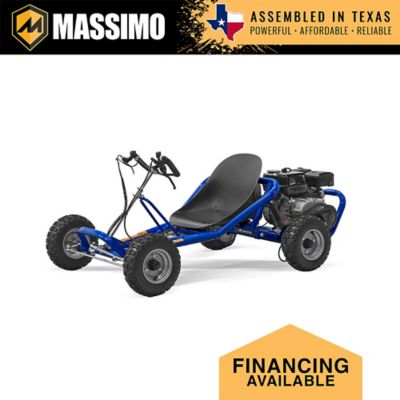
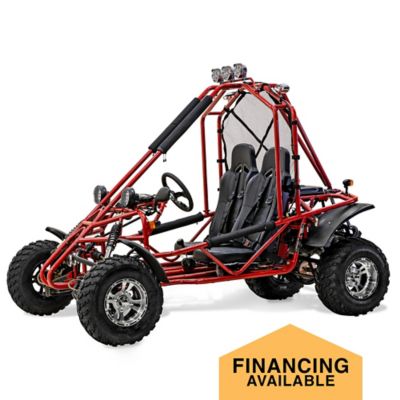
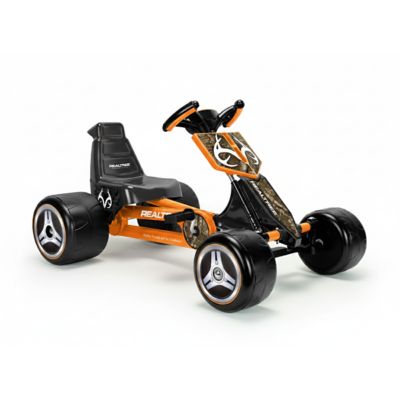
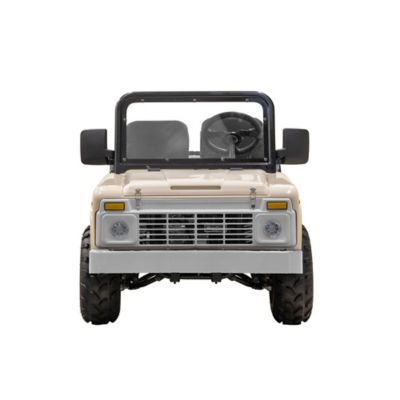
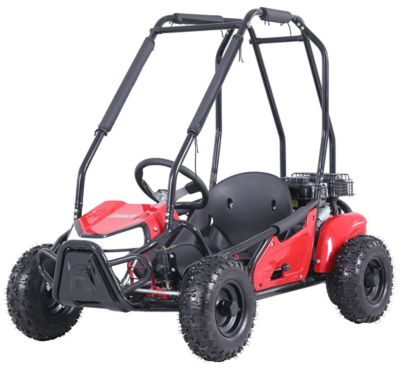
Racing go karts are compact, four-wheeled vehicles built for closed-course driving, with a low seating position and responsive steering that bring drivers close to the action. Within the broader go-kart category, a competition kart and a recreational kart with racing-inspired styling serve different purposes. Competition machines are designed around particular track surfaces and racing rules, while recreational models may be intended for designated off-road riding rather than organized competition. That difference matters more than bright graphics or an aggressive-looking frame. A kart’s intended riding surface, driver requirements, and operating limits help explain where it belongs and who can operate it. Gas-powered karts pair an engine with a fuel system and mechanical drivetrain, giving owners engine maintenance to consider alongside driving performance. Electric karts draw power from a battery and motor, with operating time, charging requirements, and battery care playing a larger part in ownership. Neither power source alone determines whether a kart is suitable for a beginner or an experienced racer. Power delivery, vehicle weight, braking performance, and the manufacturer’s age and experience requirements all matter. There is no single standard top speed for racing go karts; speed depends on the motor or engine, gearing, driver weight, course layout, and operating restrictions. Some competition karts have single-speed drivetrains, while shifter karts have multi-speed gearboxes and place different demands on the driver. For someone interested in organized racing, the class rules can determine engine specifications, chassis requirements, tires, and safety equipment before personal preferences enter the picture. For a family looking for recreational driving, manageable controls and a kart approved for the intended setting carry more weight than race-oriented features. A machine that looks ready for the starting grid is not necessarily eligible for a local racing class, and a purpose-built competition chassis is not automatically suited to the ground behind the barn.
Frame construction, seating, tires, and brakes shape how a go kart feels long before its maximum speed becomes relevant. Steel-tube frames are common, but tubing layout, welds, mounting points, and overall design all influence how a chassis handles driving loads. Many competition karts have no suspension, relying instead on frame flex, tires, and chassis setup to work through corners. Recreational off-road designs may include suspension and greater ground clearance, making them a separate consideration from low-slung pavement racers. Tires also need to match the intended surface and the kart’s specifications. Smooth racing tires and treaded off-road tires have different jobs, and neither belongs on every course. Wheel size, tire condition, and inflation specifications affect handling as well as the clearance around nearby components. Braking systems deserve the same attention as engine size: predictable response and proper maintenance matter whenever a driver needs to slow before a bend or stop within a designated riding area. Fit is just as practical. The driver needs to sit securely, reach the pedals through their full travel, and turn the steering wheel without stretching or crowding their knees. Adjustable seating or pedal positions can help accommodate different drivers when the design allows it, but adjustments do not override the manufacturer’s limits. Age recommendations, weight capacity, and height guidance work together; a driver’s age alone does not establish a proper fit. A youth-sized kart is not simply a smaller version of every adult racing machine, and extra engine power does not make an oversized frame easier to control. Single-seat layouts keep the focus on one driver, while any passenger seating belongs only on a kart specifically designed and rated for it. Chain guards, heat shields, restraints, and roll structures vary by kart type. Protective features should be evaluated according to the manufacturer’s instructions and any applicable track rules, rather than treated as interchangeable equipment across recreational and competition designs.
Ownership also includes the time spent looking after the machine between drives. Gas-powered karts require attention to the engine, fuel system, and service schedule, while electric models need charging arrangements that match the manufacturer’s electrical and battery requirements. Both types still have tires, steering components, fasteners, and brakes that need regular inspection. Depending on the drivetrain, chain tension, sprocket condition, belts, or clutch components may also be part of routine upkeep. Dust and grit can collect around moving parts, so access to service points matters when considering how a kart will fit into everyday life. A frame with room to reach adjustment points can make routine care less of a squeeze, while clear maintenance information helps an owner understand the work involved. Storage and transport deserve thought, too. Overall width, length, weight, and loading requirements determine whether a kart fits the intended storage space and suitable transport equipment. Proper tie-down points and loading procedures come from the manufacturer, not from whichever frame tube happens to be easiest to reach. For parents, grandparents, or anyone considering a kart as a gift, confirming the recipient’s fit, experience, riding location, and supervision needs is more useful than choosing by appearance alone. A racing enthusiast may need equipment that meets a particular class rulebook, while a recreational driver may need a different design altogether. The broader
Go Karts category provides context for those different purposes. Safe operation remains part of the ownership picture: a properly fitted helmet, suitable eye protection, closed-toe footwear, and any additional gear required by the manufacturer or track belong alongside the vehicle itself. Designated riding areas, appropriate supervision, and clear separation from bystanders help keep the focus on controlled driving. The best match is a kart that fits its driver, suits its permitted setting, and comes with care requirements the owner is prepared to follow—not simply the one with the boldest stance or biggest engine.