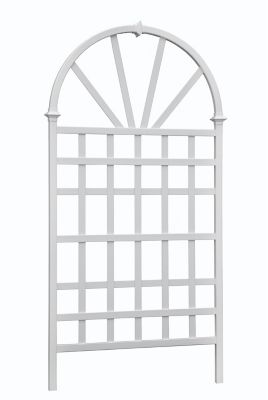
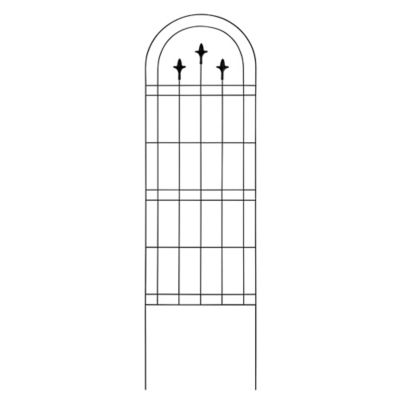
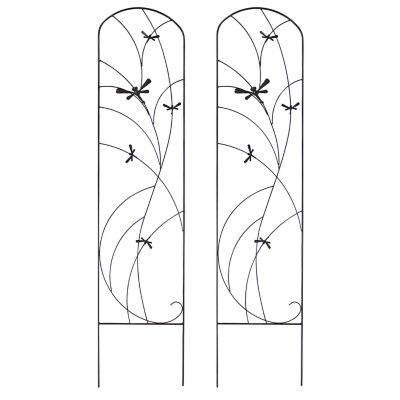
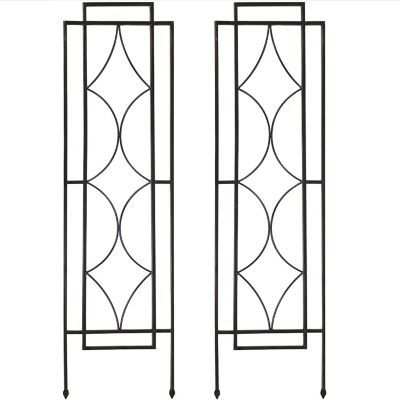
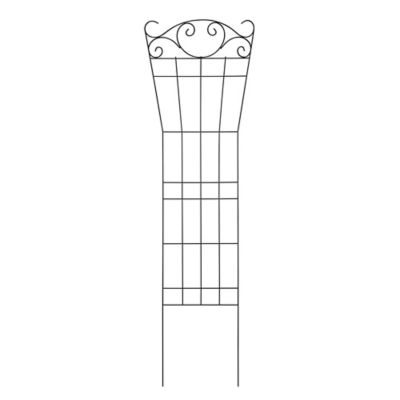
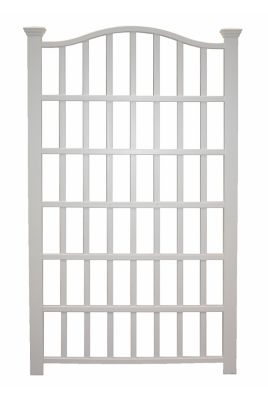
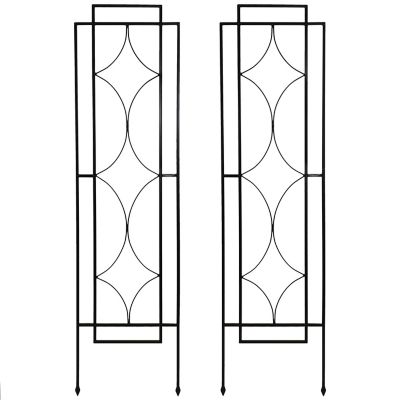
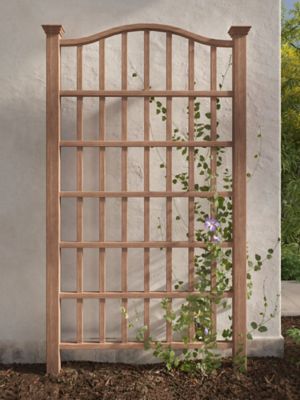
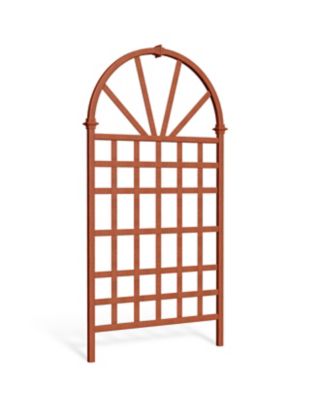
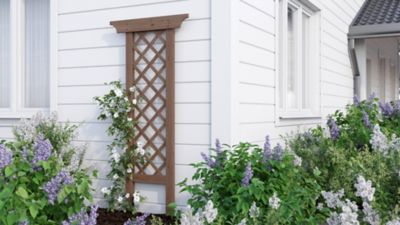
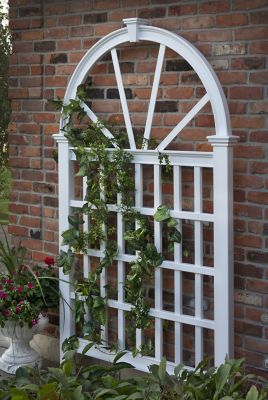
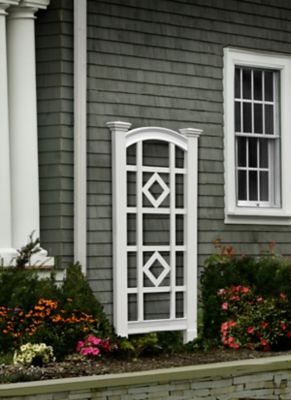
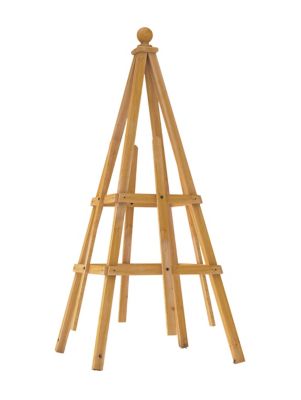
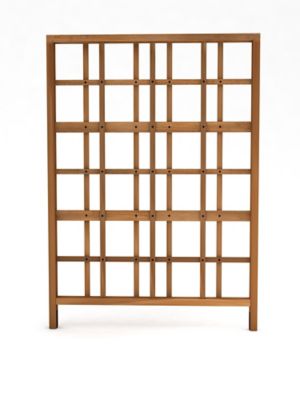
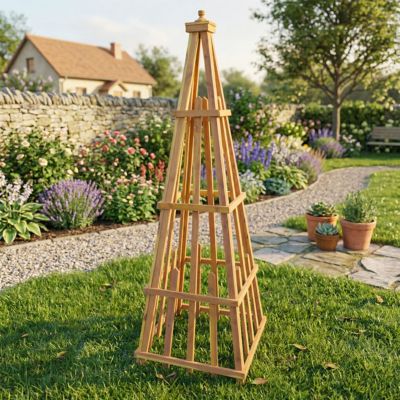
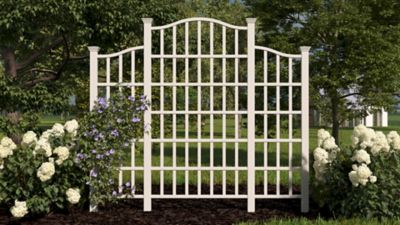
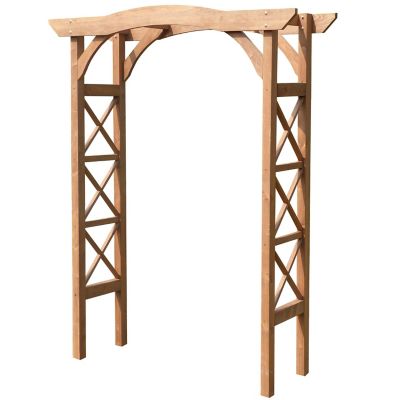
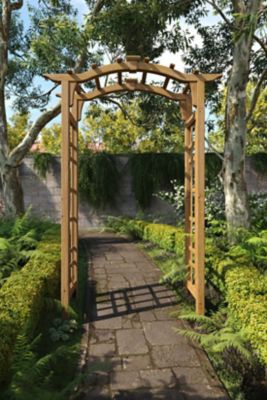
Trellises for backyard landscaping add height, support climbing plants, and help define outdoor spaces without taking up much ground. Planted with suitable vines, they can soften a bare fence, frame a walkway, or create a leafy screen beside a seating area. An open trellis brings shape to a yard even before plants cover it, while its framework gives stems and tendrils a place to climb. That makes trellises a practical fit for small backyards, roomy garden plots, and spots where flowers and vegetables share the same beds. A narrow panel can tuck behind a planter near the back steps, while several panels can mark the edge of a patio or separate a vegetable patch from the rest of the yard. Lattice patterns offer plenty of crossing points for plant growth, and straight bars or simple grids give the planting a more open look. Arched shapes draw the eye upward and can frame an entrance without closing it off. The right proportions depend on both the space and the planting: a tall, slender trellis brings height to a tight corner, while a wider panel spreads growth across a blank stretch of fence. Openings also affect how much of the yard remains visible through the structure. Closely spaced lattice creates more visual separation on its own, but a wide grid keeps the view open until foliage fills in. Trellises offer screening rather than the solid barrier of a privacy fence, and the amount of coverage depends on the plant’s growth habit and how it is trained. Beside a porch, near a gate, or along the edge of a kitchen garden, that mix of structure and greenery can make a backyard feel more settled without walling everything off.
Materials make a difference in a trellis’s appearance, weight, upkeep, and ability to carry mature plants. Wood brings a familiar garden look that sits comfortably beside raised beds, split-rail fencing, and gravel paths. Its thickness, joinery, and suitability for ground contact matter more than looks alone, particularly when the framework will support woody stems. Some wood trellises call for periodic finishing, while others are intended to develop a natural patina; care directions help clarify what to expect. Metal offers slender lines and can provide substantial support without a thick frame, though construction varies. The size of the bars, strength of the joints, and design of the anchors all contribute to how firmly a metal trellis stands. Protective coatings help limit rust, and scratched areas may need attention according to the maker’s directions. Vinyl and composite options can suit spaces where straightforward cleanup is a priority, but their load limits and mounting requirements still deserve a close look. A lightweight panel intended for delicate annual vines is not interchangeable with a substantial structure meant to carry a large, established climber. Shape matters as much as material, too. Flat panels work well against a backdrop, fan shapes spread stems outward from a narrower base, and freestanding forms can become focal points within a bed. For any style, the listed overall dimensions may include legs or stakes that sit below the soil, so the height above ground can be less than the full measurement. Planter-mounted trellises also need a good match between the frame, container size, and the weight of the planting. Routine care is generally easier when crosspieces, fasteners, and mounting points remain accessible. Removing tangled dead stems, checking connections, and cleaning away soil buildup can help keep the structure ready to support new growth. Where plants need frequent tying or pruning, an open pattern with room for a hand between the bars can make those everyday garden chores much less fiddly.
Plant choice helps narrow down which trellis belongs in each part of the backyard. Peas climb with tendrils that need slender supports to catch, while pole beans wrap their stems around a framework. Climbing roses do not attach themselves with tendrils; their long canes need support and gentle fastening as they spread. Heavier woody vines place different demands on a structure than a light flowering climber, so the plant’s mature size and the trellis’s intended load should line up from the start. The selection of
Trellises For Climbing Roses And Vines brings that plant-and-support pairing into focus for flower beds, garden boundaries, and planted backdrops. Placement matters just as much as the framework itself. A wall-mounted panel needs suitable fasteners and enough space behind it for stems, ties, and maintenance, while a freestanding trellis needs anchoring appropriate to its size and installation location. A trellis is a plant support, not a substitute for a handrail, fence, or play structure. Along a frequently traveled path, allowing room for mature foliage helps keep stems and thorns away from shoulders and sleeves. Near a vegetable bed, access to both sides can make harvesting easier and keep produce within reach. Around a seating area, the balance may lean toward leafy coverage, with enough clearance to move chairs and tend the plants without squeezing through a narrow gap. Even a small backyard benefits from leaving room at the base for watering, checking ties, and clearing fallen leaves. Gardeners working with limited bed space may appreciate the upright growing area, while those tending a larger yard may want repeating panels that give separate plantings a common shape. Whether the goal is a flowering backdrop, a more sheltered sitting spot, or an orderly place for climbing vegetables, a well-matched trellis gives the planting a clear framework and leaves useful room below.