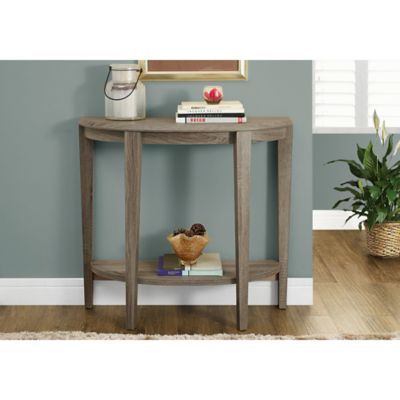
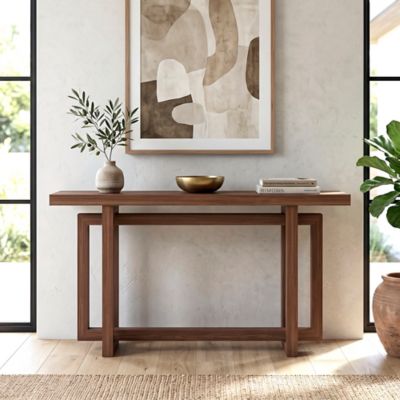
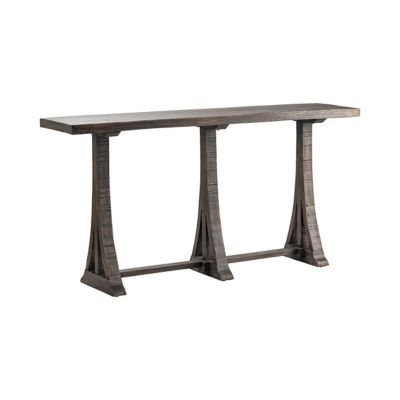
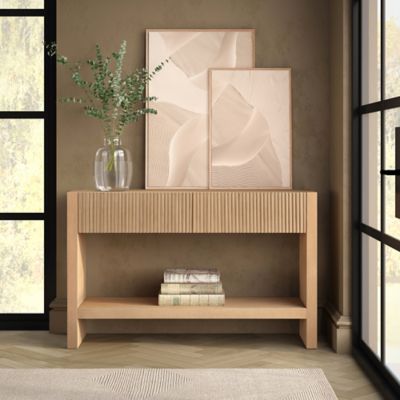
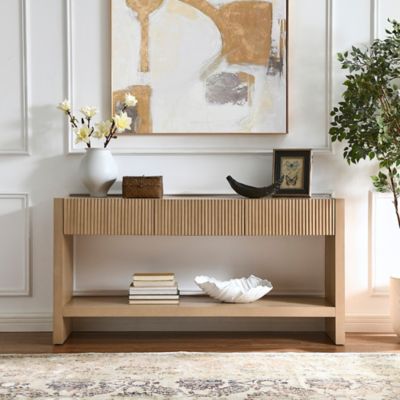
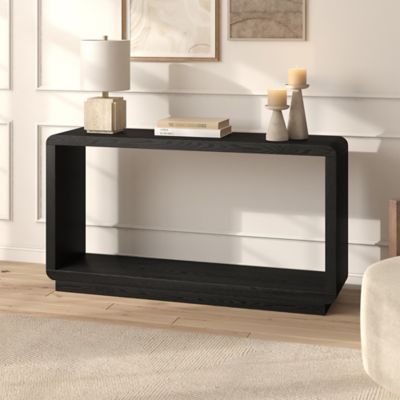
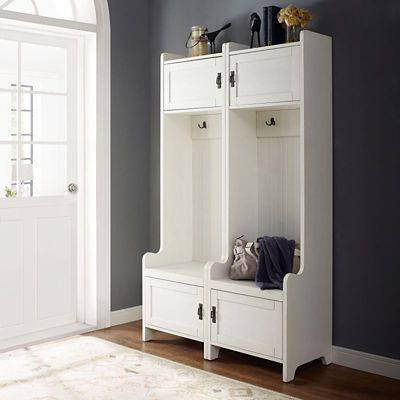
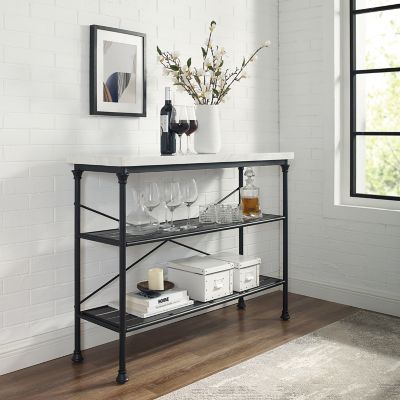
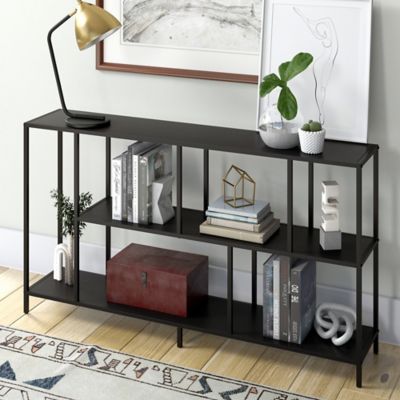
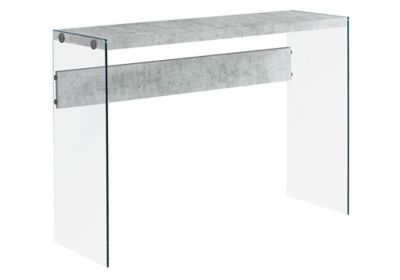
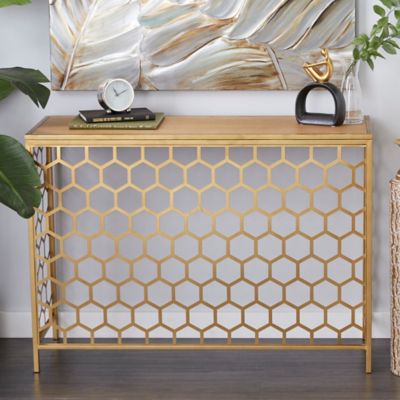
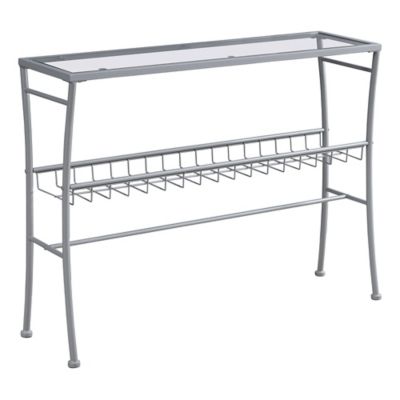
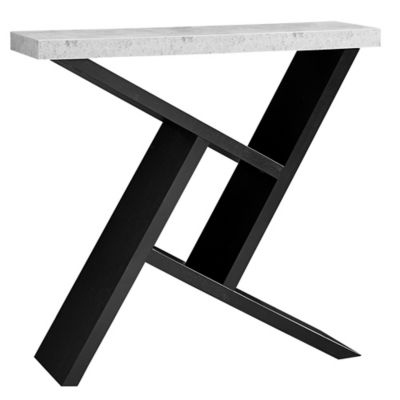
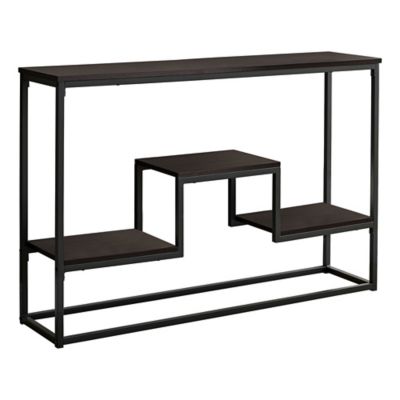
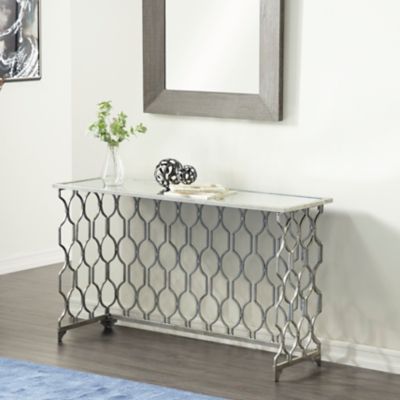
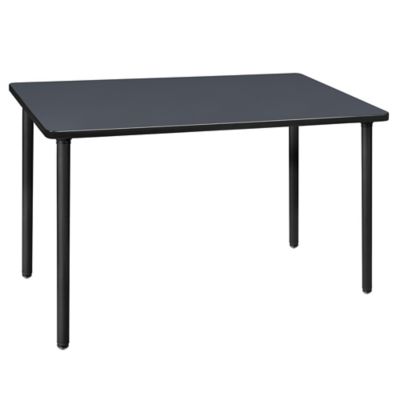
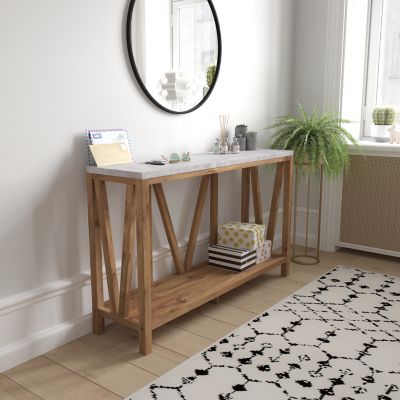
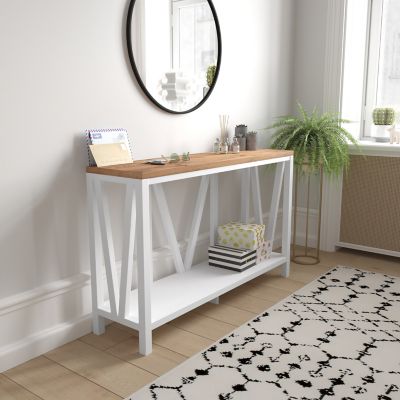
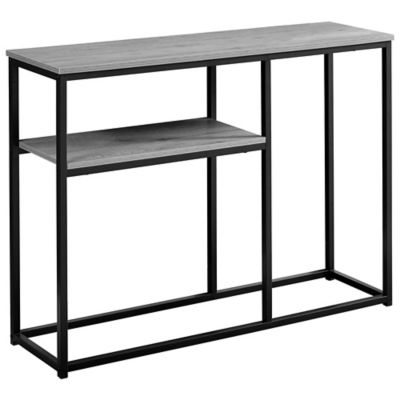
Transitional entryway tables blend the warmth and familiar shapes of traditional furniture with the simpler lines of modern design. The result is a table that feels right at home beside a paneled front door, along a plain hallway wall, or between rooms with different furniture styles. Instead of heavy carving or an all-business metal frame, a transitional console often pairs a straightforward top with gently tapered legs, a softly curved base, or understated drawer pulls. Those small details give the piece some character without making the entry feel crowded. Wood tones, painted neutrals, and combinations of wood and metal all fit this style, with the finish helping determine whether the table leans more toward a farmhouse feel or a cleaner, more streamlined look. A warm brown top can pick up the tones in exposed beams or hardwood flooring, while an ivory, gray, or taupe base can sit comfortably against painted trim. The finish does not have to match every nearby surface; a shared undertone or repeated hardware color can help the space feel pulled together. Entryway console tables also earn their place through everyday usefulness. A narrow surface beside the door gives keys, mail, and sunglasses somewhere to land before they spread across the kitchen counter. In a home where the front entry opens straight into the living room, a table can mark that transition without putting up a visual barrier. For a roomy foyer, a longer piece gives a large wall some balance, while a compact table can make a small landing feel purposeful. The broader family of
Entryway Accent Tables includes a range of shapes and styles, with transitional designs offering a middle ground between ornate and spare. Their appeal is less about having everything match and more about making familiar furnishings work together, whether the house has a country layout, an open floor plan, or a narrow front hall.
Fit matters as much as appearance because an entryway is a working passage, not just a place to set a lamp. Table depth is especially important in a narrow hall: a depth of about 12 to 15 inches can provide a useful landing surface without reaching too far into the walking path, though the right measurement depends on the room. The remaining passage needs to accommodate people carrying grocery bags, a laundry basket, or a sleeping child, along with any mobility equipment household members or visitors need. A door should swing freely without hitting the tabletop, and drawers need enough room to open without blocking the only route through the space. Baseboards, wall registers, outlets, and projecting drawer pulls can all affect the final placement, even when the listed dimensions seem to fit. Many console tables stand roughly 28 to 34 inches tall, putting the surface within easy reach for everyday belongings, but checking the actual height helps avoid an awkward reach. When a table sits behind a sofa near the entry, a top close to or slightly below the sofa back generally keeps the arrangement feeling balanced. Storage changes how the piece serves the household. Shallow drawers suit keys, pens, and envelopes, while deeper compartments can hold larger belongings if their interior measurements allow. An open lower shelf leaves room for baskets that gather pet leashes, reusable shopping bags, or other things headed out the door. For baskets to slide out easily, shelf clearance matters just as much as shelf width. A table with an open base has a lighter presence and leaves more floor visible, which can help a tight entry feel less packed. Closed storage keeps the small stuff out of sight, but a mix of drawers and open shelving often suits a busy household well. The most useful arrangement leaves some tabletop space empty, so there is still a spot to set down a bag while unlocking the door.
Materials and construction help determine how a transitional entryway table handles daily traffic and how much attention it needs over time. Solid wood brings natural grain and variation, and its finish helps determine resistance to scratches, rings, and spills. Wood veneer offers a real-wood surface over a supporting core, while engineered wood with a laminate or painted finish can provide a consistent appearance. These materials have different care requirements, so the maker’s directions matter more than a one-size-fits-all cleaning routine. Metal bases can create a slim profile, but secure connections and a steady stance are important regardless of the frame material. Well-fitted joints, firmly attached legs, smooth drawer movement, and clearly stated shelf and tabletop weight limits are useful details to compare. A table that holds a small lamp and a mail tray has different demands placed on it than one supporting a large ceramic vessel or a stack of books. Glass tops bring a lighter look but show fingerprints readily, while textured wood surfaces may take a little more attention when dust settles into the grain. A soft cloth, prompt spill cleanup, and cleaners approved for the finish help protect the surface; abrasive pads and harsh chemicals can leave marks or damage coatings. Felt pads beneath a bowl or lamp base can reduce scuffing, and a lined catchall tray keeps keys from scraping the top every day. In homes with children or active pets, rounded corners may soften sharp edges along the walkway, and any supplied wall-restraint hardware should be installed as directed. Entryway tables are not seating, even when their lower shelves look sturdy enough for a quick perch. A mirror or piece of wall art above the table can give the arrangement a clear center, while a modest lamp adds light for finding keys and sorting mail. Keeping lamp cords away from foot traffic and leaving the doorway clear lets the furniture do its job without becoming another obstacle. With the right proportions, practical storage, and a finish suited to the household, a transitional entryway table brings a welcoming feel to the front door while helping keep everyday comings and goings a little more organized.