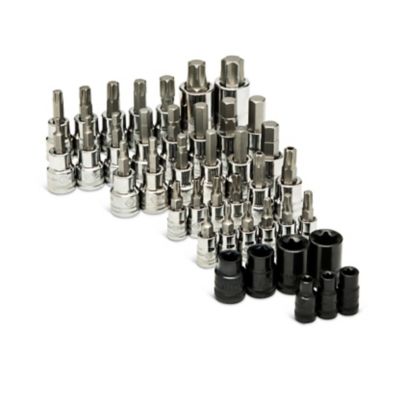
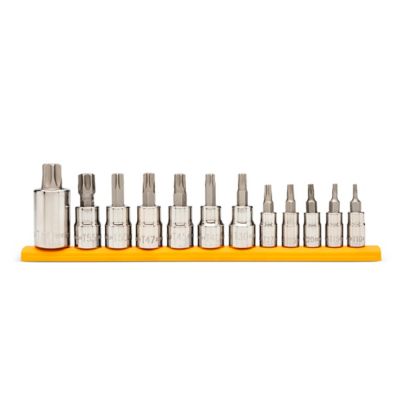
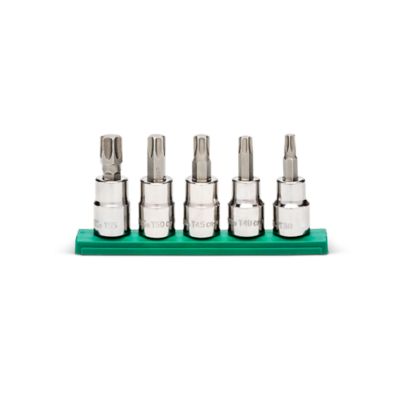
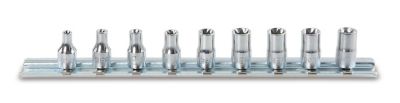
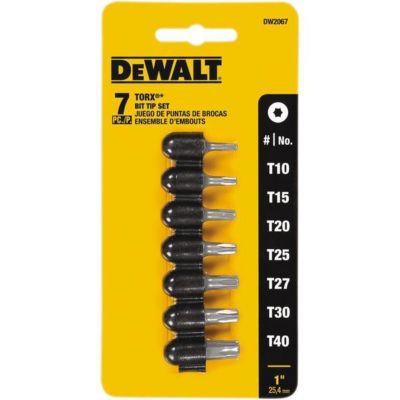
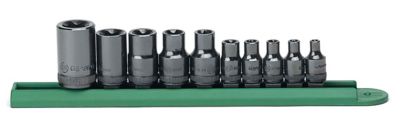
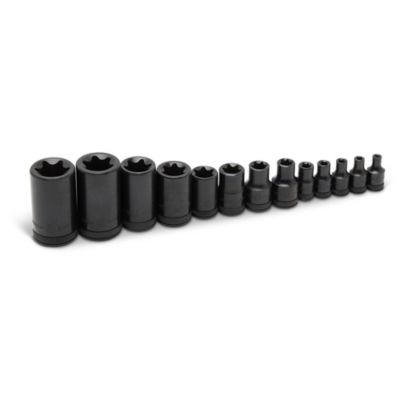
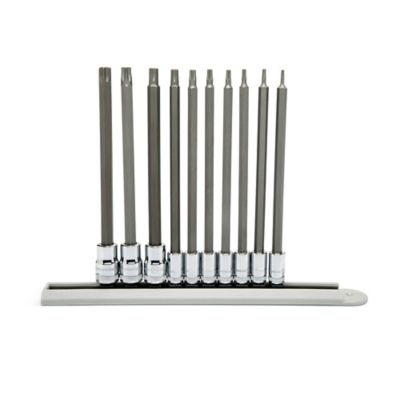
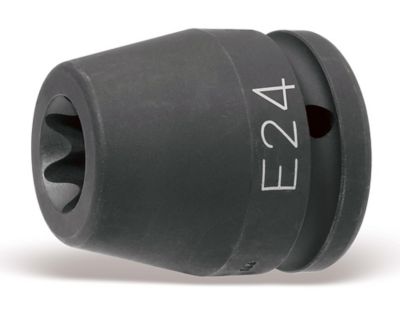
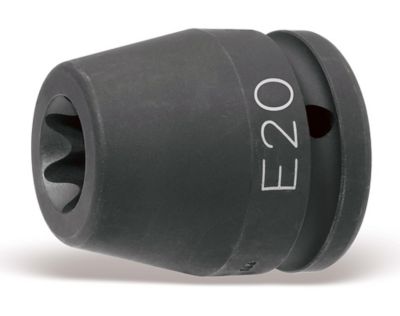
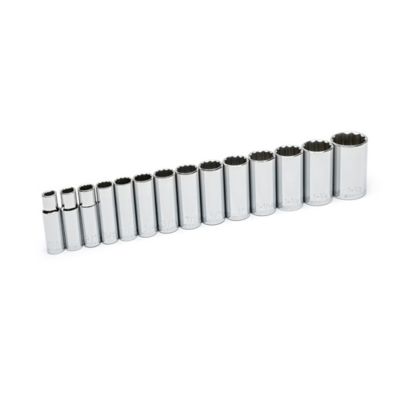
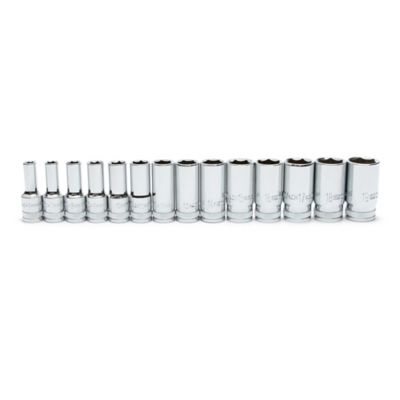
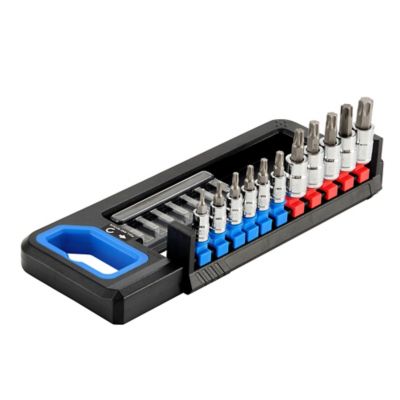
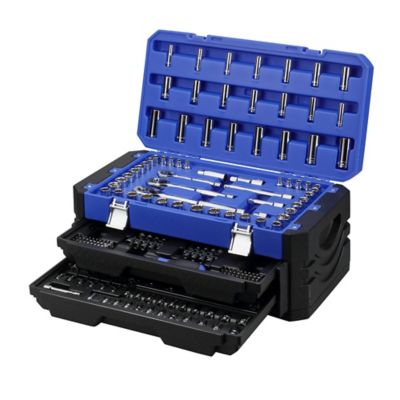
Torx sockets belong in the toolbox when a truck repair, equipment service job, or shop project calls for a firm fit on a star-shaped fastener. Their six-lobe profile matches the fastener’s shape, spreading turning force across the contact surfaces and helping limit the tendency to slip out under load. That fit matters when loosening a bolt tucked beside an engine bracket or tightening a housing screw without damaging its recess. The term covers two main socket styles: internal Torx bit sockets, which have a projecting star-shaped tip that fits inside a recessed fastener, and external Torx sockets, which fit over a raised star-shaped bolt head. Internal sizes carry a T designation, while external sizes carry an E designation. Those markings identify different profiles, so a T size and an E size with the same number are not interchangeable. Tamper-resistant Torx bit sockets add another option, with a hole in the center of the bit to clear the security pin inside a matching screw. The pin belongs to the fastener, not the socket. These distinctions help explain why a toolbox may need more than one kind of star socket, even when the fasteners look similar at a glance. Applications can include automotive assemblies, motorcycles, utility vehicles, lawn equipment, and machinery, depending on the manufacturer’s hardware choices. For folks keeping a farm truck running or handling repairs at the workbench, the appeal is straightforward: the right socket turns a particular fastener without the uncertain grip of a mismatched tool. Standard Torx, Torx Plus, and other specialty profiles also need separate attention because similar-looking lobes do not necessarily mean the same fit. The broader range of
Torx Tools can help round out a toolbox for jobs where a socket, screwdriver, or bit format makes more sense. The useful starting point is always the fastener itself—its profile, size, position, and service requirements—rather than how much force a handle can deliver.
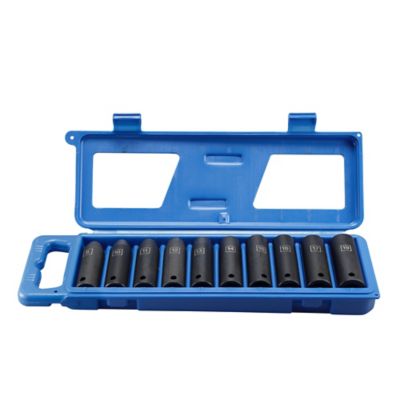
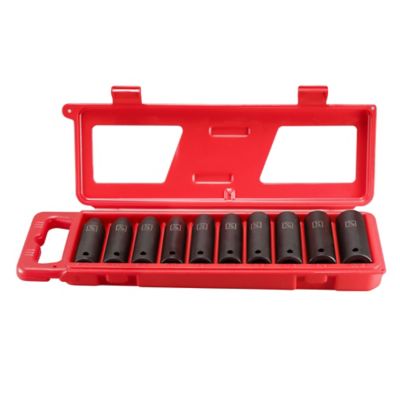
Fit involves both ends of a Torx socket: the working end must match the fastener, and the square drive must match the ratchet, extension, or torque wrench. Common square-drive sizes include 1/4 inch, 3/8 inch, and 1/2 inch. A smaller drive generally suits compact tools and tight quarters, a middle-size drive handles a broad range of mechanical work, and a larger drive supports tools intended for greater loads. Those are general relationships, not fixed rules tying every T or E size to one square drive. The socket’s specifications and the equipment’s service information matter more than assumptions based on size alone. A small recessed screw on a cover needs a different approach from a large external-star bolt on a drivetrain assembly. Socket length and outside diameter matter, too. A short bit socket can keep the tool close to the fastener where clearance is limited, while a longer bit may reach through an opening or past an obstruction. Deep external sockets can accommodate certain recessed locations or protruding hardware, provided their walls clear the surrounding parts. Extra reach is helpful only when the working end can seat fully and stay aligned; a long extension does not make an angled, partial fit any better. Clear size markings help when moving between fasteners, especially on equipment with several similar-looking heads. Sets can keep a spread of sizes together, while individual sockets make sense for filling a gap in an existing tool tray. For general repair work, coverage of the sizes actually on the equipment is more useful than a large count of pieces that rarely leave the case. A snug, fully seated fit helps protect both the tool and the hardware. A standard hex socket is not a proper substitute for an external Torx socket, and a bit that rocks noticeably in a recess is a sign to check the size or profile before applying force.
Materials and construction help determine how Torx sockets hold up through repeated work. Socket bodies often feature chrome vanadium steel, while bit sections may feature S2 tool steel or another alloy selected for hardness and resistance to wear. Some impact-rated designs incorporate chrome molybdenum steel, though the alloy name alone does not establish whether a tool belongs on powered equipment. Heat treatment, bit geometry, wall thickness, and the connection between the bit and socket body all contribute to performance. Chrome plating can make a hand socket easier to wipe clean and help resist corrosion, while dark oxide or phosphate finishes appear on many impact tools. Finish color is not proof of an impact rating; that designation needs to come from the tool manufacturer. Hand sockets and ordinary bit sockets do not belong on an impact wrench unless expressly rated for that application. Where an impact-rated Torx tool is appropriate, its drive connection, accessories, and operating limits still need to match the equipment. Care is mostly straightforward shop housekeeping: dirt packed into a screw recess can keep the bit from seating, and grit left on the tool can hide wear at the lobes. Clean working ends, dry storage, and an organized rail or case make it easier to spot a chipped tip, a twisted bit, or a cracked socket before the next job. Rounded edges deserve attention rather than a longer handle, since extra leverage cannot restore lost contact. For final assembly, a compatible torque wrench helps tighten hardware to the equipment manufacturer’s specification; the fastener’s star profile does not establish its tightening torque. These practical details make Torx sockets a sensible addition for mechanics, equipment owners, and hands-on folks who tackle their own maintenance. They can also make a useful gift for someone building a tool collection, especially when the drive size and missing fastener sizes are already known. Whether the job is at a shop bench or alongside a parked tractor, matching the socket to the hardware helps keep a routine repair from becoming a damaged-fastener problem.