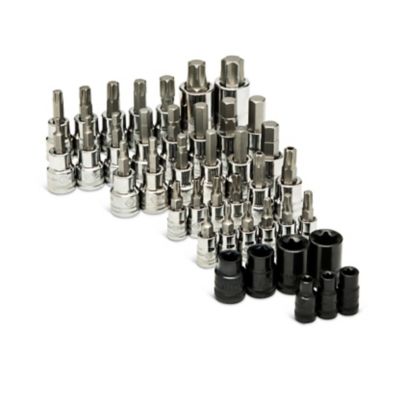
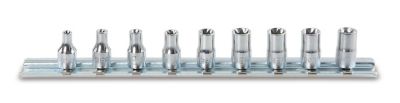
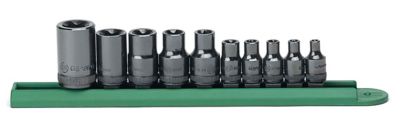
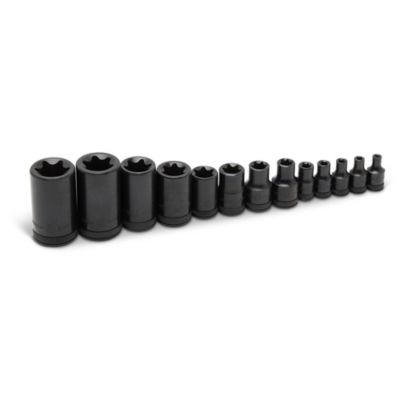
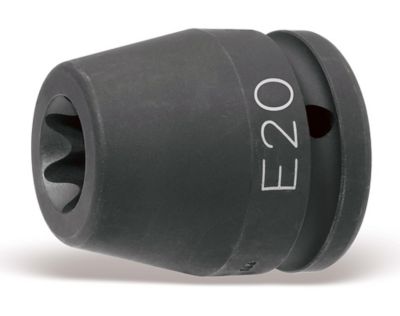
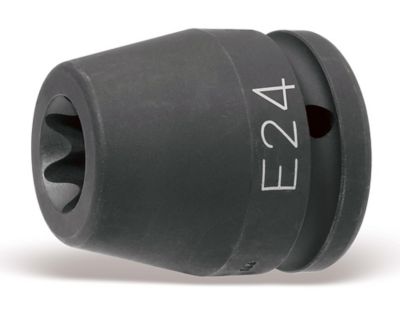
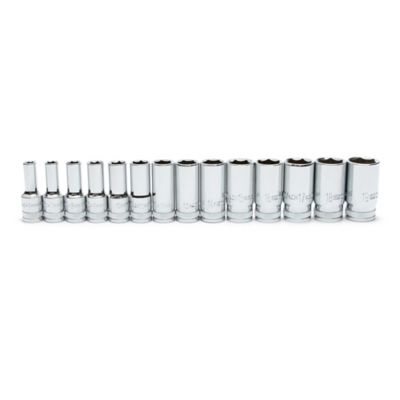
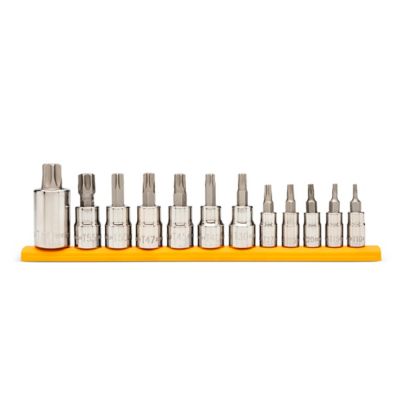
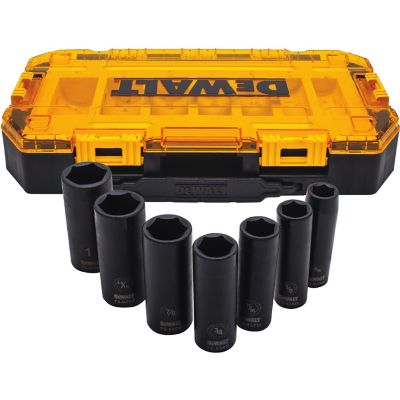
E-Torx socket sets contain sockets that fit external Torx fasteners, the bolts with raised, six-lobed heads found on many cars, trucks, and pieces of machinery. Unlike an internal Torx fastener, which has a star-shaped recess for a bit, an external Torx head fits inside a matching socket. That distinction matters when a repair takes you past familiar hex-head bolts and into an engine compartment, transmission assembly, or equipment housing. A properly matched E-Torx socket engages the lobes of the fastener rather than relying on the imperfect contact of a hex socket. For folks who handle their own vehicle maintenance, work in a repair shop, or keep farm equipment running, these sets fill a specific spot in the toolbox. The size markings begin with an E, with examples such as E4, E8, E12, E18, and E24. Those numbers identify the external Torx size; they are not millimeter measurements or square-drive dimensions. Set contents vary, so the sizes required by the equipment matter more than the total piece count alone. A collection of smaller sockets can suit work around compact assemblies, while larger sizes may be needed for particular drivetrain or chassis fasteners. The equipment’s service information is the best reference for the correct fastener size and repair requirements. A socket should seat fully and fit closely without being forced onto the head. Trying to make a near match work can damage the fastener and turn a straightforward repair into a longer job. Broader collections of
Torx Sockets can include tools for different Torx fastener styles, making the distinction between external sockets and internal bits worth checking. An E-Torx set is especially handy when a truck repair calls for several external Torx sizes across the same assembly. Having those sizes together keeps the job moving without a hunt through loose sockets every time the next bolt looks a little different. It also makes sense for a shared shop where several people work on vehicles and equipment with different fastening systems.
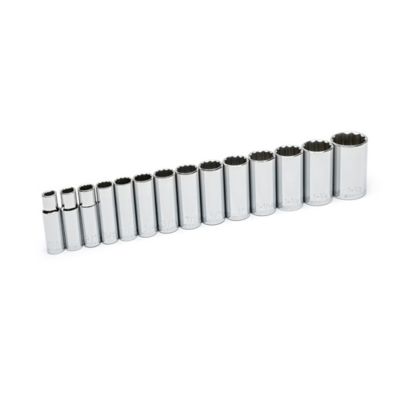
Drive size, socket depth, and tool compatibility all affect how an E-Torx socket set fits into everyday work. Common square-drive sizes include 1/4 inch, 3/8 inch, and 1/2 inch, but the square drive and the E-size describe two separate parts of the socket. The E-size matches the fastener head, while the square drive connects to the ratchet, extension, or other driving tool. A smaller drive can help with access around crowded components, and a larger drive may suit larger fasteners and the tools specified for those jobs. Some sets span multiple drive sizes, which makes the included arrangement worth checking against the ratchets already in the toolbox. Shallow sockets keep the overall tool length down when clearance is limited between a bolt head and a nearby frame rail or housing. Deep sockets offer additional reach for heads sitting farther below surrounding parts, although their added length can be a drawback where there is little room behind the ratchet. Socket length, outside diameter, and the space needed for the tool to swing all come into play. Heat-treated alloy steel, including chrome vanadium steel, is common in hand-tool sockets. Chrome finishes help resist corrosion and make oily surfaces easier to wipe clean. Impact-rated sockets may have different steel formulations, construction, and finishes to handle repeated impact loads. Neither a dark finish nor a particular steel name, by itself, establishes that a socket is suitable for an impact wrench. Standard chrome hand-tool sockets should not go on an impact tool unless the manufacturer specifically rates them for that purpose. For impact work, the socket, extensions, and adapters all need suitable ratings. For final tightening, a compatible torque wrench and the equipment manufacturer’s torque specification help protect the fastener and the assembly. The socket’s job is to provide the right engagement; it does not replace the tightening requirements for an engine bracket, suspension component, or transmission case. That combination of fit, access, and proper tool pairing matters far more than simply choosing the largest set.
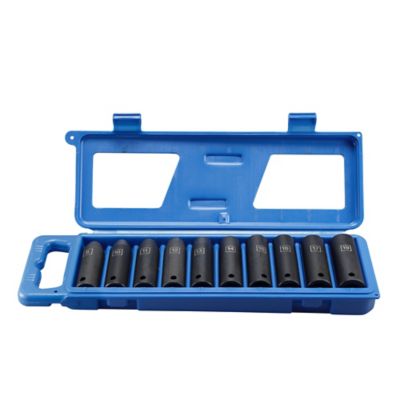
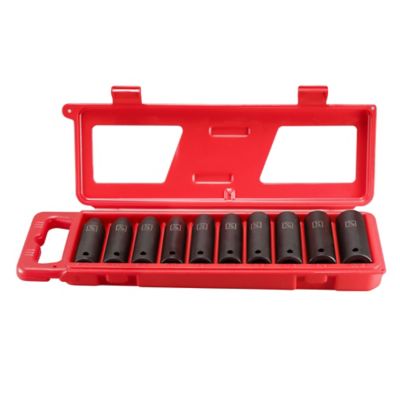
Organization and care make a real difference when E-Torx sockets become part of the regular shop routine. Clearly marked sizes are easier to sort at the bench, especially when several similar-looking sockets are lying beside a removed bracket. A fitted case or socket rail keeps the sequence together and makes a missing size easier to spot before the tools go back in a drawer. A rail may fit neatly in a tool chest, while a case can keep the set contained when it travels between the garage and an equipment shed. Retention matters, too: sockets that stay secured are less likely to scatter across a truck bed or disappear beneath the workbench. After a job, wiping away oil, grease, and grit helps keep markings visible and prevents buildup inside the socket profile and square-drive opening. Store the set in a dry spot, and follow the manufacturer’s care recommendations for its finish. Periodic checks for cracks, distorted openings, or worn internal lobes can catch damage before the next repair. A socket that no longer seats firmly deserves attention rather than another pull on a longer handle. On the job, dirt packed around a bolt head can interfere with engagement, so a clean, accessible head helps the socket sit where it belongs. Accessory length also deserves some thought: an extension may reach a tucked-away fastener, but it cannot fix a mismatched socket or an obstructed approach. These details matter in familiar situations, such as working beside a frame rail or reaching a bolt behind an engine accessory. For a mechanic, equipment owner, or family member who enjoys turning wrenches, an E-Torx socket set can make a practical gift when its sizes and drive connections match the work they tackle. It is a specialized addition rather than a replacement for standard hex sockets or internal Torx bits. A well-matched set earns its place by keeping the correct fastener profile close at hand, whether the task happens at a shop bench or beside a machine that needs to get back to work.