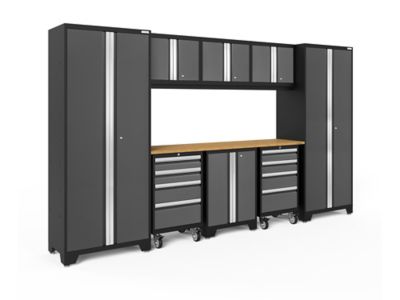
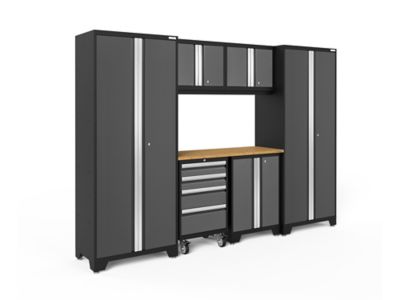
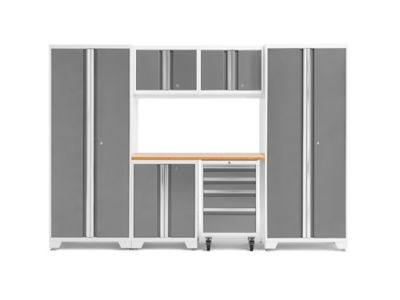
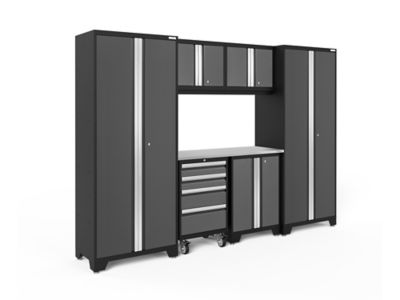
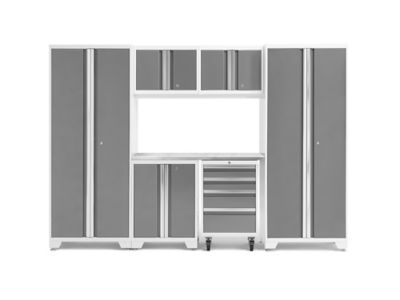
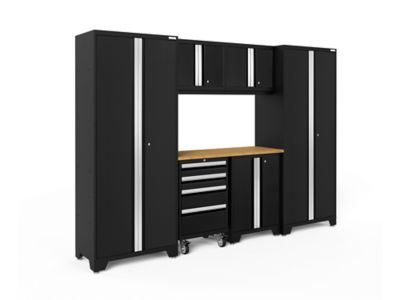
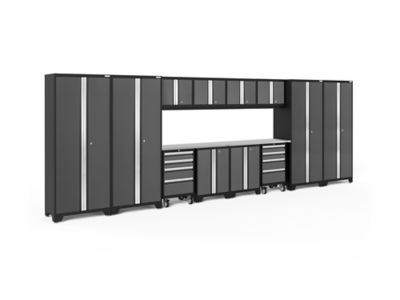
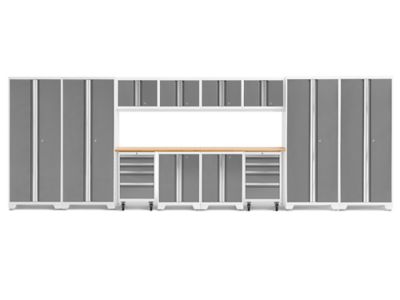
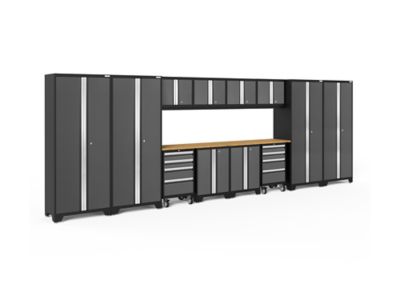
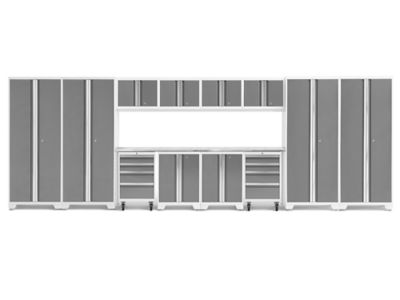
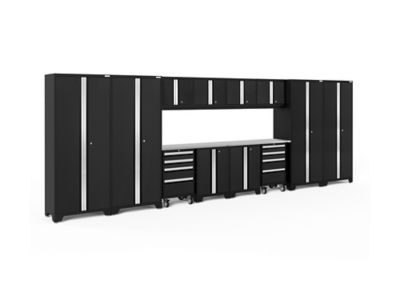
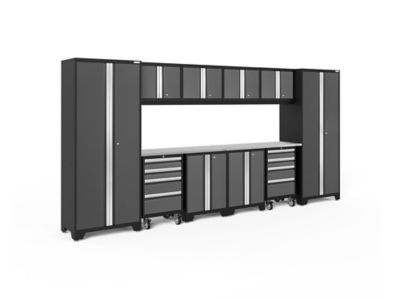
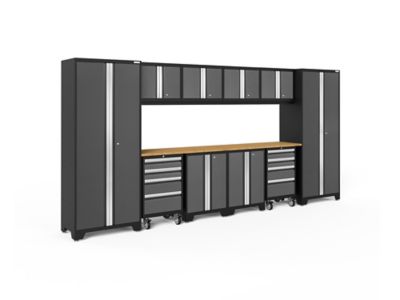
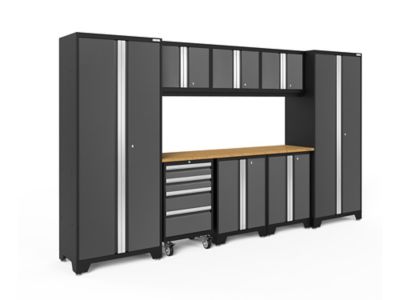
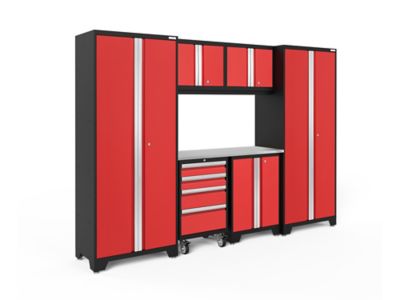
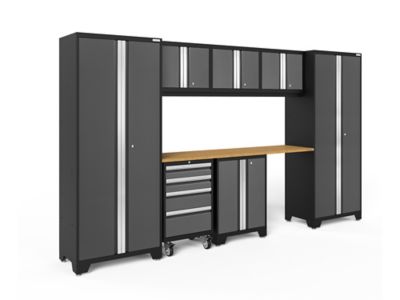
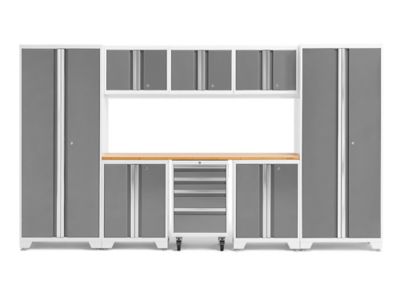
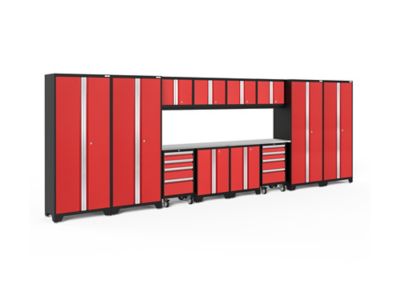
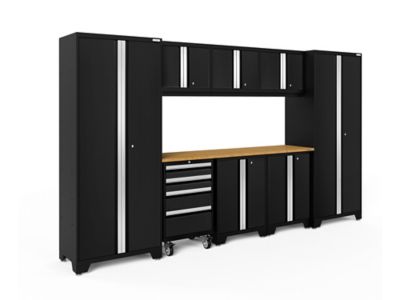
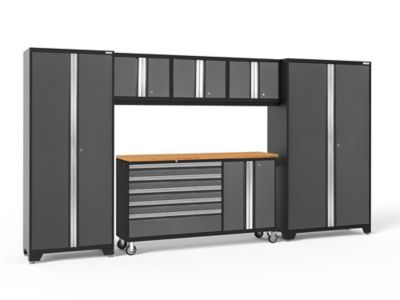
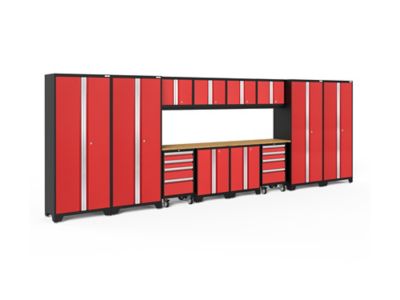
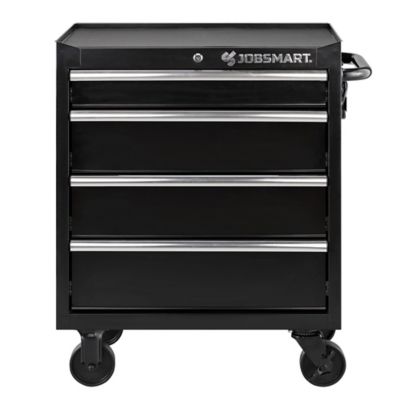
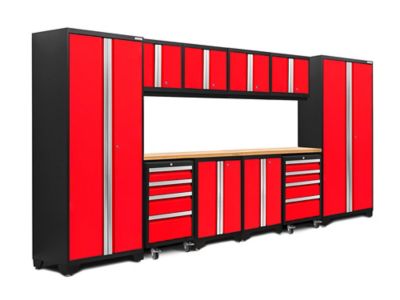
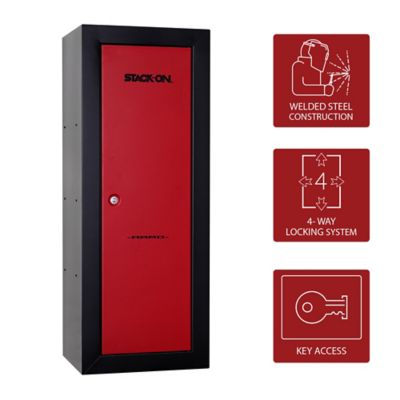
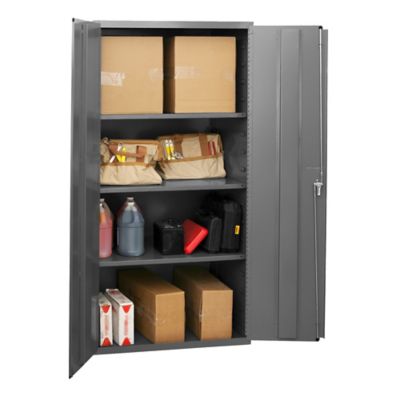
Tool storage cabinets give hand tools, power tools and shop supplies a home behind drawers or doors, helping keep a garage, farm shop or work area ready for the next job. A drawer cabinet brings order to sockets, wrenches and pliers, while a tall cabinet with shelves makes room for tool cases, larger equipment and supplies that won’t fit in shallow drawers. Rolling tool cabinets put storage close to a repair, and stationary cabinets establish a permanent spot along a wall or beside a workbench. For someone maintaining a tractor, repairing fence equipment or tackling projects around the house, that organization means less time hunting for a socket and more room to get work done. Steel construction is common because it supports substantial loads and stands up to everyday shop traffic, though cabinet strength depends on more than the outer panels. Reinforced corners, drawer construction, shelf supports and the base all contribute to how a cabinet handles weight. Powder-coated finishes help protect steel from scuffs and corrosion, but exposed metal still needs attention if the coating gets scratched. Drawer slides also make a difference in daily use. Ball-bearing slides can help loaded drawers move smoothly, and full-extension designs bring tools at the back within reach. Shallow drawers suit tools that lie flat, while deeper drawers accommodate drills, measuring equipment and larger cases. Liners help keep tools from sliding around and soften contact with drawer bottoms. Door cabinets offer a different kind of flexibility, especially when adjustable shelves let the interior change as equipment needs grow. Locking drawers and doors add access control for shared spaces, although a lock does not make a cabinet theft-proof. The best fit comes down to the work happening around it: a mechanic reaching for sockets all day has different storage needs than a woodworker keeping clamps, sanding supplies and portable power tools together.
The cabinet’s outside dimensions tell only part of the story when it comes to fitting a workspace. Drawer clearance, door swing and room to stand comfortably matter just as much as width and height. A cabinet that fits neatly against a garage wall can still crowd a walkway once a deep drawer is open. Interior measurements matter, too, especially for long torque wrenches, molded tool cases or equipment with handles that take up extra room. A mix of drawer depths often makes better use of space than several deep drawers holding small tools in loose piles. Shelf spacing should accommodate the tallest cases without leaving too much empty space above shorter gear. For rolling tool storage cabinets, caster size, wheel material and the condition of the floor influence how easily a loaded cabinet moves. Smooth concrete is different from a floor with cracks, joints or a raised doorway threshold. Swivel casters help with steering, while wheel locks help hold the cabinet in position during work. Cabinet weight limits, individual drawer limits and shelf limits are separate ratings; a high overall capacity does not mean every drawer can carry the same load. Heavier tools belong low in the cabinet to help keep weight near the floor, and drawers should stay closed while a rolling cabinet is moving. Tall cabinets may require anchoring according to the manufacturer’s instructions, with hardware suited to the wall. Wall-mounted cabinets can free up floor space, but their suitability depends on the supporting structure and the total loaded weight. A cabinet with a work surface can also provide a convenient spot for sorting hardware or setting down parts. Wood, metal and other top materials differ in their response to oil, impact and cleaning products, and not every cabinet top is intended for hammering, clamping or mounting a vise. Matching the surface to the task helps prevent damage before the first repair begins.
A tool cabinet earns its place through everyday convenience, not just how much it holds. Handles that are comfortable to grip, drawers that open without binding and shelves that are easy to reposition can make a noticeable difference during a long repair. Drawer latches help prevent unintended opening, while dividers and removable trays keep small parts from getting mixed together. In a shared farm shop, separate spaces for electrical tools, mechanical tools and measuring equipment make it easier for everyone to put things back where they belong. At home, enclosed storage can keep a work area more orderly without spreading equipment across every bench. Tool cabinets also make practical gifts for someone setting up a first shop or bringing order to a growing tool collection, provided the footprint and storage layout suit the recipient’s space. For a workspace that needs more than one cabinet,
Tool Storage Solutions can help connect cabinet storage with other ways to organize tools and equipment. Coordinating cabinets with a bench or wall storage leaves frequently reached-for tools nearby while keeping larger gear out of the working area. Routine care is straightforward: grit and metal shavings should be cleared from drawers, spills wiped up promptly and finishes cleaned with products recommended for the surface. Drawer liners need occasional cleaning as well, since debris underneath them can rub against the finish. Casters, handles, hinges and slides benefit from periodic inspection, with lubrication or adjustment only as directed by the manufacturer. Overfilled drawers and overloaded shelves can strain moving parts and make tools harder to retrieve. Ordinary tool storage cabinets are not substitutes for cabinets designed for flammable liquids or other materials with special storage requirements. With enough space for the tools on hand and room for additions down the road, cabinet storage helps keep a hardworking shop orderly, accessible and ready for the next repair.