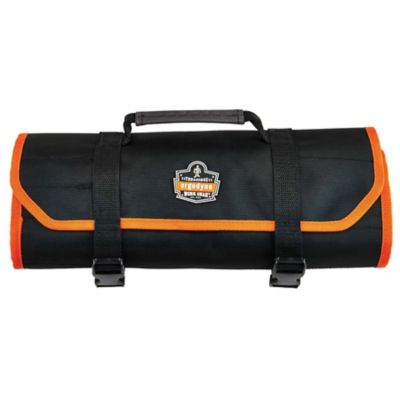
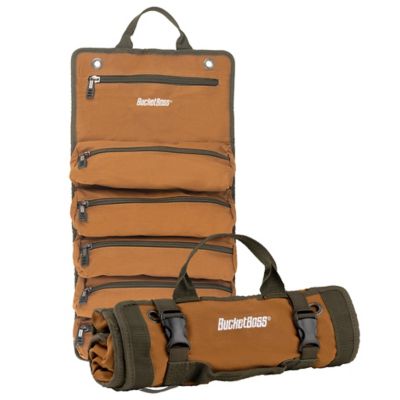
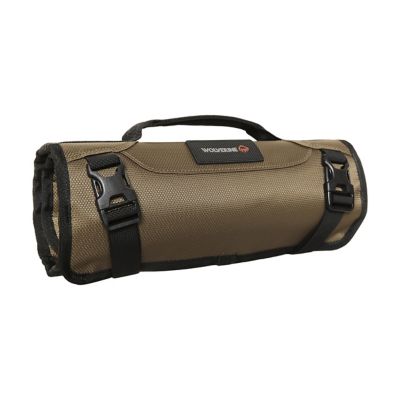
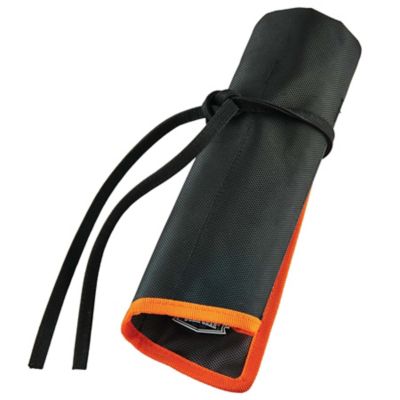
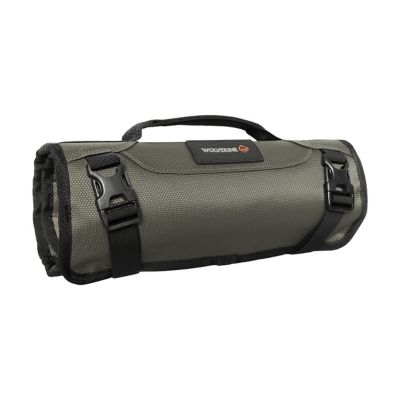
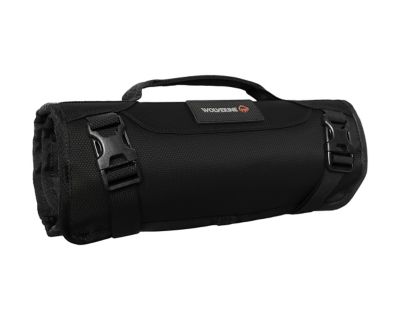
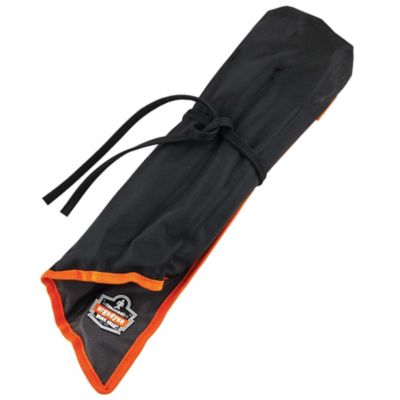
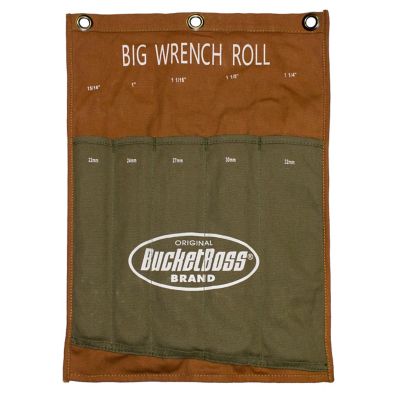
Tool roll bags are portable tool organizers with pockets or compartments that wrap into a compact bundle and fasten with straps, buckles, ties, or other closures. Unlike a wheeled tool bag, a tool roll gets its carrying shape from the way it folds around the tools inside. Opened flat on a workbench, tailgate, or clean patch of floor, it puts hand tools in view without a deep compartment to dig through. That layout makes sense for the small sets that travel between the shop, barn, equipment shed, and truck. Wrenches, screwdrivers, pliers, punches, and similar tools can each have a place, with the exact fit depending on pocket size and construction. A roll with narrow sleeves can keep a wrench set arranged by size, while a design with wider pockets gives more room for thicker handles and assorted repair tools. For someone tending fence hardware, tightening an implement bracket, or making a repair away from the main toolbox, that organization helps keep the task moving. An empty pocket also makes a missing tool easier to spot before the roll gets packed away. These bags suit mechanics, farm and ranch owners, tradespeople, and folks who keep a practical repair kit close at hand. Their flexible shape can fit inside a larger tool bag or tuck into a suitable truck storage compartment, provided the packed dimensions leave enough room. A tool roll is generally better suited to a selected set of hand tools than to large power tools or a whole shop’s worth of equipment. The appeal is straightforward: less loose gear rattling around, a manageable load, and a clear view of the tools needed for the job. For truck and tractor maintenance, separate rolls can also keep different wrench sets apart without mixing sizes in the same pile.
Materials and construction affect how a tool roll feels, carries, and stands up to everyday shop work. Canvas has a substantial feel, while nylon and polyester fabrics can offer a lighter carrying weight; the weave, backing, stitching, and overall build matter alongside the material name. Leather brings a different balance of weight, flexibility, and care needs, and it can develop marks from regular handling. No fabric name alone tells the whole story about resistance to abrasion, moisture, or sharp edges. Reinforced pocket openings, securely attached straps, and stitching around stress points are worth a close look because metal tools put pressure on those areas whenever the bag is lifted or rolled. Pocket depth matters, too. A long screwdriver needs enough coverage to stay seated, while a short socket extension can disappear into a pocket that is too deep. Wider tool handles take up more space than a flat wrench, and a roll that looks roomy when empty can become thick once loaded. Packed size and total carrying weight are more useful considerations than pocket count alone. For a kit with sockets, bits, or other small pieces, zippered sections or securely closing pouches can help contain parts that would slip out of an open sleeve. A fold-over flap can provide another layer of coverage at the top of the pockets, depending on the design. Straps and buckles need enough adjustment to close around the intended load without straining seams or forcing tools against one another. A carrying handle, when included, gives a convenient grip, but its attachment points still bear the weight of the contents. The best fit leaves tools supported and accessible rather than crammed in so tightly that pulling out one wrench disturbs everything beside it. Room for a few additions can be handy, though extra capacity only helps when the finished bundle still fits where it needs to ride.
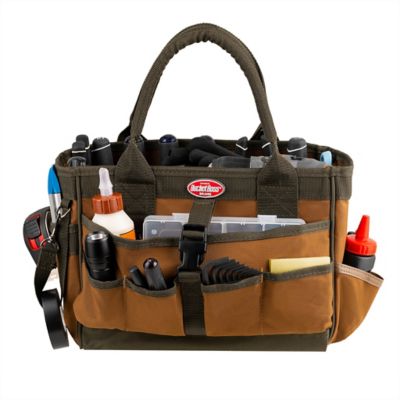
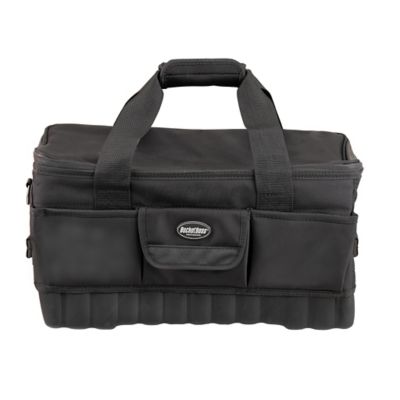
A tool roll bag works well as part of a larger storage setup rather than a replacement for every toolbox. A mechanic might keep a focused wrench set in a roll and carry sockets, a ratchet, and larger equipment separately. Someone making rounds across a property might favor a small assortment matched to the fasteners and fittings on gates, water equipment, or machinery. A dedicated roll can also keep specialty hand tools together between jobs, with less rummaging through unrelated gear. For a broader carrying setup,
Tool Bags for Mechanics offer another way to organize tools that need more compartment space or a different carrying shape. Whatever the setup, the roll’s contents should match the work rather than fill every pocket just because it is there. Even a compact bag becomes heavy when packed with steel. Care is mostly about keeping grit, moisture, and residue from settling into the material and pocket seams. Dirt left inside can rub against tool finishes, and wet tools rolled into a closed bundle can hold moisture against both metal and fabric. Letting tools and the bag dry before storage helps avoid that trapped dampness. Cleaning methods depend on the material and any coating or backing, so the care label matters more than a one-size-fits-all washing routine. Leather may need a suitable leather-care product, while some fabric rolls call for spot cleaning rather than machine washing. Harsh solvents can harm coatings, straps, and other components. Sharp cutting edges need suitable guards so they do not slice a pocket or create a hazard when the roll is handled. With sensible loading and care, a tool roll can become a familiar part of the workday—the bundle that comes out when a hinge needs tightening or a machine needs attention. It can also make a practical gift for someone building a first tool kit or organizing a crowded shop, especially when its pocket layout matches the tools they reach for most.