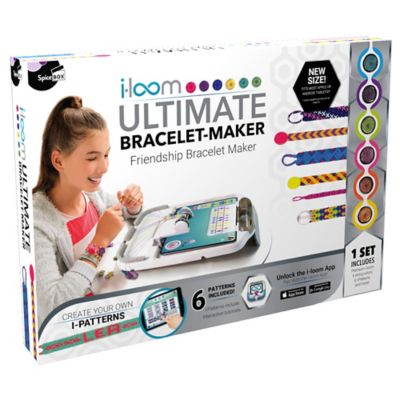
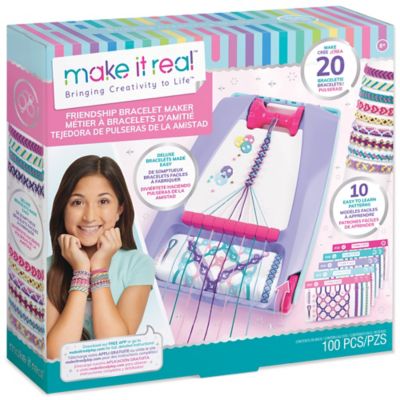
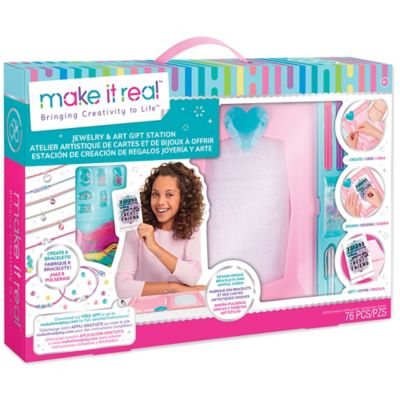
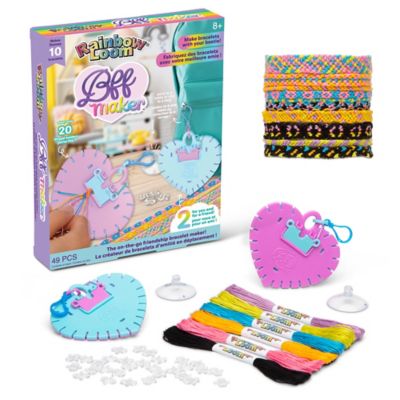
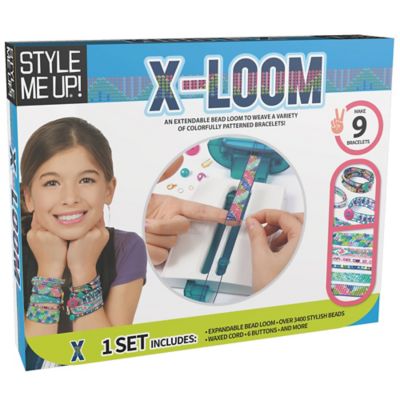
Thread friendship bracelet maker kits bring colorful thread and simple crafting tools together for making bracelets to keep, share or give to a friend. Depending on the kit, the setup may include embroidery floss, a thread-holding board, a weaving wheel, a loom, pattern instructions or a place to tuck away supplies between projects. The main job of a bracelet maker is to hold strands steady and keep them separated while knots or braids take shape. That extra support can make a difference for someone learning to manage several colors without ending up with a tangle across the kitchen table. Flat boards with clips suit many knotted patterns, while slotted wheels organize strands around a center opening for certain braided designs. Loom-style tools may support other weaving methods, so the patterns shown on the package matter as much as the shape of the tool. Simple stripes, chevrons and twisted cords offer different looks, and a kit’s instructions should match the kind of bracelet the maker wants to create. Clear diagrams, readable markings and enough room for fingers to move are helpful features for beginners. More practiced makers may care more about the range of colors, the amount of thread and whether the holder works with their preferred knotting style. Pre-cut strands reduce measuring and preparation, while skeins or thread wound on bobbins allow more choice in working length. Neither format fits every project: wider bracelets and knot-heavy patterns generally call for more thread than narrow braids. Color count alone does not tell the whole story, either. Several generous lengths in favorite shades may suit matching bracelets better than a larger assortment with only a little of each color. For a child making a first bracelet or an adult settling in for a quiet project after chores, the best match comes down to a comfortable setup, manageable patterns and supplies that suit the intended design.
Thread material affects how a friendship bracelet feels against the wrist, how clearly the knots show and how it handles regular wear. Cotton embroidery floss has a soft feel and comes in many shades, making it a familiar choice for traditional knotted bracelets. Some floss consists of strands that can be separated, while other craft thread has a different construction, so the thread type should match the project directions. Polyester and other synthetic threads can have a smoother surface or a different sheen, and their knotting feel may differ from cotton. Consistent thread thickness helps repeated knots sit evenly, especially in patterns where one uneven section stands out. A tightly twisted thread may also handle differently from loosely gathered floss. For bracelets meant for everyday wear, neat knots and securely finished ends matter just as much as the fiber itself. More thread colors do not automatically mean more finished bracelets; the amount needed depends on wrist size, bracelet width, pattern and the length left for ties. Fit deserves attention, particularly when the bracelet is a gift. A narrow braid with long tie ends gives a different fit from a broad knotted band, and an adjustable closure, when part of the design, can provide some flexibility. There should be enough room for comfortable movement without loose loops that catch on things. Long ties also deserve care around tools, gates and equipment, where loose accessories can snag. Beads and charms, if included, add texture and another consideration for fit, weight and age suitability. Thread bracelets can collect dirt, absorb moisture or show rubbing over time, so care directions for the materials should guide cleaning. Gentle handling and allowing damp thread to dry fully can help preserve its appearance. Repeated soaking, strong cleaners and rough pulling can be hard on fibers and knots. Storing finished bracelets away from sharp edges, and keeping loose floss neatly wound, helps prevent snags before the next project gets started.
Friendship bracelet kits suit a wide range of makers, from children practicing their first repeating pattern to teens trading matching colors and adults who enjoy small, hands-on projects. The right starting point depends more on patience, hand control and the kit’s age guidance than on a complicated-looking finished sample. Younger makers may do better with fewer working strands, larger holding points and straightforward picture instructions. Someone with more practice may enjoy finer patterns, longer color sequences or room to work on a wider band. Small beads, loose thread and any cutting tools call for attention to the package’s safety information and adult supervision where needed. For a birthday gift, a kit with a clear starting pattern and organized supplies can feel approachable rather than overwhelming. For cousins gathered around a table or friends at a sleepover, enough workspaces and thread for separate projects can help everyone take part without waiting on one holder. A single compact maker is better suited to one person working at a time, while a shared thread assortment may still require additional holding tools. Portability matters for visits to grandparents or projects carried between households: a closing case, secure compartments and bobbins that stay put can keep strands from becoming one big knot in a bag. Storage also helps a maker pause halfway through a pattern without losing the order of the colors. Families building a small collection of hands-on activities can pair thread projects with
Nature Craft Kits For Kids for another kind of making and exploring. Bracelet kits have their own lasting appeal because the finished piece carries a personal connection, whether it features a friend’s favorite colors, a school-color combination or matching bands for siblings. A setup that suits the maker’s hands, attention span and interests leaves more room for that part of the project: choosing the colors, watching the pattern come together and passing a finished bracelet to someone who matters.