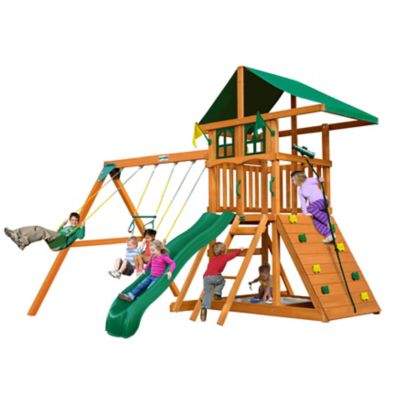
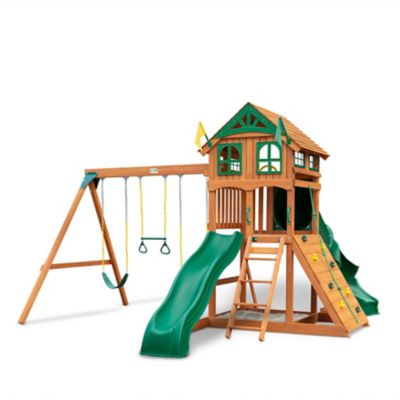
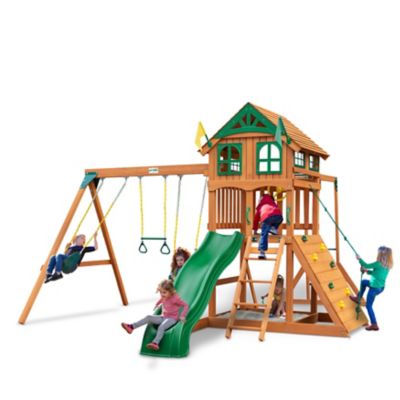
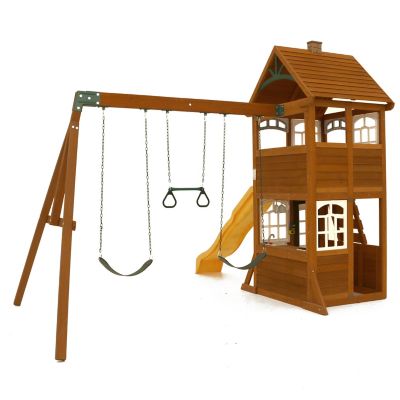
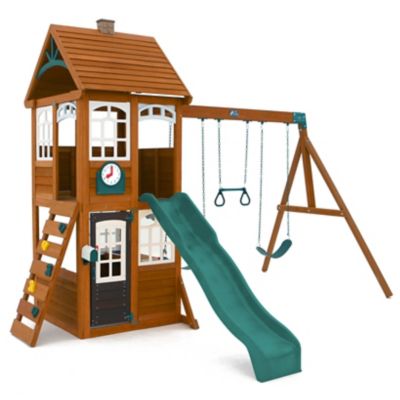
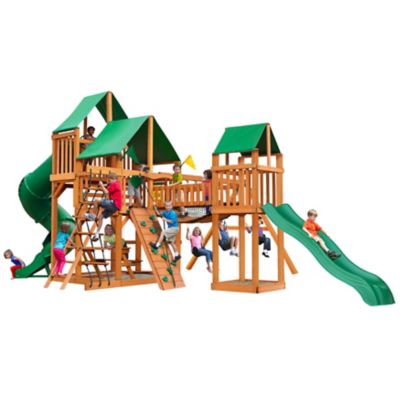
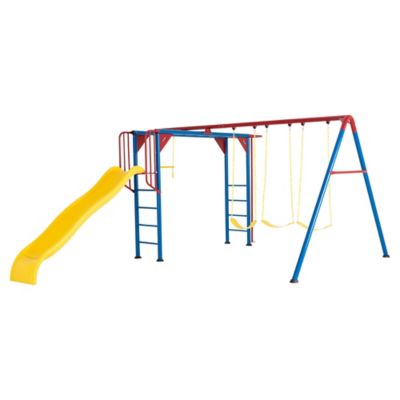
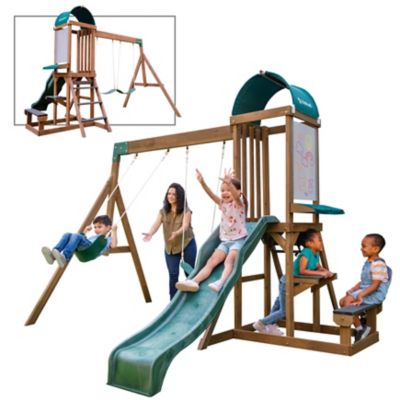
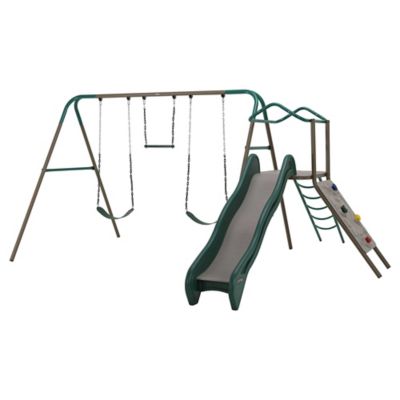
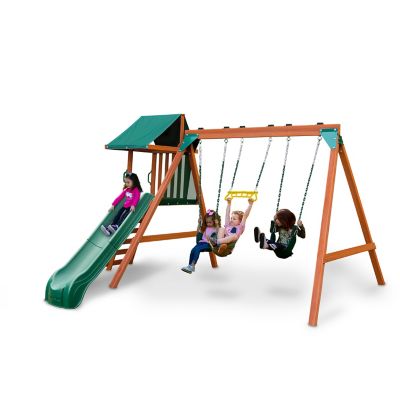
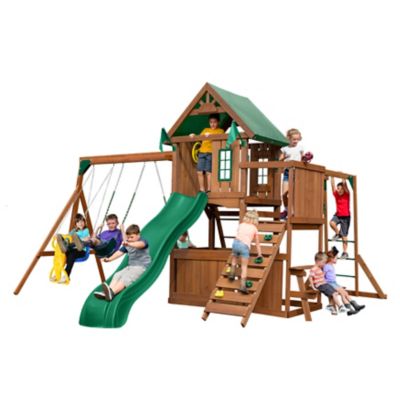
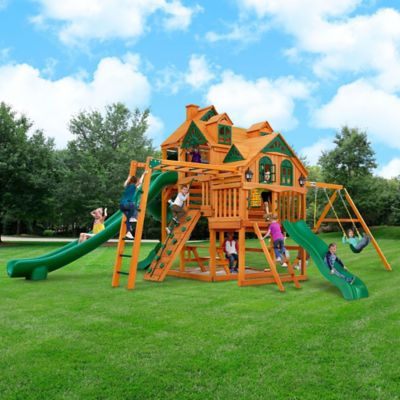
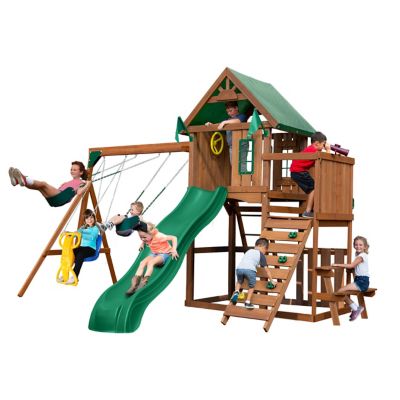
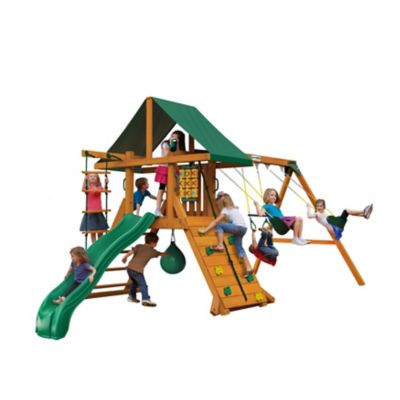
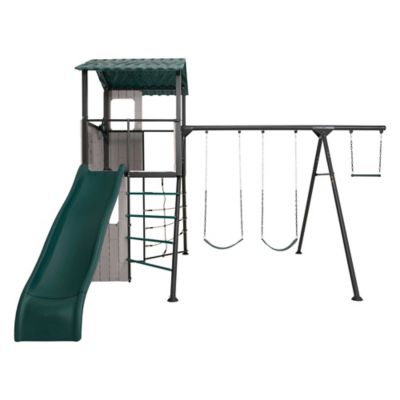
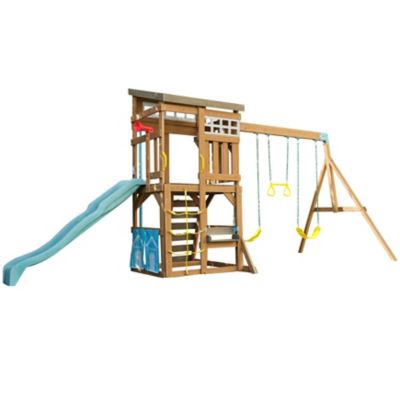
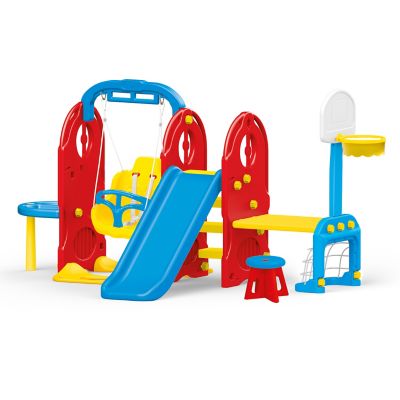
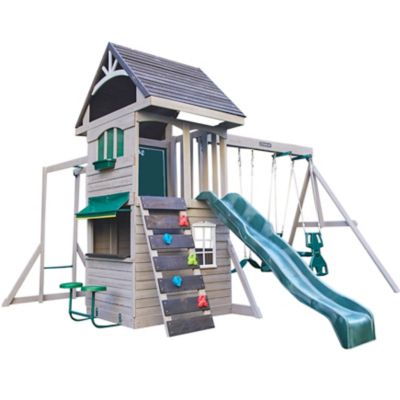
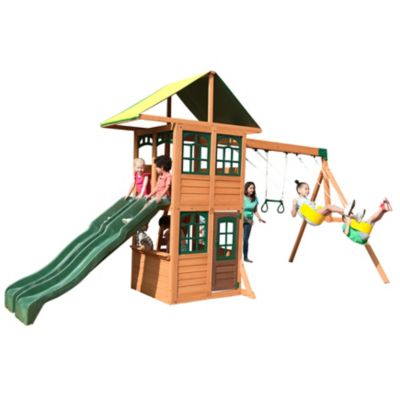
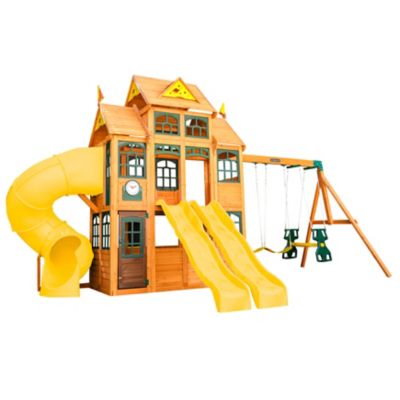
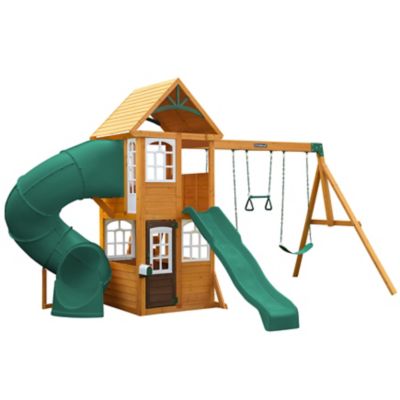
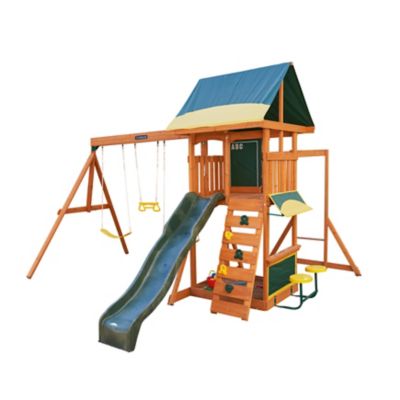
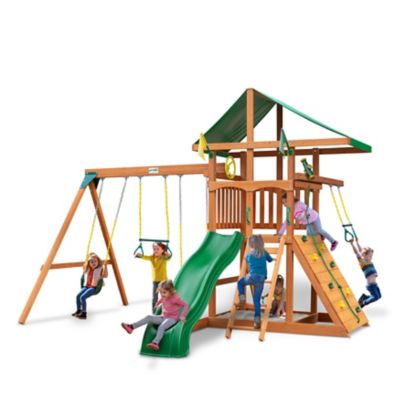
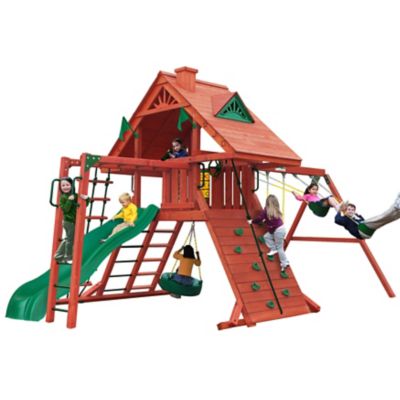
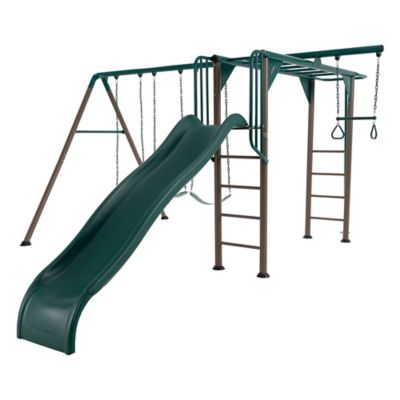
A swing and slide set brings several kinds of backyard play into one structure, giving kids a place to pump their legs, climb up, slide down, and head back around for another turn. Most sets combine a support frame, one or more swing positions, and a slide connected to a raised platform. Some layouts also include climbing walls, covered platforms, activity panels, or space beneath the deck for ground-level play. The right combination depends on the children playing, the room in the yard, and how much climbing and swinging the family wants in one spot. A compact playset can make sense for a smaller yard, while a wider layout gives siblings more separate activity areas. Materials affect the look, upkeep, and feel of the equipment. Wooden swing and slide sets often have substantial posts and deck-style platforms that fit naturally beside a garden or along the edge of an open backyard. Cedar is one wood commonly found in playsets, though wood species, board dimensions, hardware, and finish all matter when comparing construction. Metal swing and slide sets generally feature steel frames with protective coatings; galvanized components add another form of protection against corrosion. Molded plastic sets often have lower platforms and smaller climbing features intended for younger children, but the age label—not the material alone—determines who can play. Slides may be molded plastic even when the main frame is wood or metal. Smooth transitions, secure handholds, and properly fitted connections matter across all three materials. A broad platform can give a child room to turn toward the slide entrance, while an easy-to-grip ladder helps make the climb more manageable. Those details tell more about everyday fit than a long list of activities. A swing and slide set should suit the way children actually play, whether that means repeated trips down the slide or taking turns on a pair of swings.
The space a playset needs extends beyond the dimensions of its frame. Swing seats travel forward and backward, children need clear slide exits, and climbing areas need room around them. Listed footprint measurements describe the structure itself; the required play area also includes the clearances and protective surfacing specified in the assembly instructions. A level location away from fences, sheds, driveways, tree limbs, and other obstacles gives the equipment a better starting point. Even on a roomy property, the best spot is not necessarily the farthest corner. A location with a clear view from an adult seating area makes supervision more practical, and keeping the play area separate from mower routes, gates, and animal pens helps avoid competing traffic. Grass and packed soil alone do not provide adequate fall protection. Playground-rated loose-fill materials or impact-absorbing surfaces need the correct depth, coverage, and fall-height rating for the equipment; concrete and asphalt are not appropriate surfaces underneath a backyard playset. Age ranges, individual rider limits, and total capacity deserve the same attention as yard measurements. A frame’s combined weight rating does not mean that a single swing seat or platform can support that whole amount. Toddler bucket seats, belt swings, and broader shared-style seats also serve different ages and abilities, and any seat change must be approved for that frame and mounting arrangement. For a family with a preschooler and an older sibling, manageable ladder spacing and an appropriate slide height may matter more than having the tallest tower. Taller platforms and more demanding climbing features are not automatically a better fit. Clear entry points, unobstructed landings, and enough separation between activities help kids move through the set without stepping into another child’s swing path. Adult supervision remains part of backyard play, even when children know the equipment well and have settled into their favorite routines.
Construction details and regular care make a difference over the life of a swing and slide set. Wood needs checks for splinters, cracks, softened areas, and loosening connections, along with any finish maintenance the manufacturer recommends. Metal frames need attention at joints, coating damage, and areas showing corrosion. Plastic slides and seats should be checked for cracks, rough edges, and changes that affect their shape or attachment points. Across every material, swing hangers, chains, ropes, bolts, and anchors deserve a close look because they carry loads or hold the structure in place. Anchoring requirements vary by design and ground conditions, so the supplied instructions should settle how the frame is secured. Assembly is more than getting the parts to stand upright: hardware orientation, spacing, bracing, and tightening requirements all affect the finished structure. Families planning a birthday gift may want to account for assembly time, ground preparation, and protective surfacing before promising an afternoon of play. A boxed set is only one part of having the area ready. For ongoing upkeep, manufacturer-approved replacement parts help preserve the intended fit between seats, hangers, beams, and fasteners. When replacement hanging hardware is called for,
Swing Hook Kits should be matched to the playset’s approved specifications, including mounting style and load requirements, rather than chosen by appearance alone. Cleaning methods also depend on the material and finish; the care instructions help prevent damage from harsh cleaners or unsuitable treatments. Protective surfacing needs attention too, especially where repeated landings and swinging feet push loose material aside. With the right fit and upkeep, a backyard swing and slide set becomes a familiar gathering spot: siblings counting turns, a child pausing at the top of the slide, and an adult nearby keeping an eye on the action. The most useful layout leaves room for those everyday moments without adding features that do not suit the children or the space.