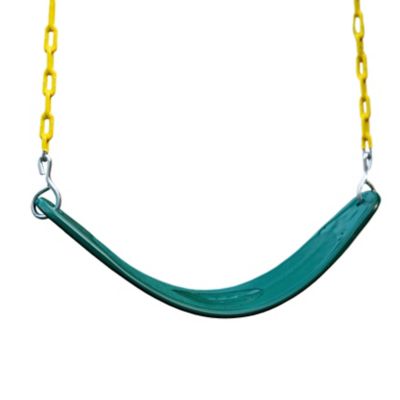
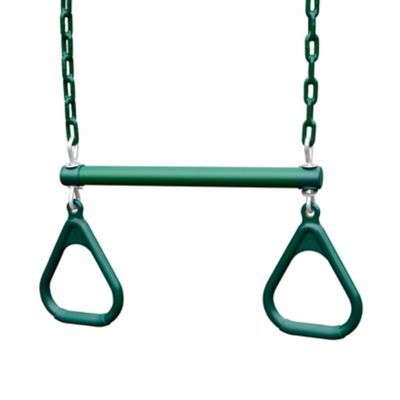
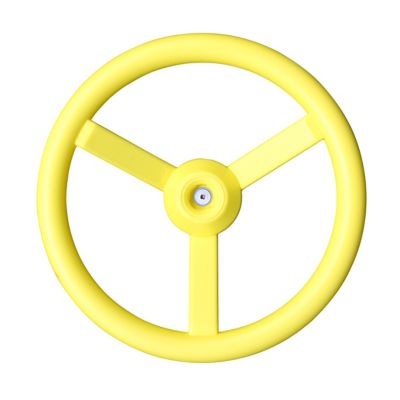
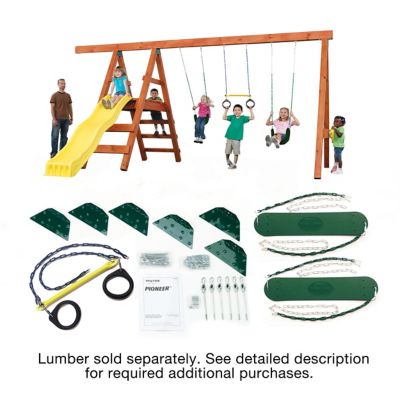
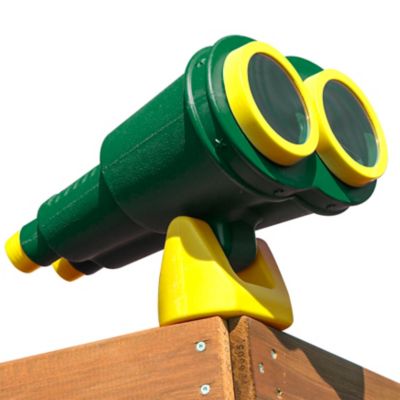
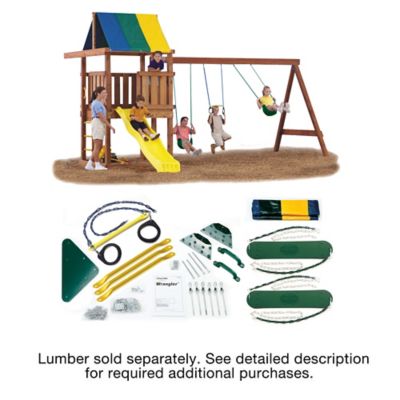
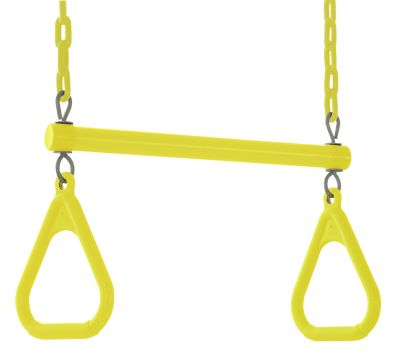
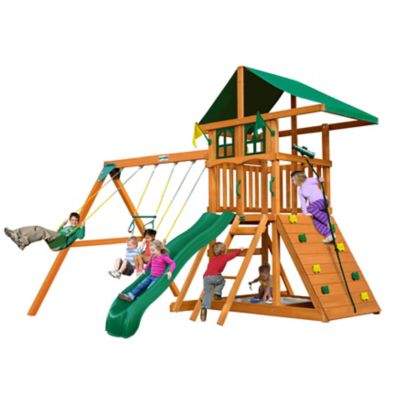
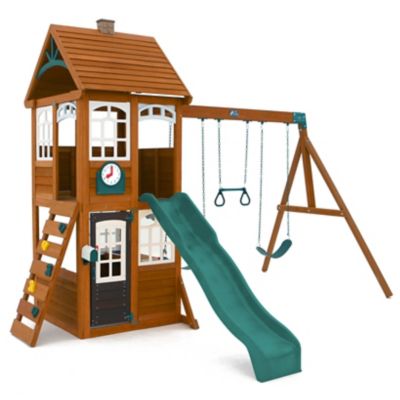
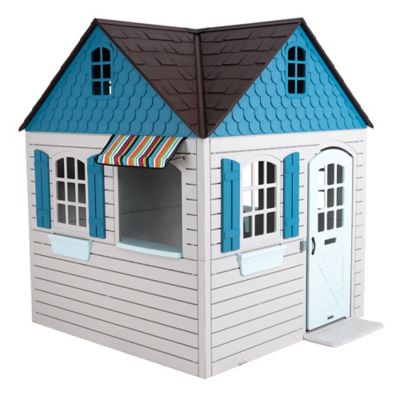
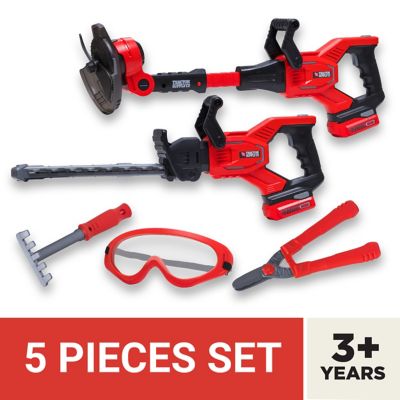
Backyard playset accessories are add-ons and replacement parts that expand the ways children can swing, climb, slide, and pretend on a compatible outdoor play structure. They range from swing seats and climbing attachments to grab handles, activity panels, and hardware that supports everyday play. The right mix gives a familiar backyard setup more to offer without crowding every open space on the frame. A child who likes steady, back-and-forth motion may spend most of playtime at a swing bay, while another heads straight for a climbing route or a platform that becomes a lookout tower. Pretend-play accessories give younger children a place to steer an imaginary tractor, run a make-believe store, or keep watch over the yard. These different activities can help siblings enjoy the same play area, though every attachment still needs to match its intended age range and the structure’s limits. More attachments do not necessarily make a better playset; enough room to move between activities matters just as much as the activities themselves. Families comparing
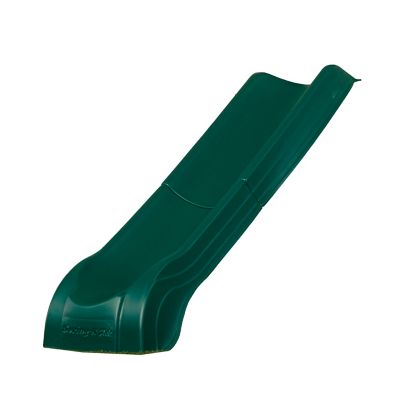
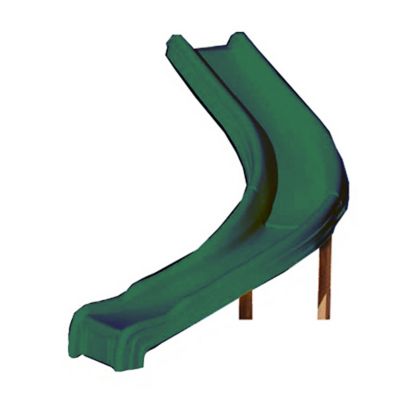
playsets with a slide can consider accessory fit alongside platform height, frame layout, and the space each activity requires. A swing needs an unobstructed travel path, a slide needs a clear exit, and a climbing attachment needs an approach that does not cross another child’s route. That layout makes a difference in a small fenced yard as well as a roomy patch of ground beside the house. Accessories intended for movement, climbing, and pretend play serve different purposes, so their value comes from how well they suit the children and the existing setup. A few well-matched additions can give a play area a fresh sense of adventure while keeping its layout straightforward for the grown-ups supervising nearby. For families sharing a play area with cousins or visiting friends, clearly defined activity spaces also make it easier to see where children are headed.
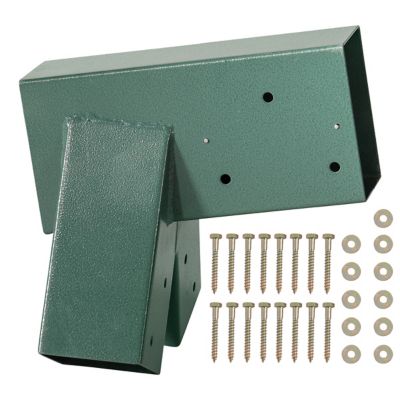
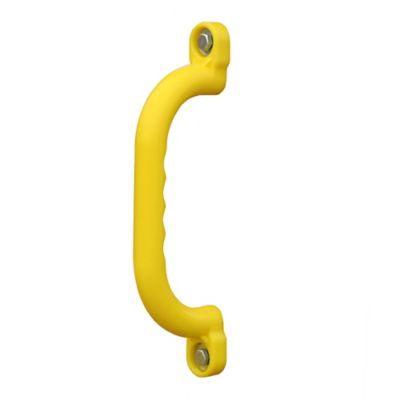
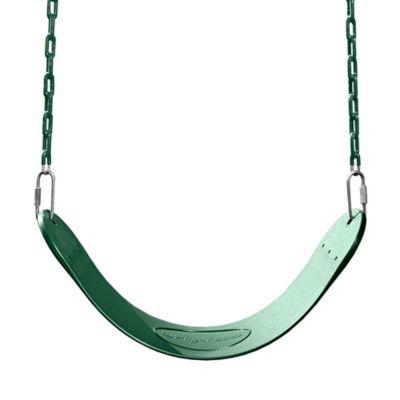
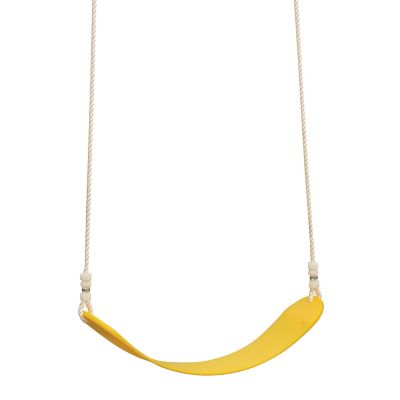
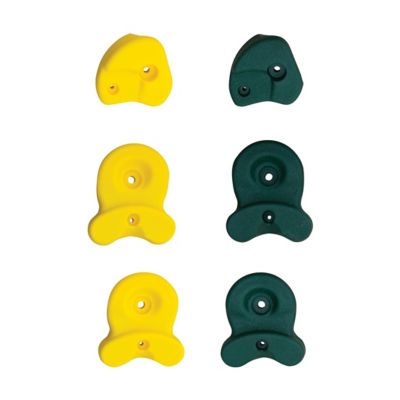
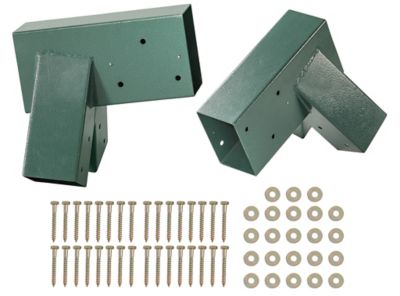
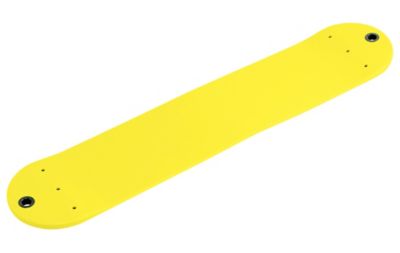
Materials affect how backyard playset accessories feel in a child’s hands, how they attach, and what care they need over time. Molded plastic is common in seats, grips, and play panels, with shapes that can provide rounded edges and comfortable places to hold. Coated metal appears in brackets, hangers, and other connection points where strength and secure fastening matter. Rope, chain, and webbing bring their own considerations, including grip, flexibility, wear, and the way moving parts meet a seat or support. No single material tells the whole story: the construction, attachment method, stated load limit, and condition of the supporting playset all matter. A replacement swing seat, for example, needs more than a familiar shape to be a good match. Its suspension length, connector requirements, clearance, and intended mounting arrangement must work with the existing frame. Climbing accessories may depend on a particular platform height, mounting surface, or spacing between supports. Even a small grab handle needs the right fastening location and hardware rather than an attachment point chosen simply because it is within reach. Manufacturer compatibility information helps separate a suitable addition from one that only looks close in a photo. Dimensions are especially important when replacing an attachment, since similar-looking parts may have different hole spacing, bracket shapes, or installation requirements. The frame itself also deserves attention before adding another activity; a loose joint or weakened support cannot be solved by fitting a new accessory to it. Clear instructions and identifiable mounting requirements make it easier to understand what a connection involves before any changes begin. For a busy family yard, practical details such as easy-to-clean surfaces, accessible fasteners, and replaceable wear parts can matter as much as color or shape. Smooth handholds, manageable reach distances, and an appropriate level of challenge help an accessory feel inviting rather than frustrating for the child it is meant to serve. Matching those details to a child’s size and abilities gives the play space a more comfortable rhythm.
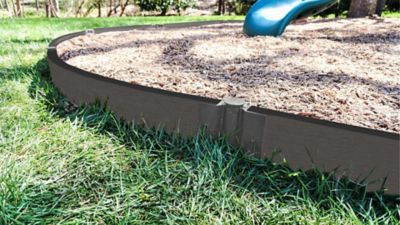
Everyday care helps keep the play area ready for the next round of backyard adventures. Moving attachments and their connection points need regular attention, particularly where chains pass through connectors, ropes meet mounting hardware, or seats flex during play. Cracks, fraying, corrosion, sharp edges, missing caps, and loose fasteners are signs that an accessory needs attention before children return to it. Cleaning methods should follow the maker’s directions, since a cleaner that suits one material may damage another. The same goes for tightening hardware, replacing connectors, or caring for wood around an attachment point. Matching replacement parts to the specified size and rating helps preserve the intended connection rather than introducing a weak link. Ground surfaces and clearances are part of the picture, too. Appropriate impact-absorbing surfacing, maintained to the playset maker’s recommendations, belongs beneath and around active play areas; grass alone is not a substitute. Open travel paths and clear sightlines give supervising adults a better view of children moving between a ladder, platform, and swing bay. Accessories should stay within the manufacturer’s age and weight limits, and attachments intended for one rider should not become a shared seat just because two children want a turn. Loose cords, extra ropes, and improvised ties do not belong on the structure, where they can create entanglement hazards. For gift giving, backyard playset accessories make the most sense when the recipient’s family can confirm the existing structure, compatible attachment points, and the child’s age and interests. A birthday addition might support a new climbing challenge or bring more pretend play to a favorite platform, but fit comes before the surprise. For grandparents and other relatives, checking those details with a parent helps keep the gift practical. Whether the goal is replacing a worn attachment or adding another way to play, a well-matched accessory should suit the frame, leave room for safe movement, and give children something they will enjoy returning to.