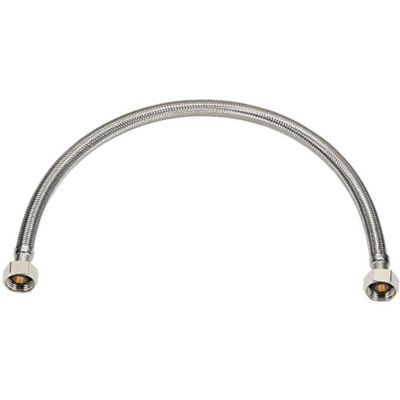
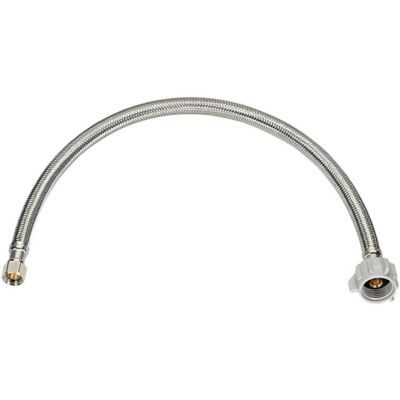
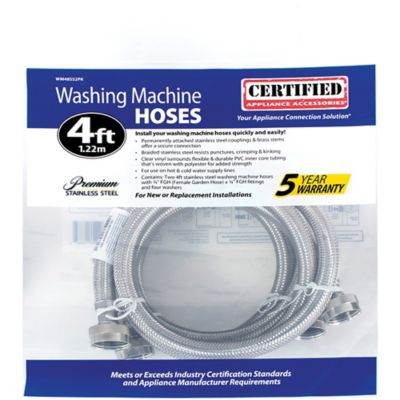
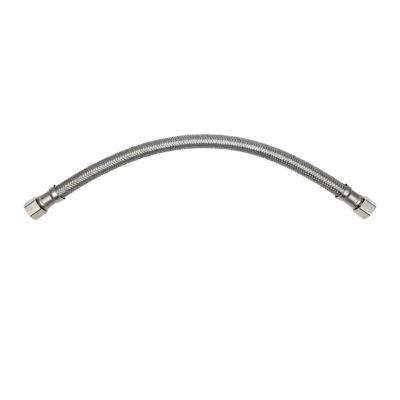
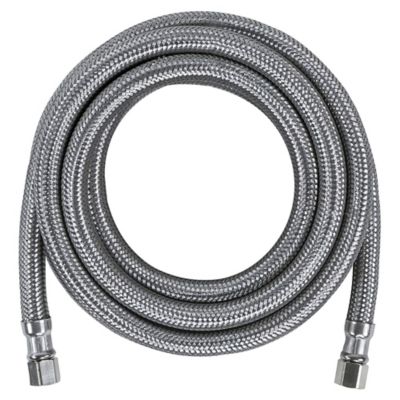
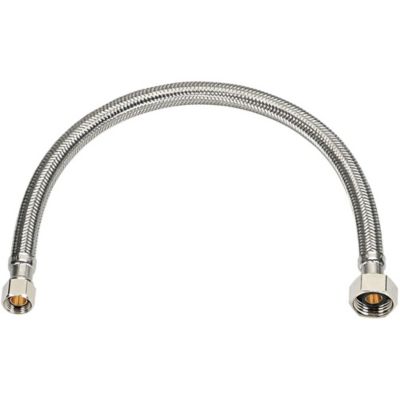
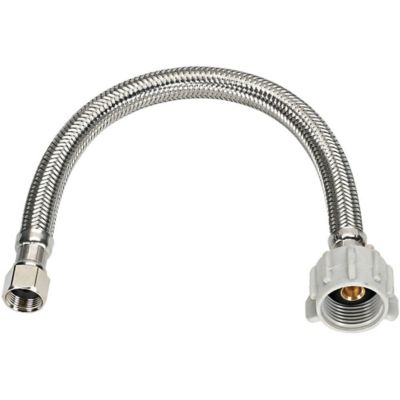
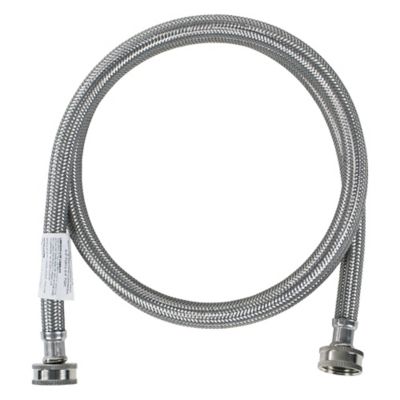
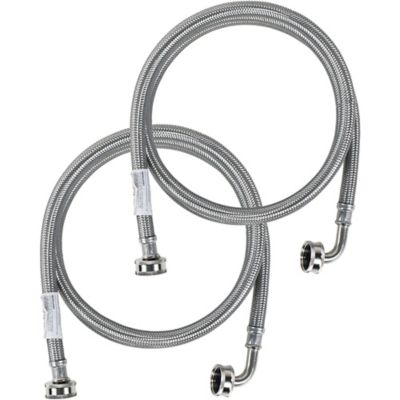
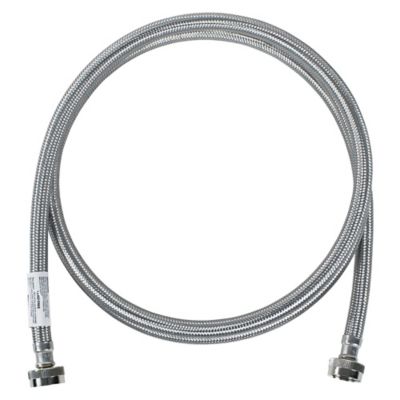
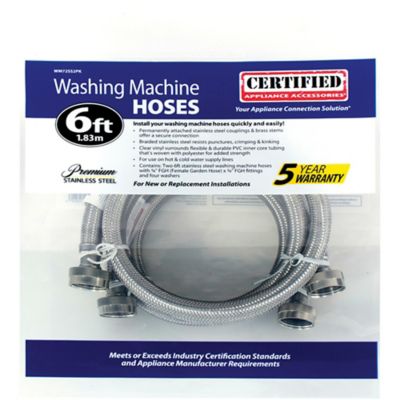
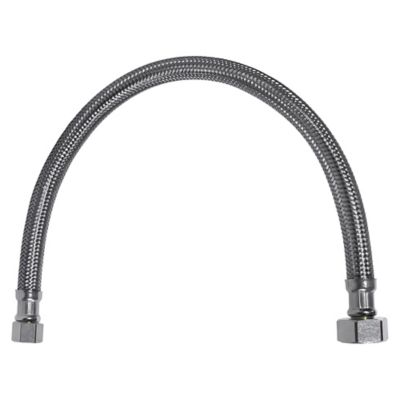
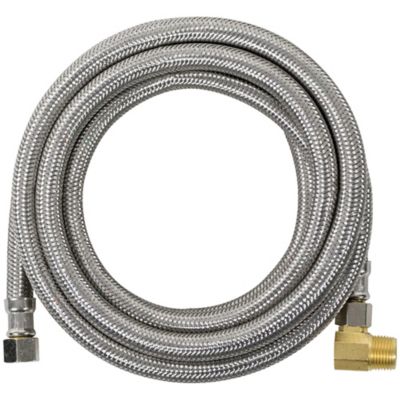
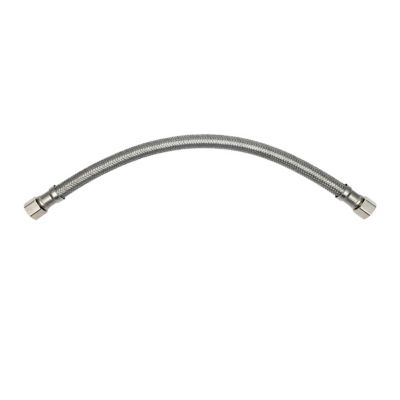
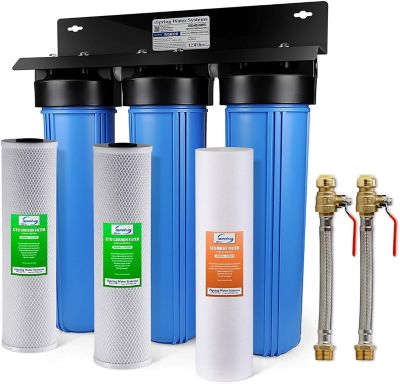
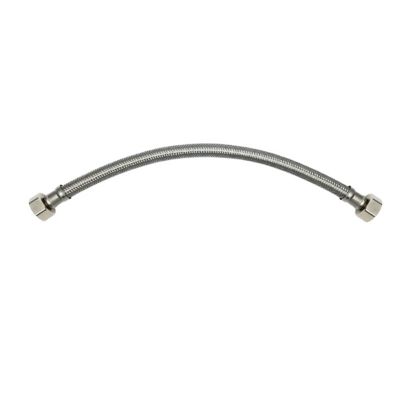
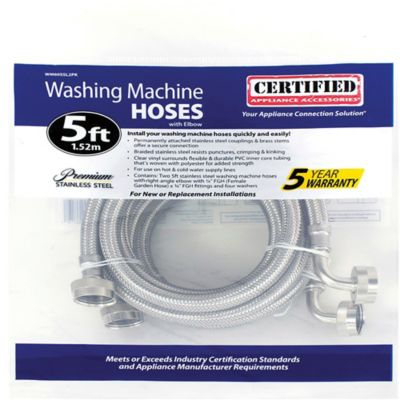
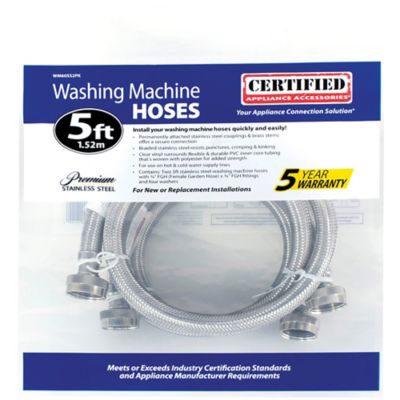
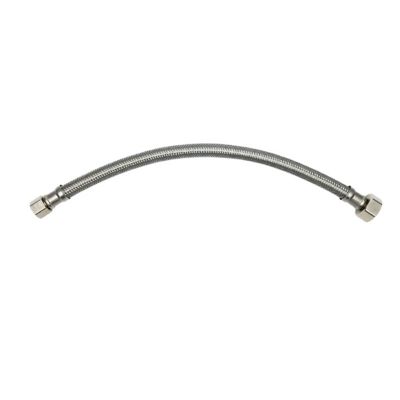
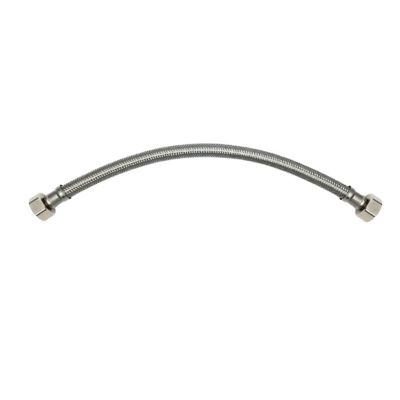
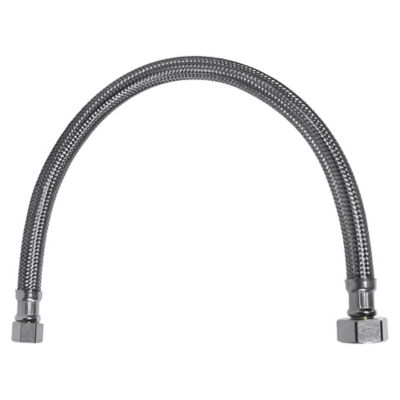
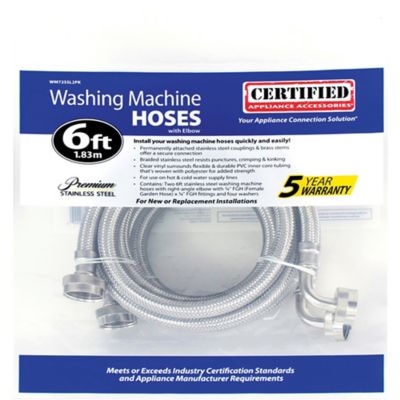
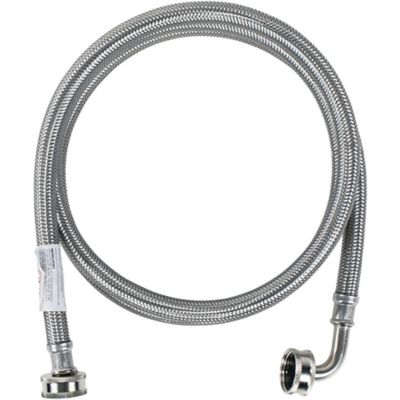
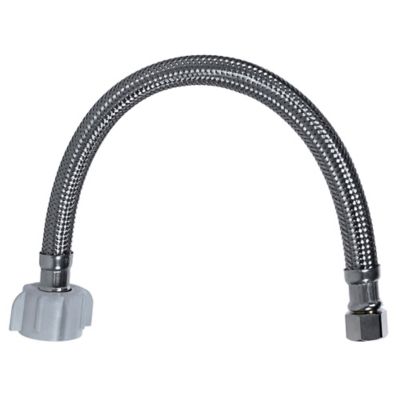
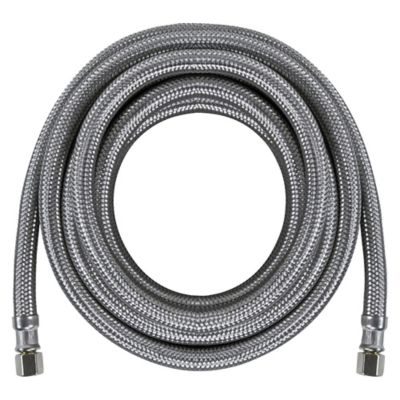
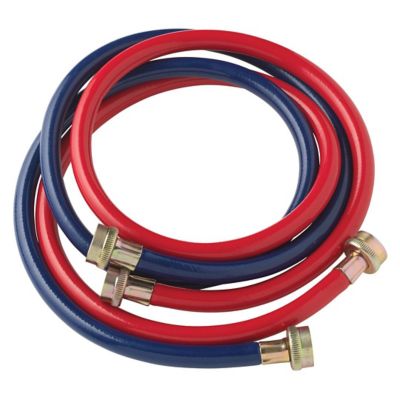
Stainless steel braided water lines are flexible connectors that join a plumbing fixture to a nearby water shut-off valve. They are commonly installed beneath kitchen and bathroom sinks, at toilets, behind refrigerator ice makers and water dispensers, and in other accessible spots where a short, flexible connection makes installation easier. Most have an inner tube made from PEX, PVC, or reinforced vinyl, surrounded by a woven stainless steel outer layer. This braided jacket helps the line resist kinking, crushing, rust, and sudden pressure stress while allowing it to bend around the back of a cabinet or along the side of a fixture. For many home plumbing repairs, replacing an aging connector is a straightforward way to refresh the connection between the supply valve and the fixture without reworking the surrounding pipe. These lines are best suited for exposed, reachable connections directly after a wall shut-off valve. They are not intended to serve as concealed piping, long runs through a wall or floor, or a substitute for properly sized supply pipe. Before shopping, identify the fixture being connected, check the connection style at each end, and measure the path from the shut-off valve to the fixture inlet. A line that is too short may pull on the fittings, while one that is much longer than needed can form loops that crowd a cabinet and make inspection harder. Common connection sizes include 3/8-inch compression fittings for many fixture shut-off valves, along with larger or different ends for certain appliances and plumbing setups. Threaded ends, compression ends, and straight or angled configurations each serve a different arrangement, so compare the existing connection before placing an order.
When selecting a stainless steel braided water line, pay close attention to length, end size, fitting type, intended application, and the materials listed for the inner tube and outer braid. A faucet line may have a different connection arrangement than a toilet line, ice maker line, dishwasher line, or washing machine line. The outside braid should be free from broken wires, sharp burrs, flattened sections, or signs of corrosion, and the inner tube should not be twisted or pinched during installation. A flexible connector should bend in a smooth, broad curve rather than fold sharply at the valve or fixture. Shut off the water supply before removing the old line, place a shallow pan or towel beneath the connection, and clean the threaded or compression surfaces before fitting the new connector. In many compression connections, the washer or cone provides the seal, so adding thread tape where it does not belong can interfere with a proper fit. Hand-tighten first, then snug the connection with a wrench according to the fitting instructions; excessive force can damage the valve, fitting, or line. Once installed, open the shut-off valve slowly and check both ends for drips. Run the fixture for a short time, look again around the connections, and inspect the area after the cabinet or appliance has been put back in place. It is also wise to leave the line visible and easy to reach, since a quick glance during routine cleaning can reveal moisture, discoloration, or a fitting that has shifted. In homes that see cooler months and heating-season plumbing checks, these connectors can be part of a broader inspection of supply valves, appliance hookups, and areas beneath sinks. For related hot-water projects, browse
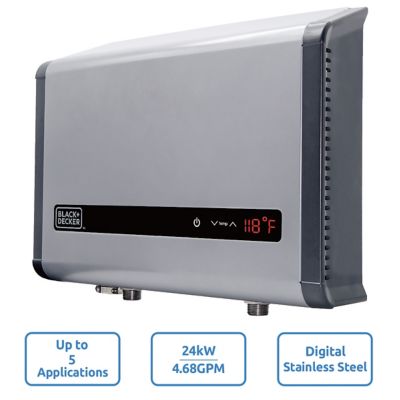
Stainless Steel Water Heaters to compare equipment for the water-heating side of a household system.
These connectors are a practical choice for homeowners, renters with permission to make fixture repairs, property managers, maintenance crews, and anyone preparing a farmhouse, workshop, cabin, or rental property for changing weather. They can help simplify a faucet replacement, toilet refresh, refrigerator hookup, or emergency repair when a rigid pipe connection leaves little room to work. A new homeowner may appreciate having correctly sized lines on hand while settling into an older house, especially where several shut-off valves and supply connections show years of mineral buildup or surface wear. They can also make a sensible addition to a household plumbing box alongside an adjustable wrench, towels, a small pan, replacement washers, and a flashlight. Keep a record of the sizes and lengths that fit the fixtures in your home, but verify every connection before installation because plumbing layouts vary from one room to the next. If a line will run behind a wall, beneath a slab, through an inaccessible floor cavity, or across a long distance, consult a licensed plumber about the proper pipe material and installation method. Do not bend a connector past its natural curve, suspend heavy items from it, paint over the braid, or place it where sharp cabinet edges can rub against the outer mesh. Periodic checks are especially worthwhile beneath sinks and near appliances, where a small drip can soak wood, flooring, or stored supplies before it becomes obvious. With the right length and fittings, a stainless steel braided water line provides a neat, flexible connection for many everyday fixture hookups and helps keep routine plumbing work manageable from early fall through the colder stretch of the year.