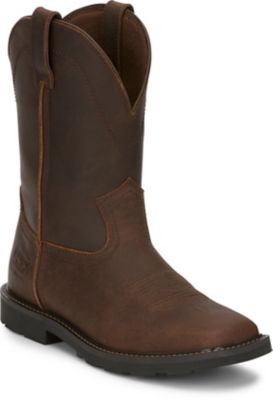
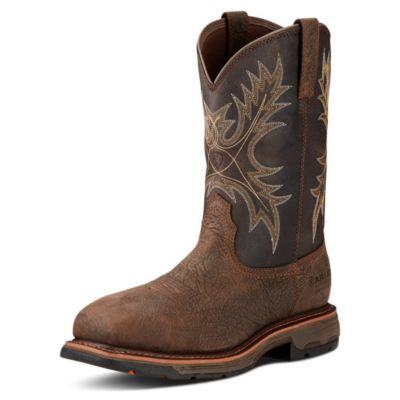
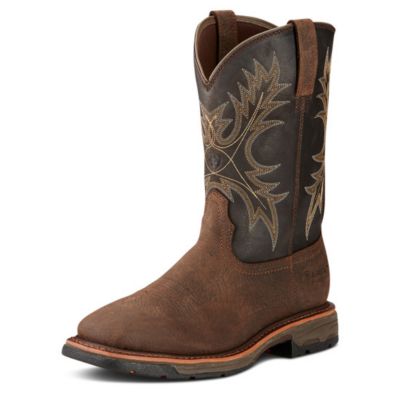
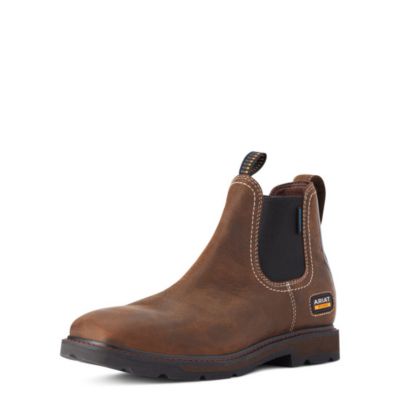
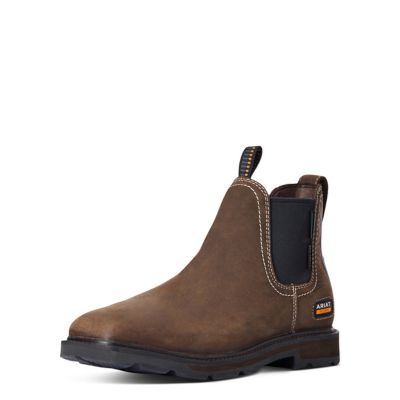
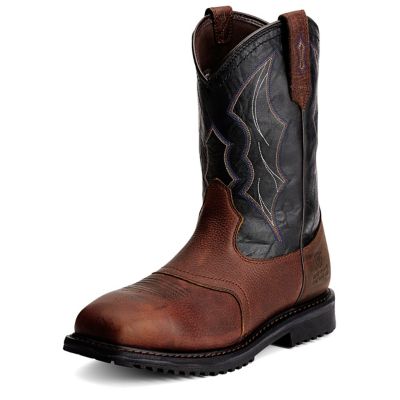
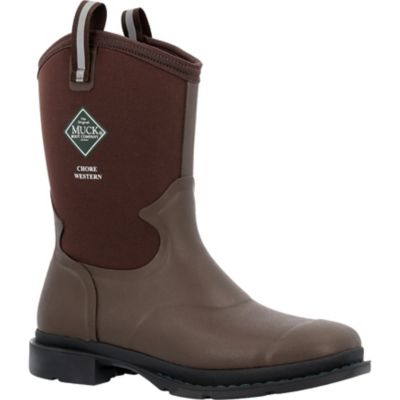
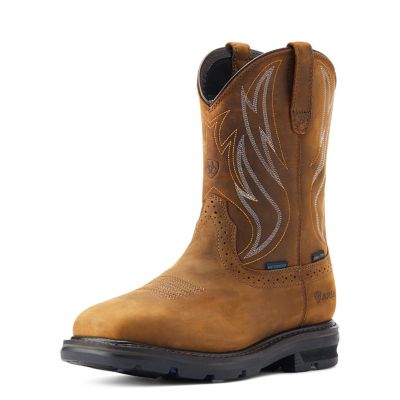
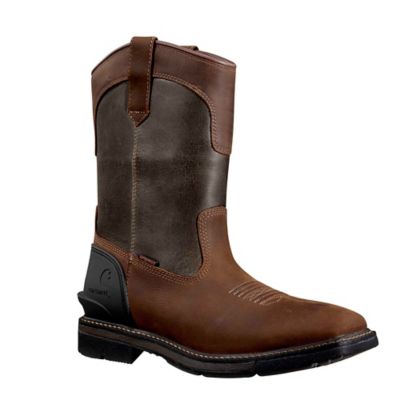
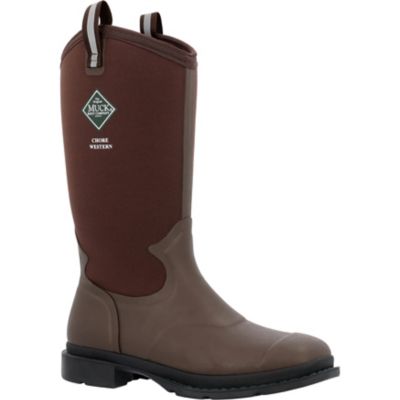
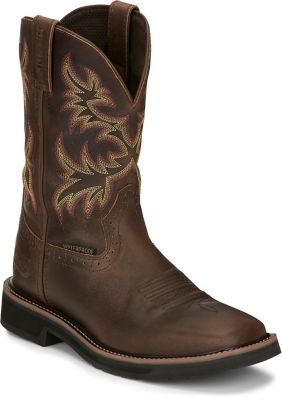
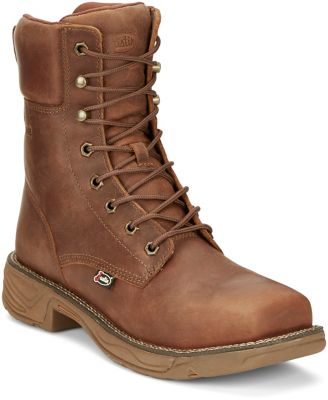
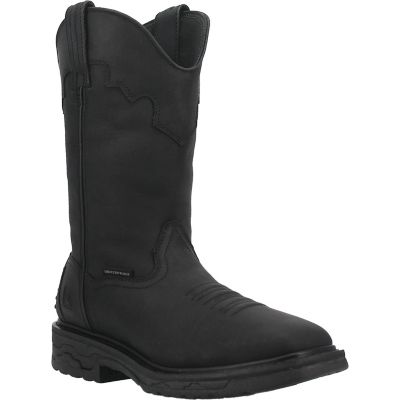
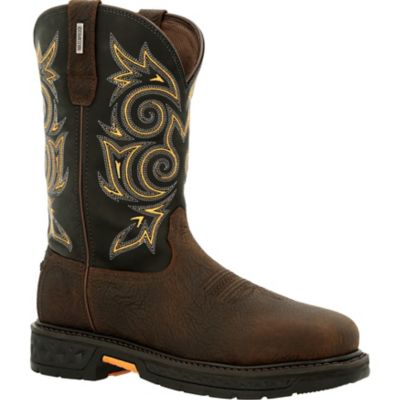
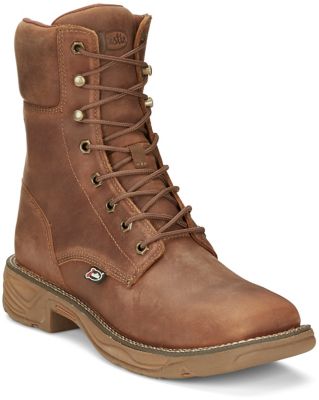
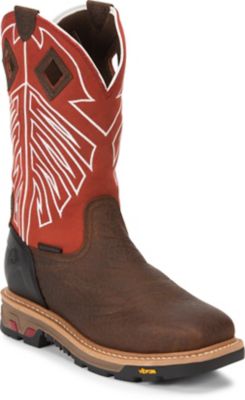
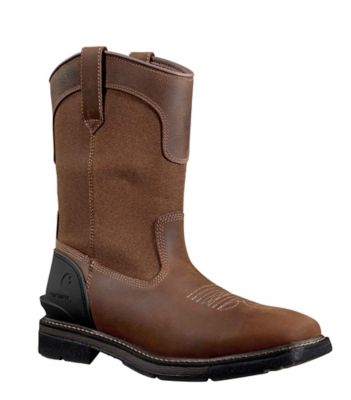
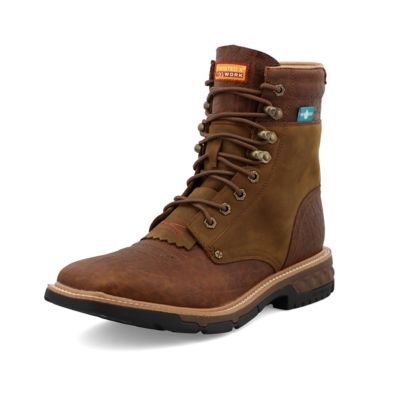
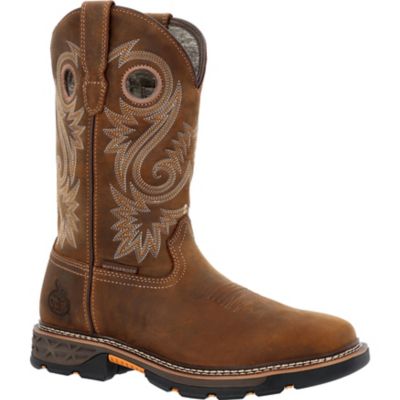
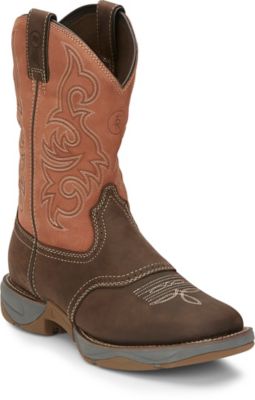
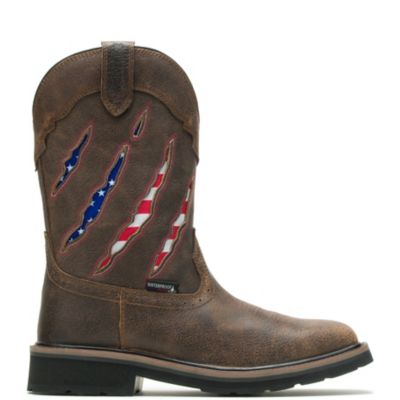
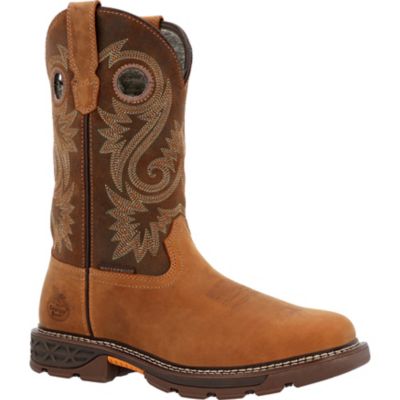
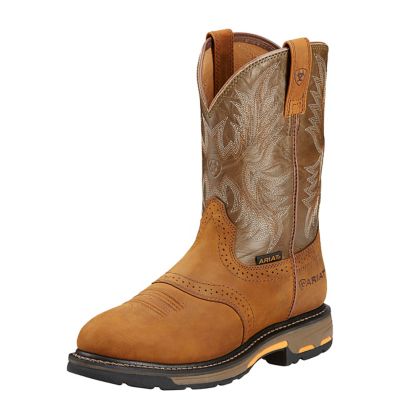
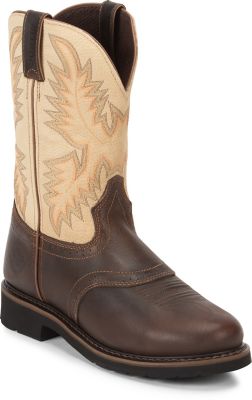
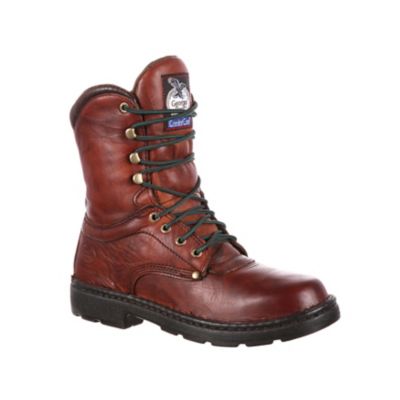
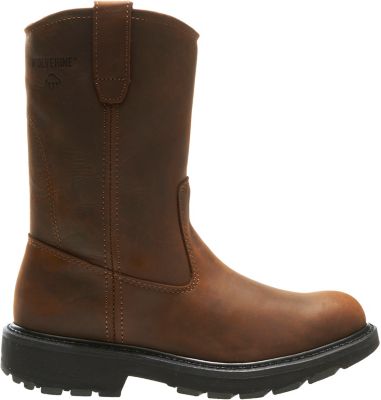
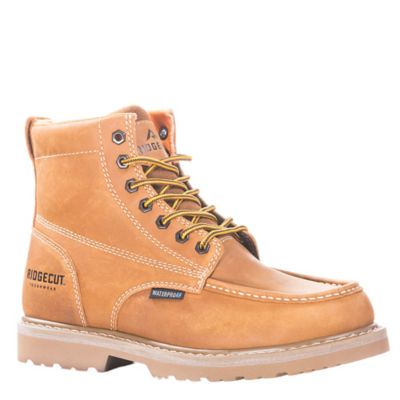
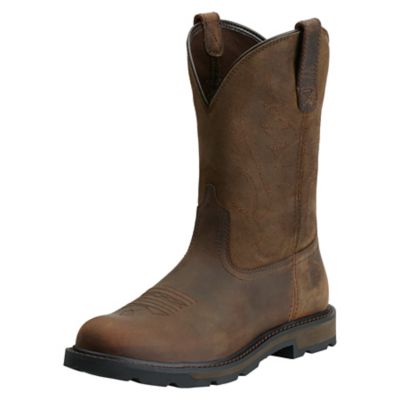
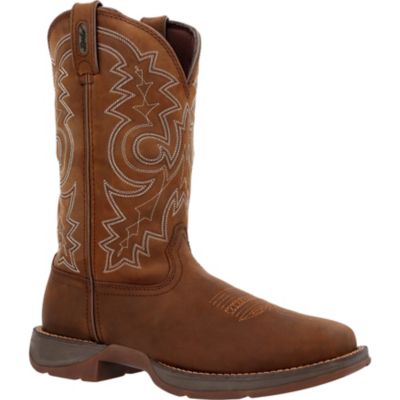
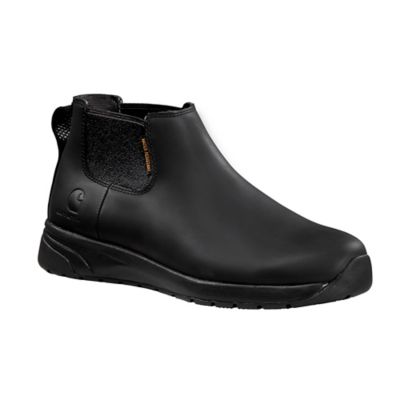
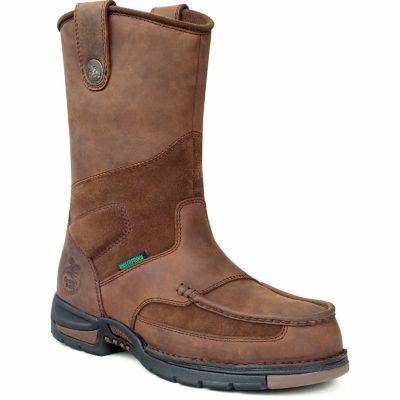
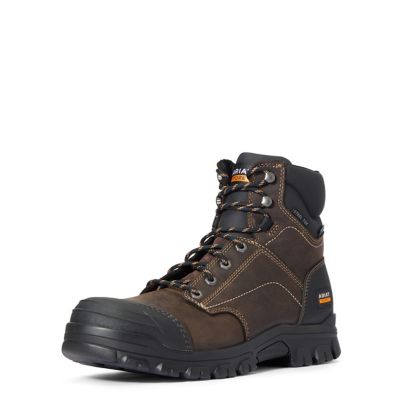
Square toe waterproof boots combine a squared-off toe shape with construction designed to keep water out during wet chores, jobsite tasks, and everyday wear. That familiar western profile fits right in around the barn, but the practical details matter just as much as the look. Waterproof protection may come from an internal membrane, sealed seams, molded rubber construction, or a combination of materials and treatments. Leather alone does not make a boot waterproof, so the stated construction is worth a close look before heading into puddles or working around a wash rack. Full-grain leather uppers can provide structure and develop a softer feel with wear, while rubber sections help shield areas that regularly meet mud and standing water. Textile linings and moisture-managing footbeds can help handle perspiration inside the boot, though breathability varies by construction. A waterproof boot still has an opening at the top, and water can get inside when it rises above the shaft or runs down a pant leg. Shaft height should suit the task: taller pull-on styles provide more coverage around splashing water and muddy ground, while shorter shafts may feel less restrictive for walking and driving. Waterproofing and insulation are separate features, too. A waterproof boot does not necessarily provide added warmth, and an insulated style may feel different in fit and weight. For someone hauling feed, opening gates, checking fence lines, or moving between a gravel lot and a concrete shop floor, the right combination comes down to protection, comfort, and footing. Square toe shapes can offer room across the front of the foot, but the shape alone does not guarantee a wide fit. Width, the shape of the boot’s interior, and the placement of any protective toe cap all affect how much space toes actually have. The best match leaves room for natural movement without letting the foot slide around every time the ground turns uneven.
Fit becomes especially important when square toe waterproof boots need to carry someone through a full day on their feet. Try them with the socks intended for work, and allow for any foot swelling that develops after hours of walking or standing. Toes should not press against the front or sides, and the widest part of the foot should line up with the widest part of the boot. Pull-on boots often feel snug across the instep at first and may allow a small amount of heel movement, but excessive slipping can lead to rubbing and an unstable feel. A boot should not need painful wear-in time to become the right size. Cushioned footbeds can soften repeated steps on hard surfaces, while supportive midsoles help maintain a steady platform when carrying buckets or walking over rutted ground. Removable footbeds may make room for an appropriate orthotic, provided the change does not crowd the foot or interfere with the intended fit. Underfoot, tread depth and spacing influence how the sole grips and sheds mud. Widely spaced lugs may release packed soil more readily, while other tread patterns suit mixed surfaces such as concrete, gravel, and packed dirt. Oil resistance and slip resistance describe separate outsole features; neither means a boot will hold firm on every slick surface. Water, manure, algae, and loose gravel still call for careful footing. Heel shape matters as well, especially when moving between walking, ladder work, and riding. For saddle time, choose footwear designed for riding and suited to the stirrup rather than assuming any western-looking boot will do. Toe protection is another separate decision. Soft toes do not provide the impact and compression protection of safety-rated steel or composite toes. When work calls for protective footwear,
Square Toe Steel Toe Work Boots offer a related category to consider. Waterproof protection still needs its own confirmation, and any safety rating should match the employer’s requirements. Electrical hazard protection, puncture resistance, and other workplace features also need individual verification rather than assumptions based on appearance.
The way a boot is put together affects how it handles repeated bending, abrasive ground, and everyday farm messes. Reinforced areas around the heel and toe can help manage scuffing, while stitching, sole attachment, and the condition of the lining deserve attention over time. Cemented, welted, and molded constructions each have their own characteristics, and the possibility of resoling depends on the design and a repair professional’s assessment. For someone who spends the morning walking muddy pens and the afternoon standing at a workbench, weight and flexibility may matter as much as shaft height. A heavier boot with substantial tread can feel different from a lighter pair over miles of walking, even when both provide waterproof protection. Care starts with getting dirt off before it settles into seams or dries into a hard crust. Brush away loose mud, then clean the exterior with a method suited to the material and the manufacturer’s directions. Leather benefits from appropriate conditioning, but too much conditioner or the wrong treatment can affect its feel, appearance, or compatibility with a waterproof membrane. Rubber and textile sections may need different cleaning methods. After a wet day, let boots dry naturally in a ventilated spot, away from a stove, radiator, or other direct heat source that could damage leather, adhesives, or internal components. Remove footbeds when the care directions allow it, and let the inside dry fully before the next outing. Keeping a second pair in rotation can give damp linings more time to air out. Check for separated seams, worn tread, cracked material, and damage around the sole edge, since waterproof performance depends on the whole construction remaining intact. A surface treatment cannot necessarily fix a failed seam or damaged membrane. For a gift, square toe waterproof boots can make sense for a ranch hand, a property owner, or someone starting a job with wet working conditions. Knowing the recipient’s size, preferred width, usual socks, and workplace safety requirements makes that choice far more useful than picking by looks alone.