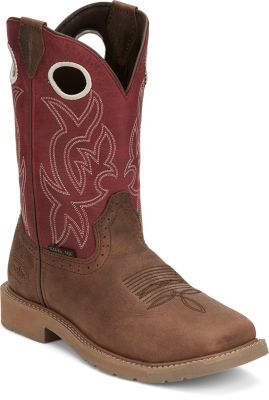
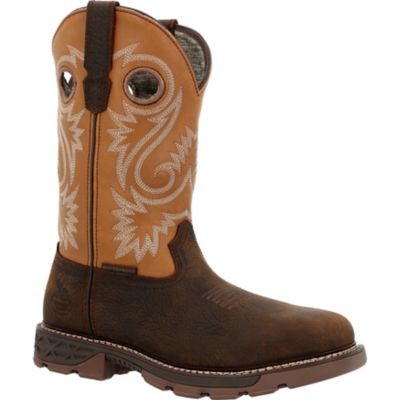
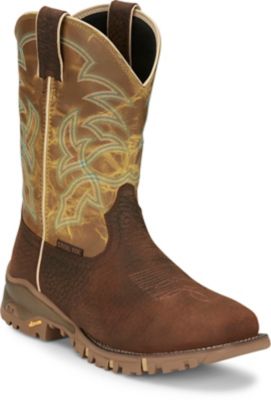
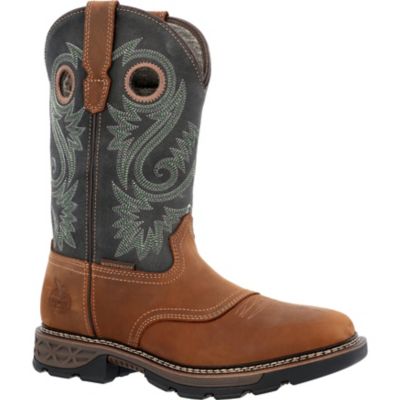
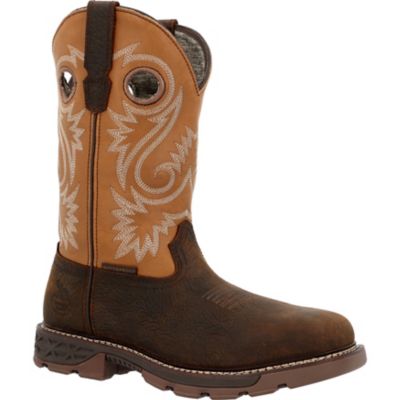
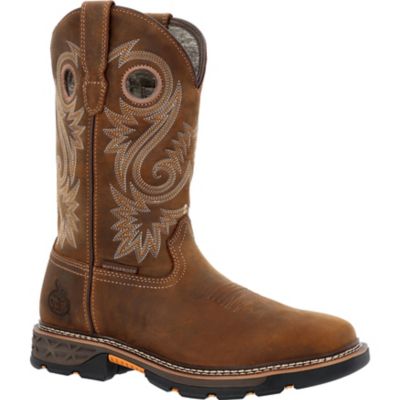
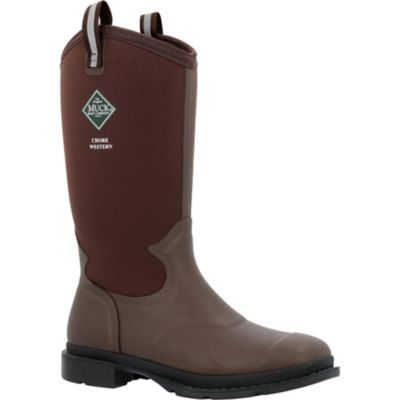
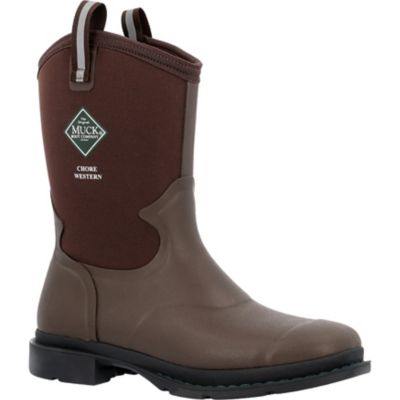
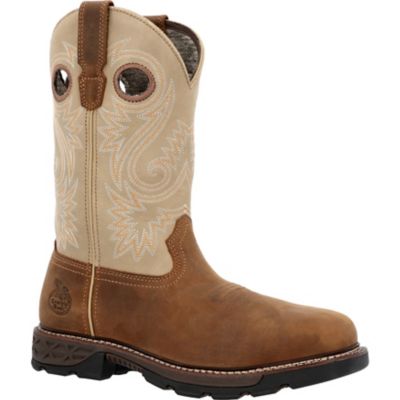
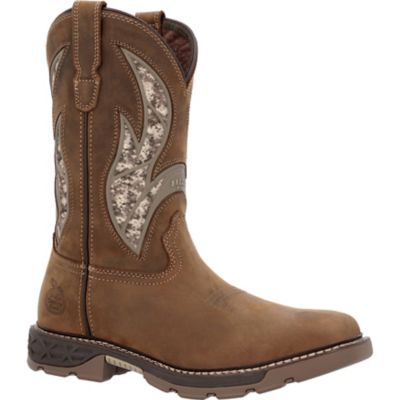
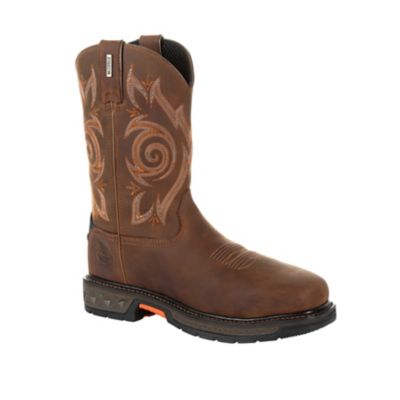
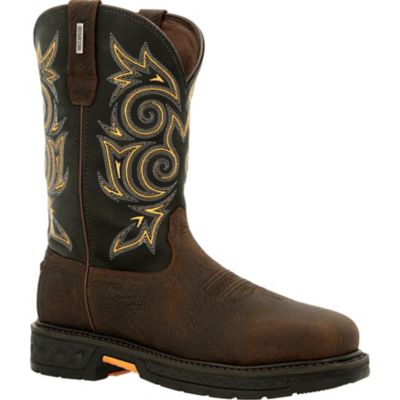
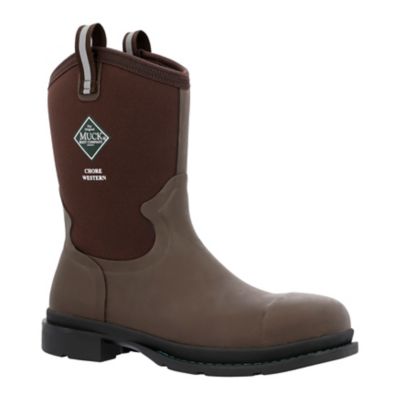
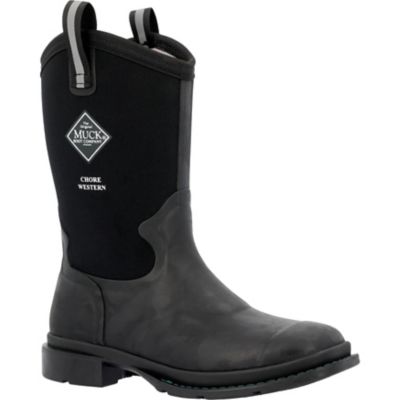
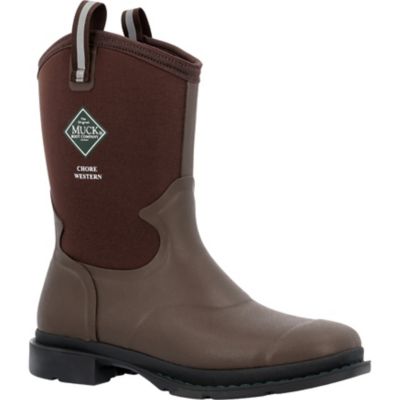
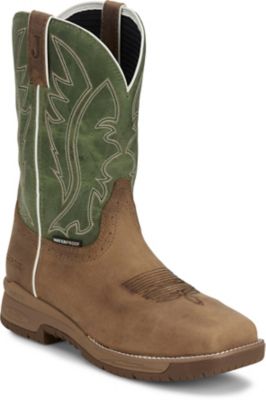
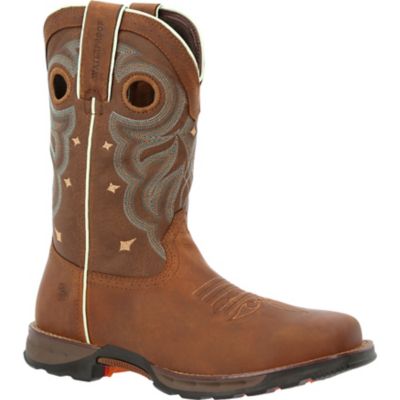
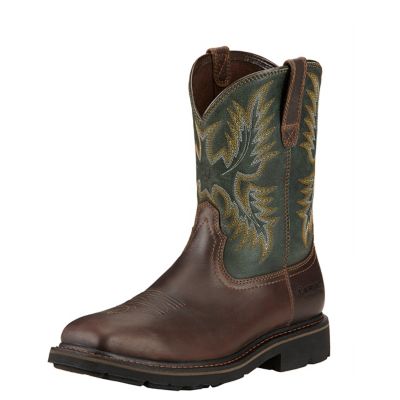
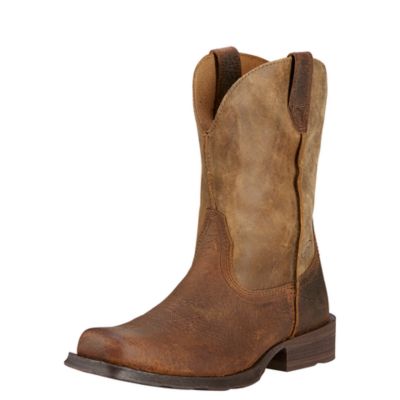
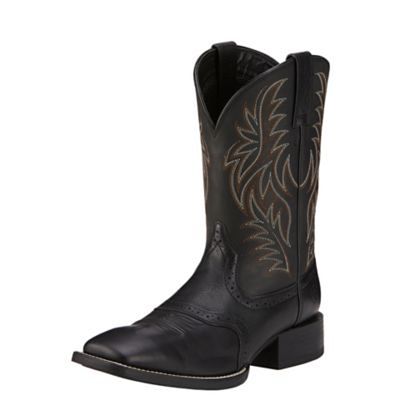
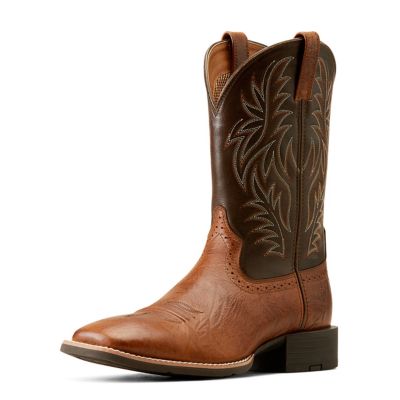
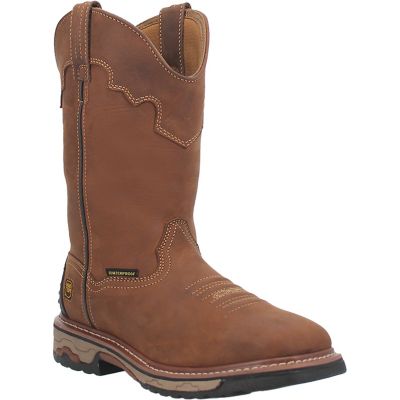
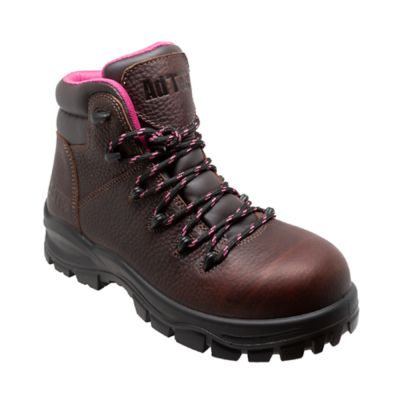
Square toe pull-on work boots combine a squared-off toe shape with a slip-on shaft, giving them a familiar ranch look and a practical place in the workday. There are no laces to tie before heading to the barn, and pull tabs or pull holes help get the boots on before chores get rolling. They suit a range of routines, from carrying feed and checking fence lines to working in a shop or spending hours on a concrete floor, provided the construction matches the job. The square toe describes the shape, not the level of protection: boots in this category may have soft toes or protective toe caps, along with different soles, linings, and support features. That distinction matters more than appearance when choosing footwear for a particular workplace. Leather is a common upper material because it can flex with the foot and develop character through regular wear. Full-grain leather retains the outer grain, while other leather finishes offer different textures and care needs. Textile panels and synthetic materials can change the weight, flexibility, and feel of a boot, so the entire construction deserves a look rather than the upper alone. Reinforcement around the toe and heel can help handle contact with gates, steps, and equipment, while sound stitching and well-finished seams help the boot hold together through repeated bending. Shaft height changes lower-leg coverage and how the boot fits beneath work pants. A taller shaft offers more coverage, but it also needs enough room around the calf for comfortable movement. Shorter shafts may feel less restrictive when climbing into a truck or kneeling beside equipment. Stitched and cemented sole constructions also have different characteristics, including flexibility and repair options; some stitched designs can be resoled when their construction and condition allow. The right combination comes down to how the boots will spend most of their working hours.
Fit has a big say in how square toe work boots feel by the end of a long shift. A broad-looking toe does not automatically mean a wide fit, and a square outline alone does not guarantee extra room inside. The shape of the boot’s interior, its width, and the thickness of any protective toe cap all affect the space around the toes. Toes need room to rest naturally without pressing against the front or sides, especially when walking downhill or stepping off a platform. At the same time, the foot should not slide around inside the boot. Pull-on construction depends on the fit through the instep and heel to keep the foot settled because there are no laces to tighten. A little heel movement can occur in a new pair, but rubbing, a loose instep, or a heel that lifts excessively can point to a poor match. The socks worn for work belong in the fit check, along with any orthotic or replacement footbed that will go inside. Extra-thick cushioning is not always the answer if it crowds the toes or raises the heel out of position. Underfoot support matters, too. A supportive shank can help steady the boot through the arch, while cushioning can soften the feel of repeated steps across hard floors. For jobs with falling-object or compression hazards, safety-toe construction and the applicable ASTM markings deserve close attention. Steel, composite, and other nonmetallic protective toe caps differ in weight and profile, but the boot’s stated rating—not the material name alone—establishes its protection. Electrical hazard protection, puncture resistance, and metatarsal coverage are separate features, not automatic benefits of a square toe. Workplace requirements should settle those details. For a gift, knowing the recipient’s size, preferred width, and job requirements makes a pair of work boots a much more practical choice than guessing from appearance.
The outsole is where square toe pull-on work boots meet the demands of the ground beneath them. Deeper tread can provide bite on loose soil, while a shallower pattern may carry less mud into a shop or cab. Wedge soles spread contact across a broader surface and can feel comfortable on flat floors; defined heels create a different footing profile that may suit certain work settings. Ladder work calls for footwear that meets the job’s requirements rather than a choice based on heel shape alone. Slip-resistant and oil-resistant describe different properties, so neither should stand in for the other when comparing features. Even a slip-resistant sole cannot remove every slipping hazard, especially on greasy floors, loose gravel, or surfaces coated with manure. For chores around wet ground, washdown areas, or water troughs,
Square Toe Waterproof Boots offer another construction option to consider. Waterproof membranes or treated construction can help limit water entry, but water can still get in over the shaft opening. Lining materials and moisture management also matter when feet spend hours inside a boot. Care helps preserve comfort and extend service life regardless of the protection features. Brushing away dirt before it packs into seams keeps grit from grinding against the material, and wiping off manure or other residue helps prevent buildup. Leather benefits from cleaning and conditioning products suited to its finish; too much conditioner can leave it overly soft or coated with residue. Boots should air-dry away from direct heaters, which can stiffen leather or affect adhesives. Removable footbeds can dry separately when the care directions allow it. Regular checks of the tread, seams, heel, and upper can catch worn areas before they interfere with footing or fit. A well-matched pair earns its place through comfortable movement, suitable protection, and construction that stands up to the work—not simply through a toe shape that looks right with work jeans.