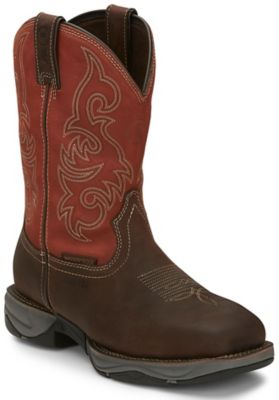
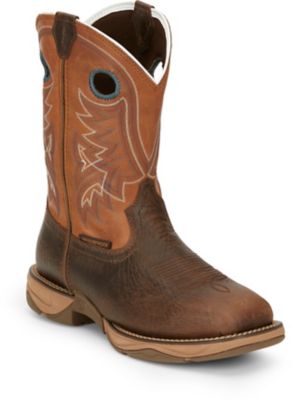
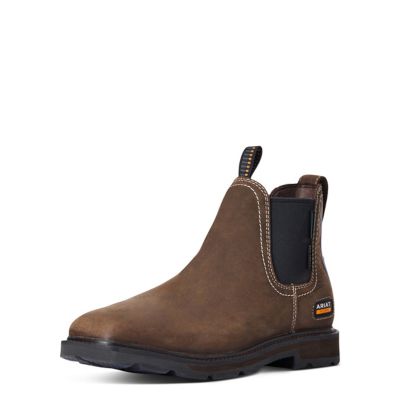
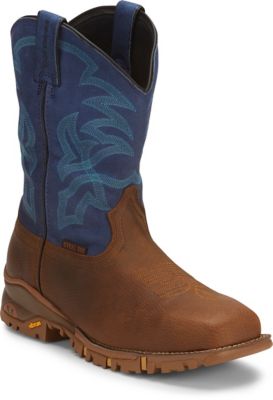
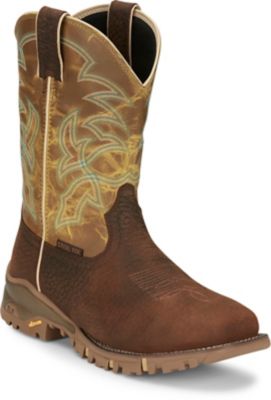
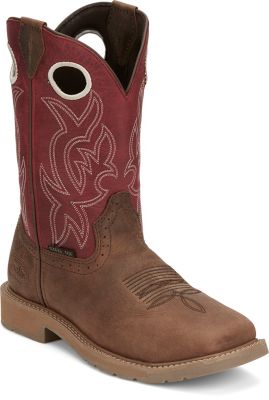
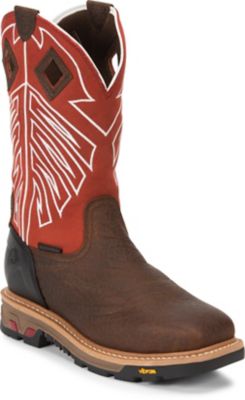
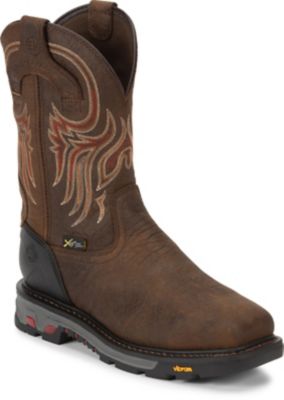
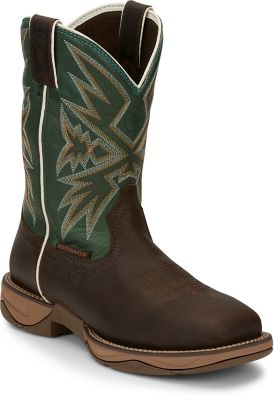
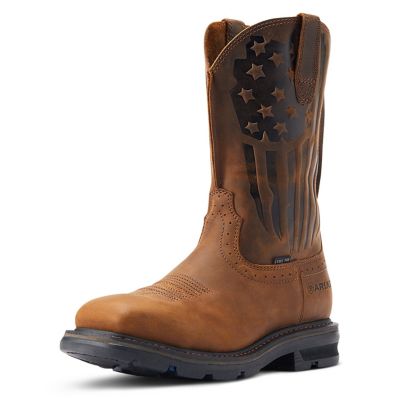
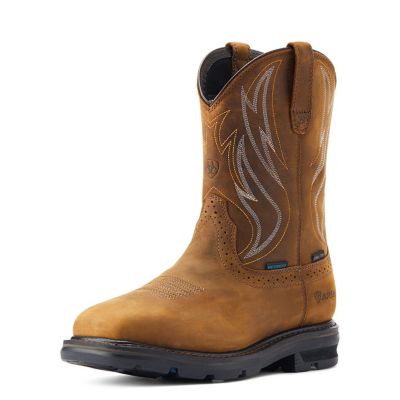
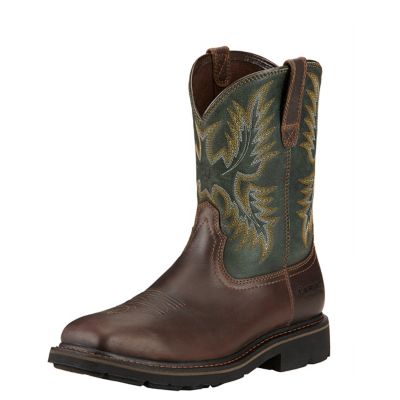
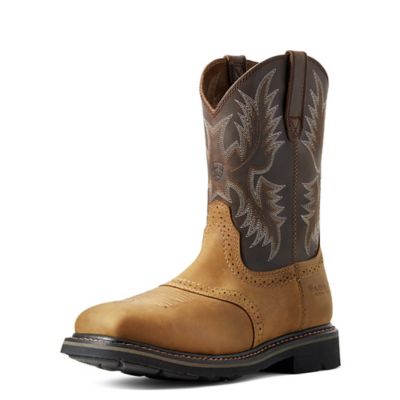
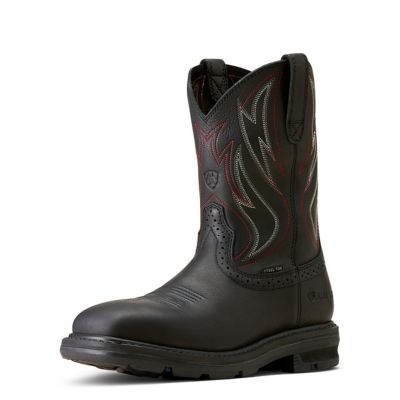
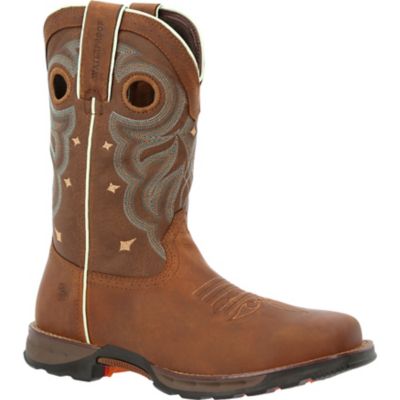
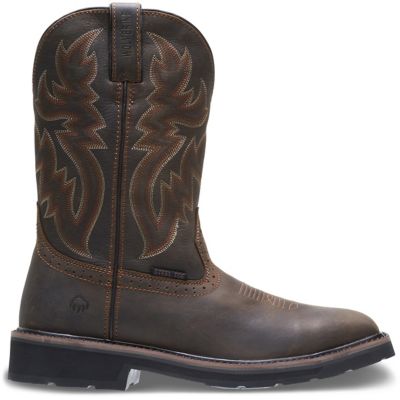
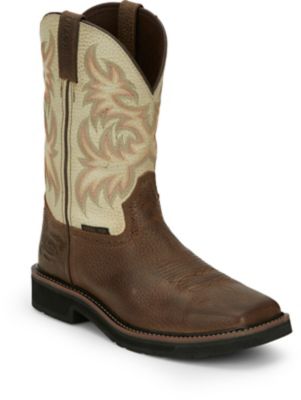
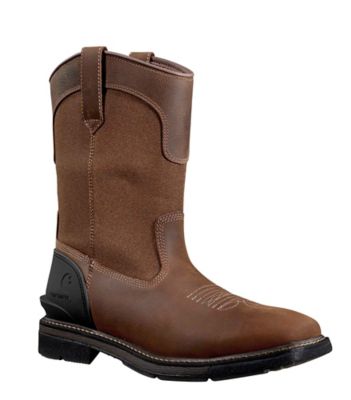
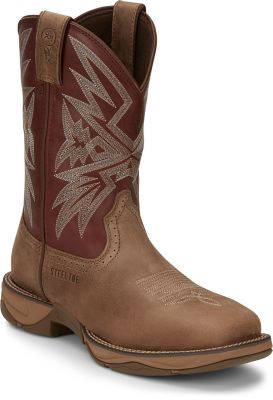
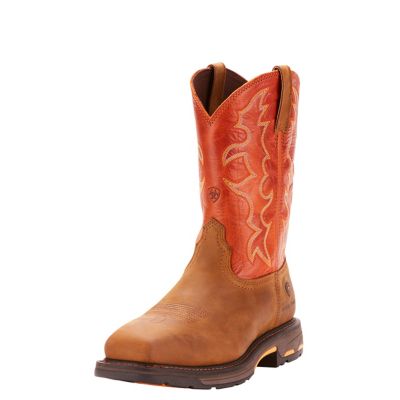
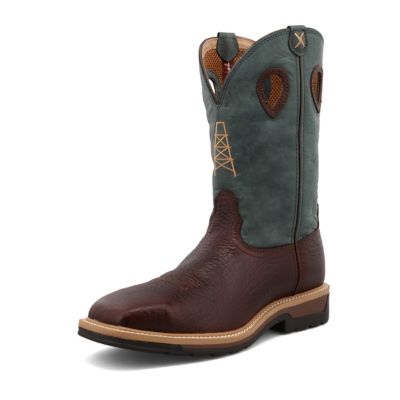
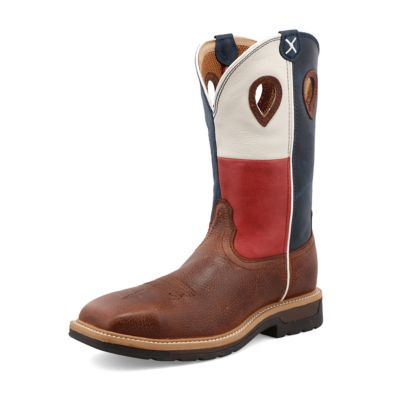
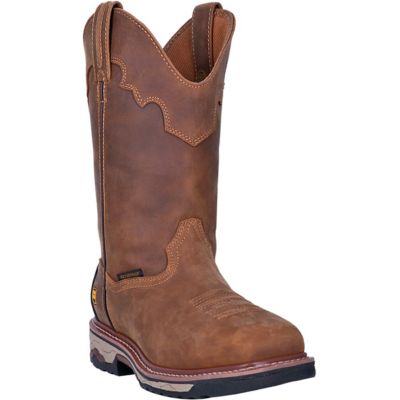
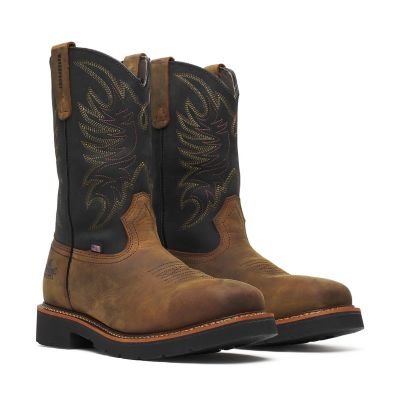
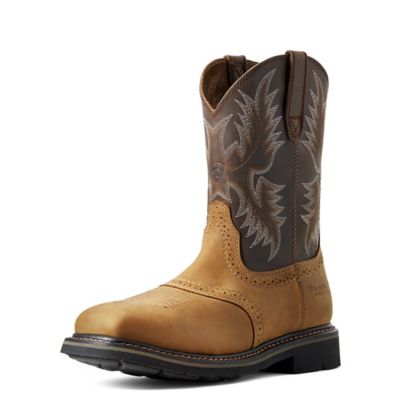
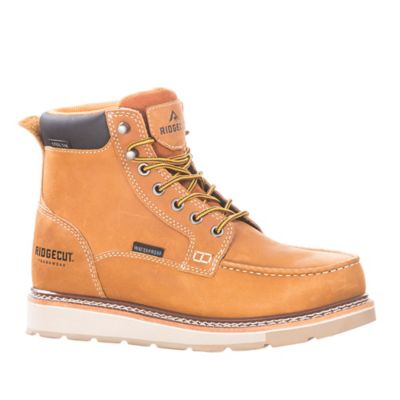
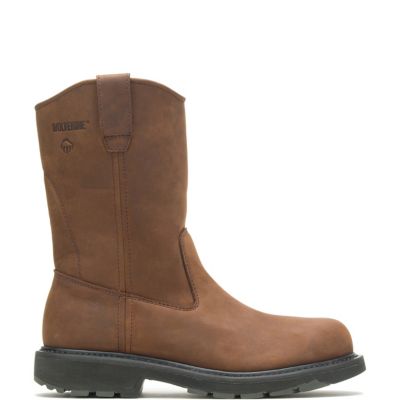
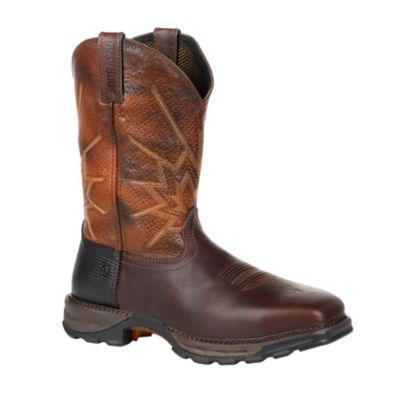
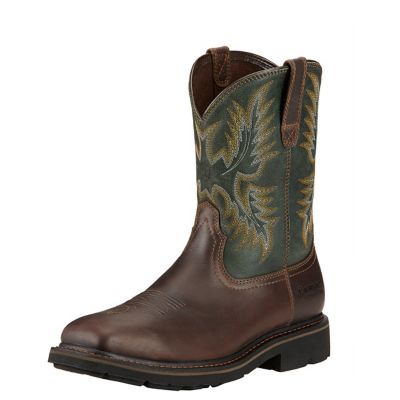
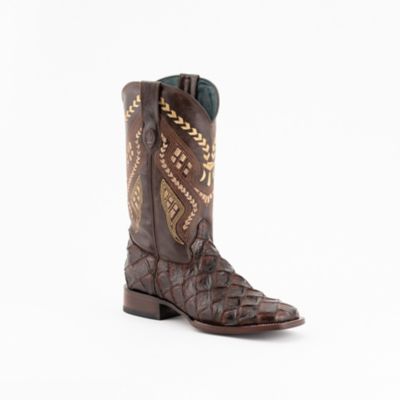
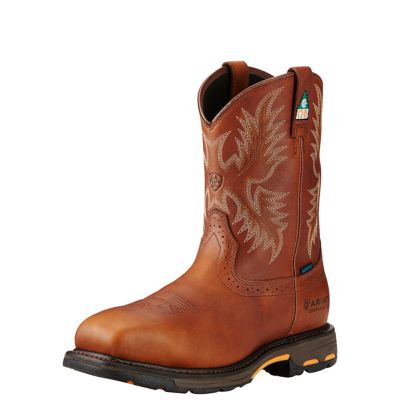
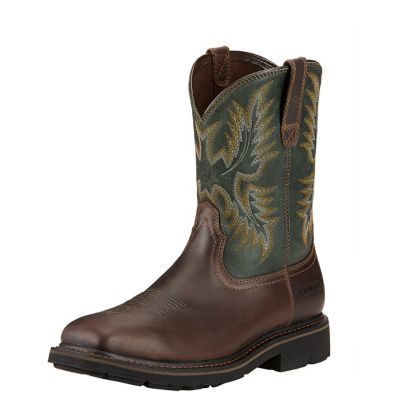
Square toe steel toe work boots pair a squared-off toe shape with a steel safety cap designed to help protect toes from impact and compression. That combination brings a familiar Western look to work footwear built for jobs where dropped tools, shifting materials and heavy equipment are part of the surroundings. The squared profile may offer more room across the front than a narrower toe shape, but the actual space depends on the boot’s width, last and safety-cap design. These boots make sense for farmhands moving supplies, warehouse crews handling freight, mechanics working around equipment and tradespeople spending long stretches on a jobsite. Pull-on Western and Wellington styles have tall shafts and an easy-on design, while lace-up styles allow more adjustment across the instep and ankle. Leather uppers are common, with full-grain leather offering a substantial feel and resistance to everyday abrasion. Reinforcement around the toe and heel can help limit wear where boots brush against equipment or scrape along a shop floor. Underfoot, rubber outsoles, cushioned midsoles and supportive shanks serve different purposes, from providing traction to helping steady the foot on uneven ground. Safety features deserve a closer look than appearance alone. A steel toe does not automatically mean a boot has electrical hazard protection, puncture resistance or a metatarsal guard over the top of the foot. ASTM F2413 markings identify tested protective features, and those markings need to match the requirements of the workplace. Electrical hazard protection is a separate rating and does not replace required electrical safety equipment or procedures. Likewise, a safety toe protects a defined area at the front of the boot, not the entire foot. For a broader look at shapes and construction beyond the square-toe profile,
Steel Toe Work Boots brings the focus back to protective footwear suited to the work at hand.
Fit makes a real difference when the day includes crossing a gravel lot, climbing into a tractor cab and standing at a workbench. Square toe steel toe work boots should leave space for the toes to move without letting the foot slide forward into the safety cap. A broad-looking toe is not a substitute for the right width; someone with a wide forefoot may still need wide sizing, while someone with a narrow heel may need a different fit altogether. The steel cap will not stretch with break-in, so pressure against its edges is not something to count on disappearing. Leather can soften and flex with wear, but a boot that pinches, rubs or squeezes from the start is worth reconsidering. Work socks matter here, too. The socks worn on the job belong in the fitting process, since extra cushioning changes how much space remains across the instep and around the toes. Trying on both boots and walking on a clean indoor surface can reveal heel movement, tight spots or a flex point that lands in the wrong place. Pull-on boots often have a little heel movement at first, but they should still hold the foot securely through the instep rather than feel loose from top to bottom. Lace-up designs offer more control over that hold, especially for feet that need different tension across different areas. Shaft height also affects how a boot feels when kneeling, driving or stepping over a low gate. Inside the boot, cushioning can soften contact with hard floors, while a stable footbed helps keep the foot from shifting around. Removable footbeds can make room for a suitable replacement insert, provided the change does not crowd the foot or interfere with the boot’s fit and specified protection. For someone buying work boots as a gift, knowing the recipient’s size is only part of the picture. Their usual width, preferred shaft style, workplace safety requirements and fit preferences matter just as much.
The right construction depends on where square toe steel toe work boots will spend their working hours. A farm shop, feed room and wash area put different demands on leather, stitching and soles. Waterproof construction can help keep outside water from reaching the foot around wash racks or wet work surfaces, while an unlined or moisture-managing interior may feel better for tasks that involve plenty of walking. Waterproofing and breathability vary by construction, so neither should be assumed from the leather alone. Outsole tread matters just as much: deeper lugs can grip loose ground but may carry more mud into a cab or building, while a shallower pattern can be easier to clear on smoother surfaces. Slip-resistant soles can help with traction, but no outsole prevents every slip, especially around oil, loose grain or slick concrete. Oil resistance and slip resistance describe different performance features, so the wording on the boot’s specifications matters. Welted construction may allow resoling when the upper remains sound and the design supports it; cemented construction can offer a flexible feel, though repair options vary. Either way, sound stitching, secure sole attachment and reinforcement at high-wear points help a boot stand up to repeated bending and scuffing. Regular care supports that service life without making boot maintenance a second job. Brushing away grit keeps it from grinding into seams, and wiping off manure, oil or other residue helps prevent buildup that can harm materials. Leather conditioners and cleaners should match the manufacturer’s recommendations, especially when a boot has a waterproof membrane or a particular finish. Air drying away from direct heat helps protect leather and adhesives, and removable footbeds can be taken out to let the interior dry more fully. Worn tread, separating soles, exposed safety caps and damaged seams are signs that protection or footing may be compromised. After a substantial impact or compression event, replacement may be necessary even when damage is not obvious. Well-matched boots bring together room to move, the required protection and a build suited to the daily workload.