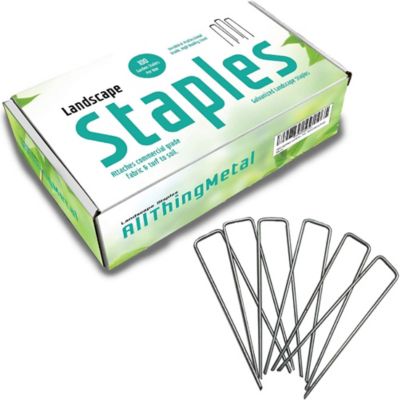
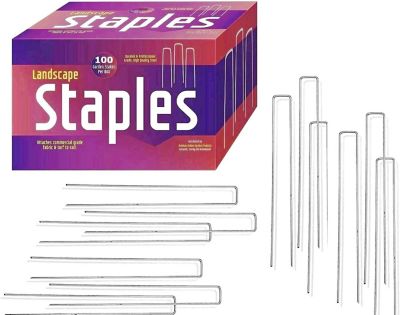
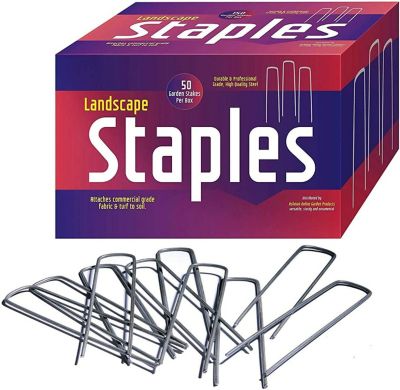
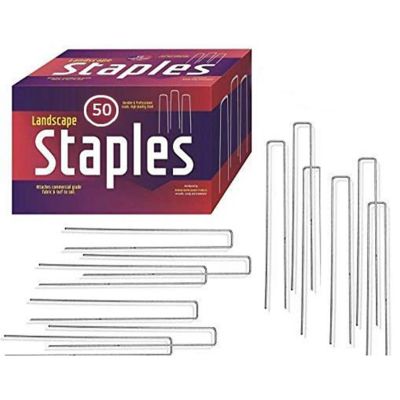
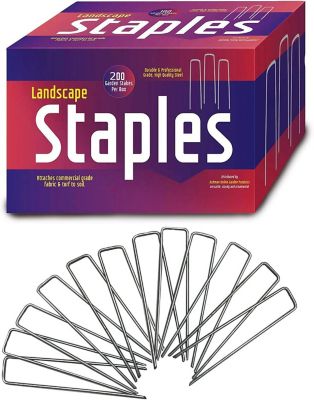
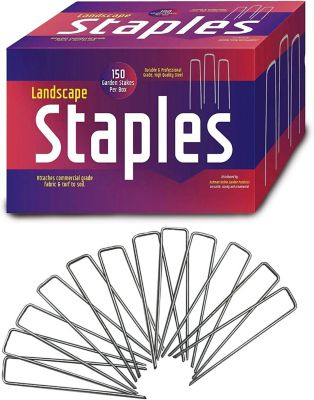
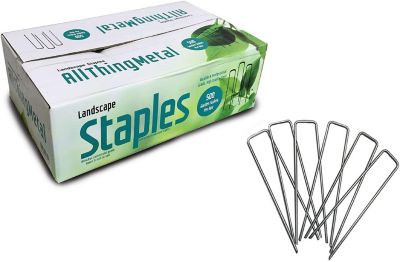
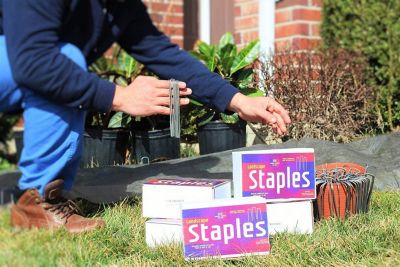
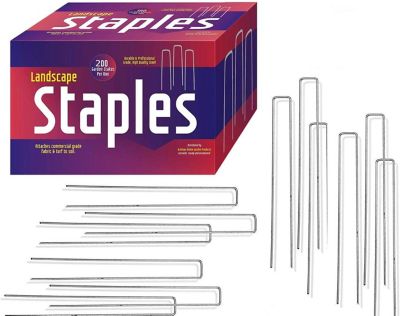
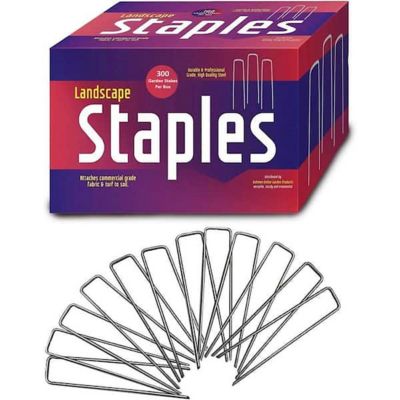
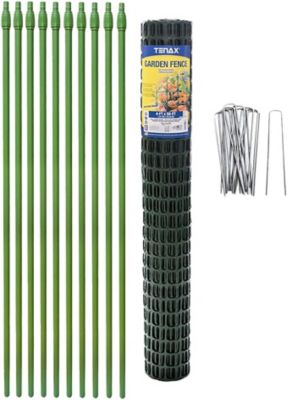
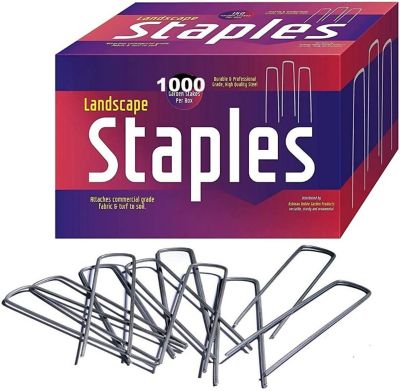
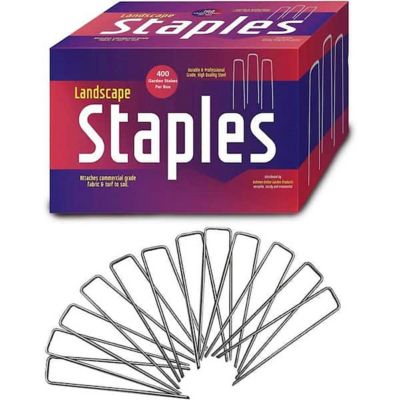
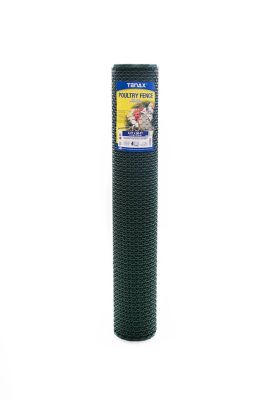
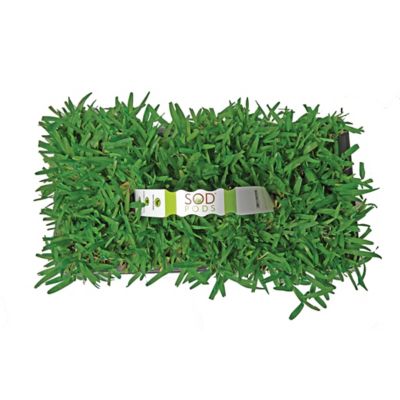
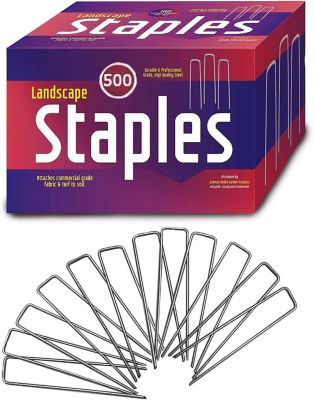
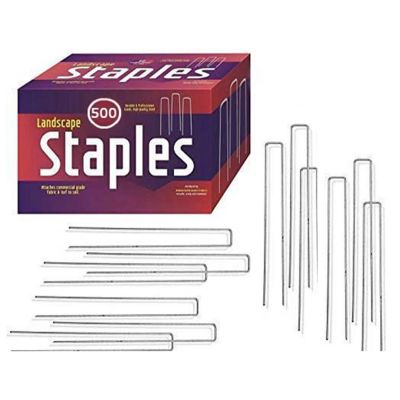
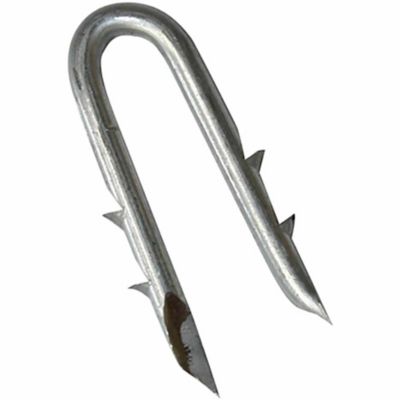
Sod staples are simple, hardworking pieces of lawn and landscape hardware used to hold materials firmly against the ground. Usually made in a U shape, these metal pins press over fresh sod, landscape fabric, plastic sheeting, drip lines, outdoor wire, and other materials that can shift when the wind picks up or the soil settles. They are especially handy when laying rolls of grass along a slope, where gravity can slowly pull new sod downhill before the roots have a chance to take hold. On a flat yard, staples help keep seams tight and edges in place, giving the lawn a cleaner finish while new grass gets established. They also make it easier to keep weed barrier fabric from bunching up around garden beds or lifting at the corners. Homeowners, renters working on a small patch, landscapers, grounds crews, and anyone repairing a worn stretch of lawn can keep a supply close by for quick fixes. They are useful during the warmer part of the growing season, when new grass is being installed, and they remain handy during cooler weather for securing fabric, coverings, hoses, or low-lying landscape materials before strong winds and wet conditions move them around. A good fit depends on the material being pinned, the type of soil underneath, and how much exposure the area gets. For ordinary, reasonably firm dirt, 6-inch staples are a common choice. Loose, sandy, freshly worked, or sloped soil may call for longer 9-inch or 12-inch staples that reach deeper and hold more securely. Shorter pins can work well for thin fabric on a level bed, while longer pins provide added grip when holding down sod, thicker ground cover, or materials placed where rainwater tends to wash across the surface. Measuring the material and checking the soil before buying can help prevent the frustration of staples that pull out with the first hard rain. People working around established lawns may also compare sod staples with
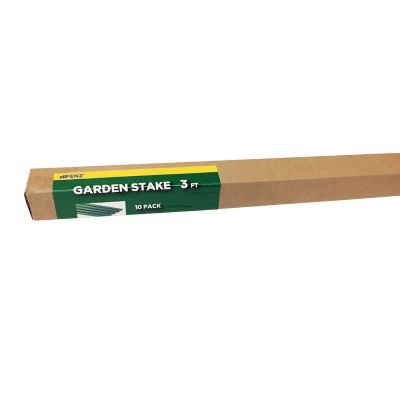
Yard Stakes when choosing the right way to support, mark, or secure an outdoor project.
When comparing sod staples, pay attention to the metal gauge, staple length, finish, shape, and pack quantity. Gauge can be a little backwards at first glance: a lower gauge number generally indicates thicker, sturdier metal. An 11-gauge staple is a dependable all-around option for many lawn and landscape jobs, while heavier 8-gauge staples can be a better match for hard-packed ground or work where bending is a concern. Thick metal matters when staples are driven into dry clay, compacted soil, or ground with hidden roots and small stones. A staple that bends over instead of entering the soil cleanly can leave the material loose and create a tripping hazard, so sturdy construction is worth considering for demanding jobs. Galvanized steel is another useful feature because the protective coating helps resist rust when staples are left outdoors through watering, rain, snow, and changing temperatures. That can be especially helpful when securing sod that needs several weeks to root or when pinning down fabric that will stay in place across more than one season. Look for a U shape with a broad enough top to hold the material without tearing it, and make sure the legs are long enough to reach into firm soil below the surface. For a larger lawn or a long run of weed barrier, buying a higher-count pack can save extra trips and keep a few spares on hand for loose corners and lifted seams. For a small repair, a smaller quantity may be easier to store in a shed, garage, or truck toolbox. Installation is generally straightforward: lay the sod or material flat, smooth out wrinkles, place the staple over the edge or seam, and press or tap it into the ground until the top sits snug without cutting into the material. Staples should be spaced more closely along exposed edges, slopes, and seams, while broad, stable areas may need fewer pins. Take care around buried irrigation, electrical lines, and other underground utilities, and avoid placing staples where they could be struck by mowing equipment or foot traffic. Families working on a new lawn, property owners tidying a roadside bank, and gardeners preparing beds for the cooler months can all find practical value in having sod staples nearby. They are not flashy, but they solve the kind of everyday outdoor problem that can turn a loose corner, sliding roll, or wind-lifted sheet into a secure, finished job.