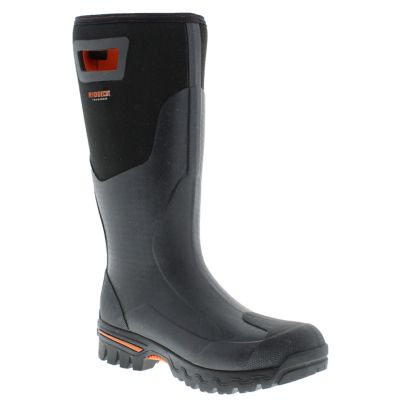
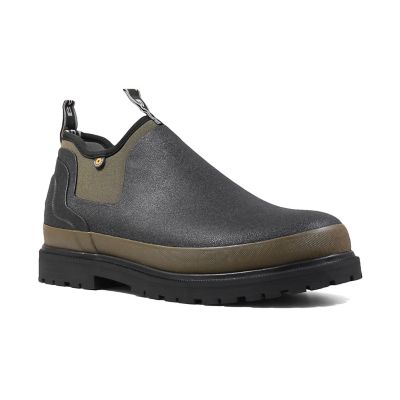
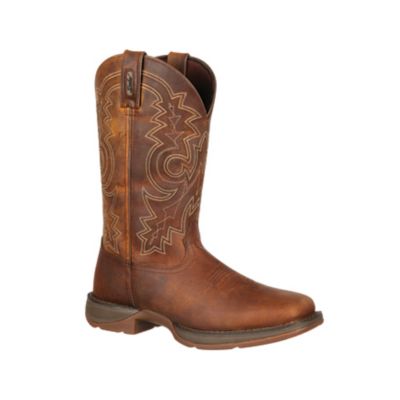
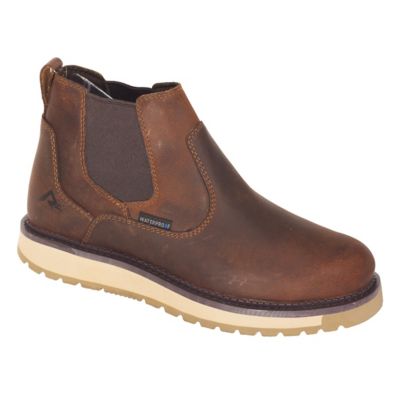
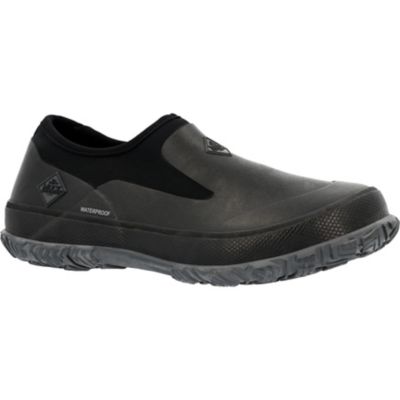
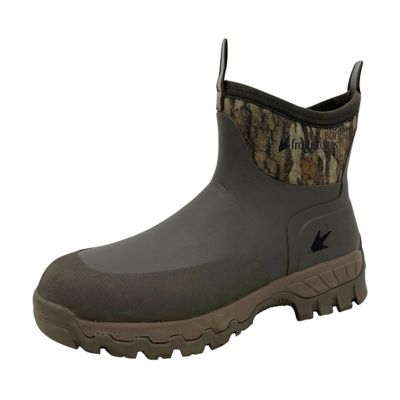
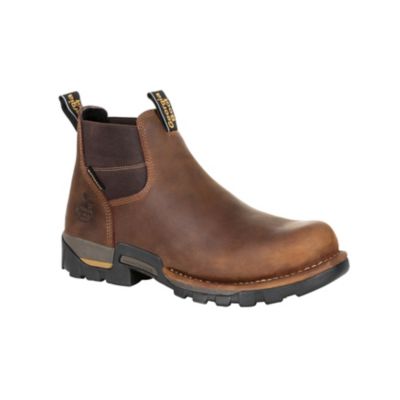
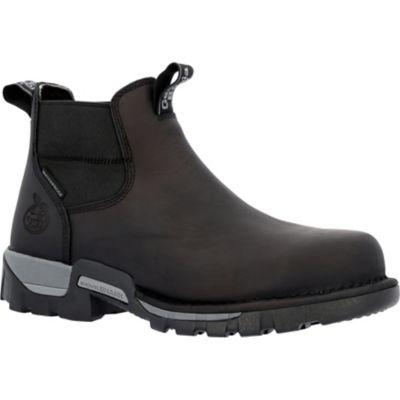
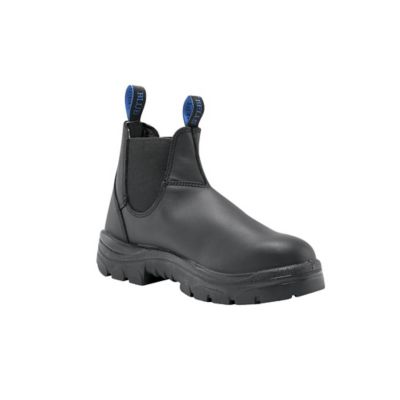
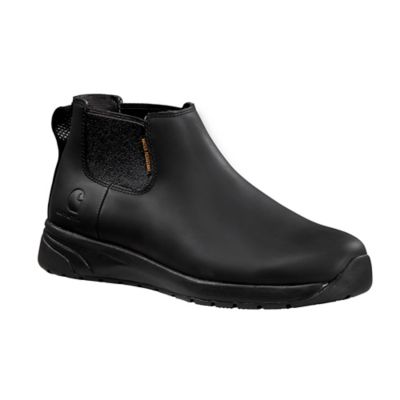
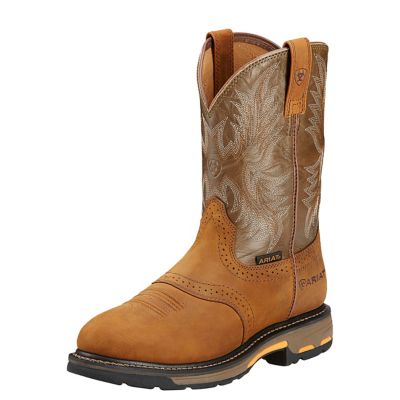
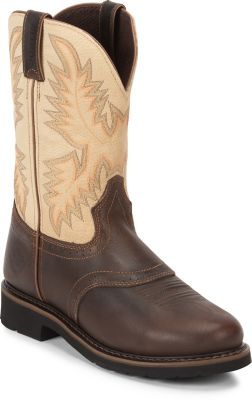
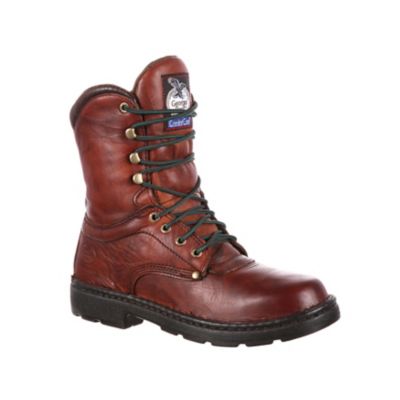
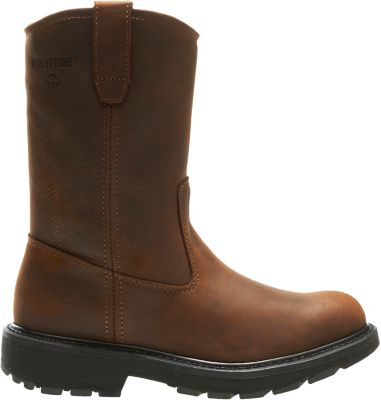
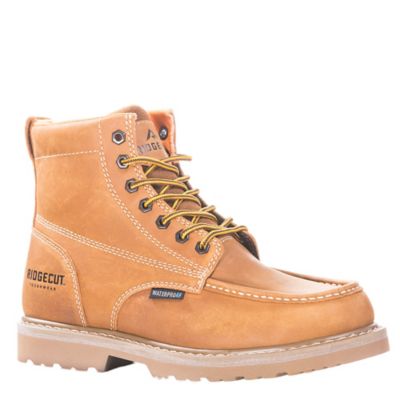
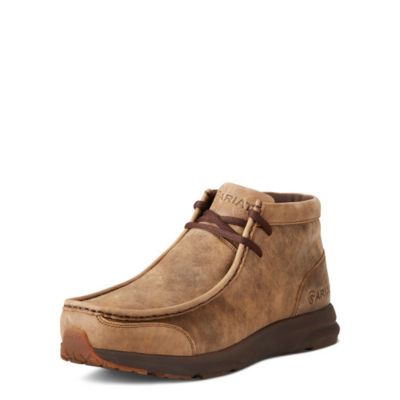
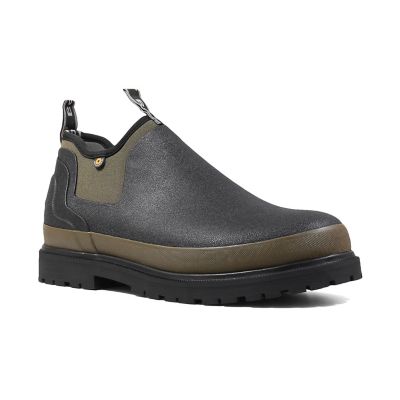
Men’s slip-on boots are pull-on footwear that stays in place without laces, with styles ranging from ankle-height Chelsea boots to taller Wellington and Western-inspired boots. Their appeal is simple: less fuss getting out the door, with options suited to everyday wear, chores and demanding work. A low-profile leather pair can look right with jeans at the feed store or straight-leg pants for supper in town, while a taller shaft offers more coverage around the lower leg when walking through bedding or brushing past tall grass. Chelsea styles typically have elastic side panels that stretch as the foot goes in, then settle close around the ankle. Romeo styles sit lower and offer an easy-on shape for everyday tasks. Wellington boots generally have taller shafts and a roomy opening, often with pull tabs to help get them on. Materials make a noticeable difference in how these boots feel, look and hold up to regular wear. Full-grain leather retains its natural surface and can develop creases and character with wear. Oiled leather often has a more relaxed appearance, while smoother leather can lean toward a cleaner, dressier look. Suede and nubuck have softer, textured surfaces that call for care suited to their finish. Rubber and synthetic constructions serve a different purpose, especially for chores involving wash bays, manure or frequent rinsing. A waterproof membrane may add protection inside a leather boot, but leather alone does not guarantee a waterproof boot. Shaft height matters, too: water can still enter over the opening. For a man who goes from checking gates to driving into town, the best match depends on how much walking, bending, kneeling and cleanup fills the day. The right pair should fit those routines rather than simply look the part. Stitching, seams, pull tabs and the connection between the upper and sole all deserve a close look because those areas take repeated strain every time the boots go on, come off or flex underfoot.
Fit is especially important with men’s pull-on boots because there are no laces to tighten across the instep. The instep should feel secure without pinching, and the toes should have room to spread without hitting the front when walking downhill or stepping off a truck. Some heel movement can occur in a new pull-on leather boot, depending on its construction, but the foot should not slide around or lift so far that walking feels awkward. Leather may soften with wear; a boot that squeezes the toes or puts painful pressure on the foot is not something to count on stretching into shape. Try boots with the socks normally worn for the task, and check the fit on both feet while standing and walking. Anyone wearing prescribed orthotics should check that the boot has enough depth and, where needed, a removable footbed. Width matters as much as length, particularly when the ball of the foot feels crowded even though there is room ahead of the toes. Underfoot features deserve the same attention. Cushioning can ease the feel of concrete underfoot, while a supportive footbed and stable heel help the foot feel settled during long stretches of standing. A wedge sole spreads contact across a broad area and is often favored for work on firm, relatively level surfaces. A defined heel and deeper tread may better suit uneven ground, though tread can collect packed soil and needs cleaning to keep its edges exposed. Slip resistance varies by outsole and surface; no sole prevents every slip. For workplace requirements,
Mens Slip On Work Boots brings the focus to task-specific features such as safety toes, protective soles and marked electrical hazard protection. Steel, alloy and composite safety toes differ in weight and feel, but protection depends on the boot’s stated rating, not the material name alone. Soft-toe boots do not provide impact protection simply because the upper looks rugged. Match any required safety markings to the job, and remember that a safety toe does not establish puncture resistance or electrical hazard protection.
Regular care helps slip-on boots stay comfortable and serviceable, whether they spend most of their time beside a workbench or under a pair of jeans. Brush off loose dirt before it works into seams, and remove manure or other residue promptly rather than leaving it on the upper. For smooth leather, follow the maker’s directions for cleaning and conditioning; too much conditioner can change the feel or appearance, and products meant for smooth leather may not suit suede or nubuck. Let boots air-dry away from direct heaters and other concentrated heat sources. Taking out removable insoles helps the inside dry, and alternating pairs gives linings and footbeds more time to air out between wears. Rubber boots usually call for a different routine, with rinsing, gentle cleaning and storage away from direct sunlight as directed by the maker. Check elastic panels for stretching, pull tabs for loose stitching and outsoles for worn tread or separation. A sole worn smooth at the heel can affect footing even when the upper still looks good. Some welted leather boots can be resoled, while other constructions are not intended for that repair, so the construction matters when thinking about years of wear. Intended use also helps narrow the choice for a gift. A father who spends his day in a shop may appreciate cushioning and a steady platform, while someone tending livestock may put more value on coverage and an upper that is straightforward to clean. A man who mainly wants boots for errands and casual outings may prefer a lighter ankle-height style with less weight underfoot. Confirm the recipient’s size, width and workplace requirements rather than guessing from the boots’ appearance. From stepping into the barn to heading out for dinner, men’s slip-on boots work best when the shape, sole and materials line up with the way the wearer actually spends his day.