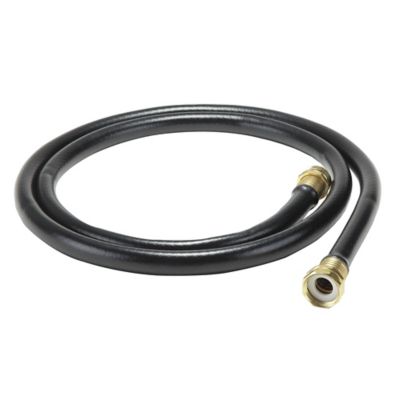
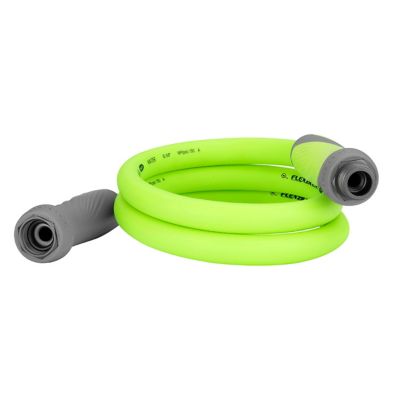
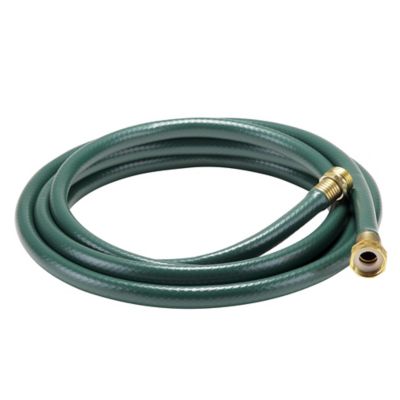
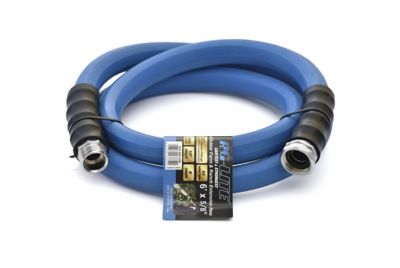
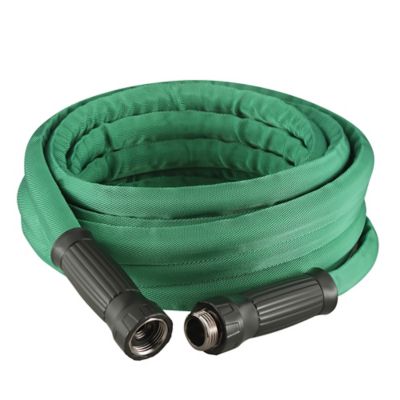
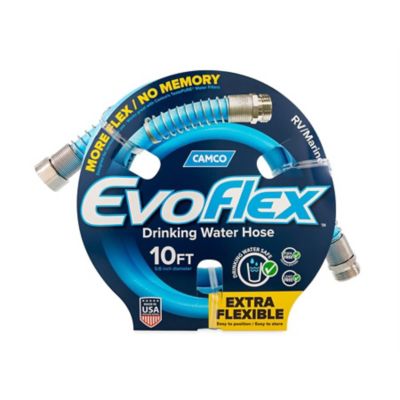
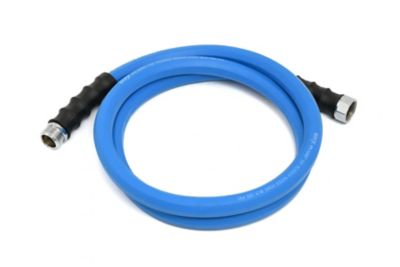
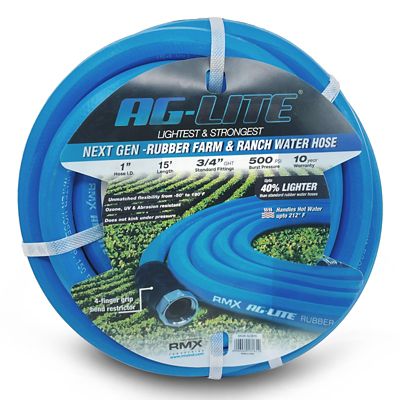
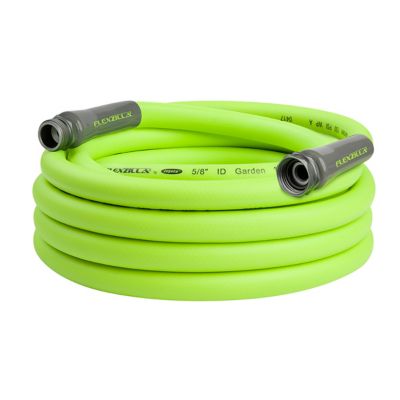
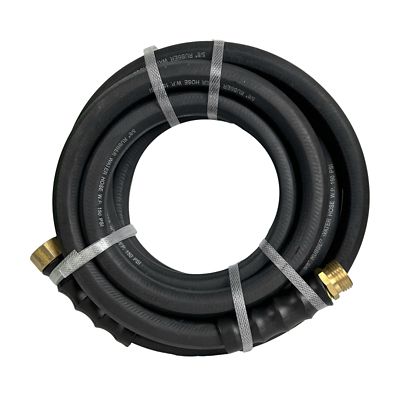
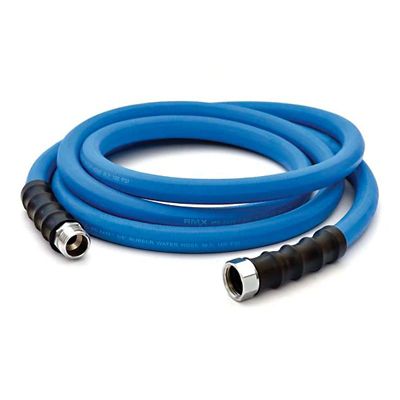
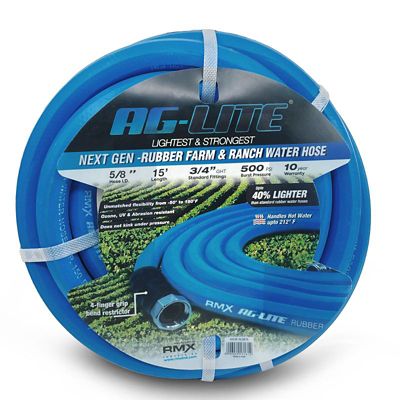
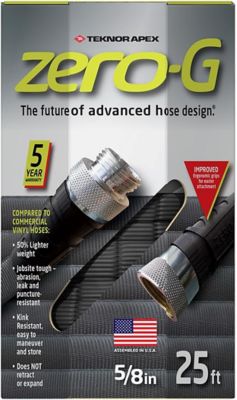
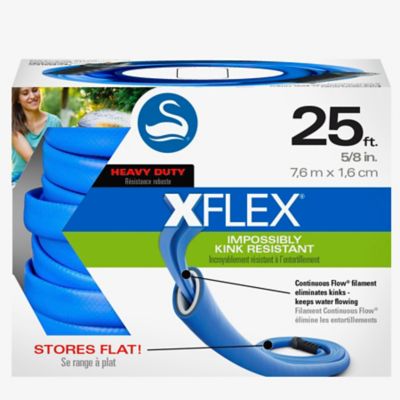
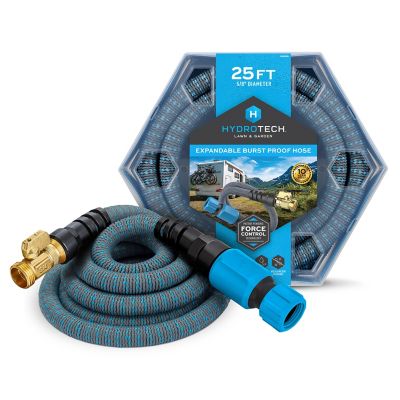
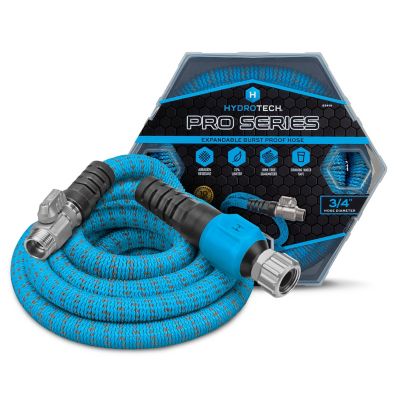
Short length garden hoses put water within reach without leaving a long coil beside the spigot. Often measuring 1 to 10 feet, these compact hoses handle close-range watering and make connections between faucets, hose reels, and watering equipment. A short leader hose can bridge the gap from a wall-mounted spigot to a reel, while a slightly longer section gives you room to water porch containers, rinse muddy boots, or fill a bucket beside the barn. For a small potting area or a raised bed near the house, that modest reach can be plenty. Less extra hose means less material to drag across gravel, wind onto a hanger, or gather out of a walkway when the job is done. The best fit depends on the actual route between the water source and the connection, not just the straight-line distance. A faucet tucked behind a planter or a reel sitting around a corner needs enough slack for gentle bends without pulling sideways on either fitting. A hose stretched tight can strain connections, while a length that folds back on itself may kink and interrupt flow. Short hoses also make sense for gardeners who prefer a lighter load and homeowners who keep a separate watering setup near an outbuilding. Around a small acreage, a dedicated short connection can keep the main garden hose free for work farther from the faucet. These hoses serve different purposes, though: a leader hose stays between two connection points, while a short watering hose needs enough working room to move a nozzle or reach several containers. Where the task extends across a yard or along a larger garden,
50 Foot Garden Hoses offer more reach. Keeping hose length close to the job helps make the whole setup easier to handle, whether that means a few feet beside the porch or a longer run to the vegetable patch.
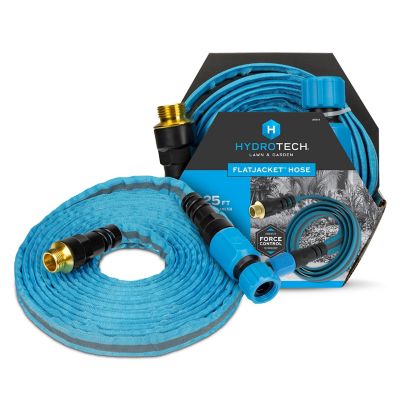
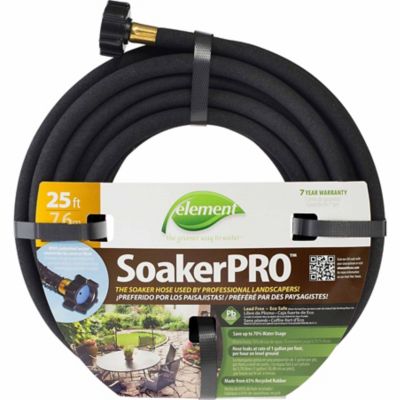
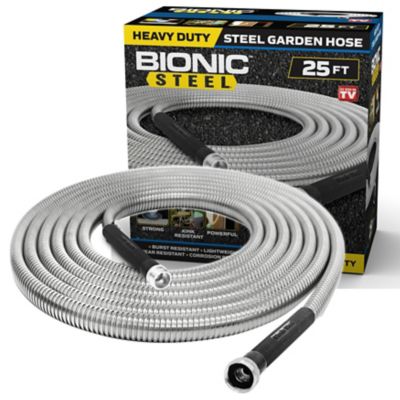
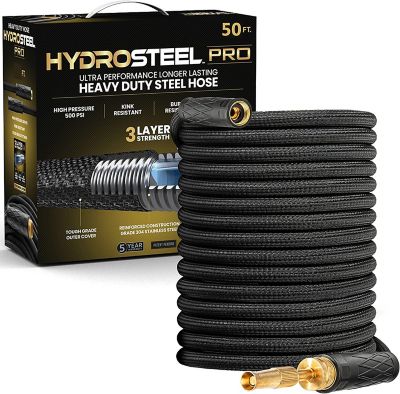
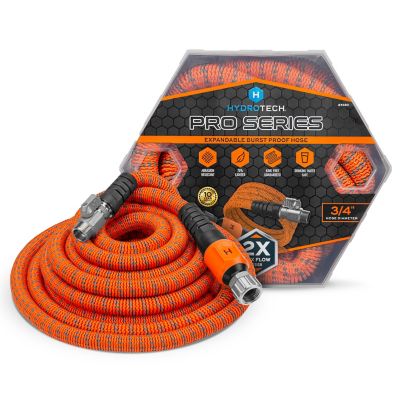
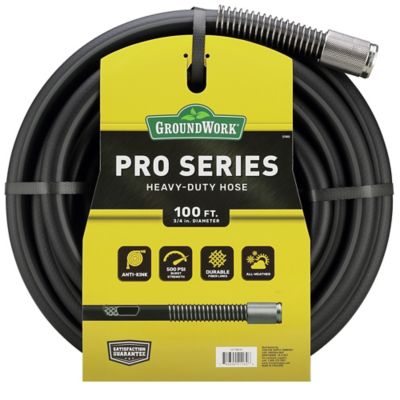
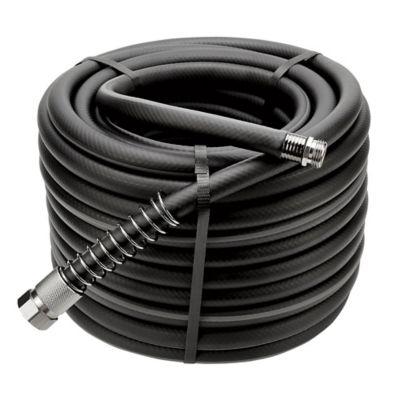
Materials, hose diameter, and fitting construction all affect how a short garden hose handles everyday chores. Rubber hoses often have a substantial feel and good flexibility, though they can weigh more than lighter alternatives. Vinyl and PVC hoses can be easier to carry, with reinforcement helping the hose wall resist pressure and hold its shape. Hybrid polymer constructions balance flexibility and manageable weight, while hoses with a stainless steel outer covering have a protective shell around an inner water-carrying tube. The outer material alone does not tell the whole story; bend radius, reinforcement, fitting attachment, and the manufacturer's intended applications matter too. A short hose may spend much of its time bent between a spigot and a reel, so flexibility near the ends is especially helpful. Reinforced collars can support that area, but they still need room rather than being forced into a sharp turn against a wall. Inside diameter is another important distinction. Common garden hose diameters include 1/2 inch and 5/8 inch, and a wider passage generally creates less restriction under otherwise similar conditions. Actual flow also depends on supply pressure, fittings, the nozzle, and any connected watering equipment. Hose diameter is separate from thread size: standard U.S. garden hose connections commonly have 3/4-inch garden hose thread, often marked GHT. Matching that thread designation matters more than assuming every fitting labeled 3/4 inch will connect, since pipe threads are different. A typical watering hose has a female inlet and a male outlet, but some reel connections call for a female fitting at both ends. Checking the reel or accessory connection prevents a mismatch. Brass, aluminum, and polymer fittings each bring different weight and handling characteristics, and broad grips can make attachment easier with wet hands. A flat washer inside the female coupling provides the seal on a standard garden hose connection. Sound washers and properly seated fittings help prevent the steady drip that leaves a puddle beneath the faucet.
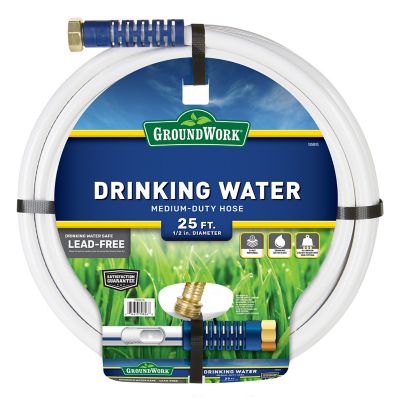
A short hose earns its place when its construction matches what runs through it and how it connects to the rest of the watering setup. For watering flowers, rinsing garden tools, or filling a watering can, a general-purpose garden hose may suit the task when its stated applications match. Water intended for people or animals calls for closer attention to the hose's labeling and material certifications; a general watering hose should not automatically be treated as drinking-water safe. Connections involving timers, splitters, and drip irrigation also need a little forethought. A leader hose can provide a flexible link between components, but it does not replace a pressure regulator, filter, or backflow protection where those are required. Timers and other attachments should have the support their manufacturers call for rather than hanging with the weight of a hose pulling on them. Pressure ratings deserve the same attention. Burst pressure is not the same as allowable working pressure, and a high burst figure does not by itself mean a hose is suitable for continuous pressure. That distinction matters when a hose sits between an open faucet and a closed timer or nozzle. For everyday handling, a short length is easy to lift clear of a gate, carry across a patio, or hang beside a utility sink, but it still benefits from sensible care. Dragging fittings across concrete can damage threads, and catching the hose beneath a wheel or tightly pinched door can harm its wall. After a task, shutting off the supply and releasing trapped pressure takes strain off the assembly. Draining the hose before storage, keeping dirt out of the couplings, and hanging it in a relaxed loop help keep it ready for the next round of chores. Periodic checks for cracked washers, loose fittings, bulges, or abrasion can catch trouble before a small leak becomes a soaked work area. With the right reach, matching connections, and room to bend naturally, a short garden hose keeps nearby watering jobs straightforward without a pile of extra hose underfoot.