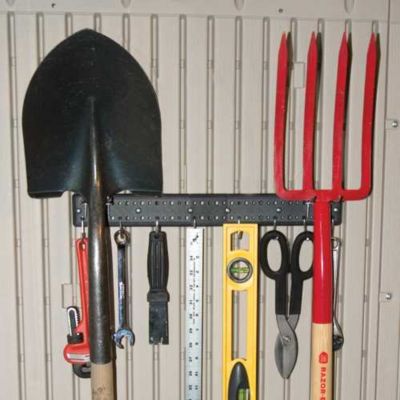
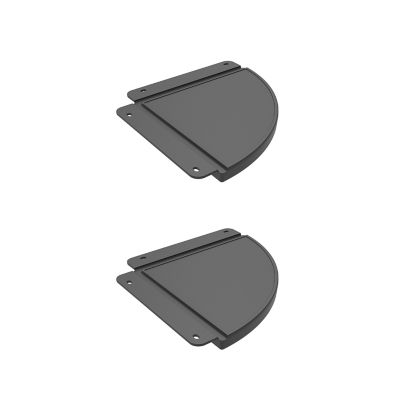
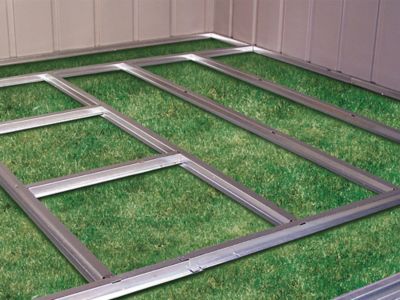
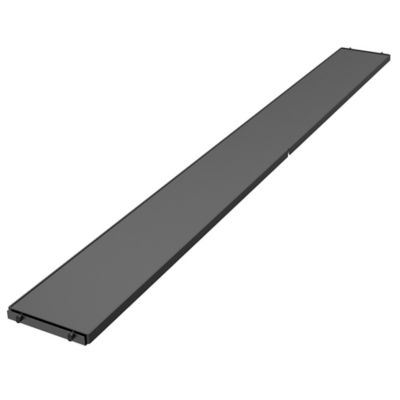
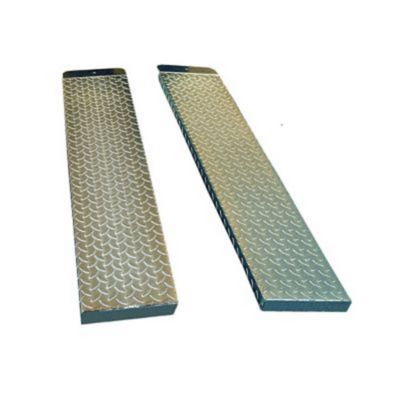
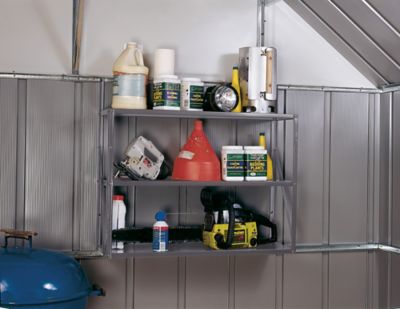
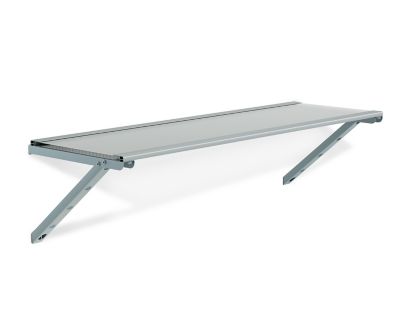
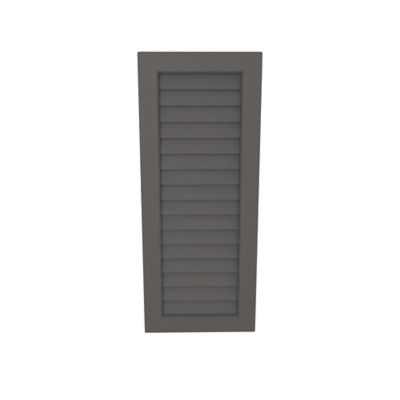
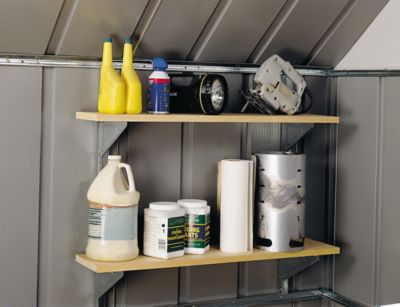
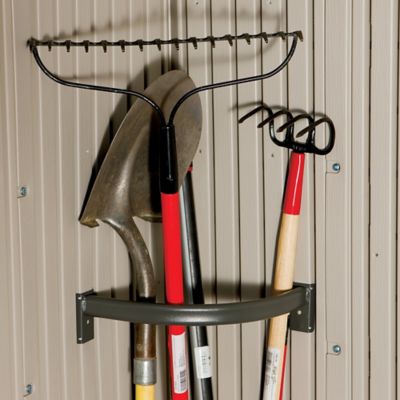
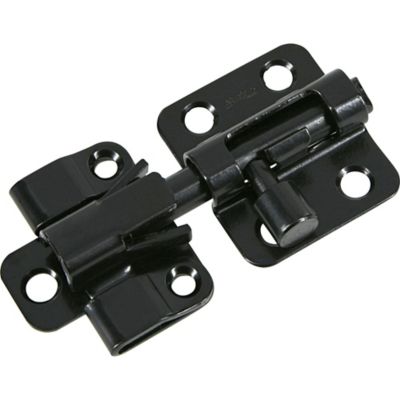
Shed accessories help make a storage building easier to organize, easier to move through, and better suited to the work that happens around your place. Common categories include shelving, wall storage, tool holders, work surfaces, ramps, door hardware, and security hardware. Each serves a different purpose, from getting long-handled tools off the floor to making room for a mower to roll through the doorway. For a gardener, that might mean a clear spot for potting supplies and a place where pruning tools stay together. For someone tending acreage, it might mean separating equipment maintenance supplies from fencing tools and everyday chores. The most useful arrangement reflects what actually goes in and out of the shed, rather than filling every inch with storage. Wall-mounted storage leaves more floor space open, while shelves bring smaller supplies within reach. Corner storage can put an awkward space to work without crowding the center aisle, and a work surface gives small repairs somewhere to land besides the mower seat. Open storage makes frequently handled tools easy to spot, while enclosed storage helps contain loose parts and keep them together. A mix often makes sense: hooks for long handles, shallow storage for small supplies, and a sturdy lower shelf for heavier loads. The depth of each accessory matters as much as its width, especially in a narrow building where a few extra inches can interfere with a wheelbarrow handle or the swing of a door. Keeping the entrance clear also makes a difference when carrying a full watering can or backing equipment into place. Shed accessories work best as part of the whole space, with enough room left to reach, lift, turn, and put things away without a wrestling match. That balance helps a small shed handle a surprising amount of everyday work without becoming a place where tools disappear behind other tools.
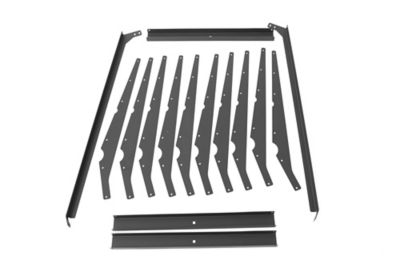
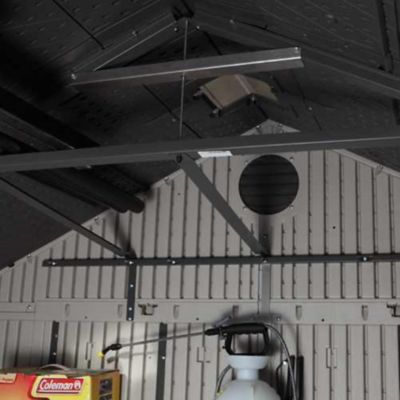
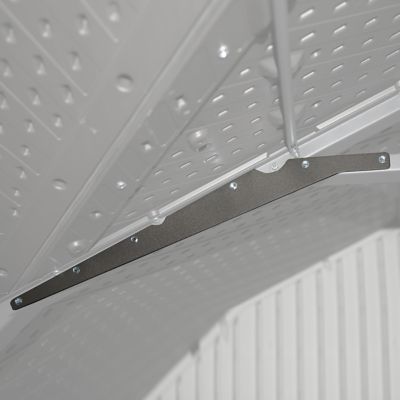
Fit starts with the shed itself. Wood framing, metal panels, and resin walls have different attachment requirements, and an accessory that fits one building may not suit another. Some storage systems connect to designated mounting points, while others need framing or another approved support behind them. Wall panels alone should not be assumed to carry the weight of loaded shelves, hanging equipment, or an overhead platform. Manufacturer compatibility information, mounting requirements, and load limits help establish whether an accessory belongs in a particular shed. Dimensions deserve the same attention: shelf spacing affects whether tall containers fit, hook spacing affects whether tool handles overlap, and overhead clearance affects whether a raised mower handle or a person carrying a ladder can pass underneath. Materials also influence how an accessory performs through repeated chores. Steel can provide substantial support in shelving and brackets, with coatings that help protect the surface from corrosion. Resin components are often easy to wipe down and do not rust, though their weight limits and fastening requirements still matter. Wood work surfaces provide a solid place for everyday tasks, but exposed edges, finishes, and cleaning needs vary. Hardware should match both the accessory and the building materials, with the specified fasteners helping keep loads supported as intended. Access accessories bring another set of measurements into play. A shed ramp needs to match the doorway, threshold height, equipment width, and expected load, including any operator weight where applicable. Its attachment method and traction surface matter when guiding wheeled equipment across the entrance. Door hardware depends on door thickness, frame construction, alignment, and clearance, while locking hardware needs a suitable mounting surface to do its job. Ventilation accessories also require a compatible location and an installation that follows the building maker’s requirements. None of these parts replaces the shed’s structural supports; the right match makes the existing space more practical without asking walls, doors, or floors to do work beyond their design.
Day-to-day usefulness shows up in the little moments: finding the right wrench without emptying a box, reaching a shovel without moving three other tools, or having a clear place to set down a part during a repair. For property owners, gardeners, and folks who look after livestock, storage that follows the order of the job can cut down on unnecessary trips. Equipment care supplies fit naturally near a work area, while frequently carried hand tools belong somewhere easy to reach on the way out. A shed that also serves as a home base for pasture or pen maintenance can keep
Fence Accessories together in a designated storage area, separate from garden tools and mower supplies. Small containers help keep fasteners from spreading across a shelf, and clear labels make shared storage easier for everyone who handles chores. Heavier loads belong where the storage system is rated to support them and where lifting does not require an awkward reach. Sharp edges, projecting handles, and loose cords need room of their own rather than a spot in the walking path. Care is generally straightforward, but it depends on the material and the work taking place nearby. Soil and grass clippings can collect around shelf feet and ramp connections, while grease and spills can leave work surfaces slippery. Cleaning methods that suit the finish help avoid damage, and occasional checks can reveal loose fasteners, bent brackets, worn hinges, or changes in door alignment. An accessory’s service life depends on its construction, the weight it carries, its installation, and the attention it receives along the way. Storage needs can change as equipment and routines change, so adjustable shelf positions and movable storage components can be useful where the system supports them. A well-arranged shed leaves room for those changes while keeping the basics simple: tools have a place, access stays clear, and the next chore can start without digging through a pile.