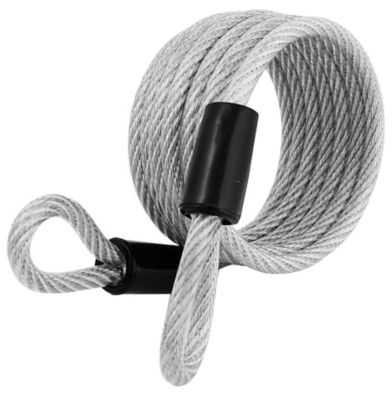
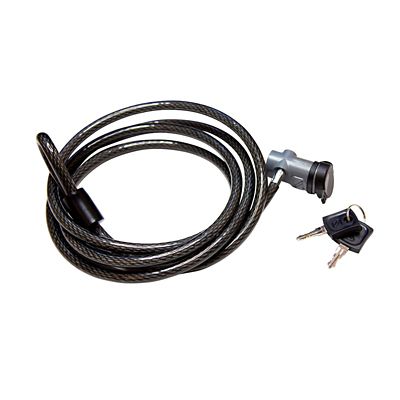
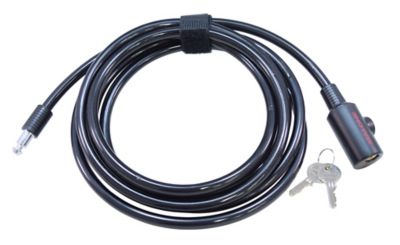
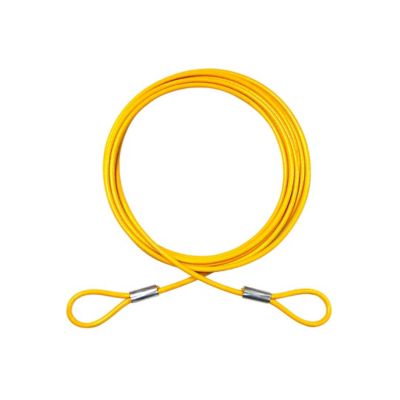
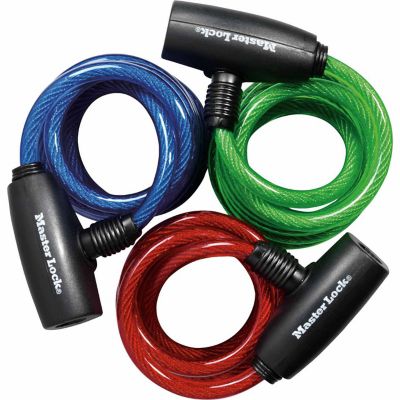
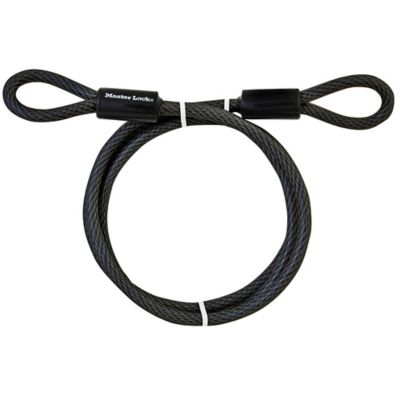
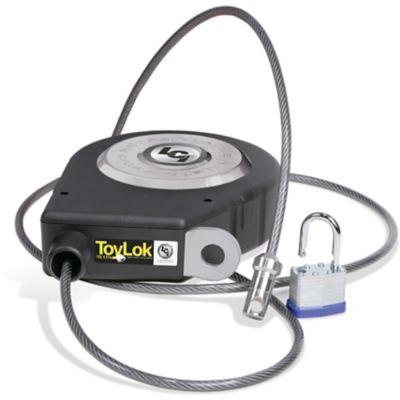
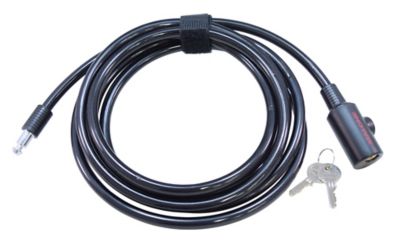
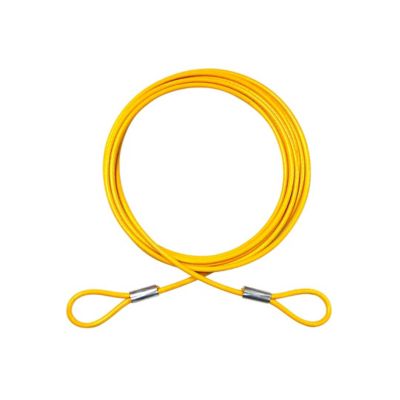
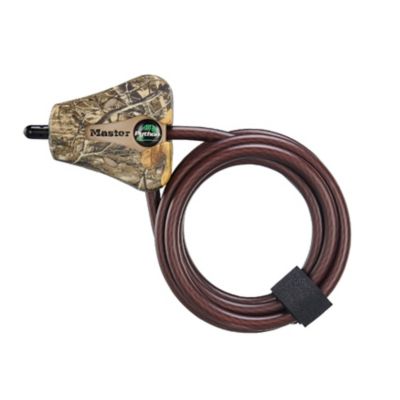
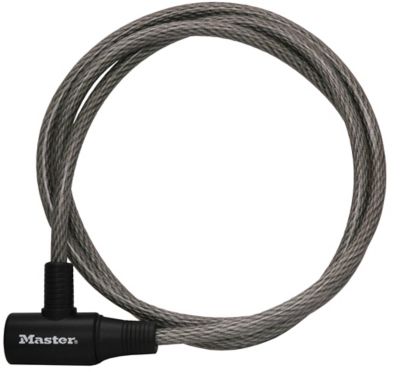
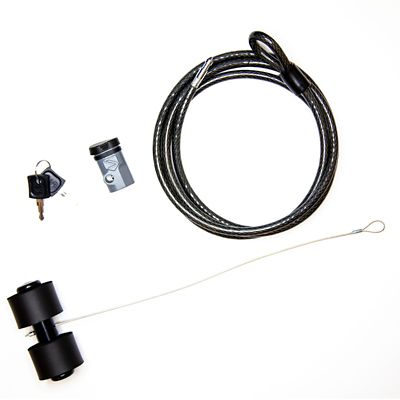
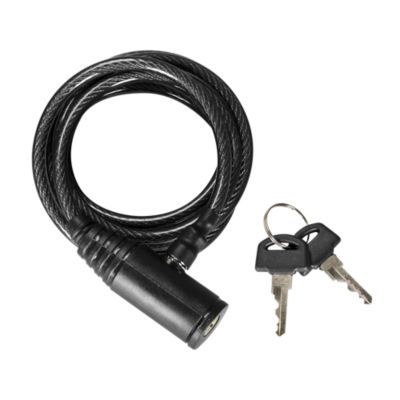
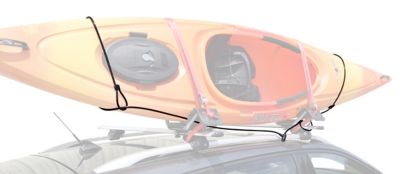
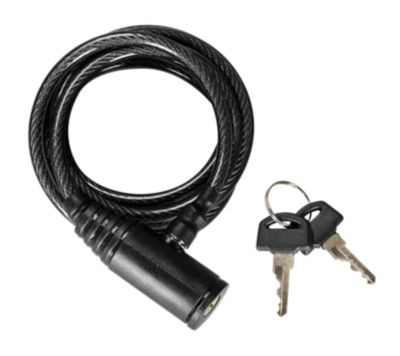
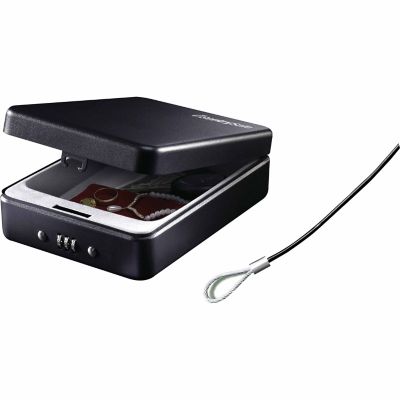
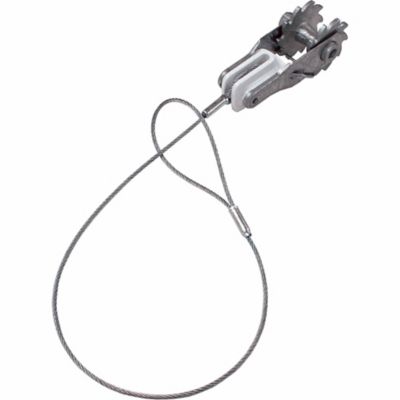
Security cables offer a simple, flexible way to help keep valuable gear, outdoor equipment and household items where you left them. Most are made with braided or galvanized steel wire at the center, giving the cable strength while allowing it to bend around a post, rail, handle or other fixed anchor. Many also have a vinyl coating that helps protect finished surfaces from scratches and shields the steel from ordinary moisture and weather exposure. A security cable is a theft deterrent, not a guarantee against determined tampering, so it should be used with a solid anchor and a lock that matches the value and setting of the item being secured. Looped-end cables work with a separate padlock and are handy for bikes, gates, patio furniture, ladders, toolboxes and equipment stored around a barn or shop. Integrated locking cables have the lock built into the cable, which can make setup quick and keeps you from hunting for a separate lock when you are heading out the door. Keyed locks are a familiar choice for families and work areas where several people need access, while combination locks can be convenient for a personal setup where carrying another key is a hassle. In either case, keep the cable snug without putting sharp bends or unnecessary strain on it, and position the lock where it is easier to reach for the owner than for someone trying to tamper with it.
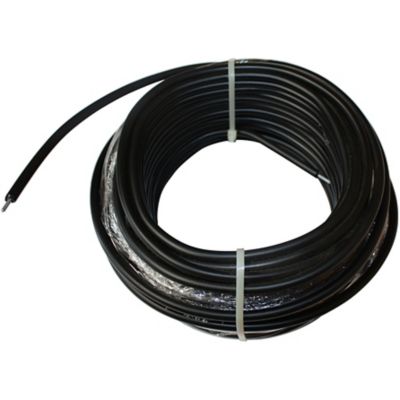
Choosing the right security cable starts with the item, the anchor and the conditions around it. Cable diameter is one of the most important details: thicker cable generally offers greater resistance to cutting, while thinner cable may be a better fit for lightweight gear or small electronics. Length matters just as much. A short cable can secure a laptop, monitor or display to a desk, but a longer cable may be needed to wrap around a bicycle frame and a sturdy post, secure several pieces of outdoor furniture together or create a perimeter around equipment. Measure the route from the item to the anchor, then allow enough extra length to form a loop and operate the lock without a struggle. For valuable tools, recreational equipment or items left outside, look for a stout braided or galvanized steel core and a coating suited to the surfaces you want to protect. Inspect the cable before each use for fraying, kinks, crushed sections, rust or damage to the lock. A cable should pass around the strongest part of an item rather than a removable handle, wheel or thin frame section, and the anchor should be firmly attached to concrete, heavy timber or another structure that cannot be easily lifted or cut away. Never use a security cable as a substitute for safe storage, proper animal containment or a rated tie-down when an item must be restrained during transport. If you are wiring alarm sensors, cameras or another low-voltage system inside a building, you may need insulated electrical wiring instead; related
Connection Cables can help with those kinds of hookups.
Security cables fit into daily routines on farms, rural properties, job sites, offices and homes. A landowner may use one to discourage the walk-off of a portable generator, pressure washer or fuel-related equipment near a shed, while a campground visitor may secure a bicycle or cooler to a fixed post during a short stop. Around the house, a cable can help keep a grill, firewood rack, patio chairs or seasonal decorations from being carried off when the property is unattended. In a workshop, it can add another layer of protection for ladders, compressors, welding equipment and boxed tools, especially during the cooler months when outdoor projects slow down and equipment may sit for longer stretches. Device security tethers are useful in offices, classrooms, retail spaces and farm offices where laptops, monitors or other small electronics stay on a shared counter or desk. These cables can also make practical gifts for a cyclist, college student, camper, handy neighbor or anyone setting up a new workshop. Before buying, consider whether the recipient needs a keyed or combination lock, the approximate distance to a fixed anchor, the weight and value of the item, and whether the cable will be used indoors, under a covered porch or out in rain and dust. Keep locks clean and dry when possible, avoid dragging coated cable across rough concrete, and store the cable loosely coiled rather than sharply folded. Used with a dependable anchor and sensible storage habits, the right security cable adds peace of mind without making everyday access to your gear a chore.