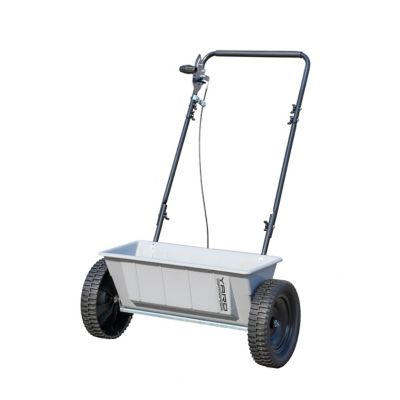
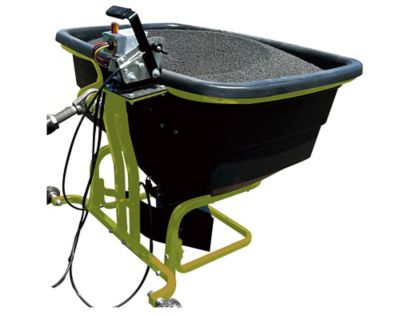
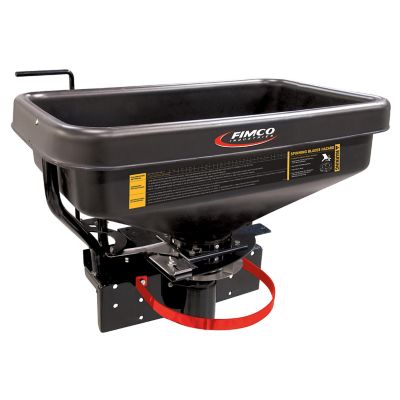
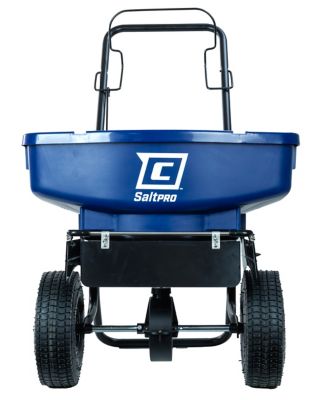
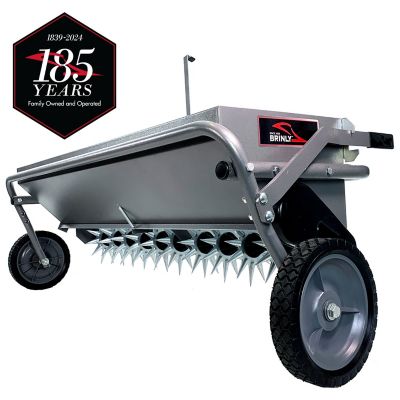
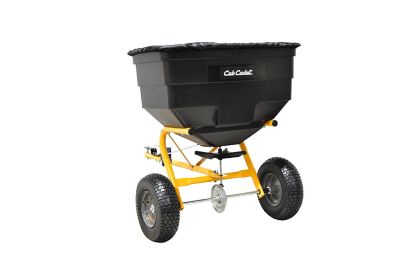
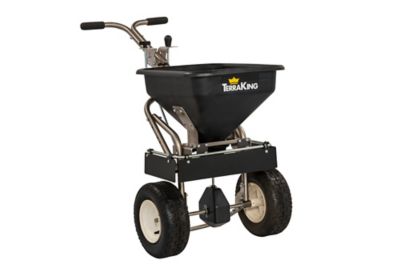
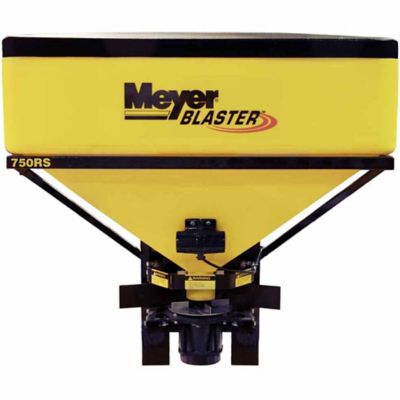
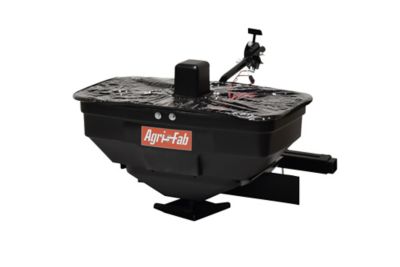
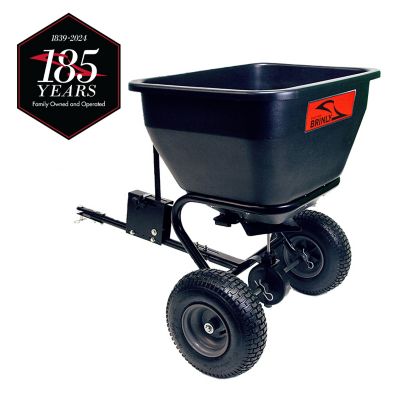
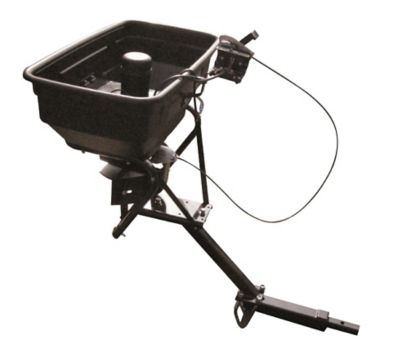
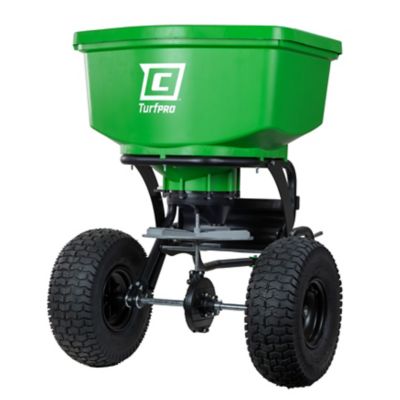
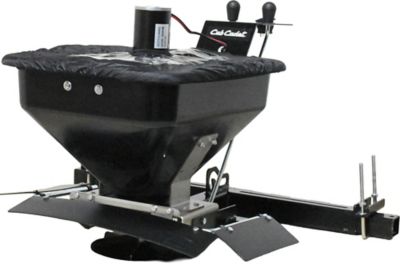
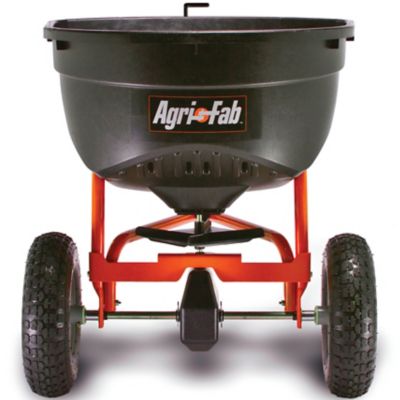
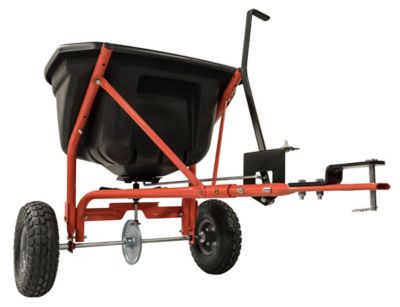
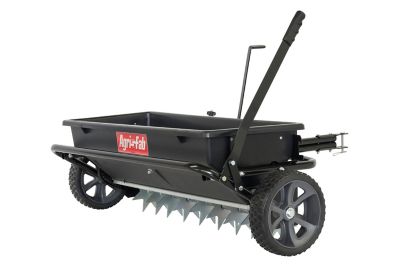
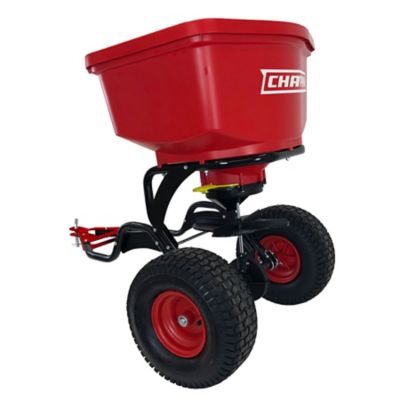
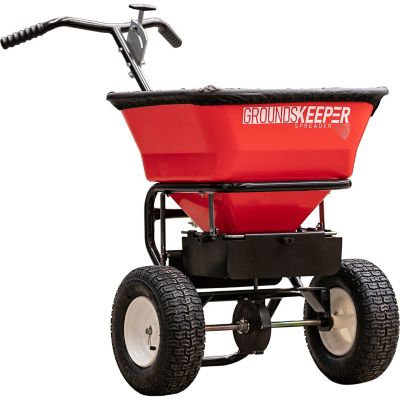
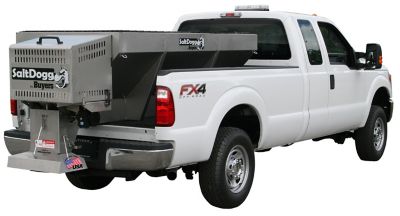
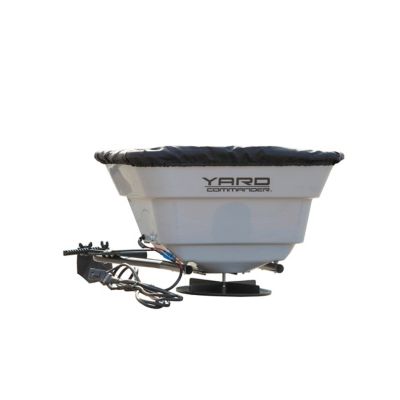
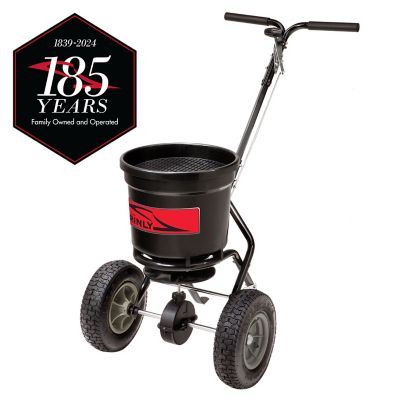
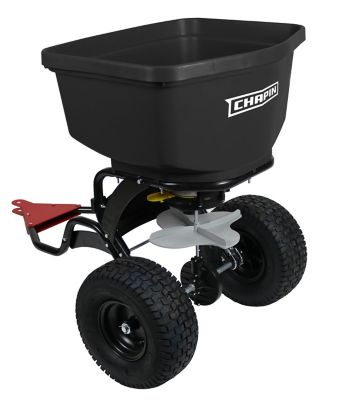
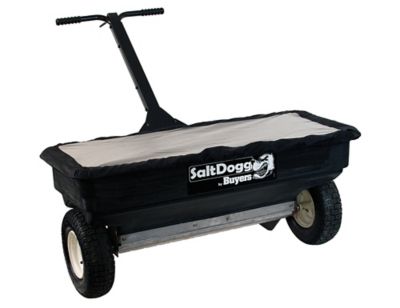
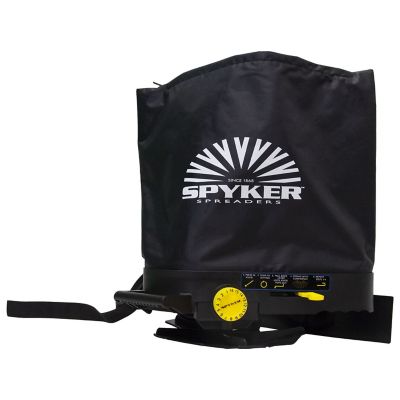
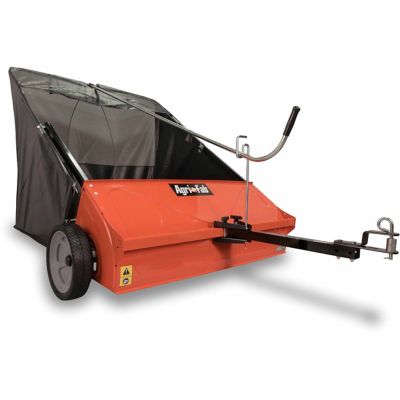
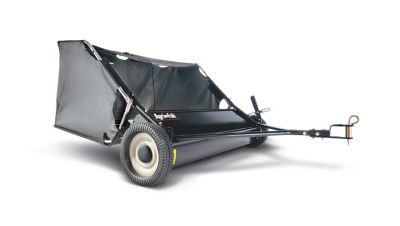
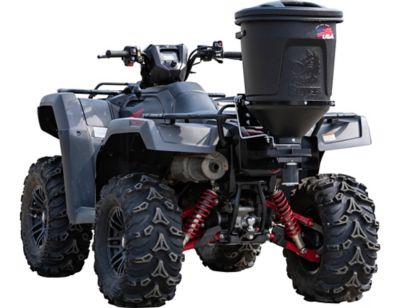
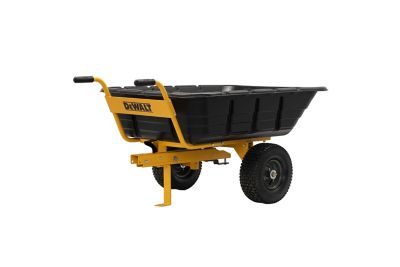
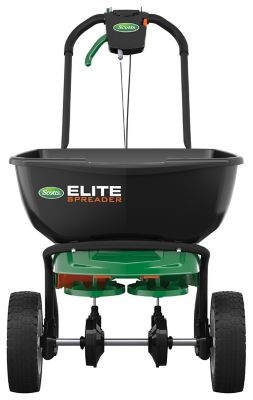
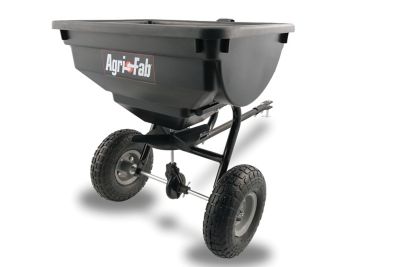
Sand spreaders help put the right amount of dry material in the right place, whether you are smoothing out a tired lawn, refreshing turf, improving traction on a gravel drive, or treating slick walking areas during the colder months. Depending on the job, a spreader may handle fine sand, washed sand, lawn topdressing blends, salt, or other granular materials. Small handheld and shoulder-mounted spreaders are handy for steps, walkways, garden paths, and other tight spots where a larger machine would be awkward. Push spreaders are a practical fit for homeowners, small acreage owners, landscapers, and anyone covering a lawn or driveway on foot. Tow-behind models pair well with riding mowers, ATVs, and utility vehicles when the area is too large for a comfortable push. For farms, municipalities, property managers, contractors, and other heavy-use operations, equipment-mounted units can move a greater volume of sand or de-icing material with less time and effort. When comparing sand spreaders, start with the size of the area and the amount of material you need to move. Hopper capacity is commonly measured by weight or volume, and a larger hopper means fewer stops to refill, though it also adds weight and may require a sturdier towing or mounting setup. A compact spreader can be easier to store and maneuver around landscaping, while a high-capacity spreader makes more sense for long drives, parking areas, arenas, farm lanes, and commercial properties. Pay attention to the spreading width, control settings, tire size, frame construction, and whether the unit is designed for pushing, pulling, or mounting to equipment. Wide, pneumatic tires can roll more smoothly over uneven ground, while a narrow footprint may be easier to guide between buildings, fences, and planted beds. A simple rate-control handle helps reduce waste and keeps coverage more consistent, especially when treating a large area where thin and heavy patches are easy to spot.
For lawn care, sand spreaders are often used to apply a light layer of topdressing across established turf. A fine, dry material can help fill small surface irregularities, support drainage in suitable soil conditions, and give a lawn a smoother finish when used as part of a broader maintenance routine. Sand is not a cure-all for compacted or poorly drained ground, so consider the existing soil and the needs of the grass before applying it over a large area. Choose clean, dry, fine silica or washed sand made for the intended use rather than damp playground sand or material that contains sticks, stones, or excess moisture. Wet sand can bridge inside the hopper, clog the opening, and leave an uneven trail behind the spreader. Even dry material may settle or compact when stored, so break up lumps and check the flow before covering the whole lawn. Set the spreader at a low application rate, make a test pass over a small section, and adjust the setting until the material falls evenly. Walking at a steady pace and overlapping passes slightly can help prevent stripes. After spreading topdressing, use a push broom or the back of a rake to work the material into low areas and around the grass crowns without burying the blades. For traction, sand spreaders can distribute material over icy steps, driveways, loading areas, sidewalks, and livestock paths. Sand provides grit rather than melting power, making it useful when temperatures are too low for some ice-melting products or when a less aggressive traction option is preferred. If you plan to use salt or another de-icer, confirm that the spreader is rated for that material and follow the recommended application rate. Salt and moisture can be hard on metal parts, so cleaning and drying the unit after use is especially important.
The best sand spreader depends on the terrain, material, storage space, and equipment already on hand. A handheld unit may be all that is needed for a short walkway or a few icy steps, while a walk-behind spreader offers better capacity and control for a typical yard. Tow-behind models save time on acreage, long gravel lanes, horse arenas, and larger driveways, particularly when the operator can maintain a steady speed across the property. Before buying, check the loaded weight and make sure your mower, ATV, tractor, or utility vehicle can tow it safely. For tractor loaders, skid steers, and other work equipment, heavy-duty attachments can handle demanding commercial and winter maintenance jobs; browse
Commercial Spreaders when a high-capacity setup is the better match. Look for a hopper that resists rust, a sturdy agitator or flow system, accessible controls, and a spreader plate designed for the material you expect to use. Keep material covered and dry, and avoid leaving a loaded hopper sitting for long periods. Once the job is done, empty leftover sand or salt, rinse residue from the hopper and frame as directed, and let every part dry before storage. Lubricate moving components when recommended, inspect the tires and hardware, and check that the gate opens and closes freely before the next use. Wear gloves and eye protection when handling dusty material or de-icers, keep bystanders clear of moving equipment, and spread only as much as the surface needs. A well-matched spreader can make ordinary maintenance feel far less like a chore, helping keep lawns neat, paths safer, and working ground ready for changing conditions from the warm season into the cooler months.